BULGARIAN SPLIT SQUAT
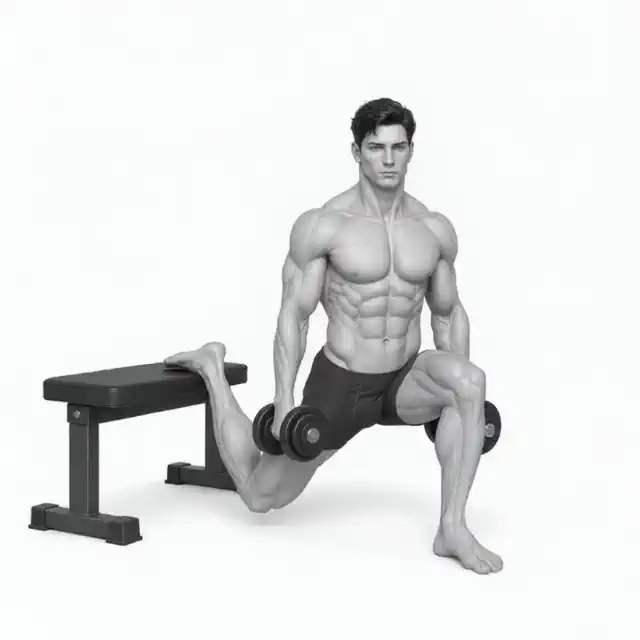
Bulgarian split squat is a single-sided squat where you control your center of gravity with your front leg, rather than pushing up with your back leg.
When you place your back foot on the bench, your front leg supports more weight and even trains your left and right balance. Adjust the bench height and front foot distance to suit your body type, and keep your entire front foot on the floor and keep your knees and toes moving in the same direction. Rather than lifting dumbbells from the beginning, it is better to secure a stable range first.
- Primary muscles
- Quadriceps, gluteus maximus
- Secondary muscles
- Hamstrings, gluteus medius, adductors, calves
- Difficulty
- Intermediate
- Movement type
- Single-Sided Squat
Can the front knee go beyond the toes?
If your heels are together, your knees follow the direction of your toes, and there is no pain, you can move forward. Prioritize foot pressure and side-to-side alignment over absolute knee position.
STEP BY STEP
4 Steps for One Complete Rep
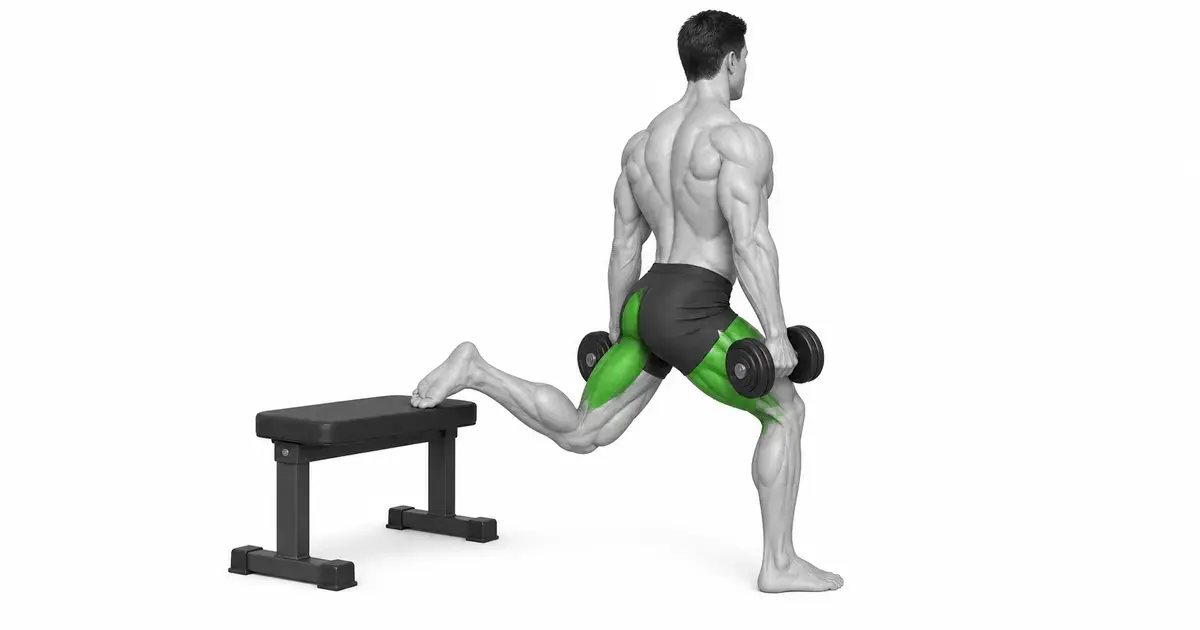
- 1
Determining bench height and front foot distance
Stand in front of a stable bench at or around knee height and raise the top of one foot. When going down, adjust your front foot to a distance where your entire front foot stays together and your pelvis does not twist.
- 2
Aligning the torso over the front feet
Press the floor with the base of the big and little toes of the front foot and the heel. Overlap your ribs and pelvis and look straight down.
- 3
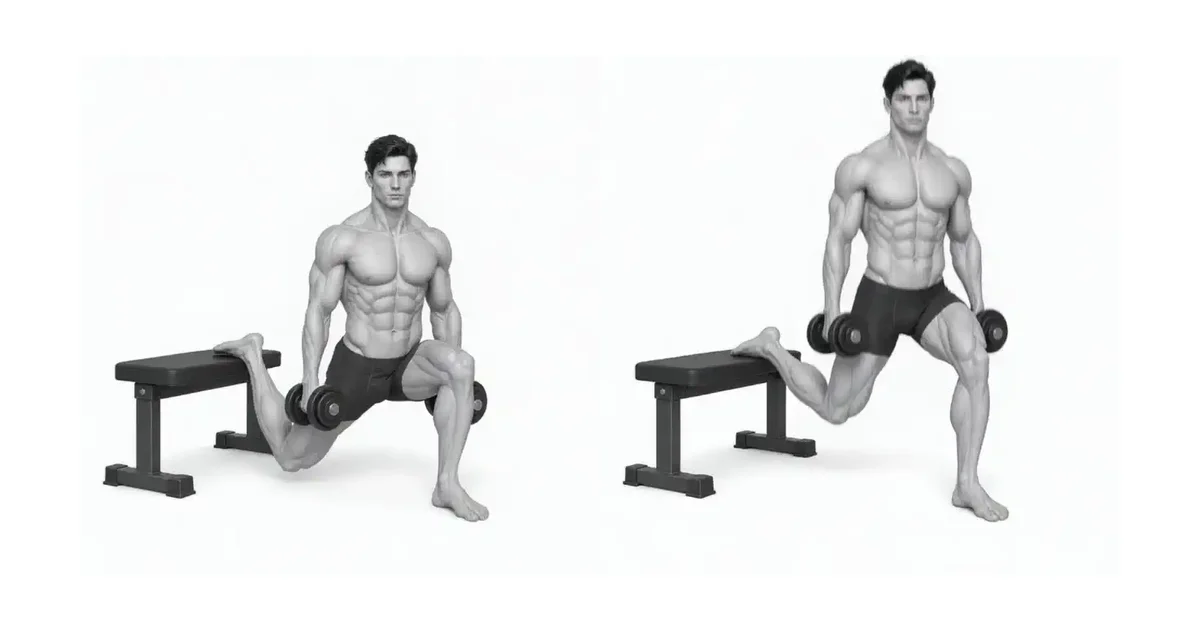
Lowering front knee and pelvis together
Inhale, let your front knee follow the direction of your toes and lower your back knee toward the floor. Go only down to a depth where you can't rock back and forth.
- 4
Push up off the floor with your front foot
Exhale and push the entire front foot into the floor to return to the starting position. Do not kick the bench with your back foot or raise your upper body suddenly.
FRONT-FOOT CONTROL
Total forefoot pressure and knee direction are the criteria for repetition
If the front foot is too close, it is easy to lift the heel or lose balance, and if the front foot is too far, the pelvis may spread excessively. Base your distance on your actual lowering posture rather than foot length.
Whether your feet collapse inward or outward is more important than whether your knees are forward of your toes. Make sure your knees and second toes face in a similar direction.
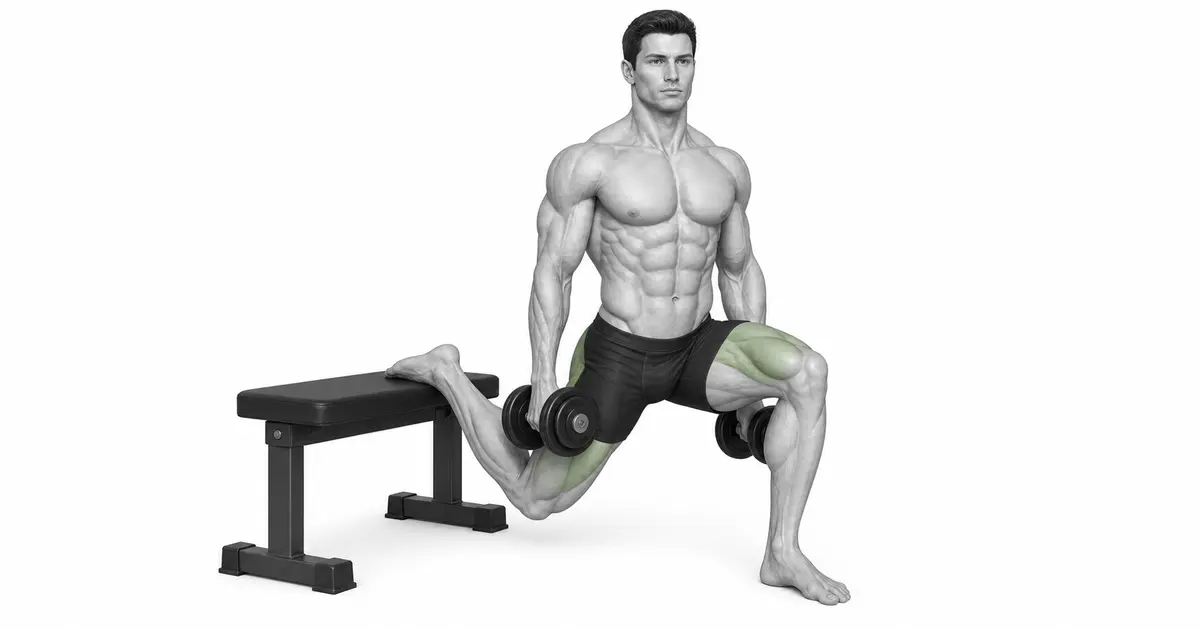
Key point: Cue to try right away: “Press the tripod of your front foot and lower your back knee.”
TORSO ANGLE
The upper body angle is fixed, but can be adjusted to suit your body type and goals.
Leaning slightly forward can increase hip involvement, and a relatively upright posture is easier to focus on the quadriceps. In either case, your torso and pelvis should tilt together rather than just your lower back.
If your pelvis turns to one side as you go down, reduce the depth and lightly hold the support to practice balance first.
TROUBLESHOOTING
Fix the cause of a mistake, not just its appearance
Push up bench with back foot
- What you see
- With each repetition, the hind legs tense and the body springs forward.
- Likely cause
- Front foot center of gravity is unstable or front foot is too close to the bench.
- How to correct it
- Move your front foot slightly forward and use your back foot only as a balance aid.
Front knee collapses inward
- What you see
- My knee moves inward towards my big toe when going down or coming up.
- Likely cause
- Weight and depth exceed the current hip joint stabilization ability.
- How to correct it
- Reduce the weight and depth and bring your knees toward your second toe.
Pelvis rotates to one side
- What you see
- From the front, the waistband line slopes and one hip falls back.
- Likely cause
- The bench is high or there is a large difference in left and right balance and range of motion.
- How to correct it
- Repeat the range with your pelvis facing forward, using low support and using your hands to assist with balance.
REGRESSION & PROGRESSION
Match the difficulty before adding load
Supported Split Squat
Place your back foot on the floor and use your hands to assist with balance.
Bodyweight Bulgarian Split Squat
Learn forefoot pressure and pelvic alignment.
Goblet Bulgarian Split Squat
Place the weight in front of your chest and stabilize your torso.
Dumbbell Bulgarian Split Squat
Increase the weight in both hands but keep the reach on both sides the same.
BEGINNER PROGRAM
A practical starting framework
Once you're comfortable with bodyweight reps on each leg, start with light dumbbells and do your weaker side first, matching sets and reps on both sides.
Count
6–12 times each
Descent 2-3 seconds, maintain forefoot pressure
Set
2–4 sets each
60–120 seconds recovery after performing both sides
Frequency
1–2 times a week
Squat and lunge volume combined
- If both sides maintain the same depth and speed, increase the number of repetitions first.
- If you lose balance or your knees collapse inward, reduce the weight and depth.
- If you feel sharp pain in your knee or hip joints, stop and recheck your foot distance and bench height.
Frequently asked questions
Is the higher the rear bench the better?
No. If it's too high, it's easy for your pelvis and lower back to compensate. Start from a low height that is comfortable on your back foot and allows you to keep your hips straight.
Which leg should I start with?
If there is a difference between left and right, start with the weaker side and finish with the same number of repetitions and range on the stronger side. If the difference is large, improve movement symmetry before weight.