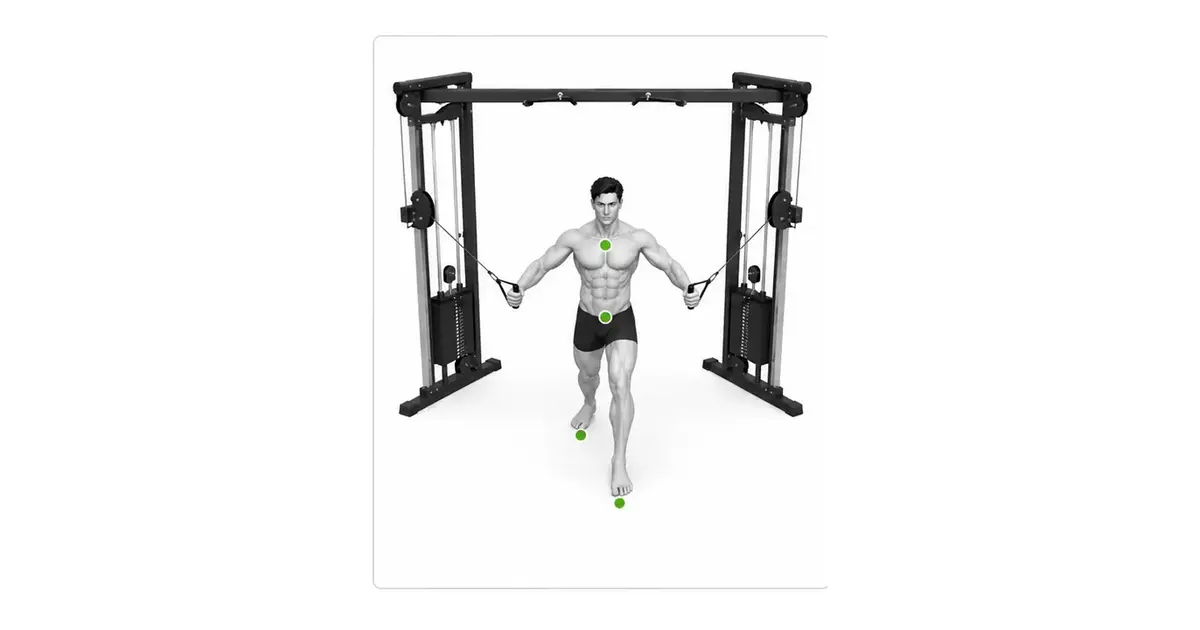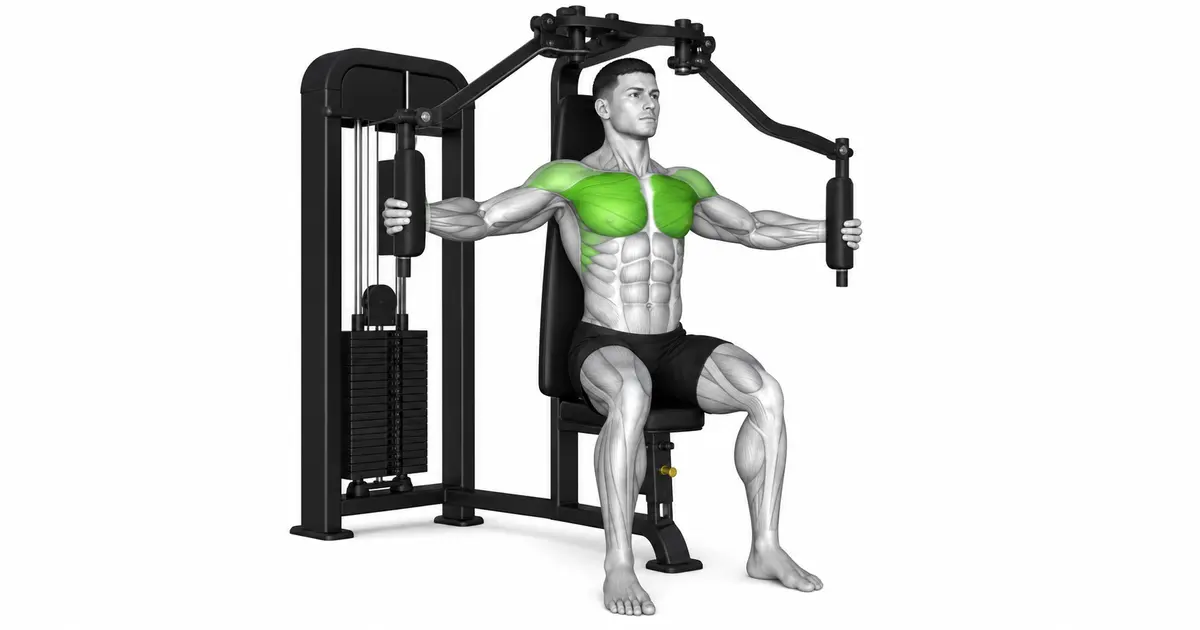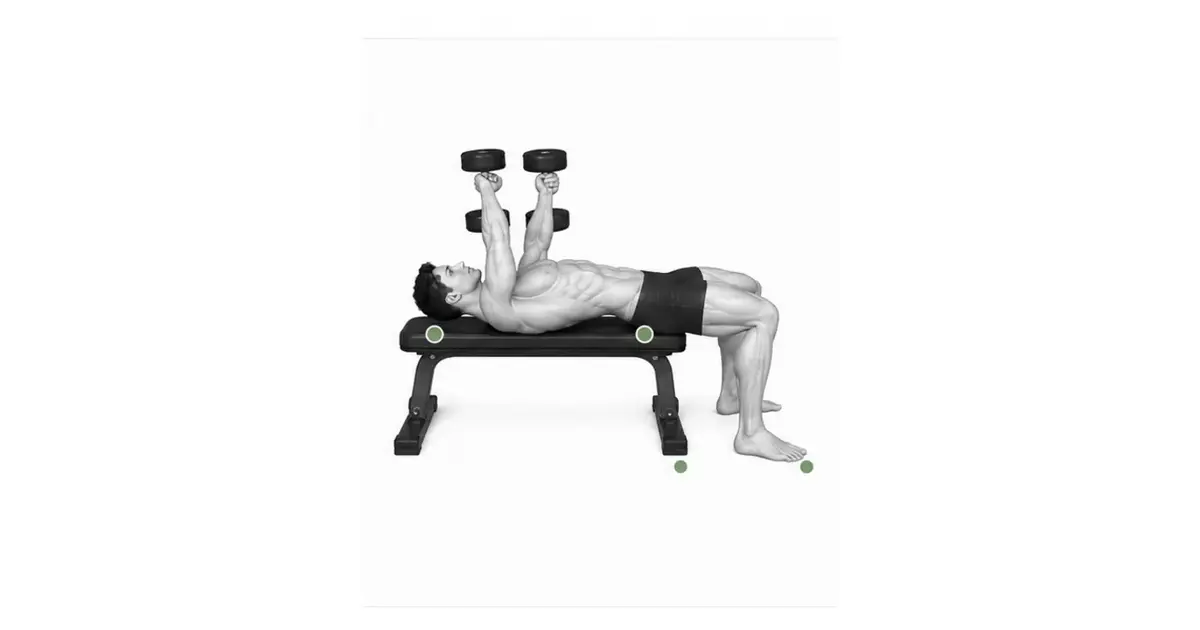
CABLE BICEPS CROSS
The cable biceps cross is a unique isolation exercise that targets the inner biceps (short head) by lifting the arms to shoulder height
The cable biceps cross (also known as the high cable curl) is performed by standing between two cable machines and using shoulder-height pulleys to curl your arms inward. The abducted arm position (arms out to the sides) shifts the emphasis to the 'short head' located on the inside of the biceps. Resembling the 'double biceps' bodybuilding pose, this movement is exceptional for building the peak and defining the inner line of the biceps.
- Primary muscles
- Biceps Brachii (Short Head)
- Secondary muscles
- Brachialis · Forearms
- Difficulty
- Intermediate
- Movement type
- Elbow Flexion
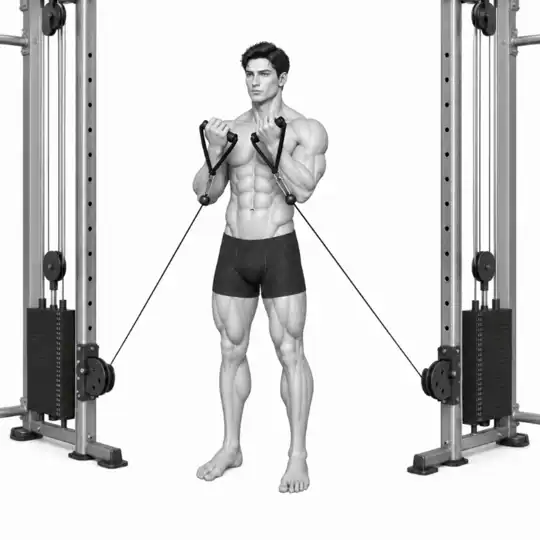
Where should I set the pulley height?
Generally, just slightly above shoulder height is best. The cable should come from a slightly downward angle to optimize biceps recruitment.
STEP BY STEP
4 Steps for One Complete Rep
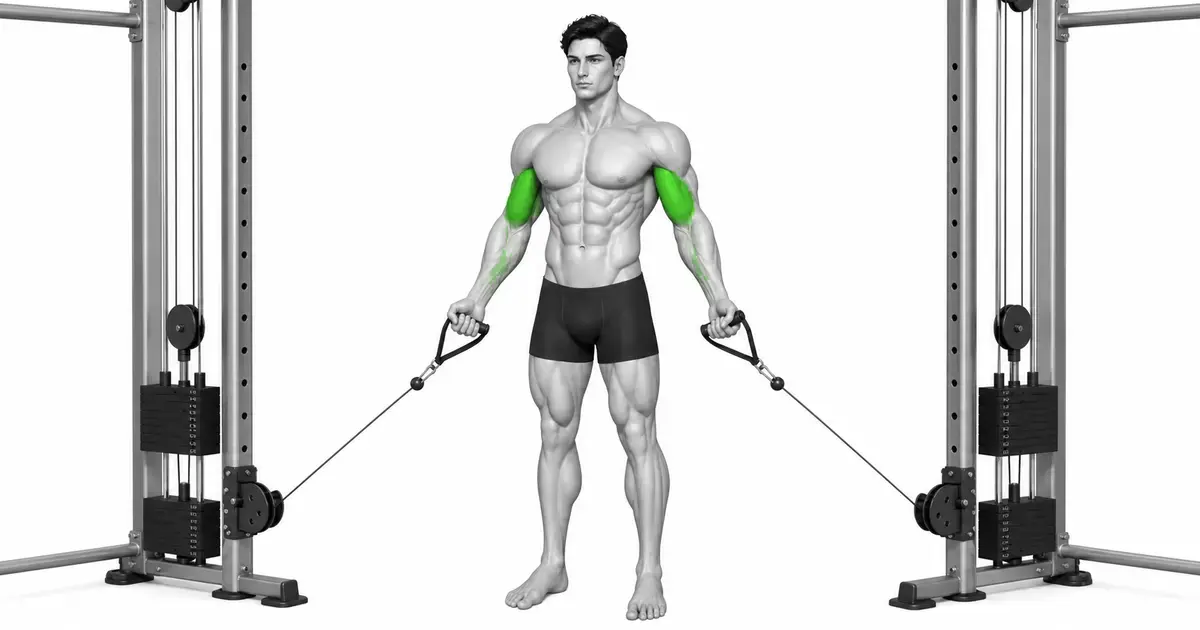
- 1
Grip cables and stand center
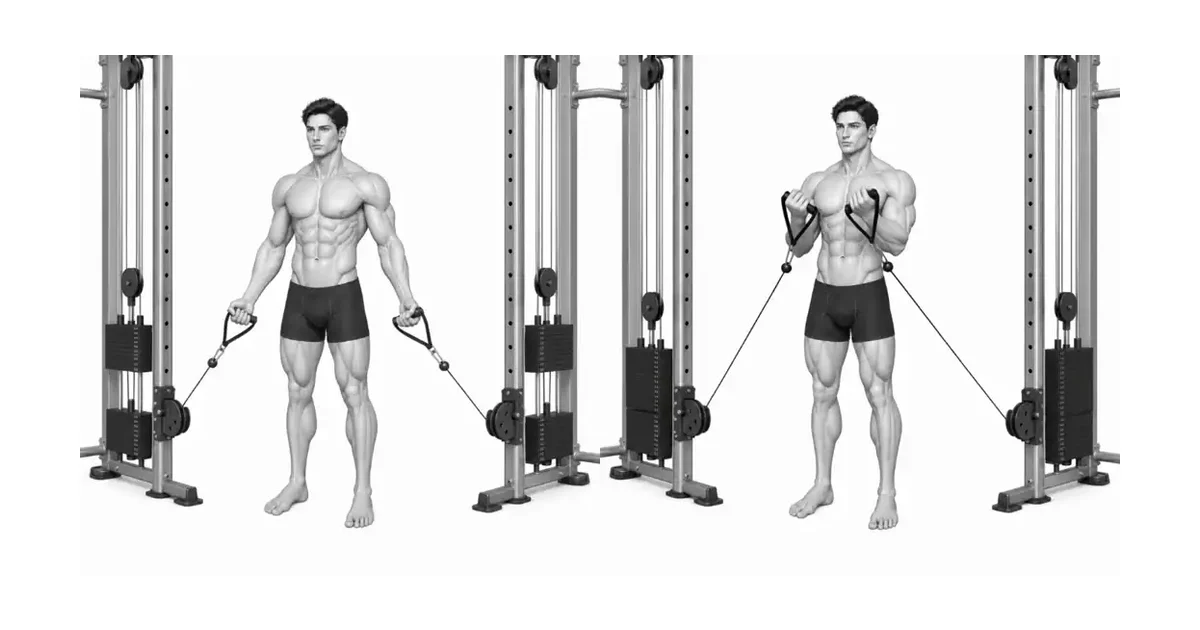
Grip the high pulley handles on both sides and stand in the center of the machine. Extend your arms out to your sides to form a 'T' shape.
- 2
Fix elbows and curl
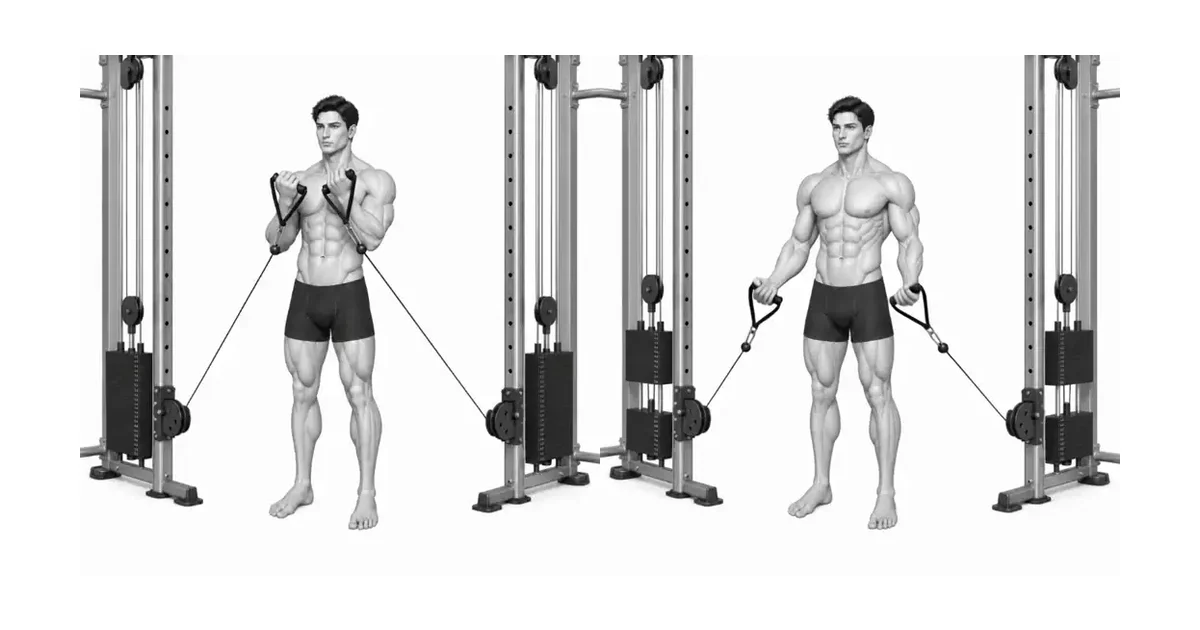
Exhale and curl the handles toward your ears while keeping your elbows stationary. Focus on the intense squeezing sensation in your biceps.
- 3
Peak contraction
Hold the fully curled position for 1-2 seconds to improve the contraction of the inner biceps.
- 4
Slowly extend (stretch)
Inhale and slowly return to the starting position, feeling the resistance of the cables. Extend fully without letting your shoulders rise.
SHORT HEAD PEAK DEVELOPMENT
The Secret to Biceps Peaks
The biceps brachii consists of a long head (outer) and a short head (inner). While standard curls with arms at your sides tend to emphasize the long head, lifting the arms to shoulder height as in the biceps cross makes the short head the primary mover. The short head provides the inner thickness of the arm and plays a crucial role in creating a high 'peak' when the biceps are flexed.
The most critical technical point is elbow positioning. If the elbows sway forward or backward, or drop toward the floor, the deltoids take over and the biceps isolation is lost. Imagine your elbows are fixed against a wall; only the forearms should move. Using a lighter weight with a perfect trajectory is far more effective than struggling with heavy loads.
RANGE, LOAD & TEMPO
Choose a range and load that keep the Cable Biceps Cross repeatable
The useful range of motion ends before your torso or working joints have to change position to move the load. Keep the biceps brachii (short head) producing the movement while the brachialis · forearms support the same alignment from the first repetition to the last.
Use a controlled lowering phase of about two to three seconds and avoid bouncing through the transition. If the final repetitions become shorter, faster, or visibly different from the first, reduce the load or stop the set before technique breaks down.
Key point: Progress the Cable Biceps Cross only after every repetition follows the same path without joint pain.
TROUBLESHOOTING
Fix the cause of a mistake, not just its appearance
Dropping the elbows
- What you see
- Elbows sagging toward the floor as you pull the handles.
- Likely cause
- Using a weight that is too heavy or fatigue in the medial deltoids.
- How to correct it
- Lower the weight and use a mirror to ensure your elbows remain level with your shoulders throughout the set.
Torso swaying
- What you see
- Rocking the upper body back and forth to generate momentum.
- Likely cause
- Lack of core stability.
- How to correct it
- Engage your abdominals to lock your torso in place and move only at the elbow joints.
REGRESSION & PROGRESSION
Match the difficulty before adding load
Single-Arm High Cable Curl
Perform the movement one arm at a time to increase focus and allow for a deeper range of motion.
Isometric Hold
Add a 3-5 second isometric hold at the peak of the contraction to challenge the neuromuscular system.
BEGINNER PROGRAM
A practical starting framework
The cable biceps cross adds the finishing touches to your arm development. Maintain a consistent tempo throughout.
Frequency
2 times per week
Ideal as a finishing isolation movement for a biceps-focused routine.
Volume
3 sets of 12-15 reps
Focus on the 'pump' and the quality of the contraction rather than maximal weight.
- Avoid excessive wrist flexion; keep a natural, strong grip.
- Consider stopping just short of full extension (90% open) to keep constant tension on the muscle.
- Exhale as you curl and inhale as you extend.
Frequently asked questions
Is this better than barbell curls?
Barbell curls are better for overall mass, while the biceps cross is better for shaping the inner line and peak. A well-rounded routine includes both.