CABLE CURL
An efficient curl exercise that maintains tension in the biceps and induces muscle hypertrophy through the constant resistance of the cable.
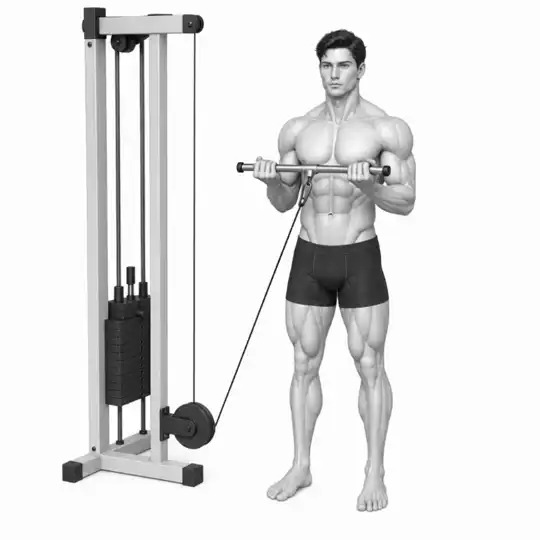
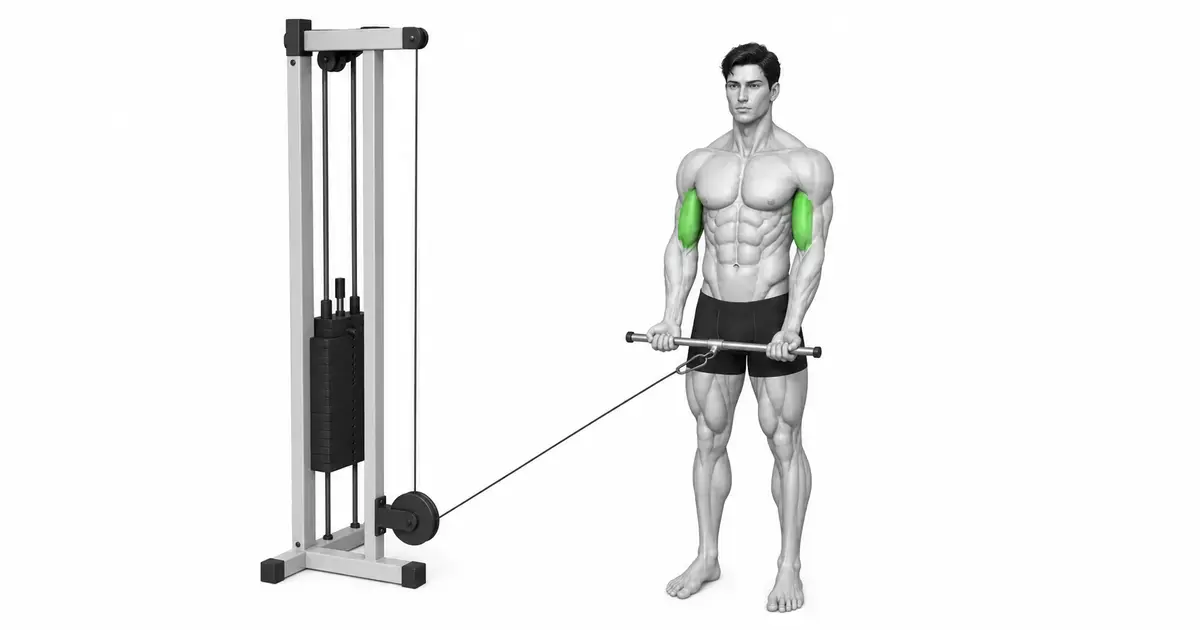
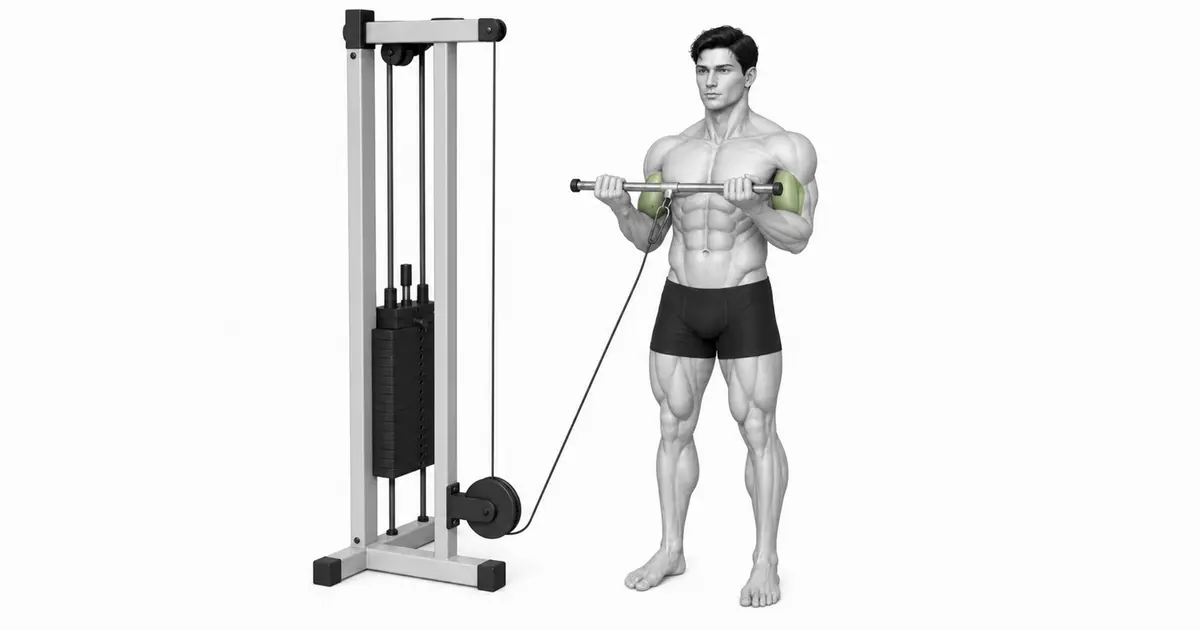
Set the cable machine's pulley to the lowest position and attach a straight bar or rope. Stand about one step away from the machine, holding the handle with both hands with an underhand grip. Keeping your elbows at your sides, exhale and raise the handles to chest level. Contract your biceps strongly at the top, then slowly return to the starting position, feeling the tension in the cable.
- Primary muscles
- Biceps Brachii
- Secondary muscles
- Brachialis · Brachioradialis · Forearms
- Difficulty
- Beginner
- Movement type
- Elbow Flexion
Is it better than barbell curls?
Barbells are good for heavy training, while cables are better for sustained tension and isolation. It's best to do a combination of both.
STEP BY STEP
4 Steps for One Complete Rep
- 1
Cable Settings and Grips
Align the pulley at the bottom and hold the bar. Stand upright with your chest out and your core tense.
- 2
Lift Handle
With your elbows pressed to your sides, raise the handle using your biceps. Minimize upper body shaking.
- 3
Vertex Contraction
At the highest point, squeeze your biceps and pause for 1 second. Feel the constant resistance of the cable.
- 4
Resisting and descending
Slowly extend your arms to avoid being dragged by the weight of the cable. Maintain muscle tension throughout.
CONSTANT MECHANICAL TENSION
Advantages of a cable that does not lose resistance
With barbell or dumbbell curls, the influence of gravity makes it easy for the muscles to relax at the bottom point when the arms are fully lowered. However, cable curls provide diagonal or horizontal resistance through pulleys, forcing your biceps to work constantly during all phases of the movement.
This sustained tension builds up intramuscular metabolites and improves the pumping effect, powerfully inducing hypertrophic growth. The effect is especially evident when performed with high repetitions at the end of the exercise routine.
RANGE, LOAD & TEMPO
Choose a range and load that keep the Cable Curl repeatable
The useful range of motion ends before your torso or working joints have to change position to move the load. Keep the biceps brachii producing the movement while the brachialis · brachioradialis · forearms support the same alignment from the first repetition to the last.
Use a controlled lowering phase of about two to three seconds and avoid bouncing through the transition. If the final repetitions become shorter, faster, or visibly different from the first, reduce the load or stop the set before technique breaks down.
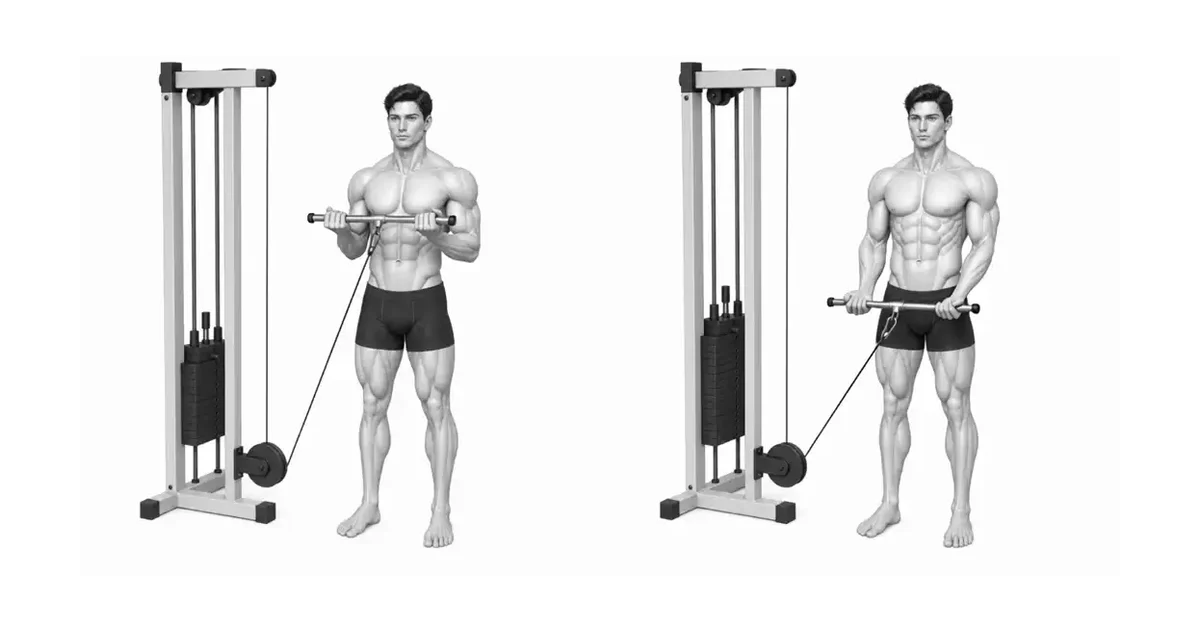
Key point: Progress the Cable Curl only after every repetition follows the same path without joint pain.
TROUBLESHOOTING
Fix the cause of a mistake, not just its appearance
Elbows forward
- What you see
- A movement in which the elbow moves forward away from the side when raising the handle.
- Likely cause
- Lift the weight using the front shoulder muscles.
- How to correct it
- Keep your elbows at your sides and move the handle only by bending your arm.
Excessive upper body recoil
- What you see
- Position of leaning back to lift weight.
- Likely cause
- Choosing a weight that is too heavy for you to handle.
- How to correct it
- Lower the weight and tighten your core and hips to keep your torso vertical.
REGRESSION & PROGRESSION
Match the difficulty before adding load
Rope Cable Curl
Using the rope, spread your hands outward at the top to induce maximum contraction of your biceps.
One Arm Cable Curl
Perform one arm at a time to more precisely feel the stimulation of each bicep and correct imbalances.
BEGINNER PROGRAM
A practical starting framework
Cable curls don't give your biceps a break. Perform rhythmically at a steady pace.
Frequency
1-2 times a week
Use as a finishing exercise or pumping exercise for your biceps.
Volume
3~4 sets, 12~15 times
We recommend appropriate weight and high repetitions to maintain consistent tension.
- Fully extend your arms at the bottom, but be careful not to touch the weight.
- Don't bend your wrists too far inward and keep them neutral.
- Breathe out when going up and inhale when going down.
Frequently asked questions
Which handle is best?
The straight bar is basic, the easy-bar type handle is comfortable for the wrists, and the rope is advantageous for maximum contraction.