CLAP PUSH-UP
The clap push-up is not a trick about clapping loudly—it is a power exercise about pushing fast and landing softer
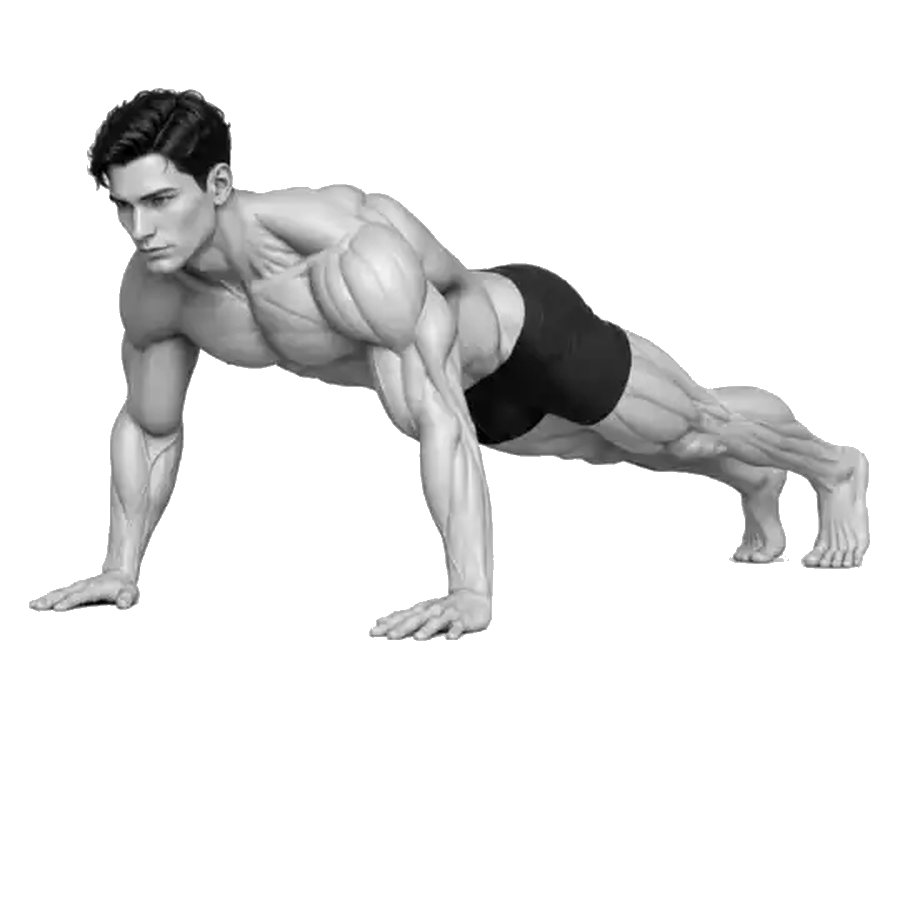
The movement demonstration on this page shows a descent into a straight plank, an explosive push off the floor that lifts both hands, a clap in front of the chest, and a fast return of the hands to land. This is not an entry-level exercise to attempt before you can control a standard push-up. Prioritize whether the chest and hips move together, whether both hands return beneath the shoulders before landing, and whether the elbows absorb the impact—not how high you fly. When power drops and your hand placement or landing starts to fall apart, end the set even if you have repetitions left on your target.
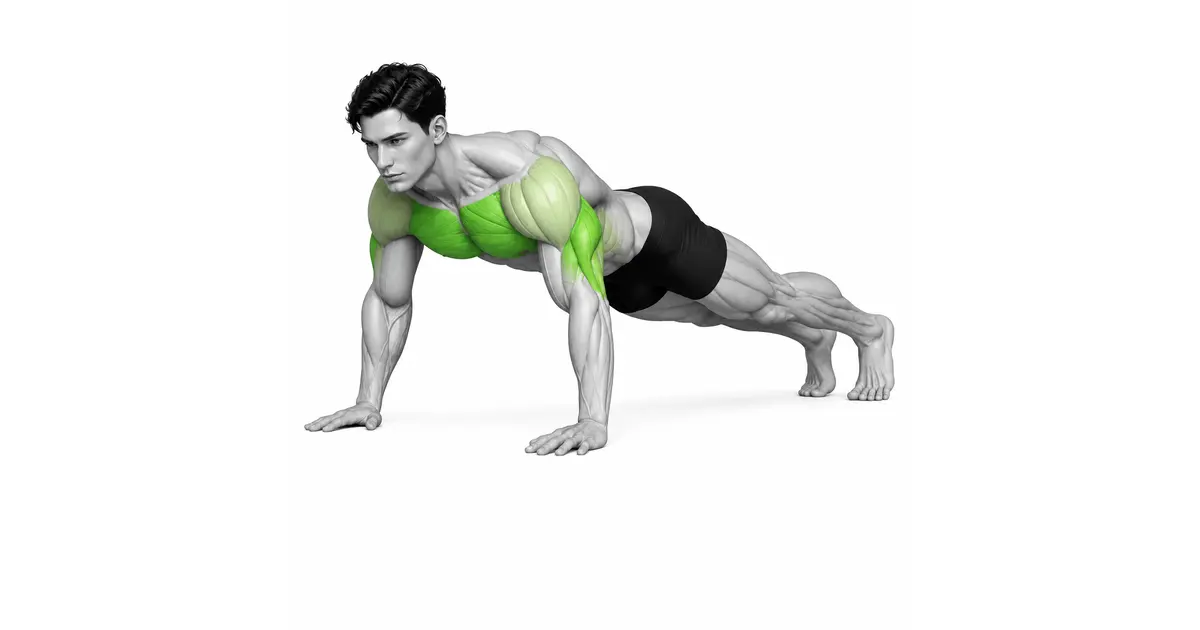
- Primary muscles
- Pectoralis major · triceps
- Secondary muscles
- Anterior deltoids · serratus anterior · core
- Difficulty
- Advanced
- Movement type
- Explosive horizontal press
How many standard push-ups should I be able to do before trying the clap push-up?
There is no absolute number, but at minimum you should be able to control standard push-ups across several sets without your trunk sagging. After that, treat it as a more important readiness standard whether you can return your hands to the same spot and land quietly in a plyometric push-up without a clap.
STEP BY STEP
5 Steps for One Complete Rep
- 1
Check the floor and the space around you
Choose a firm, non-slip surface and remove anything that would interfere with your hands landing, such as a watch or rings. Make sure you have enough room that your hands will not hit an obstacle if they travel forward, and place this early in the session while you are fresh.
- 2
Build a firm plank and hand position
Place the hands slightly wider than the shoulders and spread the fingers to press into the floor. Adjust your foot spacing so you can hold your balance, squeeze the glutes, and stack the ribs over the pelvis to build one line from head to heels.
- 3
Lower the chest and hips together under control
Inhale and bend the elbows roughly 30–60 degrees from the torso. Lower the whole body as one piece so the stomach or hips do not drop first, and change direction at a comfortable depth from which you can push the floor away hard.
- 4
Push the floor away fast and clap in the air
Holding tension through the chest, triceps, and trunk, push the floor away as fast as you can to lift both hands. As in the demonstration, clap briefly in front of the chest only once your hands are well clear, and do not arch the low back or lift your head to make the clap happen.
- 5
Return the hands first, then land softly
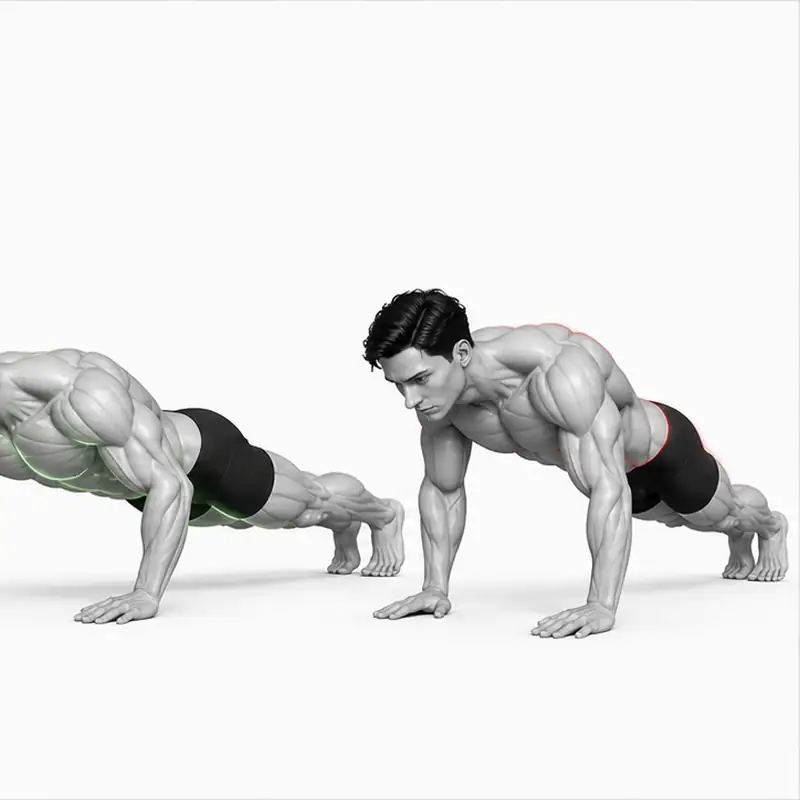
Immediately after the clap, spread both hands quickly back beneath the shoulders. The moment the palms contact the floor, bend the elbows softly to absorb the impact and let the chest and hips descend together. Start the next repetition only once your position is stable.
LOAD & TAKEOFF
Fast force production and a single-piece trunk come before depth
The purpose of a plyometric push-up is not to extend the arms slowly to full lockout—it is to produce large force in a short time to separate the hands from the floor. But if the trunk collapses first on the descent, force from the chest and triceps never reaches the floor. Hold the same plank as a standard push-up and change direction without lingering at a depth you can control.
Adding external load does not necessarily produce more power. In a study of trained men, the bodyweight-only plyometric push-up showed higher mean and peak power than several external loading conditions. For this exercise it is more practical to log takeoff speed and the quality of each repetition than to add weight.
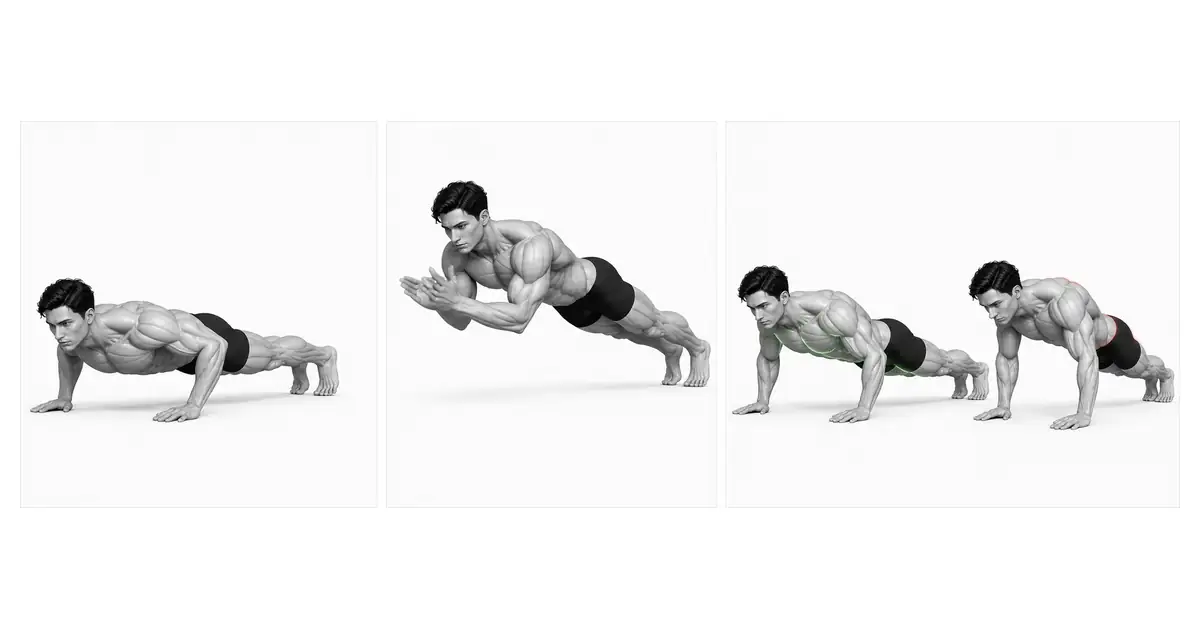
Key point: Practical cue: “Descend with the whole body → push the floor away fast → clap only after the hands are airborne.”
FLIGHT & CLAP
The clap is a layer you add only once you have enough air time
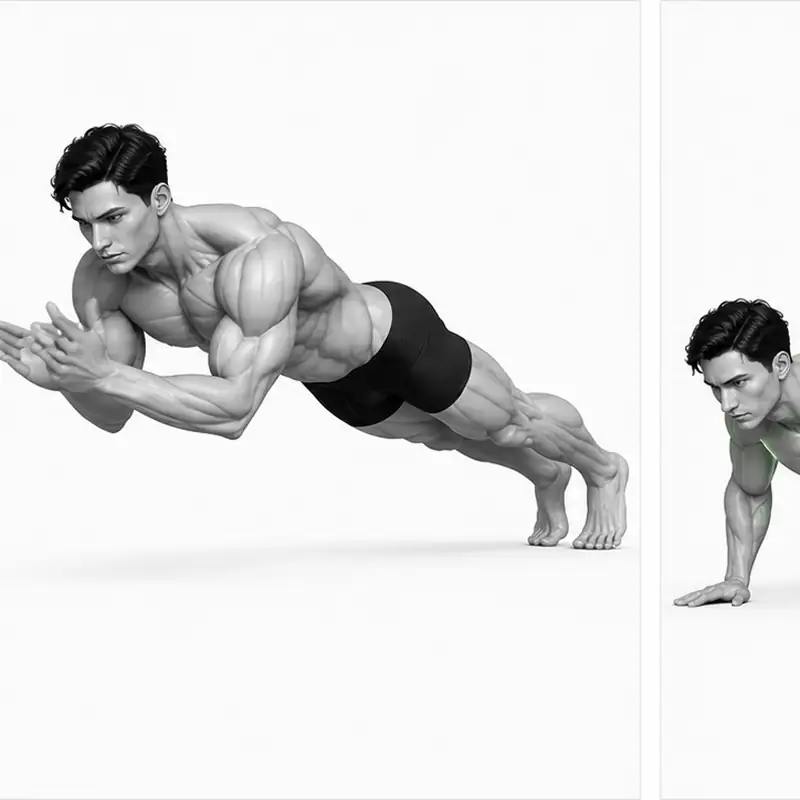
If your hands leave the floor but there is not enough time to clap and spread them again, practice the lower plyometric push-up where you simply lift the hands first. Forcing a clap makes the hands return late, so the wrists and elbows take the impact abruptly. Hold abdominal and glute tension in flight too, so the low back does not arch and the feet do not lift excessively.
Hand width can change your force and movement characteristics, but no single width is right for everyone. Start slightly wider than the shoulders and find the width where your hands return to the same spot on takeoff and landing and the wrists and shoulders stay comfortable. If your hands creep forward every repetition, it is landing control—not power—that broke down first.
LANDING
A good repetition is judged by a quiet landing, not by takeoff height
Right after the clap, spread the hands so the fingers and the whole palm receive the floor together. Landing with the elbows locked leaves less time to absorb the impact. Bending the elbows softly at contact and letting the chest and hips descend together flows naturally into the next descent.
Upper-body plyometric training is used to improve power and some performance measures, but the effect depends on repetition quality and sensible programming. Treat it differently from a muscular-endurance set pushed to the edge of failure. When flight height drops, the hands return more slowly, or the landing gets louder, end the set and recover fully.
TROUBLESHOOTING
Fix the cause of a mistake, not just its appearance
The hands return late because of the clap
- What you see
- The hands land well ahead of or outside the shoulders and the upper body drops abruptly to the floor.
- Likely cause
- You may be forcing the finished movement without enough air time to clap.
- How to correct it
- Drop the clap and practice the plyometric push-up where the hands lift low and return to the same spot.
Locking the elbows on landing
- What you see
- The arms are straight at the moment the hands touch and the impact travels directly into the wrists, elbows, and shoulders.
- Likely cause
- You may be rushing into the next repetition or trying to hold the body far from the floor.
- How to correct it
- Bend the elbows softly the instant the hands land so the landing is quiet. Rebuild your position between repetitions.
The low back arches and the hips follow late
- What you see
- The chest lifts but the stomach and hips stay down, or the low back bends sharply on landing.
- Likely cause
- Trunk support from the standard push-up may be insufficient, or fatigue may have released the plank.
- How to correct it
- Regress to a standard push-up or an incline explosive push-up, and move the chest and hips together with the ribs stacked over the pelvis.
The elbows flare to 90 degrees out to the sides
- What you see
- From above the body and arms form nearly a T shape and the front of the shoulder is uncomfortable on landing.
- Likely cause
- The hands may be placed too high, or you may be spreading the arms to generate more rebound.
- How to correct it
- Bring the hands back near the chest line and keep the elbows roughly 30–60 degrees from the torso.
Forcing repetitions while fatigued
- What you see
- Flight height drops with each rep, the landing gets louder, and hand placement changes.
- Likely cause
- You are treating a power exercise like a high-rep endurance exercise taken to failure.
- How to correct it
- End the set the moment you cannot hold the same height, trunk position, and landing as the first repetition, and rest 2–3 minutes.
REGRESSION & PROGRESSION
Match the difficulty before adding load
Incline explosive push-up
Put the hands on a sturdy bench or box and push fast, practicing the same trunk alignment even if the hands do not leave the surface.
Knee plyometric push-up
Support on the knees, lift the hands briefly, and land softly in the same position.
Low-flight push-up
From a toes-down plank, lift the hands low and return them beneath the shoulders without a clap.
Clap push-up
Add a short clap in the air only once you have enough air time and a stable landing.
BEGINNER PROGRAM
A practical starting framework
Perform it early in the session while the upper body is fresh, after 5–10 minutes of full-body warm-up and wrist and shoulder preparation. Use only a low rep count you can complete with the same takeoff height and landing as the first repetition, and never train to failure.
Reps
3–5
Hold flight and landing quality on every repetition
Sets
3–5
Rest 2–3 minutes for full recovery between sets
Frequency
1–2 sessions per week
Ensure recovery between high-intensity upper-body sessions
- End the set immediately if your hands lift noticeably less than on the first repetition or you cannot return them to position after the clap.
- Add one set or one repetition the following week only when every set finished with a quiet landing, and never increase both at once.
- Log the number of successful high-quality repetitions rather than a clap count, and keep it separate from fatiguing sets of standard push-ups or bench pressing.
Frequently asked questions
What if my hands lift but I do not have time to clap?
Drop the clap. Simply lifting the hands briefly and returning them to position still lets you practice explosive pushing and landing. Adding a short clap once your air time improves is safer for the wrists and shoulders.
Is the clap push-up an exercise for building chest muscle?
It uses the pectoralis major and triceps, but its main purpose is fast force production and power training for the upper body. It is practical to cover enough weekly volume for hypertrophy with controlled standard push-ups or pressing exercises and to place the clap push-up as a low-rep, high-quality power exercise.
Evidence and references
- 1. NASM — Plyometric Push-Up Exercise Library
- 2. Koch et al. — Plyometric push-up power under external loading
- 3. Dhahbi et al. — Hand width and plyometric push-up performance
- 4. Kikuchi & Nakazato — Kinematics and kinetics of push-up variations
- 5. Systematic review of upper-body plyometric training effects