CROSS BODY CURL
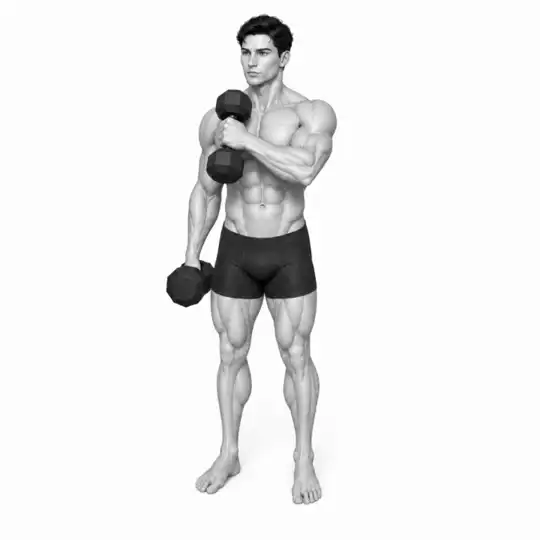
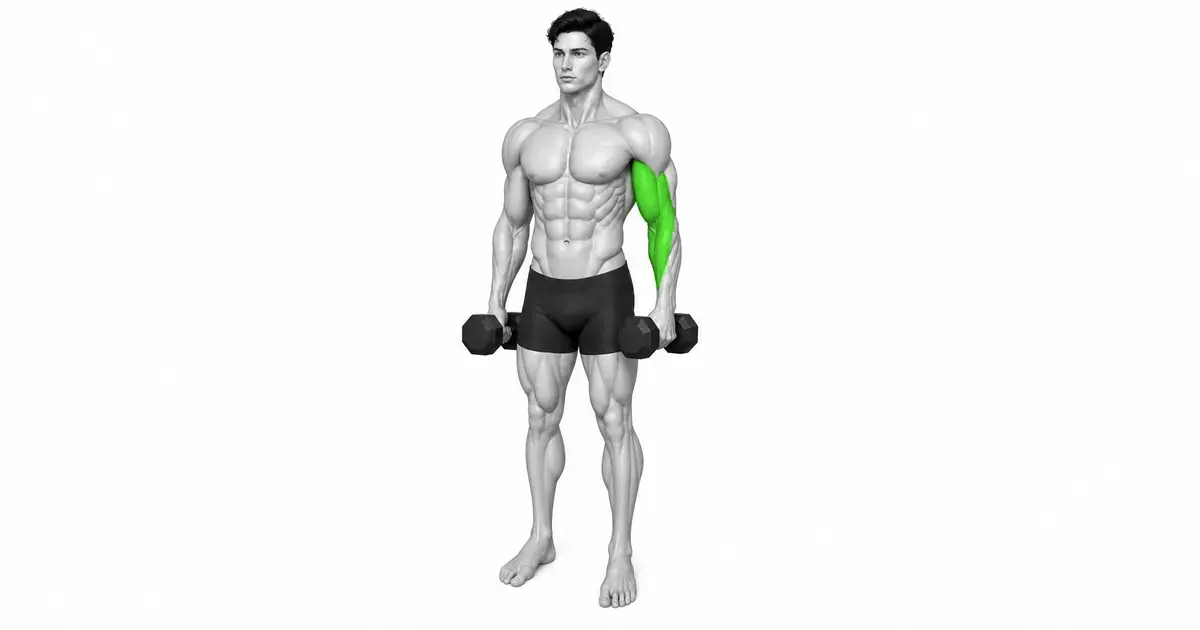
The cross body curl strengthens the connection between the brachialis and forearm by sending the dumbbell to the opposite chest.
Alternate curls where you raise the dumbbell toward the opposite chest while maintaining a neutral grip with your palm facing your torso. Many people find it comfortable with greater involvement of the brachialis and brachioradialis muscles and less wrist rotation. Rather than making a large diagonal path, it is important to move only your forearms across, keeping your elbows next to your torso.
- Primary muscles
- Brachialis muscle, brachioradialis muscle
- Secondary muscles
- Biceps brachii·Forearm flexors
- Difficulty
- Intermediate
- Movement type
- Neutral Grip Elbow Bend
How is it different from a regular hammer curl?
Both use a neutral grip, but the regular hammer curl raises the dumbbell to the same shoulder, and the crossbody curl raises the dumbbell to the opposite chest. Select a range that does not cause your torso to rotate.
STEP BY STEP
4 Steps for One Complete Rep
- 1
Stand with neutral grip
Hold a dumbbell in both hands with your palms facing your thighs. Keep your ribs and pelvis stacked and your shoulders away from your ears.
- 2
Raise one dumbbell diagonally
Exhale and bend one elbow, sending the dumbbell towards the opposite chest or under the collarbone. Keep your palms facing inward.
- 3
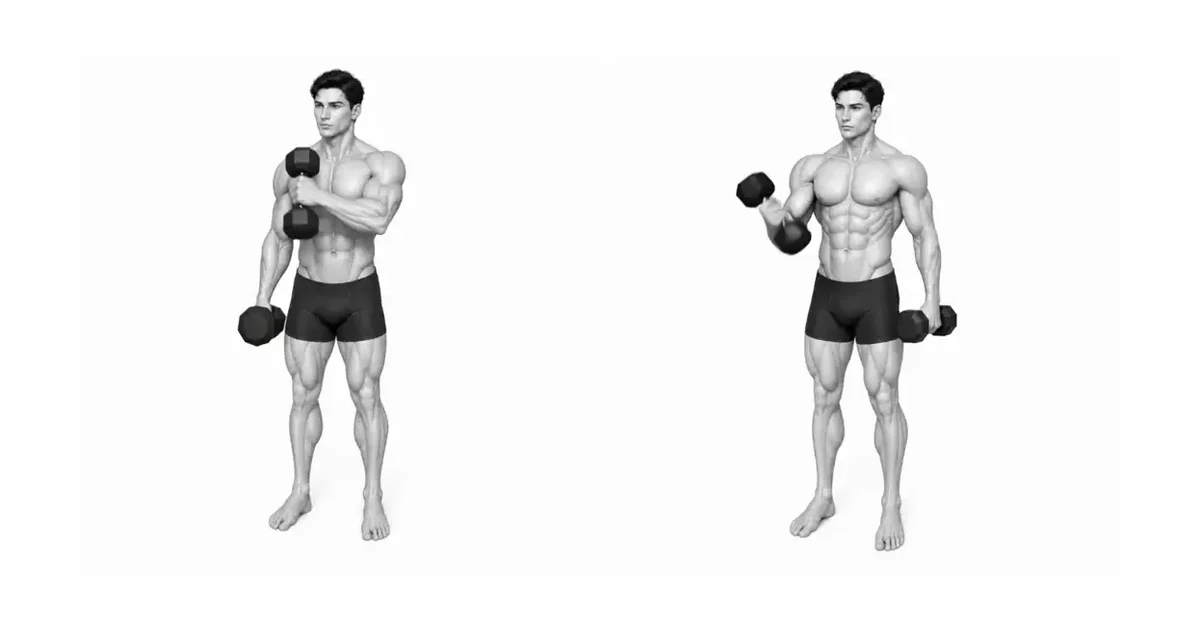
Stop before elbow moves
Feel the contraction of the brachialis muscle and forearm as the upper arm follows the front of the torso or stops at a point just before the shoulder rolls.
- 4
Take control and do the other side
Lower the dumbbells in the same path over about 2 seconds and then perform the opposite side after your arms are stable. Do not twist your torso from side to side to face the dumbbells.
DIAGONAL PATH
The diagonal is the forearm path, not the torso rotation
Put the dumbbells in a natural diagonal line toward the front of your chest, not directly above your opposite shoulder. Your elbows should remain next to your ribs and your torso should remain straight ahead.
Handling the dumbbells too far across can cause your shoulders to roll inward and your wrists to buckle. Use short, comfortable routes that fit your arm length.
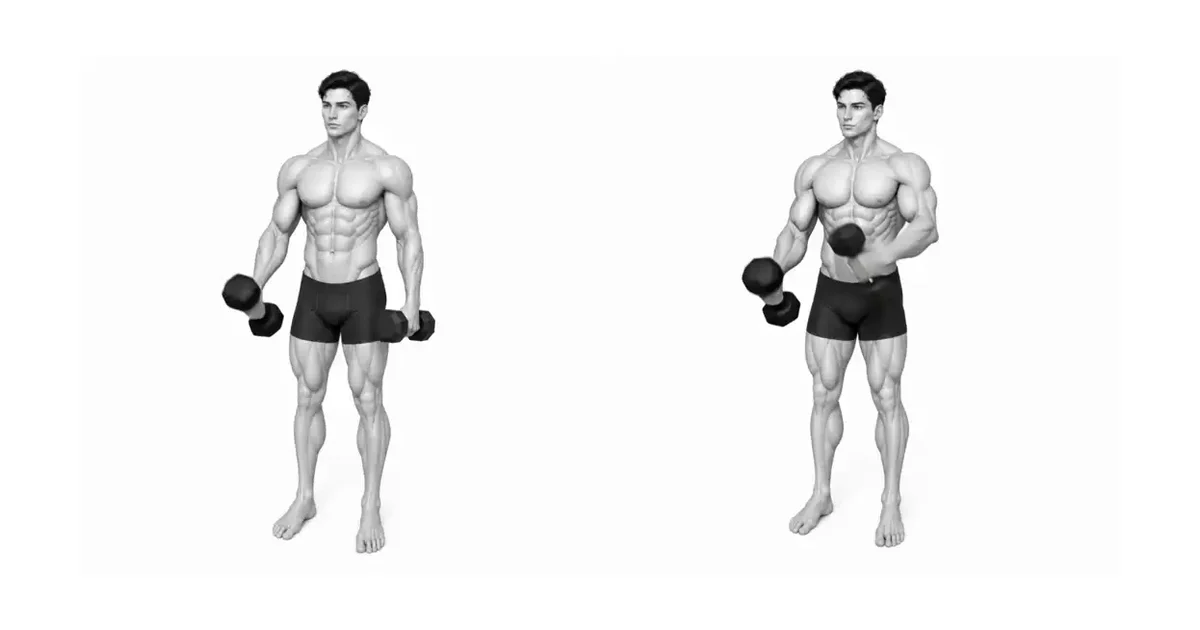
Key point: Cue to use right away: “Elbows by your sides, dumbbells on the opposite side of your chest.”
NEUTRAL GRIP
Keep the handle vertical so your wrists and forearms are in line
Neutral grip increases brachioradialis and brachialis involvement and reduces wrist rotation demands. Hold the dumbbells in the center of the handle to avoid tilting them or curling your wrists toward your little fingers.
If your grip loosens first, adjust your repetition speed and handle position for heavier dumbbells. Grip strength may be a limiting factor, but it doesn't necessarily have to be compensated with a strap.
TROUBLESHOOTING
Fix the cause of a mistake, not just its appearance
Twist the torso to the opposite side.
- What you see
- When the dumbbells are raised, the shoulders and chest rotate together.
- Likely cause
- Weight that exaggerates diagonal range or is difficult to control with one arm.
- How to correct it
- Tighten your abs and hips and reduce your range of motion. Look in the mirror and make sure both shoulders are facing straight ahead.
Elbows follow forward
- What you see
- At the top, the elbows leave the ribs and move toward the front of the chest.
- Likely cause
- Try to raise the dumbbells to your collarbone or continue pulling them to your shoulders after you finish contracting your biceps.
- How to correct it
- Stop just before your elbows move and slowly lower the dumbbells. The weight is also lowered.
Wrist bent to the side
- What you see
- Dumbbells are tilted and strain is felt on the outside or inside of the wrist.
- Likely cause
- The handle is held off to one side or the diagonal path is too large.
- How to correct it
- Hold the center of the handle and keep the back of your hand and forearm in one line. Raise it only to a comfortable chest height.
REGRESSION & PROGRESSION
Match the difficulty before adding load
Two-arm hammer curl
Learn neutral grip and wrist alignment first.
Alternating Hammer Curl
Creates the ability to anchor the torso with one arm at a time.
Cross Body Curl
Combines a short diagonal path and elbow fixation.
Tempo Cross Body Curl
Strengthens left and right control and grip strength with a 3-second descent.
BEGINNER PROGRAM
A practical starting framework
If performing in conjunction with other bicep curls, start with 2-3 sets to account for total elbow flexion volume. Keep the number of left and right repetitions and speed the same.
Count
8–12 times/side
Alternate by controlling one side at a time
Set
2–3 sets
60–90 seconds recovery between sets
Frequency
1–2 times a week
Combine volume with other curl exercises
- Start with the weak side and stop at the same number of repetitions on the strong side.
- If you experience torso rotation or elbow shift, lower the weight and reduce the diagonal range.
- If you have wrist or elbow pain, adjust your neutral grip width and top height and avoid the pain range.
Frequently asked questions
Is it a biceps or forearm exercise?
The brachialis, brachioradialis, and biceps brachii muscles work together to flex the elbow. Although it may feel like there is a lot of forearm involvement due to the neutral grip, it is a flexion exercise for the entire arm.
Can I use both arms at the same time?
Possible, but if you do them alternately, it's easy to check the diagonal path of one dumbbell and inhibit torso rotation. After becoming familiar with the movements, select them according to your purpose.