DEADLIFT
The deadlift is not a movement that mimics a perfect position; it is a movement that involves keeping the bar close and controlling your hips and torso.
Deadlift is a full-body resistance exercise that involves lifting a barbell from the floor while extending your hips and knees. Although safety or risk of injury cannot be determined based on spine position alone, a practical standard is to keep the bar close to the body and control the movements of the torso and hip joints in a pain-free range in a repeatable manner. Do not use a heavy load from the beginning, but first familiarize yourself with foot pressure, bar path, and breathing with an empty bar or light load.
- Primary muscles
- Gluteus Maximus · Erector Spinae
- Secondary muscles
- Hamstrings · Quadriceps · Latissimus Dorsi · Forearm Flexors
- Difficulty
- Beginner
- Movement type
- Hip Hinge
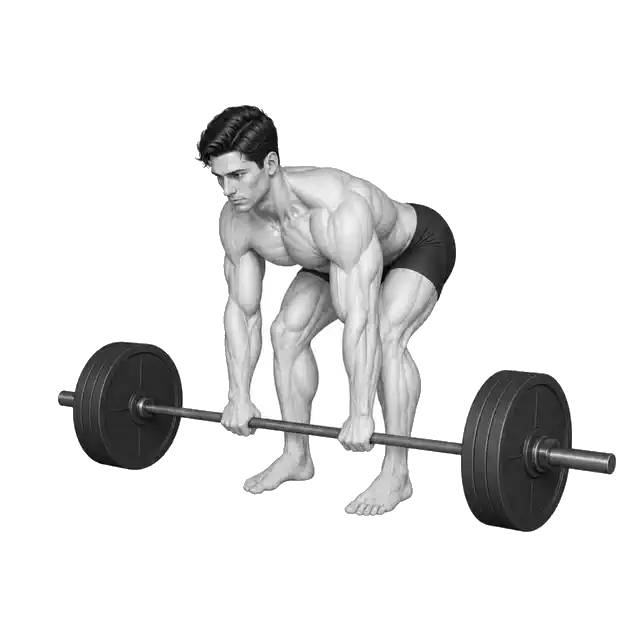
Does the spine have to be completely neutral in the deadlift?
Safety cannot be determined by just one appearance. Maintaining repeatable trunk control and bar path in the pain-free range is a more practical criterion.
STEP BY STEP
6 Steps for One Complete Rep
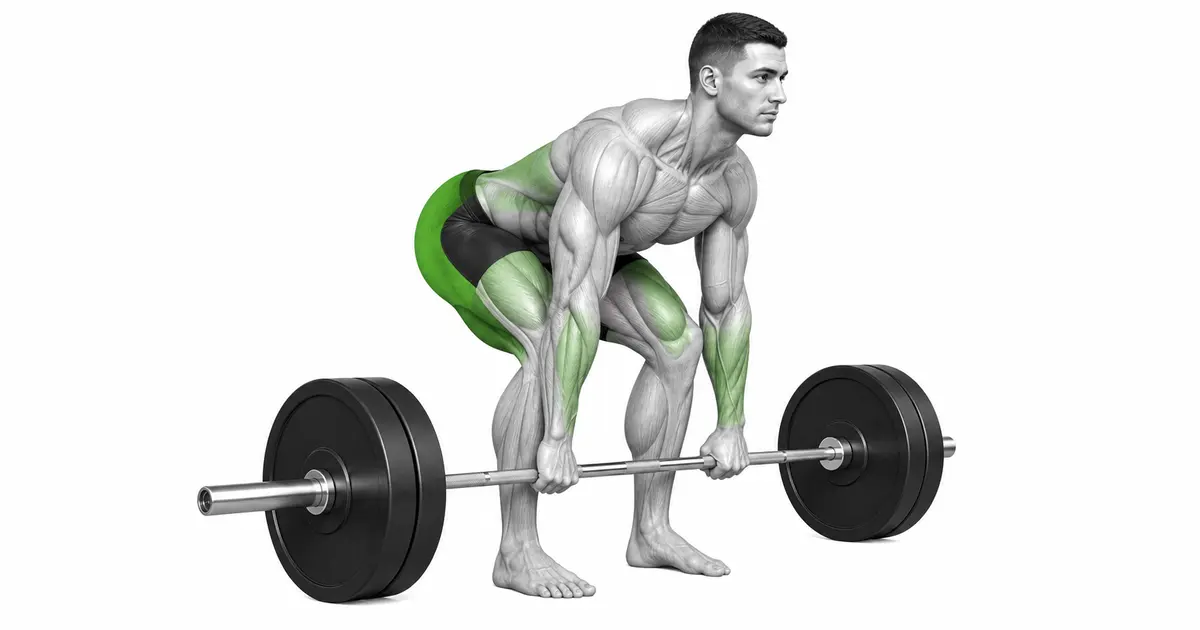
- 1
Place the bar over the middle of your feet
Stand with the barbell over the middle of your feet and place pressure on the entire sole of your feet. Do not start by rolling the bar away from your feet.
- 2
Send your hips back to reach the bar.
Bend your knees as much as necessary and send your hips back. Do not bend or squat sharply at the waist to grab the bar.
- 3
Keep your torso steady and hold the bar close to your body.
Inhale to firm your abdomen and torso. Keep your wrists neutral, do not pull your arms, and keep the distance between the bar and your shins small.
- 4
Press your feet into the floor and straighten your knees and hips together
Raise the bar close to your legs without moving it away from your body. Don't just pop your hips first or pull the bar with your arms.
- 5
Maintain balance while standing, but do not arch your back excessively.
Straighten your knees and hips and raise your body tall. There is no need to lean back or shrug your shoulders to climb further at the top.
- 6
Send your hips back first to control the bar.
As you come down, drive your hips back and lower the bar closer to your thighs and shins. Do not drop the bar and end the set if you feel pain or loss of balance.
BAR PATH
The further away the bar is, the greater the control demands.
The bar moves as close to the legs as possible. As the bar moves further forward, it becomes easier to lose balance between torso and foot pressure.
The goal is not to force the bar to rub against your shins. Find a nearby route that can be repeated without skin or joint discomfort.
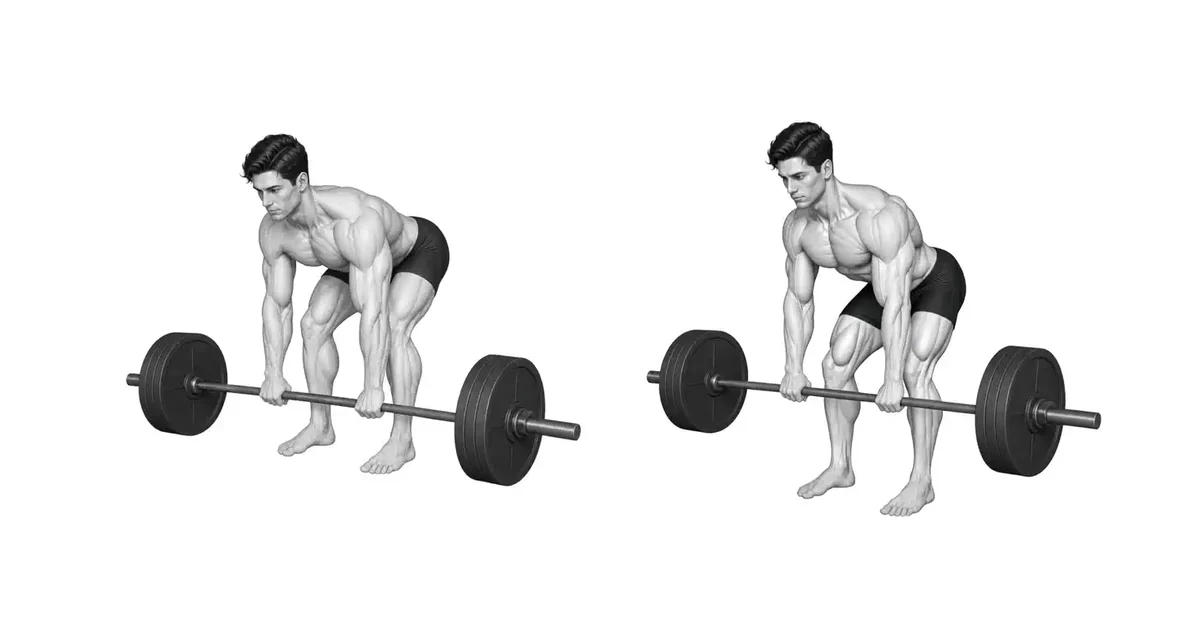
Key point: Practice cue: “Keep the bar close to your body and push into the floor.”
HINGE & BRACE
Hip hinge and torso fixation are recreated with each repetition.
By keeping your hips back and your abdominals primed, you can clear the role of your torso and lower body before lifting the bar. It does not force a single spine shape.
If the current load causes loss of trunk control or pain, lower the range, load, and number of repetitions.
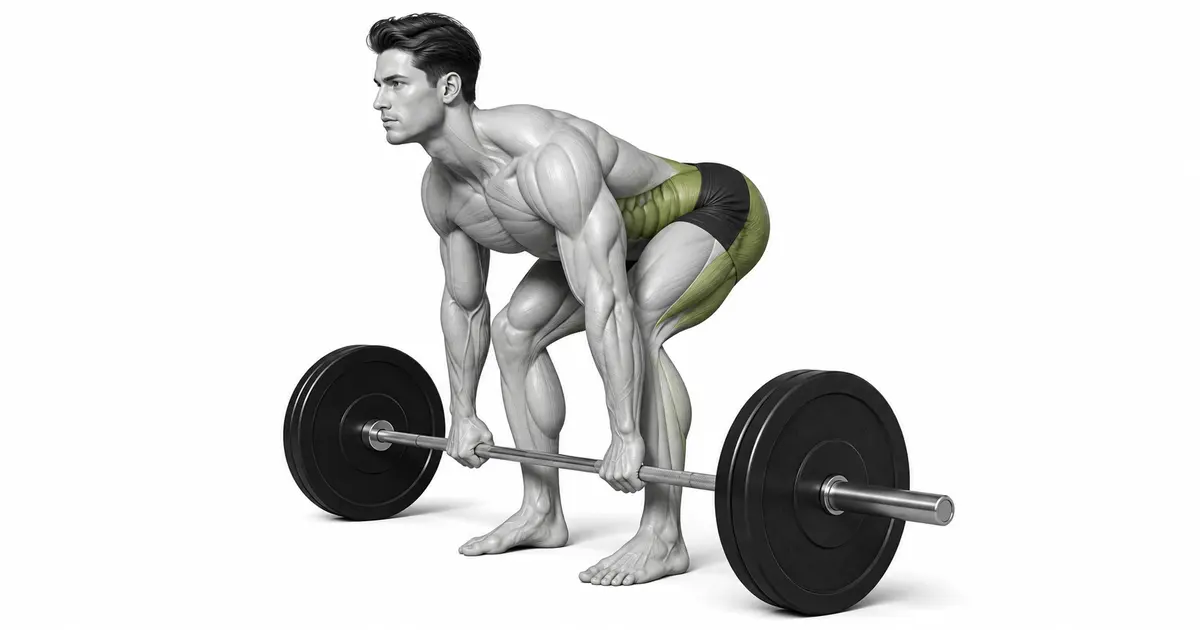
Key point: Points to check: Prepare for breathing and fix the torso and foot pressure before the bar rises.
LOAD CONTROL
If technique falters, choose repeatable range over load
Your form may change under heavy loads, but if you are losing balance with the bar path with each repetition, your current load may be out of control.
Do not increase the number of repetitions, load, or range all at once. When reproducing the same route without pain, just raise one variable slightly.
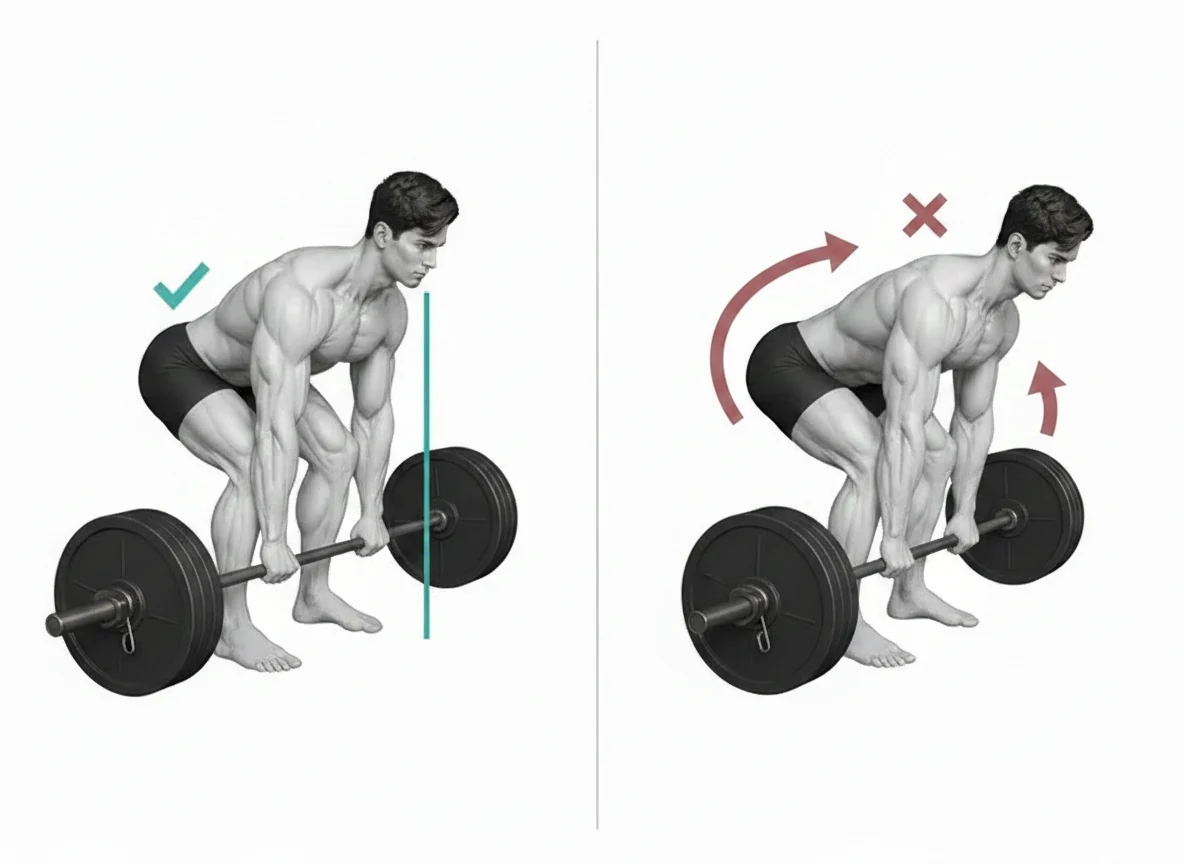
Key point: Progression rule: If the bar moves away or becomes unbalanced, end the set and lower it in the next set.
TROUBLESHOOTING
Fix the cause of a mistake, not just its appearance
The bar moves away from your feet.
- What you see
- The bar moves forward and away from the shins.
- Likely cause
- The starting position or hip hinge may be disturbed.
- How to correct it
- Place the bar back over the middle of your feet and bring it closer to your legs on the descent.
Only the buttocks pop up first.
- What you see
- Your knees extend first before the bar lifts off the floor.
- Likely cause
- You may lack control in pushing your legs and hips together against the floor.
- How to correct it
- Lower the load and re-establish torso and foot pressure before the bar moves.
Excessively arching the lower back at the top
- What you see
- Lean your torso further after standing.
- Likely cause
- You can try to finish the top higher.
- How to correct it
- Stop in a balanced standing position with your hips and knees extended.
pull the bar with your arms
- What you see
- Your elbows are bent or your shoulders are shrugged.
- Likely cause
- You can lift the bar with your arms instead of your legs and hips.
- How to correct it
- Start by keeping your arms long and pressing into the floor.
drop the bar
- What you see
- You have no control over the bar path on the descent.
- Likely cause
- Fatigue or current load may be out of control.
- How to correct it
- Reduce your descent speed and lower the load if necessary.
Mistaking pain for fatigue
- What you see
- There is sharp pain or numbness in the lower back, hips, or knees.
- Likely cause
- Joint or nerve symptoms may have been interpreted as muscle fatigue.
- How to correct it
- Stop immediately and consult a specialist if symptoms persist.
REGRESSION & PROGRESSION
Match the difficulty before adding load
rod hinge
Learn to move your hips back with a light bar.
empty bar deadlift
Repeat the bar path and torso preparation at a lower load.
light barbell deadlift
Add small loads only if the same bar path is maintained.
regular deadlift
Proceed when balance and controlled descent are maintained for all repetitions.
BEGINNER PROGRAM
A practical starting framework
Practice 1–2 times a week with sufficiently recoverable load. For the first two weeks, prioritize bar path and pain-free repetitions over weight.
Repetitions
5–8 reps
Bar path and range of balance
Sets
2–3 sets
Rest 2–3 minutes between sets
Progression
+1–2 reps or +2.5–5 kg
Add only one thing when all iterations are stable
- The criteria for the next session is to have the bar close to the body and pain-free and balanced until the last repetition.
- If the bar path strays or you lose torso/foot pressure, end the set and lower on the next set.
- There is a distinction between muscle fatigue and sharp pain, numbness, and dizziness. Do not continue if you have symptoms.
Frequently asked questions
Should the bar always touch your shins?
Keep the bar close to your body, but don't rub it so hard that it hurts your skin. Find a route nearby that is controlled and hassle-free.
Should I tilt it back at the top?
No. Finish in a balanced standing position with your hips and knees extended. There is no need to arch your back further to gain height.
What if the grip loosens first?
Lower the load and return to a controllable number of repetitions on the bar. Grip aids do not replace basic bar path and torso control.
Can I continue if my back is tired?
Muscle fatigue and sharp pain and numbness are different. Discontinue immediately if joint or nerve symptoms occur.