DECLINE DUMBBELL PRESS
The decline dumbbell press is the key movement for defining the lower chest line
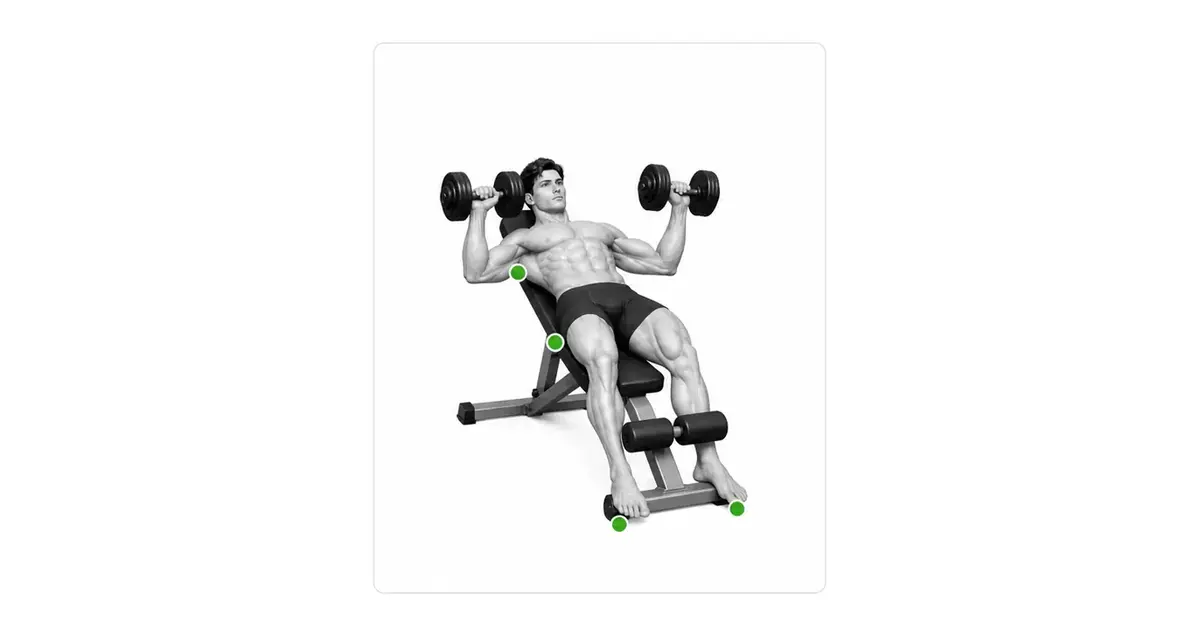
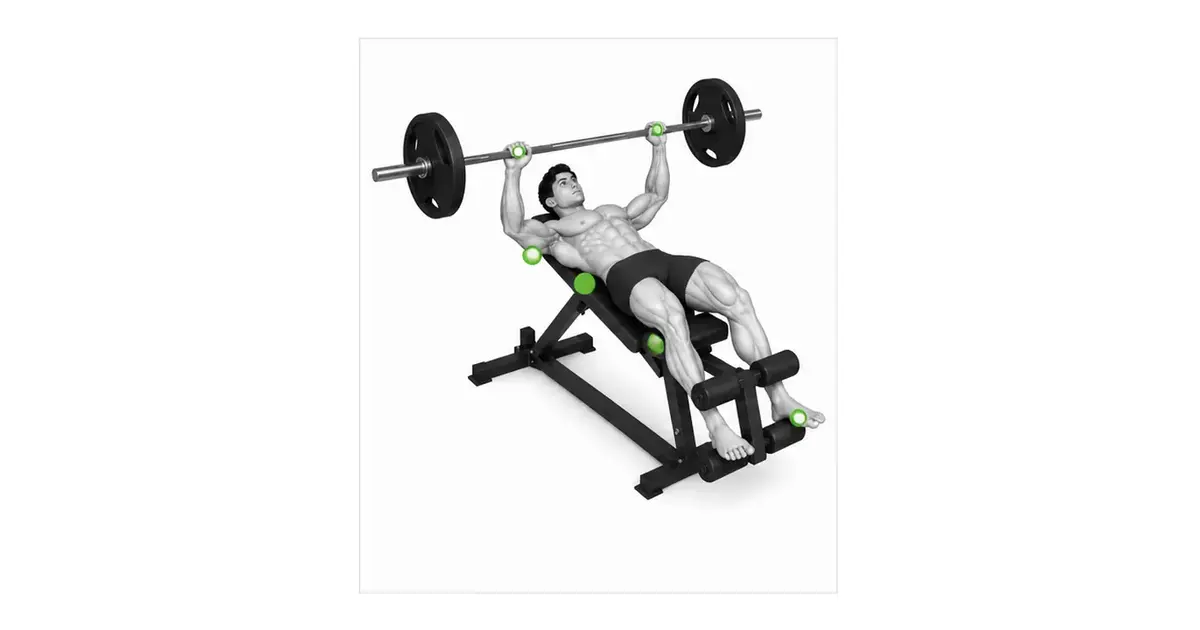
The decline dumbbell press is a pressing movement performed with a downward tilt, precisely targeting the lower fibers of the pectoralis major. The independent movement of dumbbells improves the range of pectoral contraction while minimizing shoulder involvement, delivering a more targeted load to the chest muscles themselves.
- Primary muscles
- Lower pectoralis major (sternal head)
- Secondary muscles
- Triceps · anterior deltoids
- Difficulty
- Intermediate
- Movement type
- Decline press
Can I build a big chest with only lower chest exercises?
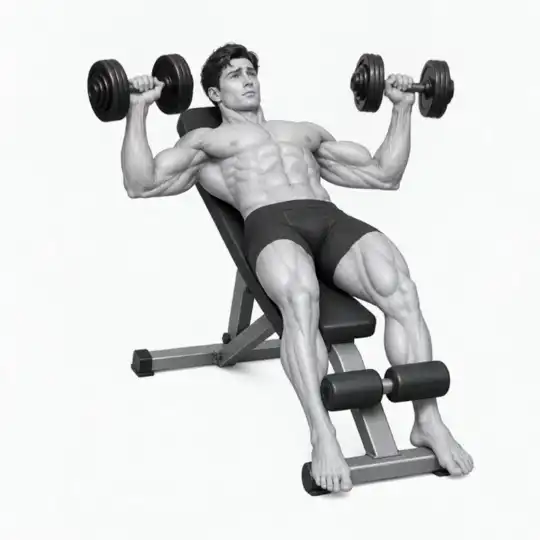
No. For overall chest mass, you must combine flat and incline presses with decline movements.
STEP BY STEP
4 Steps for One Complete Rep
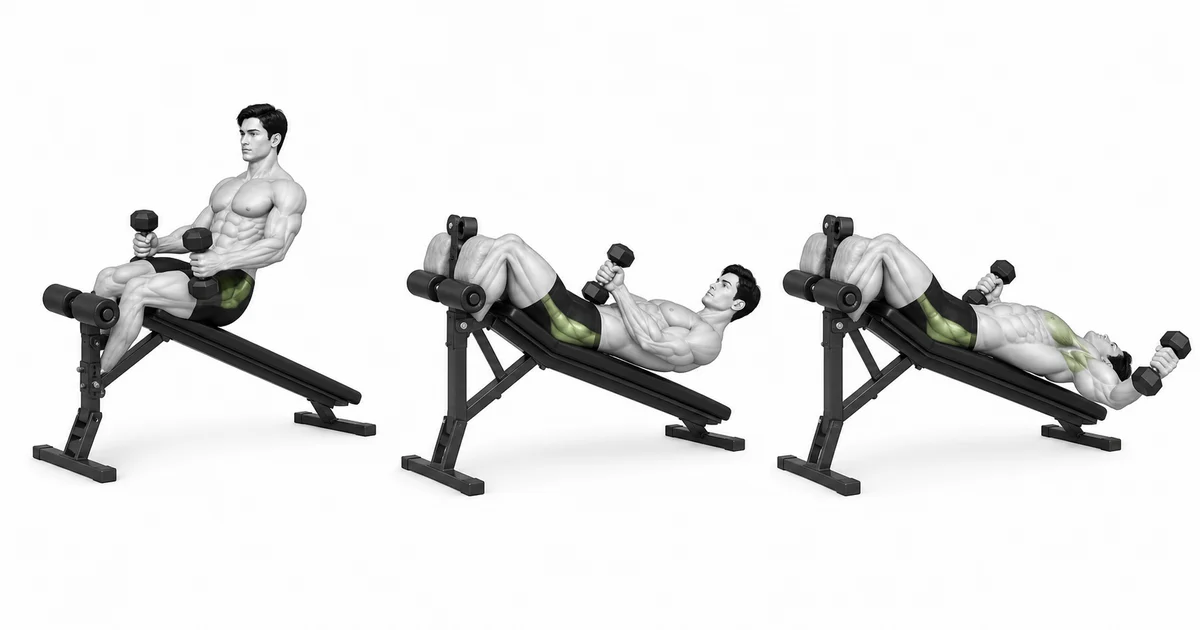
- 1
Bench Angle Setup
Set the bench to a decline angle of approximately 15–30 degrees and secure your feet firmly in the footpads.
- 2
Dumbbell Positioning
Lie back with dumbbells and position them at the sides of your lower chest. Keep your forearms vertical to the floor.
- 3
Press & Contraction
Exhale as you press the dumbbells straight up. Contract as if bringing them toward the center of your chest.
- 4
Controlled Eccentric
Inhale as you slowly lower the dumbbells back to the sides of your chest. Stretch only within a pain-free range for the shoulders.
LOWER PEC FOCUS
The Decline Path for Lower Chest Definition
The decline angle shifts the line of force toward the lower fibers of the pectoralis major. This reduces anterior deltoid involvement compared to flat benching, allowing for more targeted chest loading.
Ensure the dumbbells travel along the lower chest line rather than the upper sternum. Maintain an elbow angle of 45–60 degrees relative to your torso for safety and power.
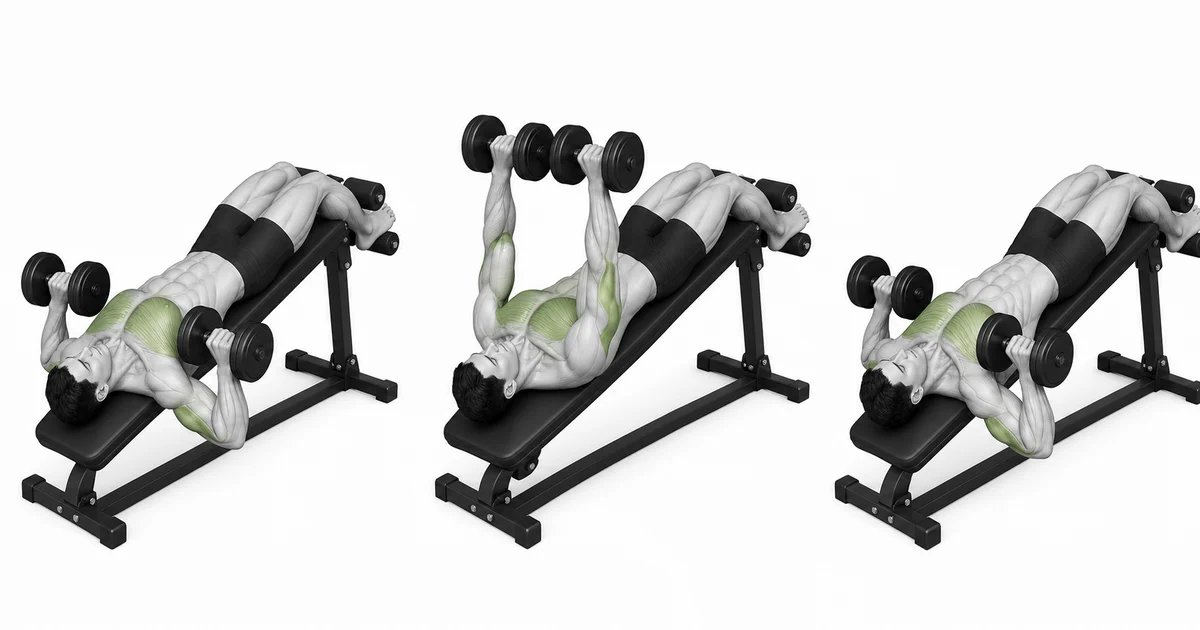
Key point: Practical Tip: When pressing, don't just push up; think about bringing your biceps toward the sides of your chest for a stronger peak contraction.
RANGE, LOAD & TEMPO
Choose a range and load that keep the Decline Dumbbell Press repeatable
The useful range of motion ends before your torso or working joints have to change position to move the load. Keep the lower pectoralis major (sternal head) producing the movement while the triceps · anterior deltoids support the same alignment from the first repetition to the last.
Use a controlled lowering phase of about two to three seconds and avoid bouncing through the transition. If the final repetitions become shorter, faster, or visibly different from the first, reduce the load or stop the set before technique breaks down.
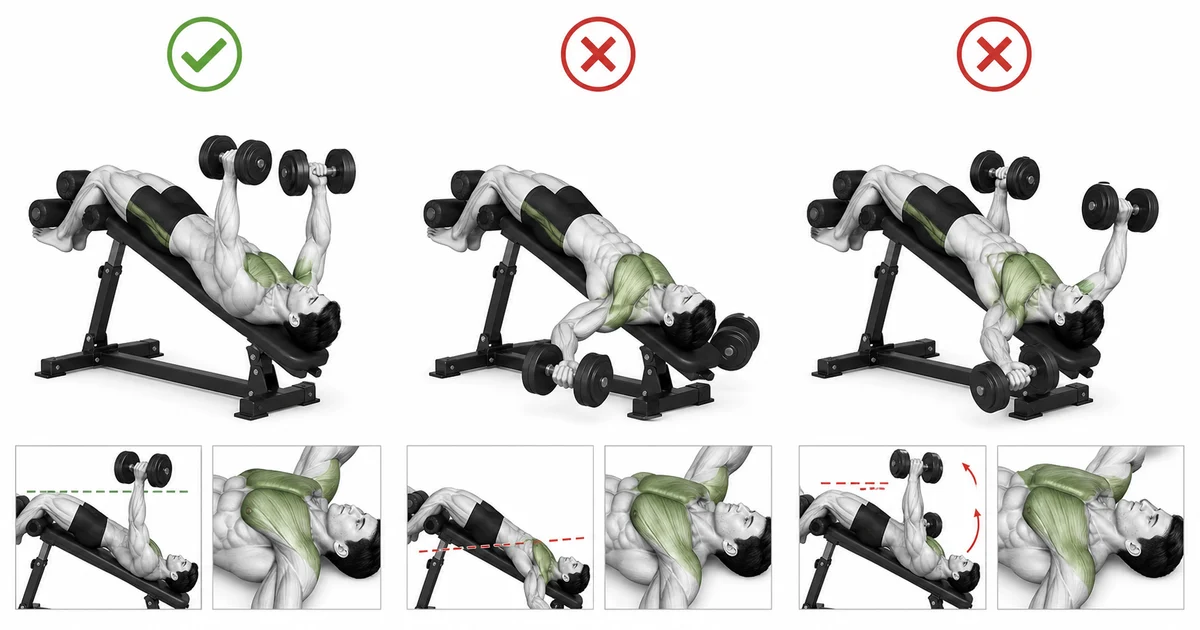
Key point: Progress the Decline Dumbbell Press only after every repetition follows the same path without joint pain.
TROUBLESHOOTING
Fix the cause of a mistake, not just its appearance
Clashing Dumbbells
- What you see
- Banging the dumbbells at the top, making noise.
- Likely cause
- Attempting excessive contraction or lacking control.
- How to correct it
- Maintain a fist-sized gap between the dumbbells at the top to keep constant muscle tension.
Excessive Back Arch
- What you see
- Glutes lifting off the bench or lower back arching excessively.
- Likely cause
- Using momentum or compensation to lift heavier weights.
- How to correct it
- Keep your core engaged and glutes firmly on the bench to maintain a neutral spine.
REGRESSION & PROGRESSION
Match the difficulty before adding load
Progressive Overload
Once you can perform 12–15 reps with perfect form, increase the weight by 1–2kg.
Range Expansion
As flexibility improves, gradually lower the dumbbells slightly deeper to improve the stretch on the lower pectoral fibers.
BEGINNER PROGRAM
A practical starting framework
The decline dumbbell press is highly effective for enhancing lower chest definition. Focus on feeling the correct target muscle for the first 2 weeks.
Sets
3–4 sets
Recommended in the middle of a chest routine
Reps
8–12 reps
Ideal range for hypertrophy
Rest
90–120 seconds
Recover fully before the next set
- Always choose a weight you can control.
- If you feel shoulder pain, immediately reduce the range of motion or stop.
- Ensure your leg anchor is secure throughout the set.
Frequently asked questions
Is a steeper angle more effective?
No. Excessive angles (beyond 30 degrees) can increase cranial pressure and put unnecessary strain on the shoulders.