DRAG CURL
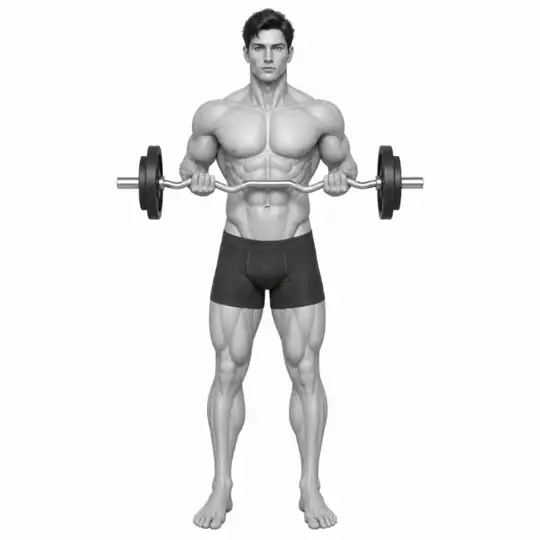
A drag curl is a curl in which the bar is pulled vertically close to the body rather than curled forward.
Unlike regular barbell curls, move your elbows behind your body and keep the bar close to your body. This route causes a strong contraction of the biceps brachii, but shrugging or leaning over defeats the purpose. There is no need for the bar to scrape your body, just use a natural, close path while maintaining wrist and forearm alignment.
- Primary muscles
- Biceps brachii
- Secondary muscles
- Brachialis, brachioradialis, posterior deltoid
- Difficulty
- Intermediate
- Movement type
- Elbow flexion and shoulder extension
Does the bar have to touch your body?
No. The key is to use a path close to the torso, and the goal is not to strongly scratch the skin or clothes. Keep your wrists and elbows at a comfortable close distance.
STEP BY STEP
4 Steps for One Complete Rep
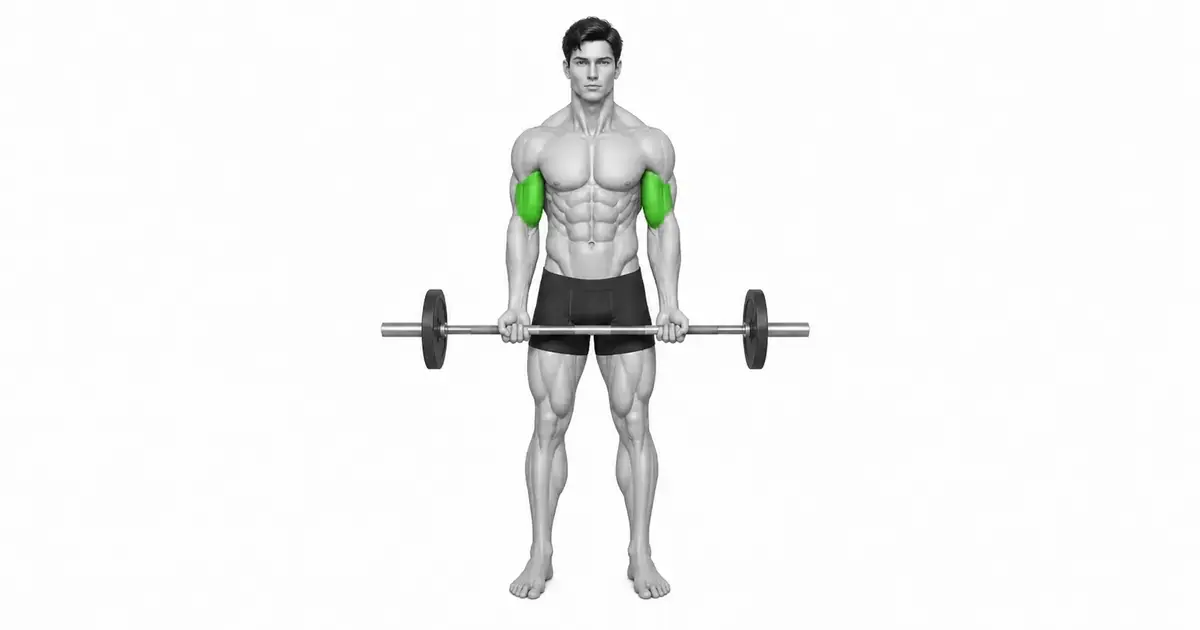
- 1
Undergrip and body settings
Hold a barbell with a closed undergrip about shoulder width apart and place it in front of your thighs. Gently straighten your knees and tighten your abdomen and hips to avoid lifting your ribs.
- 2
Drag the bar closer to your body
Exhale, send your elbows back and raise the bar along your belly and lower chest, close to vertical. Don't crack your wrists or shrug your shoulders.
- 3
Stopping at the top possible
Tighten your biceps at the point before your forearm stops rising or your wrist becomes out of alignment. Like a regular curl, you don't advance your elbows back to bring the bar in front of your shoulders.
- 4
Get off on the same path
Inhale and slowly return your elbows to the front starting position and lower the bar closer to your body. Prepare for the next repetition without rocking your body at the bottom.
BAR PATH
The close vertical path of the bar is the key difference from a regular curl
In a regular curl, the forearms rotate forward and the bar draws an arc, but in a drag curl, the elbows move backwards and the bar comes up closer to the body. Rather than pressing the bar hard against your skin, keep it in a natural path, within a few centimeters.
Top height depends on arm length and shoulder movement. Instead of forcing the bar up to your chest, stop at a point where you can maintain biceps contraction and wrist alignment.
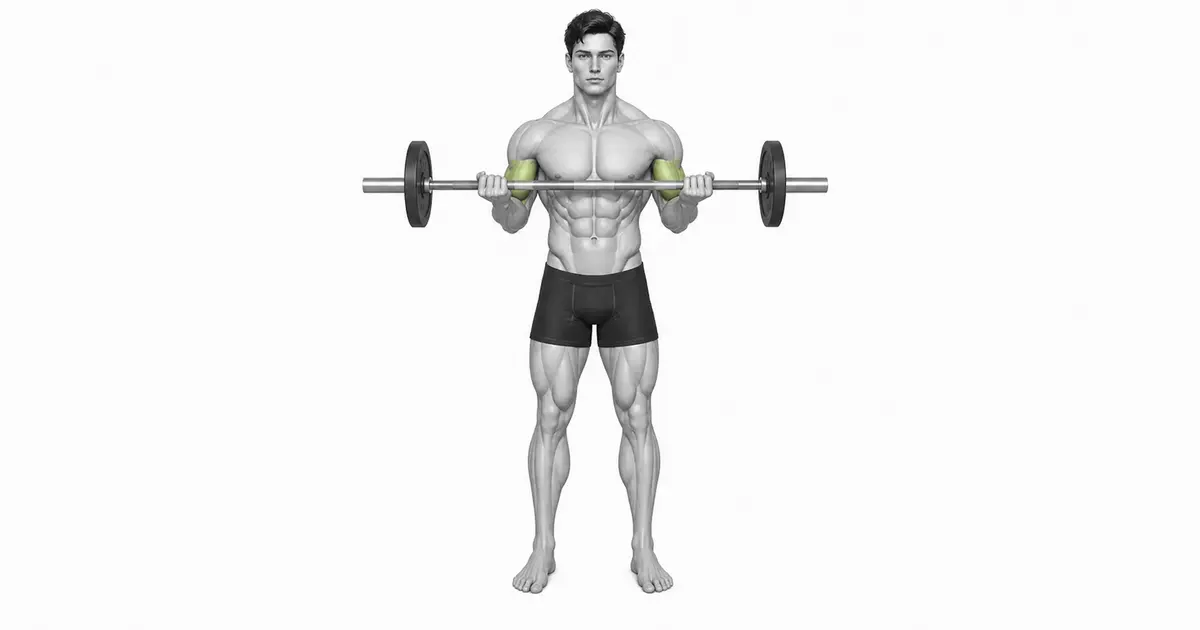
Key point: Cue to use right now: “Bar close, elbows back, torso still.”
SHOULDER CONTROL
Elbows should be back, but shoulders should not be raised towards ears.
A slight backward movement of the elbows is the intended movement, but raising the bar by shrugging the shoulders or lifting the chest excessively is a compensatory movement.
Check that your head and torso are still, using a mirror or side view. If your upper body leans back with each repetition, you need to lower the weight.
TROUBLESHOOTING
Fix the cause of a mistake, not just its appearance
Floats the bar forward like a regular curl
- What you see
- Bar moves away from torso and elbows move forward.
- Likely cause
- Using a familiar curl path or not understanding the elbow movement of the drag motion.
- How to correct it
- With an empty bar or light dumbbells, practice the vertical path of raising the bar close to your clothes.
Start by leaning back
- What you see
- As the bar leaves the bottom, the pelvis pushes forward and the chest moves back.
- Likely cause
- This is a weight that is difficult to control with the biceps in the early stages.
- How to correct it
- Lower the weight and keep your hips and abs engaged. You can check your torso movement by performing it in front of a wall.
Roll up the bar with your wrists
- What you see
- At the top, the wrist folds inward and only the forearm is overly fatigued.
- Likely cause
- You are trying to raise the bar higher or the grip is placed on your fingers.
- How to correct it
- Place the bar in the center of your palms and keep the backs of your hands and forearms in a straight line. Finish the iteration before alignment is broken.
REGRESSION & PROGRESSION
Match the difficulty before adding load
Drag empty bar
Learn the bar path and elbow movement first.
Dumbbell Drag Curl
Practice independently with your left and right wrists at a comfortable angle.
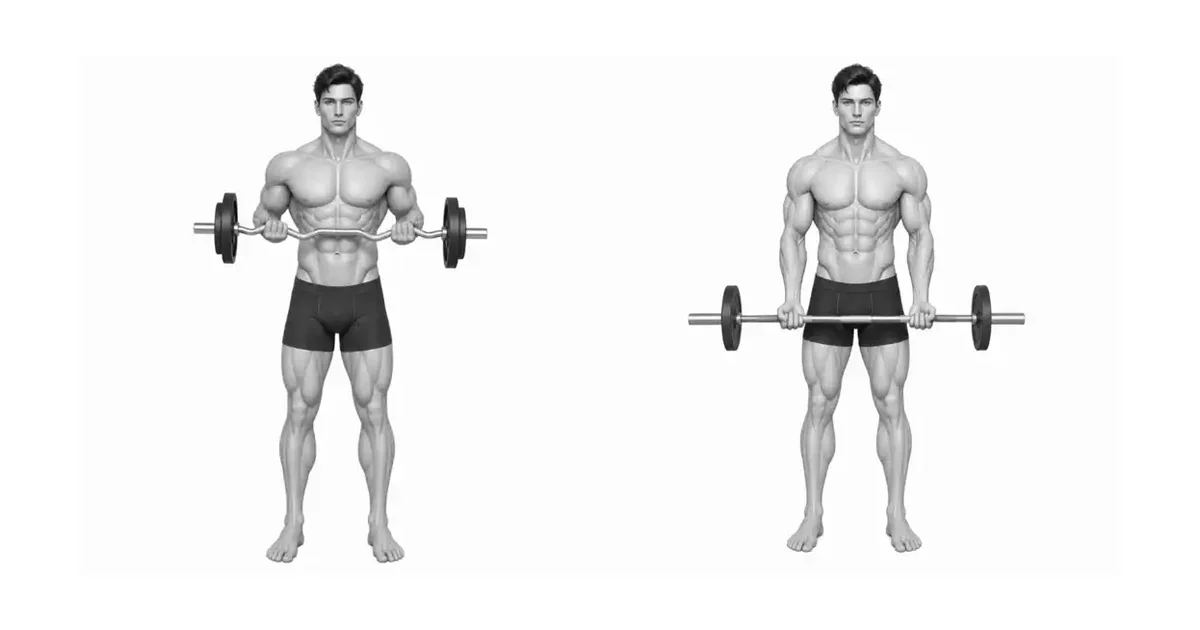
EZ Bar Drag Curl
Makes the path and top contraction of both arms consistent.
Barbell Drag Curl
Slight increase only in the range where the torso is fixed.
BEGINNER PROGRAM
A practical starting framework
Place in the middle or end of your arm exercise, and complete a close bar path first at a weight lighter than a regular barbell curl.
Count
8–12 times
Top retraction 1 second, descent 2 seconds
Set
2–3 sets
60–90 seconds recovery between sets
Frequency
1–2 times a week
Different curl exercises and total volume control
- If torso and shoulder height are maintained, increase the number of repetitions first and then increase slightly.
- If the bar moves away from your body or your back gets wet, lower the weight by at least 10%.
- If you have sharp pain in your wrist or elbow, change your grip width and tool and avoid the pain range.
Frequently asked questions
Should I go heavier than a regular barbell curl?
Usually not. Choose a weight that maintains a path that moves your elbows back without torso kick. Sticking to the same weight can cause back strain.
Can this be done with dumbbells?
Yes. By raising the dumbbells to the side of your torso, you can individually adjust your wrist angle, which is useful for people who have difficulty gripping a barbell.