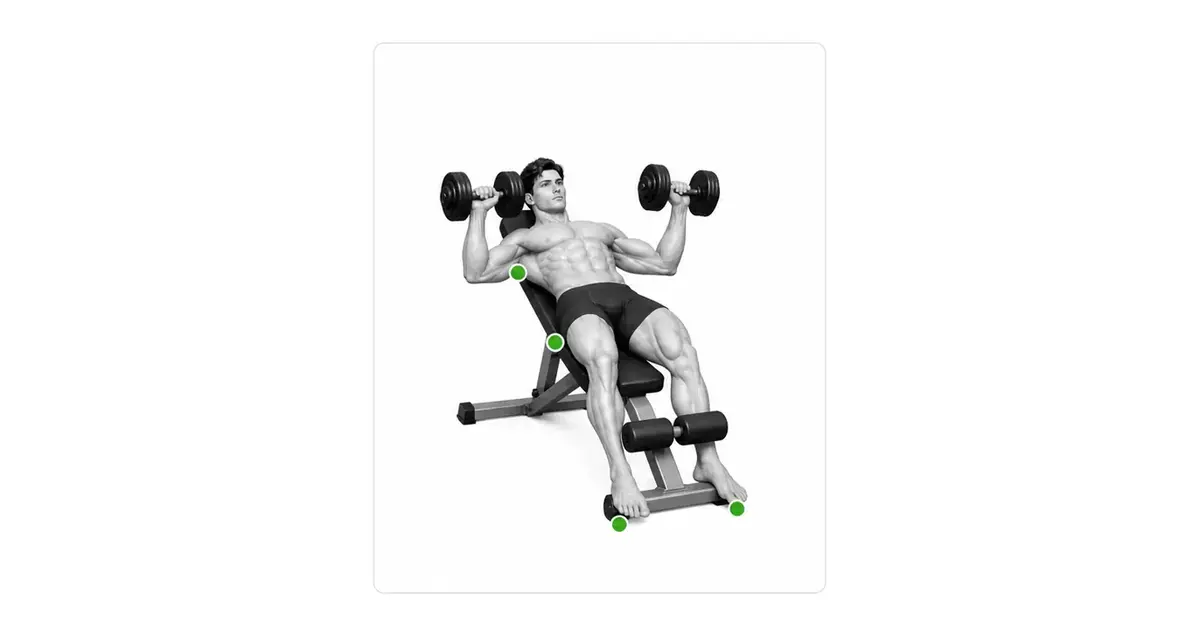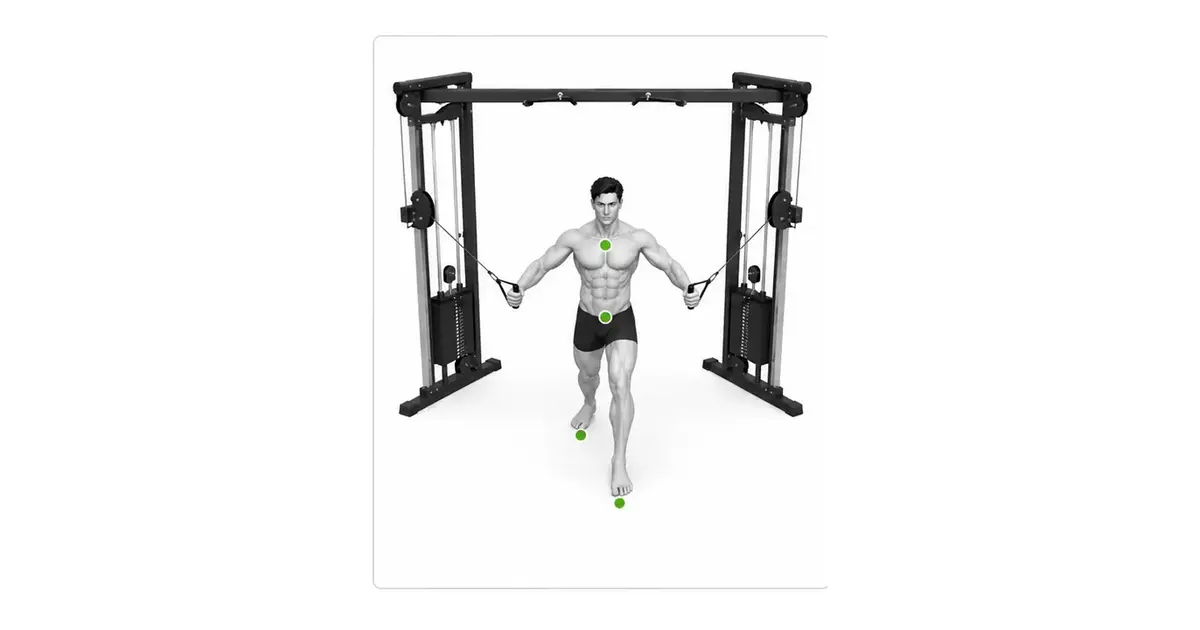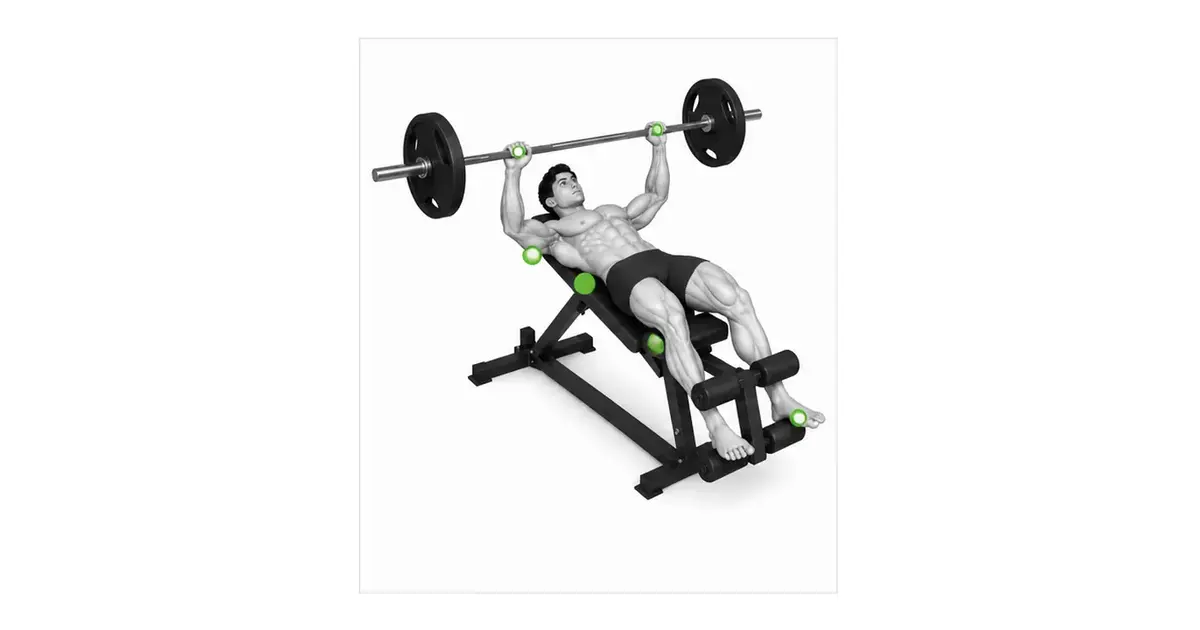
DUMBBELL FLY
The dumbbell fly is not about clashing the dumbbells—it is about controlling a wide arc while holding your elbow angle
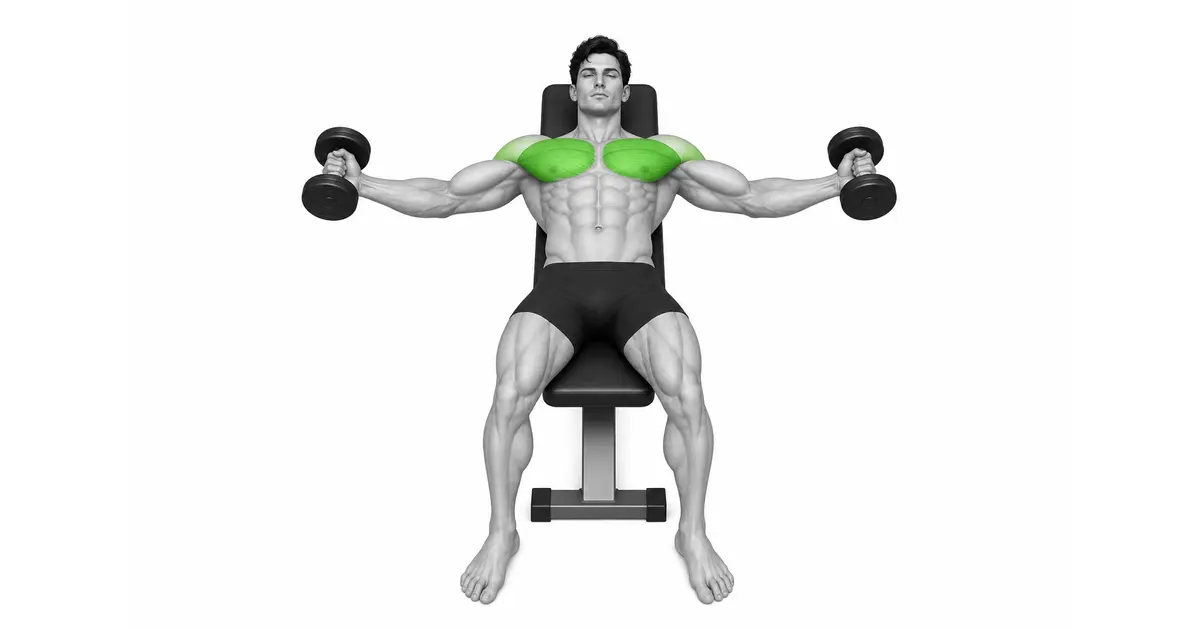
The dumbbell fly is a horizontal adduction exercise performed lying on a flat bench, opening the arms outward from above the chest and bringing them back together. As in the movement demonstration, each hand moves independently, so you have to stabilize both paths yourself, and the further the dumbbells travel from the shoulder at the bottom, the more torque even a light load produces. EMG research shows the dumbbell fly does work the pectoralis major but has not shown it to be consistently superior to the bench press, so it makes more sense as a controlled chest accessory than as a replacement for heavy pressing. Holding support through the head, upper back, and pelvis and staying in a comfortable shoulder range matters more than reaching the deepest possible position.
- Primary muscles
- Pectoralis major
- Secondary muscles
- Anterior deltoids · upper-arm stabilizers
- Difficulty
- Intermediate
- Movement type
- Horizontal adduction
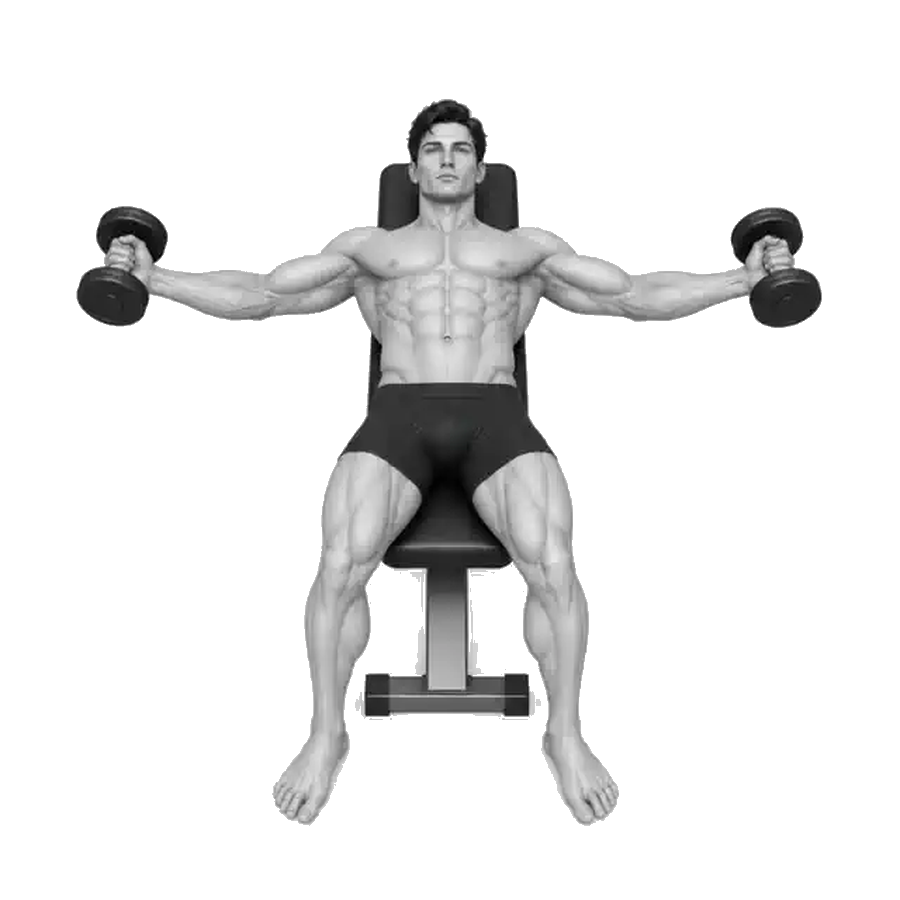
Does the dumbbell fly build the chest better than the bench press?
That cannot be stated so firmly. EMG research shows the dumbbell fly does work the pectoralis major, but studies have also found the bench press producing higher activity across the pectoralis major, anterior deltoid, and triceps over the whole movement. Using it as an accessory after pressing is usually the practical choice.
STEP BY STEP
5 Steps for One Complete Rep
- 1
Prepare light dumbbells and a stable bench
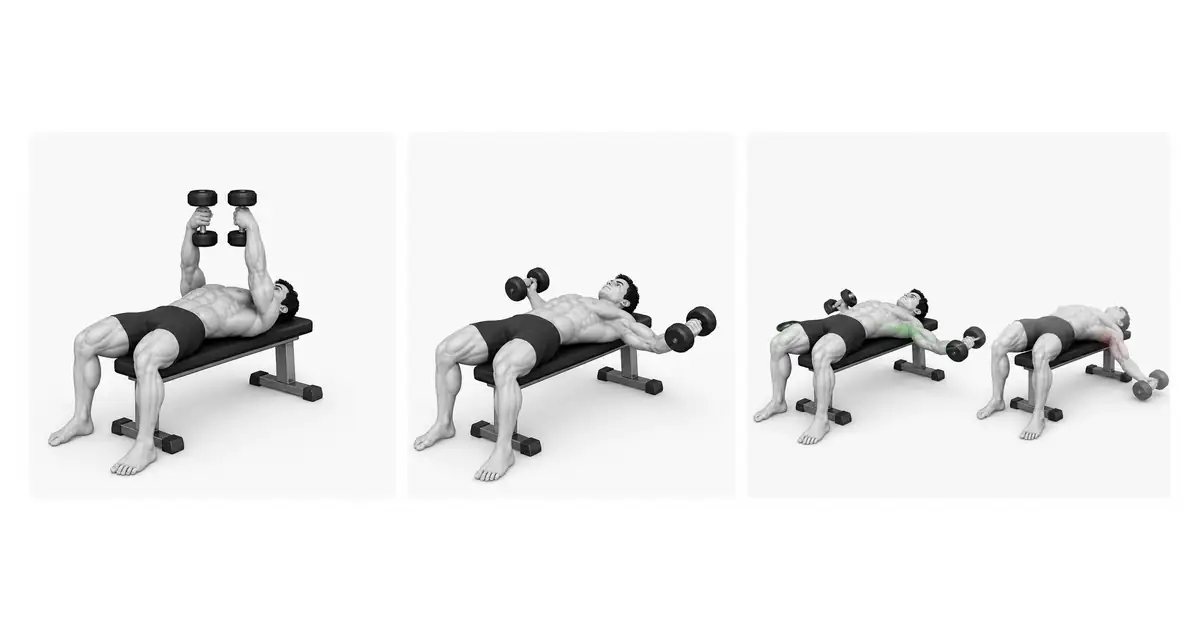
Check that the bench does not rock and sit with two dumbbells resting on your thighs. Because the lever at the bottom is long, start with a far lighter load than you would press. Confirm the dumbbells are locked and that you have space around you.
- 2
Lie back safely using your knees
Keep the dumbbells close to your thighs, lie back in one motion, and use your knees to bring them up over the chest. Place your head, upper back, and pelvis on the bench with both feet flat on the floor, then hold the dumbbells over the shoulders with a neutral grip, palms facing each other.
- 3
Set a soft angle at the elbows
Do not lock the elbows straight—bend them softly to roughly 15–30 degrees and match the angle on both sides. Hold that angle for nearly the whole set. Keep the wrists in line with the forearms and do not let the dumbbells clash.
- 4
Open both arms on the same wide arc
Inhale and move both dumbbells outward and downward symmetrically over two to three seconds. Do not bend the elbows further and turn it into a press, or straighten them and lengthen the shoulder lever. Stop around the point where the upper arms reach torso height, wherever the front of the shoulder is comfortable.
- 5
Close the arc over the chest and settle
Hold the elbow angle and palm direction as you return along the arc, as if wrapping both arms around a large barrel. When the dumbbells arrive over the shoulder joints, do not push the shoulders forward or bang the dumbbells together—check your balance briefly, then begin the next repetition.
BENCH SUPPORT
Head, upper back, pelvis, and both feet support the long lever of the arms
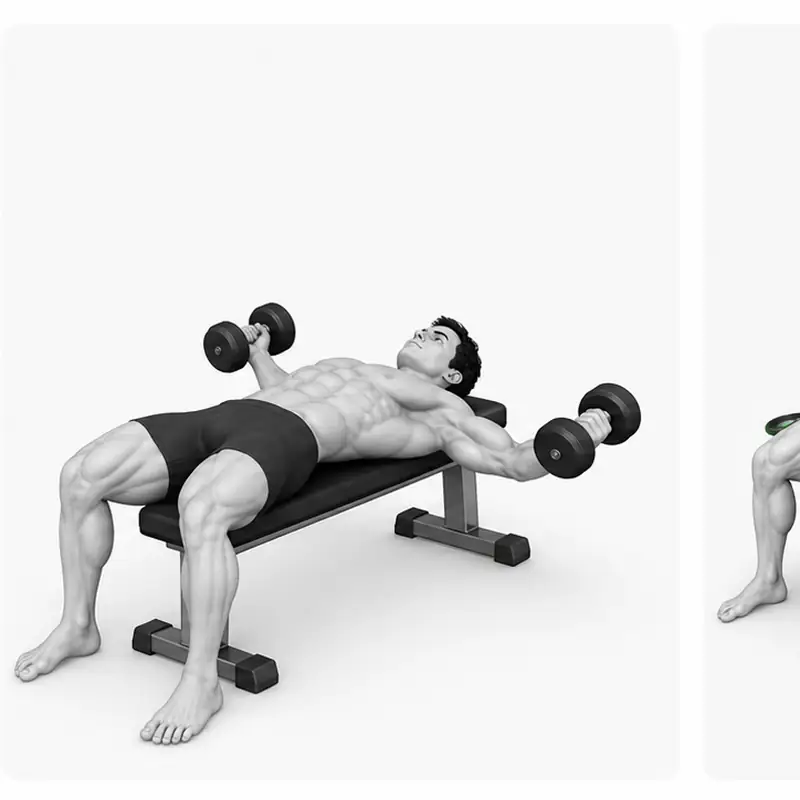
ACE's coaching for the lying chest fly calls for maintaining contact through the head, shoulders, hips, and feet. Those contact points reduce the tendency for the trunk to tip to one side or the low back to lift as the arms travel outward. A natural low-back curve can remain, but the relationship between the ribs and pelvis should not change from rep to rep.
Do not pick the dumbbells up off the floor once you are lying down—bring them from your thighs with help from your knees. Finish the same way: settle both dumbbells over the chest, bring them toward your knees, and sit up with them. Dropping heavy dumbbells to the floor with your arms out to the side risks both your shoulders and the people around you.
Key point: Practical cue: “Anchor head, upper back, and pelvis → press both feet into the floor → start the dumbbells from your thighs.”
ARC & ELBOWS
Fix the elbow angle and create a symmetrical arc at the shoulder
Elbow movement is what separates a fly from a dumbbell press. In a fly you hold nearly the same soft bend you set at the start while the upper arms travel outward and inward around the shoulder joint. Continuing to fold the elbows as you descend turns it into a press; straightening them completely lengthens the lever so the same load feels far heavier on the shoulder.
The two dumbbells must move at the same height and speed. If one side descends first or a palm rotates toward your feet, lower the dumbbell weight and reset the path at the top. At the top, stop over the shoulder joints and control the tension rather than banging the dumbbells together.
BOTTOM RANGE
Dropping the upper arms below the bench is not the mark of a good repetition
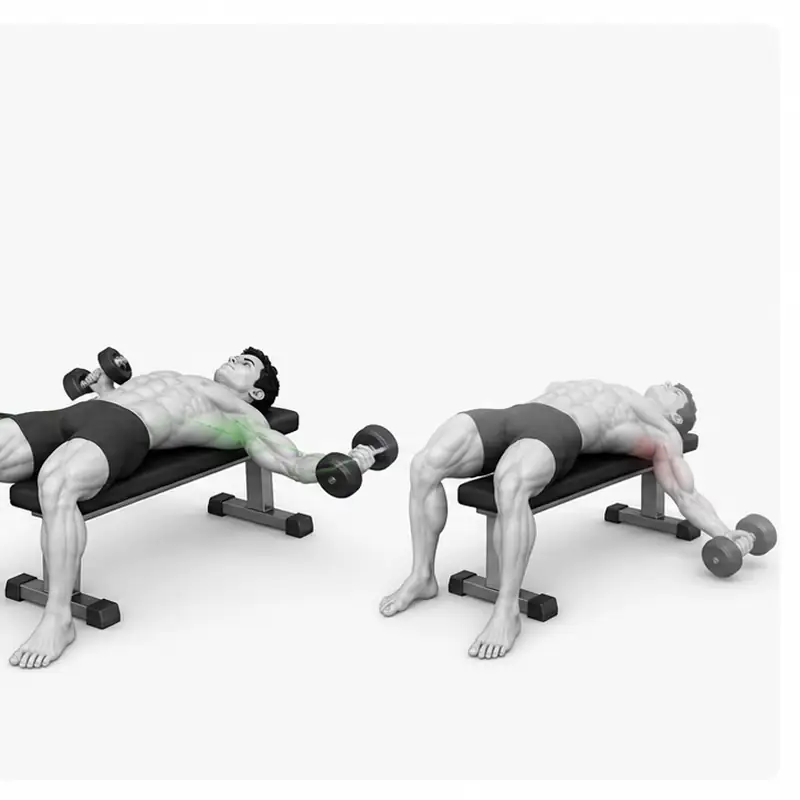
External torque is greatest at the bottom, where the dumbbells sit farthest from the shoulder. General full-range resistance training research has its merits, but the data on upper-body and trunk hypertrophy are limited, and it is not an instruction to force maximum depth regardless of your shoulder structure. When the upper arms reach around torso height, change direction if the front of the shoulder pulls or your shoulder-blade support releases.
Do not drop the arms far below the bench or arch the low back to stretch the shoulder further. Your controllable range depends on arm length, bench width, mobility, and past injury. Instead of going deeper, develop a two-to-three-second lowering phase, side-to-side symmetry, and a consistent elbow angle first.
TROUBLESHOOTING
Fix the cause of a mistake, not just its appearance
The dumbbells drop far below the shoulders
- What you see
- At the bottom the upper arms fall well below the bench and the front of the shoulder pulls hard or lifts.
- Likely cause
- You may believe maximum depth is required to stretch the chest, or you may be unable to decelerate the load.
- How to correct it
- Stop at a comfortable point around torso height for the upper arms and take two to three seconds to descend. Reduce the load as well.
The elbows straighten as you descend
- What you see
- The arms lock straight at the bottom and the wrist, elbow, and shoulder connect into one long lever.
- Likely cause
- You may not have set a starting angle, or you may be judging the range only by where your hands are.
- How to correct it
- Set a soft elbow bend at the top and hold it. Define the range by the arc of the upper arms.
The fly turns into a dumbbell press
- What you see
- The dumbbells arrive beside the chest at the bottom and you extend the elbows substantially to press them up.
- Likely cause
- You may have chosen a load too heavy to control as a fly, or fatigue may have accumulated.
- How to correct it
- Reduce the load and practice an arc with only small changes in elbow angle. End the set as soon as it starts turning into a press.
The dumbbells differ in height and speed
- What you see
- One side reaches the bottom first, and at the top one dumbbell sits further forward or higher than the other.
- Likely cause
- More than a stability difference, the load may be too heavy or you may not be lying centered on the bench.
- How to correct it
- Center your head and pelvis on the bench and slow the stronger side down. If the difference persists, switch to lighter dumbbells.
Clashing the dumbbells hard at the top
- What you see
- The dumbbells collide on every repetition and the shoulders lift forward off the bench.
- Likely cause
- You may be closing the arc on momentum instead of control, or believe the dumbbells must touch to contract the chest.
- How to correct it
- Leave a small gap between the dumbbells and stop over the shoulder joints. Set up the next repetition with your upper back on the bench.
REGRESSION & PROGRESSION
Match the difficulty before adding load
Floor dumbbell fly
The floor limits how far the upper arms can descend, so use a light load to learn the elbow angle and a symmetrical arc.
Light flat dumbbell fly
Start with a short, comfortable range on a flat bench and match speed side to side and bench support.
Slow-lowering dumbbell fly
Descend over two to three seconds and reverse the arc at the bottom without rebound.
Paused dumbbell fly
Hold for one second at a controllable bottom position, then return over the chest with the elbow angle intact.
BEGINNER PROGRAM
A practical starting framework
Place it as an accessory after chest pressing, once or twice per week. In the fly, deceleration at the bottom and a symmetrical path matter more than the number in your log, so use a lighter load than you press with and leave two or three repetitions in reserve through the final rep.
Reps
10–15
Descend over 2–3 seconds and hold a symmetrical arc
Sets
2–3
Rest 60–120 seconds between sets
Load
+1–2 kg total
Only when all 15 reps are stable
- If the elbow angle and side-to-side depth are the same for all 15 reps and the shoulders feel comfortable, add the smallest available increment next session.
- If after adding weight the dumbbells drop at the bottom or the fly turns into a press, go straight back to the previous load.
- Do not compare press and fly loads directly—log the arc, tempo, and range for the fly separately.
Frequently asked questions
How far below chest level should the dumbbells go?
There is no set depth. Lower only to the point where the upper arms reach around torso height with shoulder-blade support and your elbow angle intact and the front of the shoulder comfortable. There is no need to force them below the bench.
Do the dumbbells have to touch at the top for the chest to contract?
No. The pectoralis major is already working as the arms come together, well before the dumbbells meet. Instead of clashing them or pushing the shoulders forward, leave a small gap and control the position over the shoulder joints.
Evidence and references
- 1. ACE — Lying Chest Fly Exercise Library
- 2. Welsch et al. — Muscle activity in the bench press, dumbbell press, and dumbbell fly
- 3. Solstad et al. — Muscle activity in the barbell bench press versus the dumbbell fly
- 4. Pallarés et al. — Systematic review and meta-analysis of range of motion in resistance training
- 5. ACSM — 2026 Resistance Training Guidelines