DUMBBELL SUMO SQUAT
The dumbbell sumo squat is not an exercise where you place dumbbells on the floor, but rather a squat in which you hang the dumbbells stably between your arms and sit down as much as you can control your lower body.
If you sit in a wide stance holding one dumbbell under you with both hands, the burden on your arms and torso will feel different than the goblet variation where you hold a dumbbell in front of your chest. If the dumbbells touch the floor first, do not spread your posture further or force yourself on the stand. Maintain full foot and knee alignment and only achieve range of motion with a stable low platform if necessary.
- Primary muscles
- Quadriceps, gluteus maximus, adductors
- Secondary muscles
- Hamstrings, calves, core, forearms
- Difficulty
- Beginner
- Movement type
- Hanging Dumbbell Wide Squat
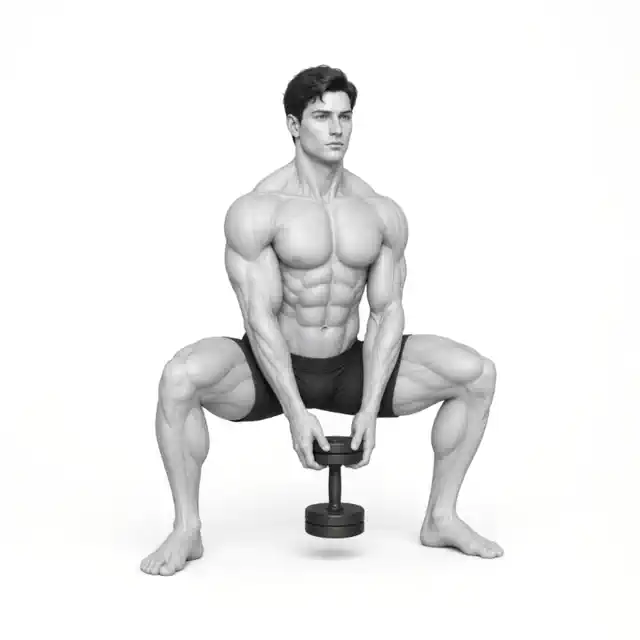
How is it different from the sumo goblet squat?
Dumbbell sumo squats place the weight under the arms, making different torso and grip demands. The goblet variation holds the dumbbells in front of your chest.
STEP BY STEP
4 Steps for One Complete Rep
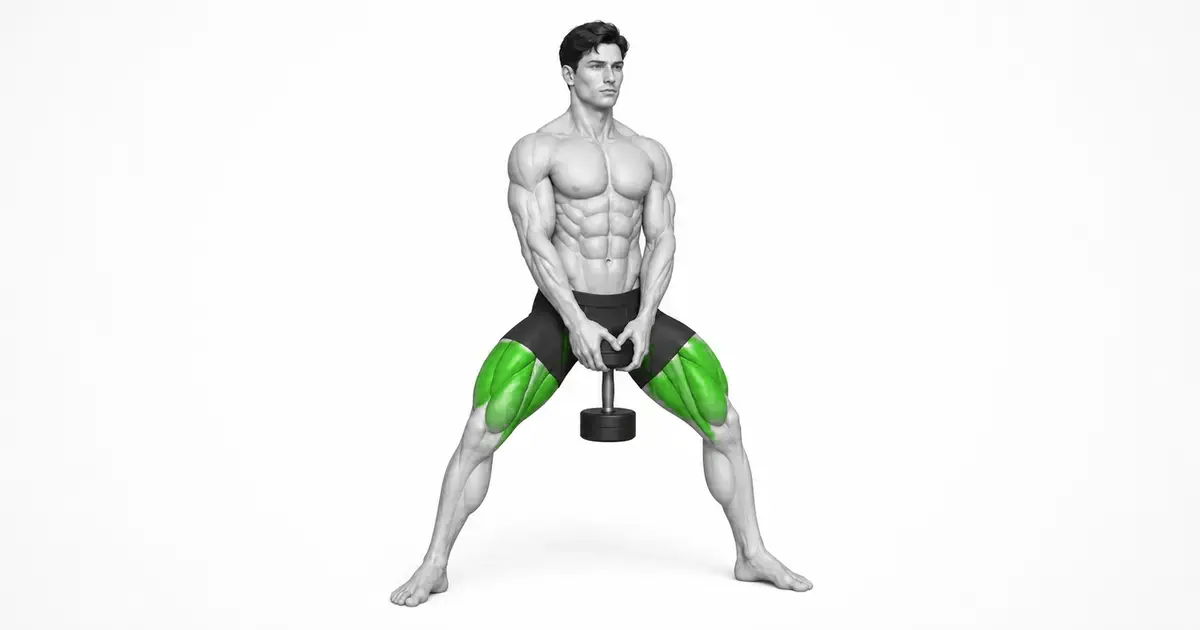
- 1
Lift and center dumbbells safely
Lift dumbbells from a high rest or hold them securely with hip hinges. Make sure you have a two-hand grip and that the dumbbells are below the midline of your body.
- 2
Creating a wide stance with the entire foot together
Place your feet wider than your shoulders and turn your toes comfortably outward. Find a width that maintains the arch of your feet without the dumbbells hitting your legs.
- 3
Sit with dumbbells vertically
Create abdominal pressure and bend your knees and hip joints together. The dumbbells are quietly lowered under your arms and your knees follow the direction of your toes.
- 4
Push to stand and set down safely
Push your entire foot into the floor, straightening your knees and hips together. At the end of the set, place the dumbbells on the rest with hip hinges and knee bends without rounding your back.
WEIGHT CLEARANCE
Do not change joint range even if there is insufficient space between dumbbells and the floor
If the dumbbells touch the floor first, you can stop at that point. If you need more reach, use two non-slip platforms of the same height, but make sure they are wide enough.
Standing on an unstable stack of discs or letting dumbbells bounce on the floor breaks both balance and tension.
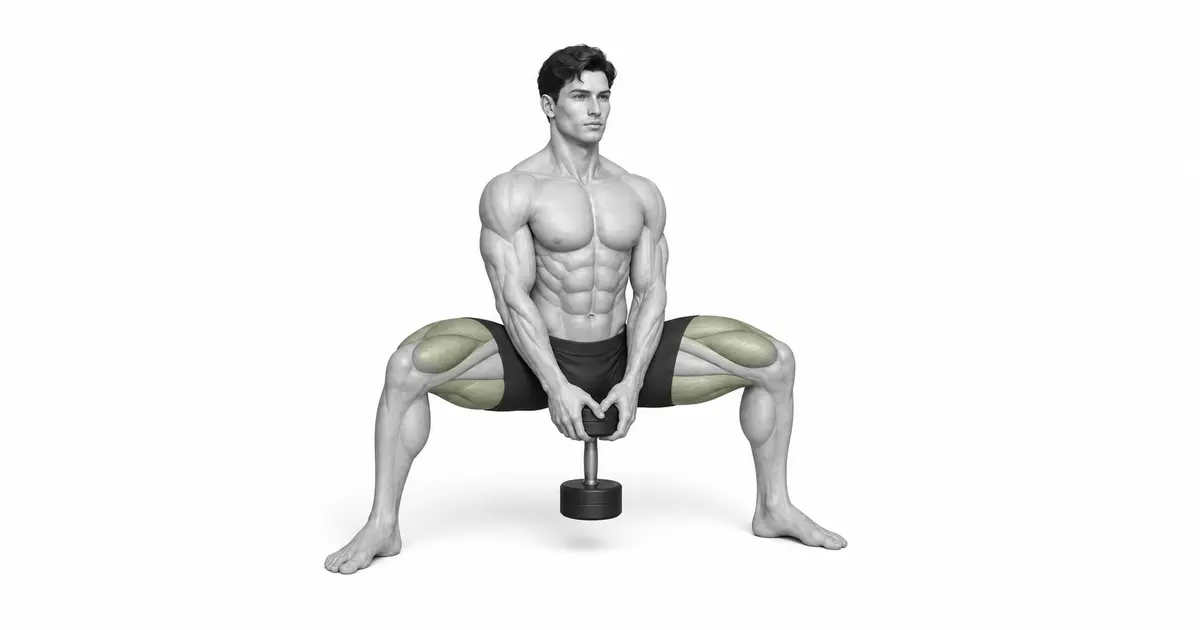
Key point: Cue to use right away: “Dumbbells are vertical, feet and knees are in the same direction.”
GRIP & TORSO
Finish your set before grip fatigue changes your form
If your hands are relaxed, your shoulders may roll and the dumbbells may swing from side to side. Hold both hands evenly, without overlapping them.
If your forearms are limited first with heavy dumbbells, choosing a goblet variation or barbell variation may suit your lower body training purposes.
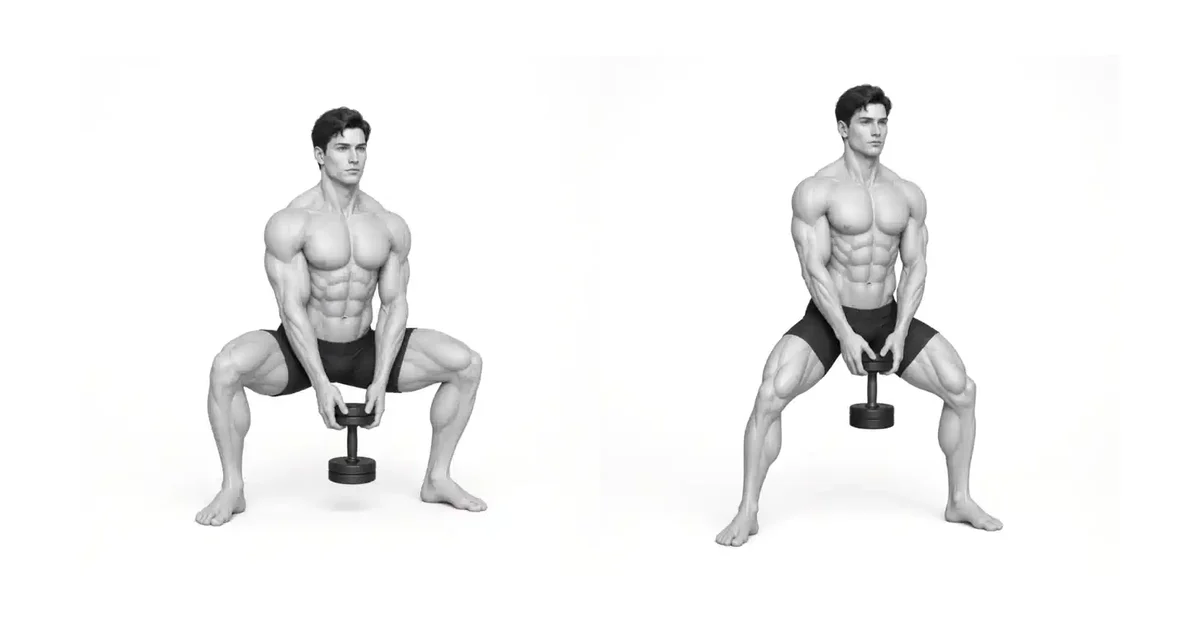
TROUBLESHOOTING
Fix the cause of a mistake, not just its appearance
Dumbbells hit the floor repeatedly
- What you see
- An impact sound is heard from each bottom and the body bounces up.
- Likely cause
- Prioritize depth over dumbbell length or release tension.
- How to correct it
- Stop just before the bottom and gain room on a stable platform if necessary.
Knees in toward toes
- What you see
- When descending or rising, the knees are brought together and the arches of the feet are collapsed.
- Likely cause
- Width, toe angle and weight do not match current control.
- How to correct it
- Lower the weight and depth and bring your knees toward your second toe.
Dumbbell is biased towards one leg
- What you see
- Torso is tilted and more pressure is placed on one foot.
- Likely cause
- The grip between both hands is asymmetrical or the dumbbells shake due to fatigue.
- How to correct it
- Re-adjust your grip, center the dumbbells between your feet, and repeat.
REGRESSION & PROGRESSION
Match the difficulty before adding load
Bodyweight wide squat
Learn foot and knee alignment.
Light Dumbbell Sumo Squat
Practice the vertical dumbbell path.
Platform Dumbbell Sumo Squat
Safely increases range of motion only when needed.
Tempo Dumbbell Sumo Squat
Reduce shaking with 3 second descent.
BEGINNER PROGRAM
A practical starting framework
If your goal is lower body and not forearm, choose an appropriate weight and repetition range before your grip limits your form. There is no need to duplicate and build excessive volume with regular sumo goblet squats.
Count
8–15 times
Control dumbbells without shaking
Set
2–4 sets
60–120 seconds recovery between sets
Frequency
1–2 times a week
Combine volume with other squats
- Once foot pressure and dumbbell center line are maintained, increase the number of repetitions first.
- If you hit the floor, lose your grip, or collapse your knees, reduce the weight and depth.
- The platform should only be used when the same height, sufficient width and anti-slip properties are ensured.
Frequently asked questions
Can I stand on the disk?
Consider only when the dumbbells touch the floor and your range is limited. A platform of equal height that is wider and less slippery than a pile of discs is safer.
How wide should I place my feet?
The standard is the width that allows the dumbbells to maintain full foot and knee alignment and hip comfort without colliding with the legs.