ELLIPTICAL
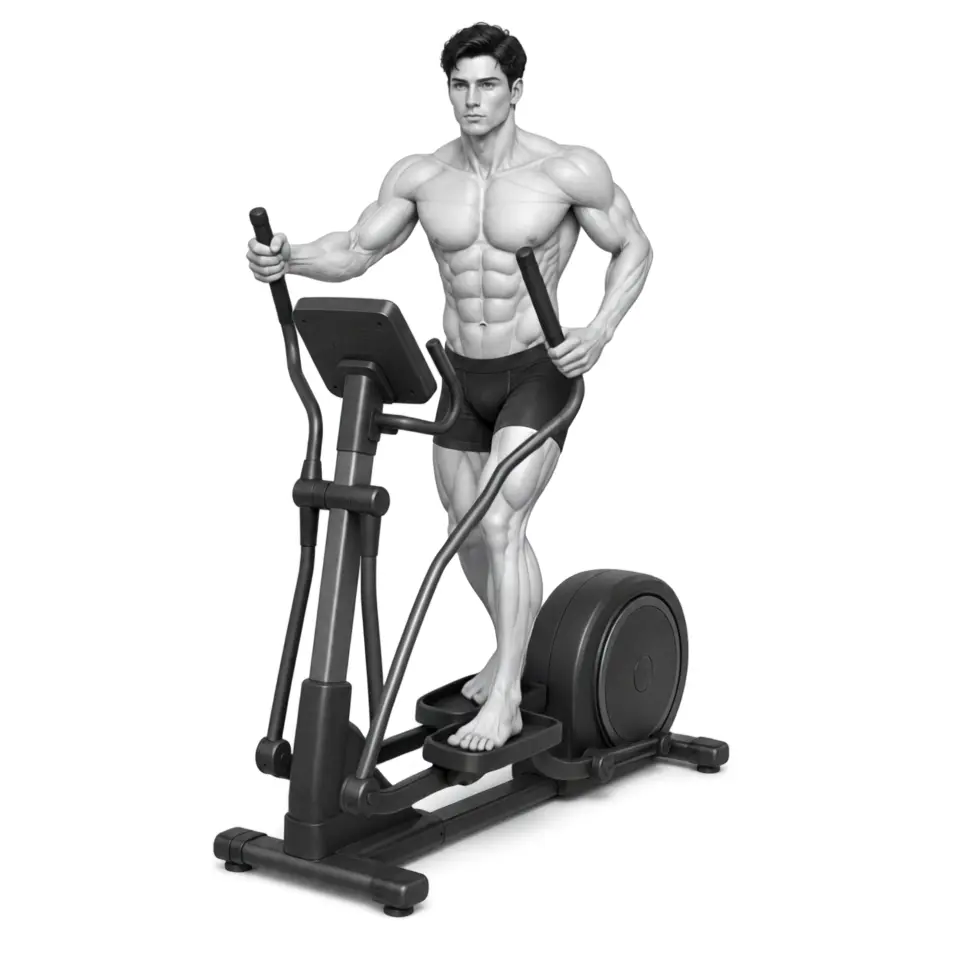
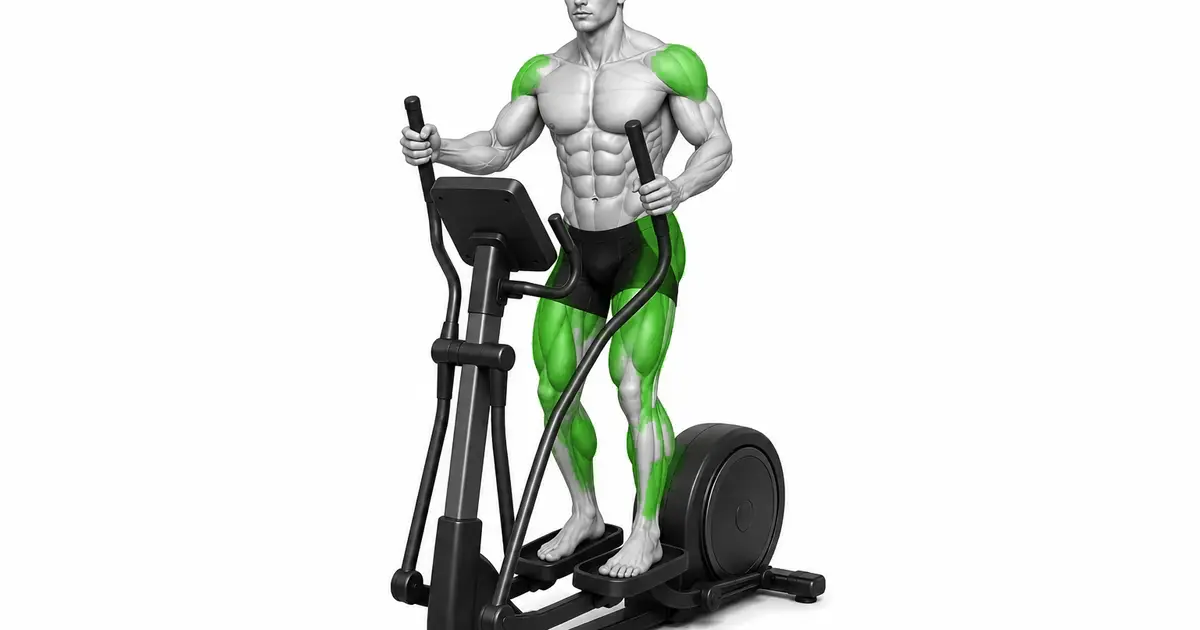
Elliptical is a low-impact aerobic exercise that involves actively pushing and pulling the lower body and the moving handle with the entire foot on the pedal, rather than leaning on the handle and following the pedal.
The elliptical can reduce the impact of landing compared to running because your feet do not fall off the pedals, but if you only put pressure on your toes or lean your weight on the fixed handle, your knees, feet, and upper body will easily get tired. With the pedal stopped, stand up holding the fixing handle and learn the movement at low resistance. Adjust speed and resistance separately while keeping your torso upright and maintaining pressure across your feet.
- Primary muscles
- Quadriceps and gluteus maximus
- Secondary muscles
- Hamstrings, calves, back, triceps, core
- Difficulty
- Beginner
- Movement type
- Low-impact elliptical walking and upper and lower body pushing and pulling
Is riding the elliptical necessarily safer than running?
Landing impact may be low, but improper alignment and excessive resistance can still create discomfort. Adjust to suit your personal condition.
STEP BY STEP
4 Steps for One Complete Rep
- 1
Climbing safely with the pedals stopped
Hold the fixing handle and step up one foot at a time, starting from the lower pedal. Check the emergency stop and resistance adjustment buttons.
- 2
Create full feet and upright torso
Place your heels on the pedals and align your knees toward your toes. Keep your ribs over your pelvis and do not lean against the console.
- 3
Smooth push and pull with legs and arms
Creates a natural alternating rhythm where one leg pushes forward while pulling the opposite handle. Don't shrug your shoulders.
- 4
Lower the resistance to stop and then come down
Slowly reduces speed and resistance before shutting down. After the pedal has completely stopped, hold the fixing handle and lower the pedal starting from the high one.
WHOLE-FOOT PRESSURE
The entire foot, including the heel, must be in contact with the pedal for the lower body force to be transmitted evenly.
If you focus your weight only on your toes, your calves and front knees will easily get tired. Even when going backwards, press your heel lightly on the pedal.
If your feet slip inside the pedals, slow down and check your shoes and pedal surfaces.
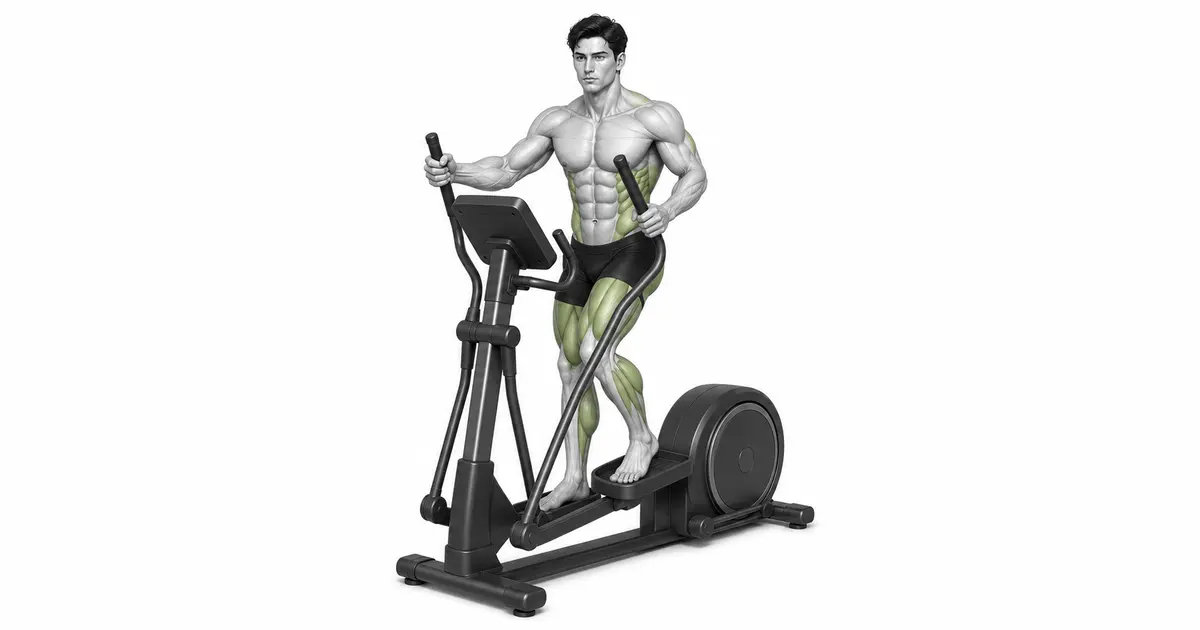
Key point: Cue to use right away: “Press with your entire foot and keep your torso in the center.”
DON'T HANG ON
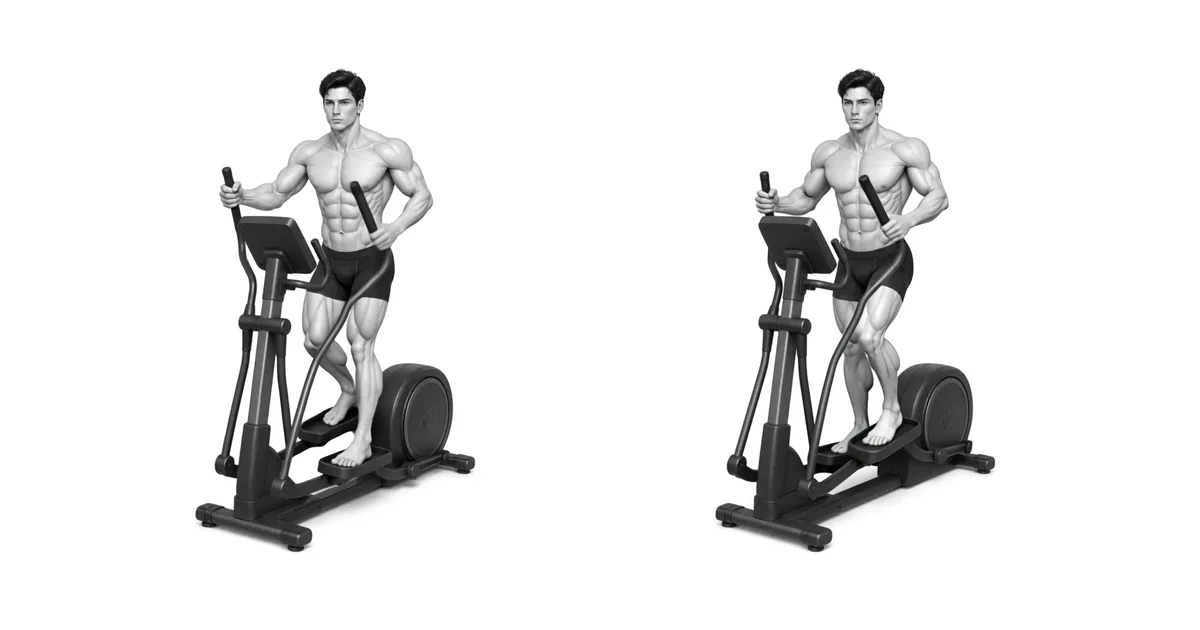
Handles assist with upper body movement and balance, but are not intended as a support for carrying body weight
If you have to lean on the handle to maintain strength, the resistance or incline is too much. Raise your torso yourself.
If you want to reduce upper body use, lightly hold on to the holding handle and keep your weight off your shoulders and wrists.
TROUBLESHOOTING
Fix the cause of a mistake, not just its appearance
Weight is concentrated only on toes
- What you see
- My heel keeps popping and my calf or front of my foot feels numb.
- Likely cause
- Catching up with stride length or upper body leaning forward.
- How to correct it
- Slow down, center your hips, and return your heels to the pedals.
Hanging from handle
- What you see
- Body leans forward with arms extended and lower body moves passively.
- Likely cause
- Resistance/slope is high or fatigue has accumulated.
- How to correct it
- Reduce the intensity and lighten your hand grip to support your torso on your own.
Get on and off when pedal moves
- What you see
- One pedal suddenly goes down and I lose my balance.
- Likely cause
- Did not wait for complete stop.
- How to correct it
- Hold the fixing handle and make sure the pedals have stopped, then get on and off the vehicle one foot at a time.
REGRESSION & PROGRESSION
Match the difficulty before adding load
Interval Training
improve calorie consumption efficiency by repeating high and low intensity.
Increased time and resistance
Strengthen your stamina by increasing performance time or increasing the resistance level of the machine.
BEGINNER PROGRAM
A practical starting framework
Start with 15-30 minutes at a comfortable intensity and gradually increase resistance, incline, or speed. If your upper body shakes or foot pressure changes, lower the intensity.
Frequency
3-5 times a week
If your goal is to lose body fat, it is important to do it consistently.
Volume
20~40 minutes
Gradually increase the time according to your fitness level.
- Do this while drinking plenty of water.
- Protect your joints through light stretching before and after exercise.
Frequently asked questions
Can I step backwards?
You can use it briefly if your equipment allows, but make sure you balance at low speeds and keep your knees pointed towards your toes.
Is it necessary to use the moving handle?
Not required. It is helpful for full-body exercise, but if your balance is uneasy, lightly hold on to the fixing handle and learn the lower body rhythm first.