EZ BAR CURL
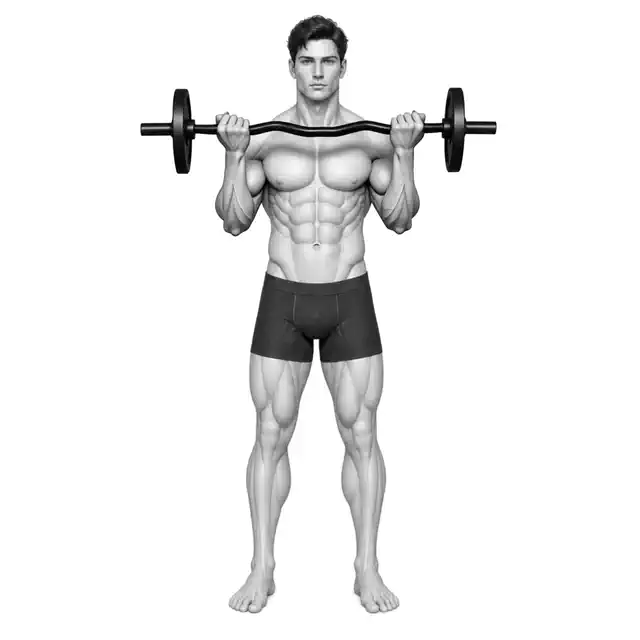
Curl exercise that uses a curved bar to reduce the burden on the wrists and develop the biceps three-dimensionally
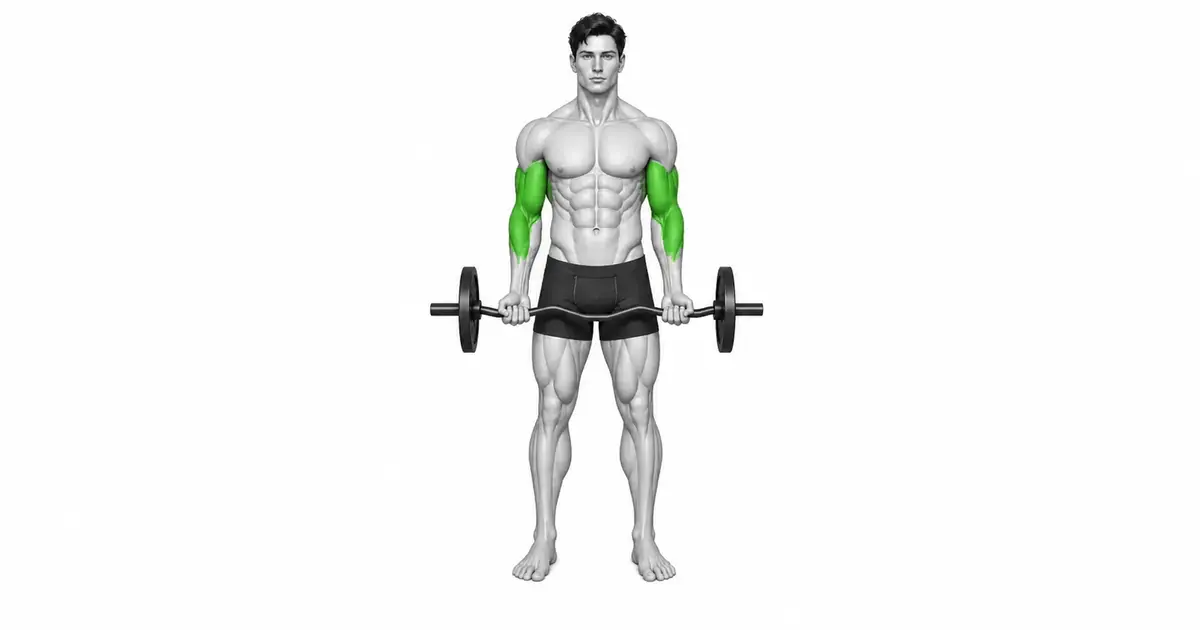
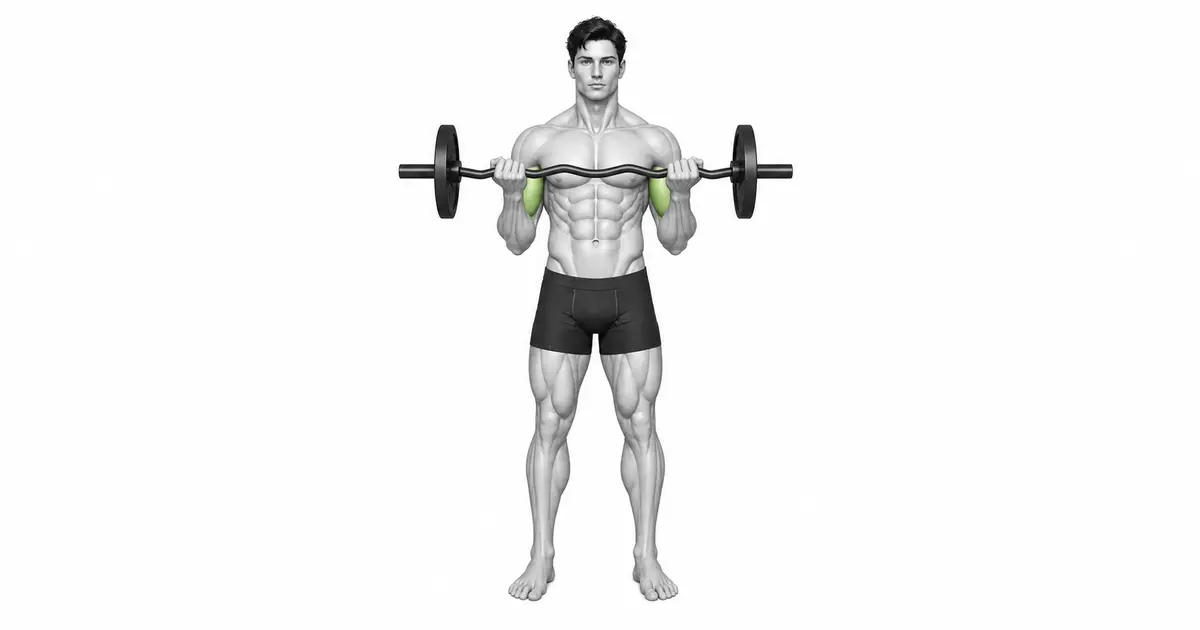
Hold the curved part of the EZ bar with an underhand grip. Stand up straight with your elbows at your sides. Exhale and raise the bar with your elbows up to chest level. Contract your biceps strongly at the top, then inhale and slowly return to the starting position with resistance.
- Primary muscles
- Biceps Brachii
- Secondary muscles
- Brachialis · Brachioradialis · Forearms
- Difficulty
- Beginner
- Movement type
- Elbow Flexion
Is it less effective than a straight barbell?
No, joint comfort allows for higher quality reps, so it can be an equal or even better advantage in terms of hypertrophy.
STEP BY STEP
4 Steps for One Complete Rep
- 1
Grips and Preparation
Stand holding the EZ bar about shoulder width apart. Stabilize your upper body by expanding your chest and stabilizing your shoulder blades.
- 2
Lift Bar
With your elbows pressed to your sides, lift the bar in an arc. Minimize upper body bounce.
- 3
Vertex Contraction
At the highest point, squeeze your biceps and pause for 1 second.
- 4
Slow down
Slowly lower the bar while maintaining tension in your biceps. Fully extend and relax your arms.
ERGONOMIC ADVANTAGE
Optimization of wrist protection and stimulation
Straight barbells require wrists to be fully turned outward, which can cause wrist pain for many people. The EZ Bar features a semi-supinated grip that is slightly inwardly curved, significantly reducing stress on wrist and elbow joints.
These ergonomic benefits allow users to handle heavier weights or perform more repetitions without joint discomfort. Additionally, depending on the width of your grip, you can effectively alternately target the long and short heads of your biceps.
RANGE, LOAD & TEMPO
Choose a range and load that keep the EZ Bar Curl repeatable
The useful range of motion ends before your torso or working joints have to change position to move the load. Keep the biceps brachii producing the movement while the brachialis · brachioradialis · forearms support the same alignment from the first repetition to the last.
Use a controlled lowering phase of about two to three seconds and avoid bouncing through the transition. If the final repetitions become shorter, faster, or visibly different from the first, reduce the load or stop the set before technique breaks down.
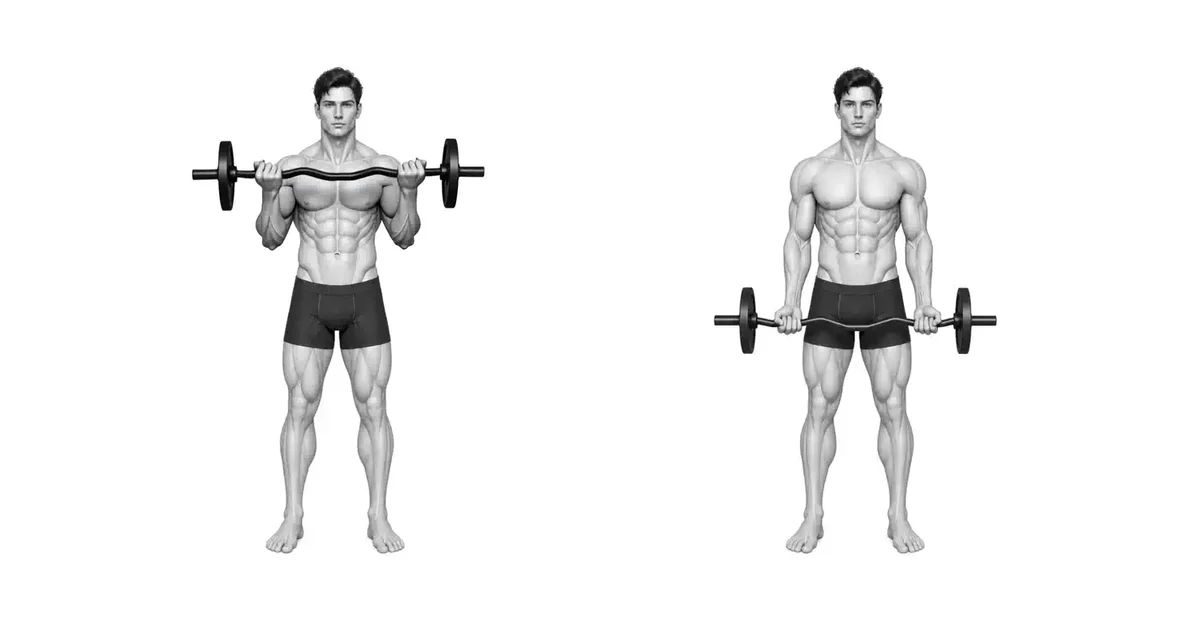
Key point: Progress the EZ Bar Curl only after every repetition follows the same path without joint pain.
TROUBLESHOOTING
Fix the cause of a mistake, not just its appearance
Elbows back
- What you see
- A motion in which the elbows are pushed back to the sides when raising the bar.
- Likely cause
- Trying to use the strength of the back of the shoulders and back rather than the strength of the biceps.
- How to correct it
- Think of keeping your elbows pressed to your sides and keep them vertical.
Excessive upper body recoil
- What you see
- Position in which the body bounces or shakes the body to lift weight.
- Likely cause
- Choose a heavy weight that cannot be handled.
- How to correct it
- Lower the weight and engage your core to keep your torso vertical.
REGRESSION & PROGRESSION
Match the difficulty before adding load
EZ Bar Reverse Curl
Performed with an overhand grip to focus on strengthening the brachioradialis and forearm muscles.
EZ Bar Preacher Curl
Perform from a preacher bench to block recoil and improve isolation.
BEGINNER PROGRAM
A practical starting framework
EZ bar curls are a shortcut to building thick arms without injury. Maintain a steady tempo.
Frequency
1-2 times a week
Use it as the main exercise in your arm exercise routine.
Volume
3~4 sets, 8~12 times
Combine the right weight and number of repetitions for hypertrophy.
- Be careful not to bend your wrist inward or outward.
- When coming down, slowly resist and relax for 2 to 3 seconds.
- Exhale when going up and inhale when going down.
Frequently asked questions
Where should I grab it?
If you bend inward, more stimulation will come to the outside (long head) of your bicep, and if you bend outward, there will be more stimulation to the inside (short head) of your bicep.