FACE PULL
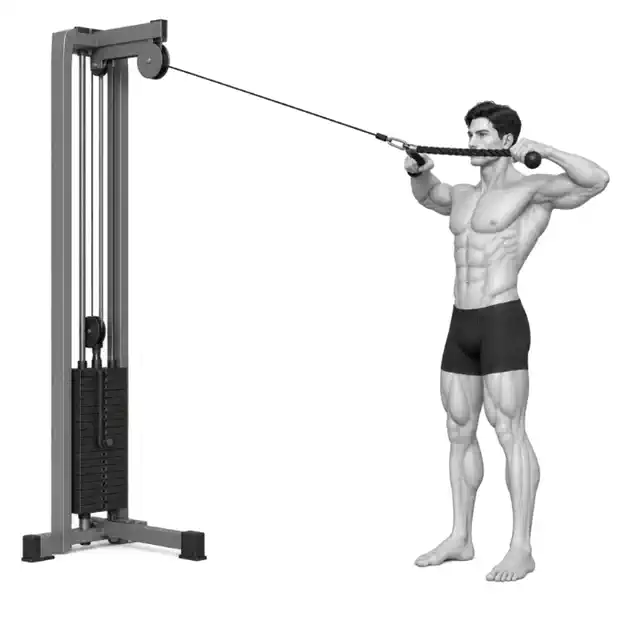
Face pull is not an exercise that involves pulling hard on a rope, but rather an exercise that repeats the path of the shoulder and arm while keeping the torso fixed.
The face pull is a cable exercise that trains the rear deltoids, upper back, and muscles involved in external shoulder rotation. Although upper body pushing exercises can be used in many programs to complement the balance of pulling movements, they are not intended to treat specific posture problems or shoulder pain. Start with light weights and prioritize the range where the rope reaches face height and your torso remains steady.
- Primary muscles
- Rear Deltoid Upper Trapezius
- Secondary muscles
- Rotator Cuff · Rhomboids
- Difficulty
- Beginner
- Movement type
- Cable Horizontal Pull with External Rotation
Can I perform face pulls every day?
Daily face pulls are not necessary. Treat them like other resistance exercises: use a light warm-up dose when useful, but schedule harder sets two or three times per week and adjust volume if the rear shoulders, elbows, or upper back remain sore.
STEP BY STEP
5 Steps for One Complete Rep
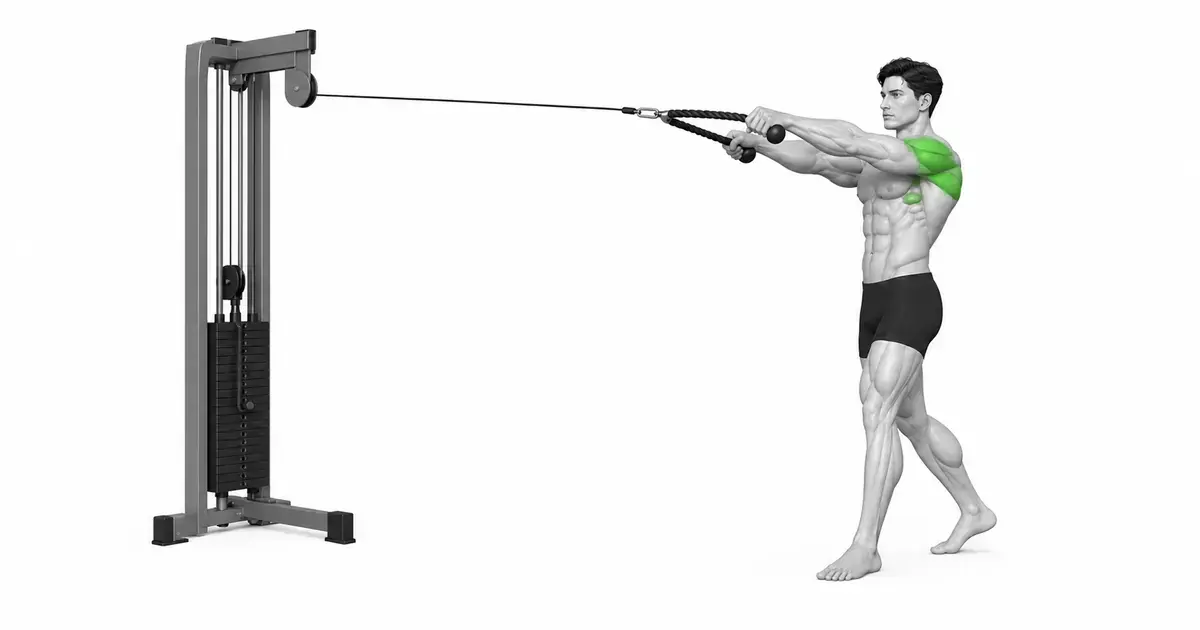
- 1
Cable height and grip settings
Set the pulley at face height or slightly higher. Hold the rope handle with an overhand grip with your thumb facing you.
- 2
Ready posture
Step back from the machine and straighten your arms. For a stable base, keep your knees slightly bent and your torso straight.
- 3
Pull it towards your face.
Exhale and pull the center of the rope towards your forehead or bridge of your nose, spreading your elbows high.
- 4
External rotation and compression
At the end of the pull, spread the ends of the rope and rotate your shoulders outward as if you were doing a double biceps curl. Feel pressure in your rear delts and upper back.
- 5
Controlled Expansion
Inhale and slowly extend your arms back to the starting point, feeling the stretch in your shoulder blades.
Face-Full
Add external rotation and elbow height
The secret to a perfect face pull is external rotation at the end. When pulling, your fist should be next to your ear and your elbow should be slightly lower than your fist. This ensures complete engagement of the posterior deltoid and rotator cuff.
Focus is determined by the height you pull. Pulling it up to eye level targets the rear delts, while pulling it lower toward the mouth puts more emphasis on the middle trapezius. Adjust according to your goals, but always keep your chest out and don't let your shoulders roll forward.
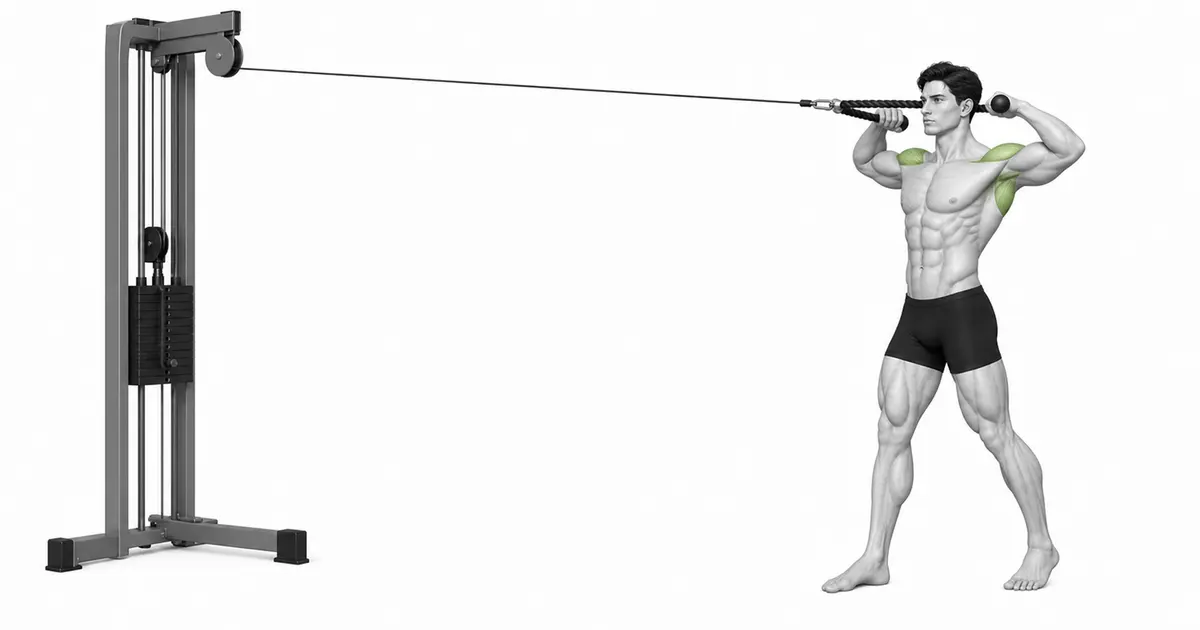
Key point: Don't let your ego get too high. In this exercise, precise contraction and rotation are much more important than moving heavy weights.
RANGE, LOAD & TEMPO
Choose a range and load that keep the Face Pull repeatable
The useful range of motion ends before your torso or working joints have to change position to move the load. Keep the rear deltoid upper trapezius producing the movement while the rotator cuff · rhomboids support the same alignment from the first repetition to the last.
Use a controlled lowering phase of about two to three seconds and avoid bouncing through the transition. If the final repetitions become shorter, faster, or visibly different from the first, reduce the load or stop the set before technique breaks down.
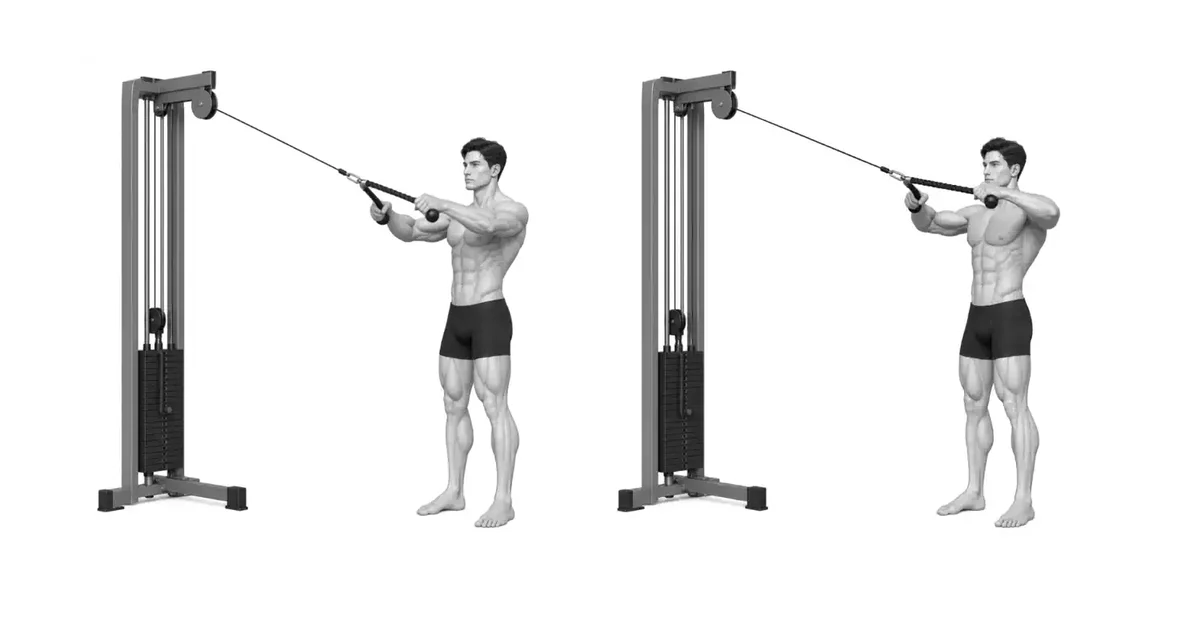
Key point: Progress the Face Pull only after every repetition follows the same path without joint pain.
TROUBLESHOOTING
Fix the cause of a mistake, not just its appearance
Pull towards chest
- What you see
- The movement of pulling the rope towards the chin or under the chest.
- Likely cause
- Recruiting the latissimus dorsi as the main mover
- How to correct it
- Keep the pull towards your face high and focus on spreading the ends of the rope at the finish.
Excessive body tilt
- What you see
- Lean back and pull the weight
- Likely cause
- The weight is so heavy that you need full body exercise
- How to correct it
- Use a staggered stance or lower the weight to keep your torso vertical.
REGRESSION & PROGRESSION
Match the difficulty before adding load
Learning band external rotation and shoulder movements
Practice external rotation and shoulder retraction with your elbows next to your body with a light band to get a feeling of not putting pressure on your neck.
Light Cable Face Pull
Hold the rope at face level and keep your torso stationary for 12–15 repetitions. The ends of the rope should be spread to the left and right, and your elbows should be at similar height to your wrists.
Face pull with stop zone
Pause for 1 second in the last position and then slowly straighten your arms. Increase the weight slightly only when you can achieve the same rest position for all repetitions.
BEGINNER PROGRAM
A practical starting framework
Master external rotation and shoulder movement with light weights first, increasing the weight only when the rope arrives at face height on every repetition.
Repeat
12–15 times
Spread the ends of the rope to both sides without recoil.
Set
2–3 sets
Rest 60–90 seconds between sets.
Frequency
2–3 times a week
Place after back or shoulder exercises.
- Raise weight only within the range where elbow height and external rotation can be maintained all the way.
- If you arch your back or feel your body swaying backwards, lower the weight and stand one step closer to the cable.
- If you feel sharp pain in the front of your shoulder, stop the movement and recheck your range of motion and cable height.
Frequently asked questions
How heavy should the Face Pull be?
Use a load that lets you complete the planned repetitions while preserving the setup, range of motion, and tempo described above. Finish the set when you can no longer reproduce the same joint path; add weight only after the top of the repetition range feels controlled in at least two sessions.