FLOOR PRESS
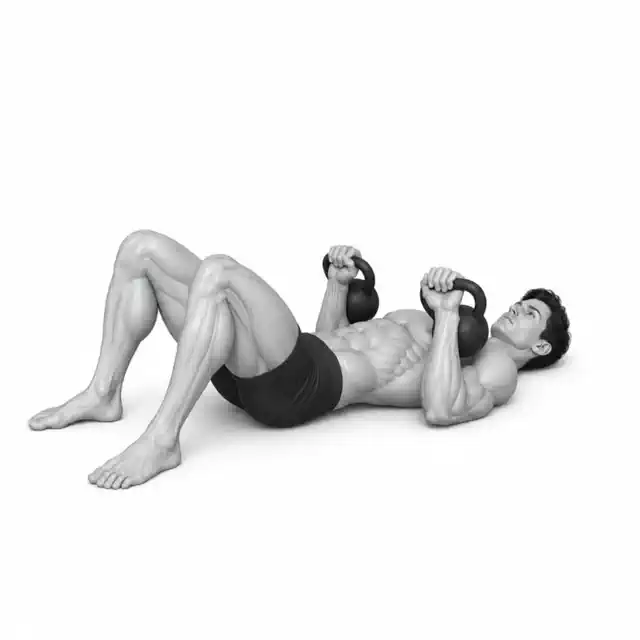
The floor press is not a bench press done on the floor, but a limited range of motion technique that pushes back from the point where the upper arm touches the floor.
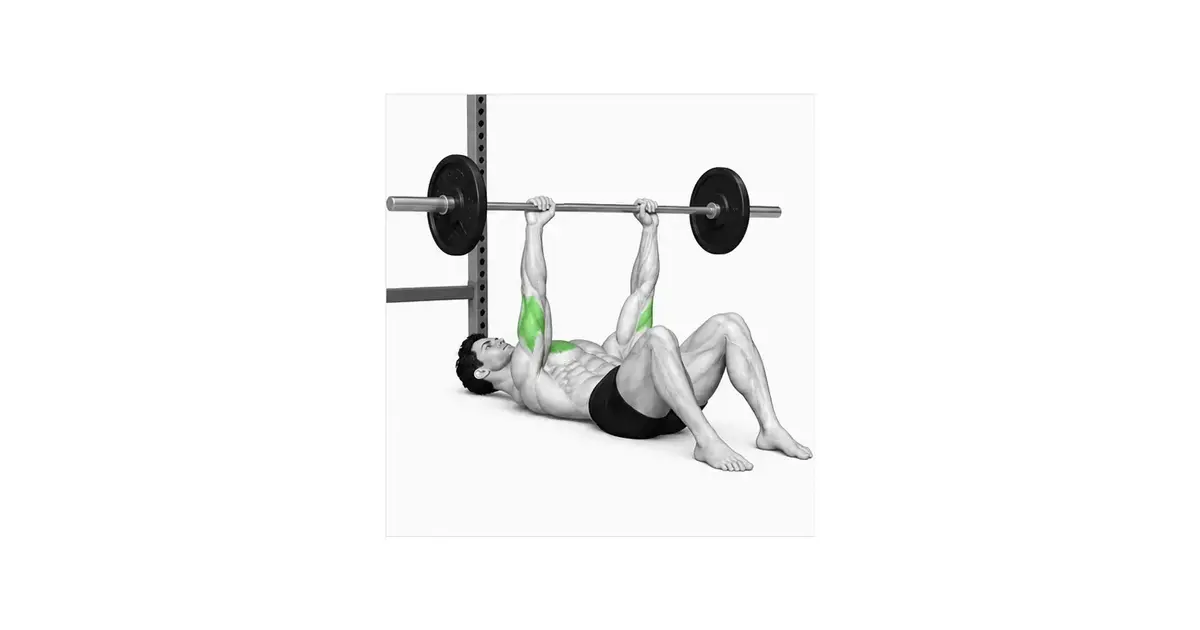
The barbell floor press is a horizontal press that lowers and pushes a barbell while lying on the floor instead of a bench. The lower leg stops once your upper arms and triceps touch the floor, making the lower leg shorter than a regular bench press, but that doesn't mean it's automatically safer for everyone. The key is to stack your wrists and elbows under the load, gently touch the upper arm to the floor, and then change direction without recoil. Since the connected movement demonstration is a barbell variation with the knees up and the feet on the floor, this guide is also based on the barbell movement, not the dumbbell movement.
- Primary muscles
- Pectoralis major and triceps
- Secondary muscles
- Front deltoid
- Difficulty
- Intermediate
- Movement type
- Limited range of horizontal push
Is the floor press safer than the bench press?
Although it has the characteristic of reducing the lower range of motion of the shoulder when the upper arm touches the floor, it cannot be said to be safer for everyone. Floor impact, wrist and elbow alignment, barbell set-up, and risk of escape in case of failure still need to be managed. If you are experiencing pain, check with a professional to determine the cause rather than randomly substituting exercise.
STEP BY STEP
5 Steps for One Complete Rep
- 1
Low rack and safety devices first
Set the J-cup low so that you can take out the bar with your arms almost straight without lifting your shoulders while lying on the floor. Place the safety bar at a height where the barbell does not come down to your neck or face when your upper arms touch the floor, and prepare unfamiliar weights with an assistant.
- 2
Secure your body with four contact areas
Place your head, upper back, and pelvis on the floor, raise your knees, and place both feet together. Tighten your abdomen to avoid excessive lifting of your ribs, and bring your shoulder blades back to stabilize them on the floor. There is no need to force your lower back into the floor or arch your back.
- 3
Creating Closed Grip and Forearm Alignment
Keep your wrists straight by wrapping your thumbs around the bar and resting the bar on the bottom of your palms. Adjust your grip width so that your forearms are close to vertical, both front and side, at the bottom where your upper arms touch the floor.
- 4
Lower your upper arms until they gently touch the floor.
Inhale and, keeping your torso fixed, control the bar downward from the center of your chest. Keep your elbows approximately 30 to 60 degrees from your torso, and stop when your upper arms and triceps touch the floor without colliding or bouncing.
- 5
Pushing a barbell over your shoulders while stationary
After contact with the floor, push the bar up with both hands without relaxing. Make sure your wrists remain above your elbows and the left and right plates are level, without roughly locking your elbows at the top, and allow the bar to stabilize before starting the next repetition.
FLOOR STOP
The floor is not a recoil plate, but a guide to the range of descent
In the floor press, the moment the upper arm touches the floor, the shoulder cannot move further down, so the range of motion is shorter than in the bench press. In bench press research, reducing the range of motion changed the weight that could be lifted, bar speed, and stagnation zone. Therefore, floor press records should not be compared on the same basis as full range of motion bench press records.
When you slam your elbows into the floor, the impact causes you to change direction and makes it difficult to see your torso tension and barbell path. Slow your descent so that your upper arms quietly touch, pause for 0.5 to 1 second, and then push. Even though floor contact limits the lower range of the shoulder, pain-free range and appropriate weights still need to be adjusted on an individual basis.
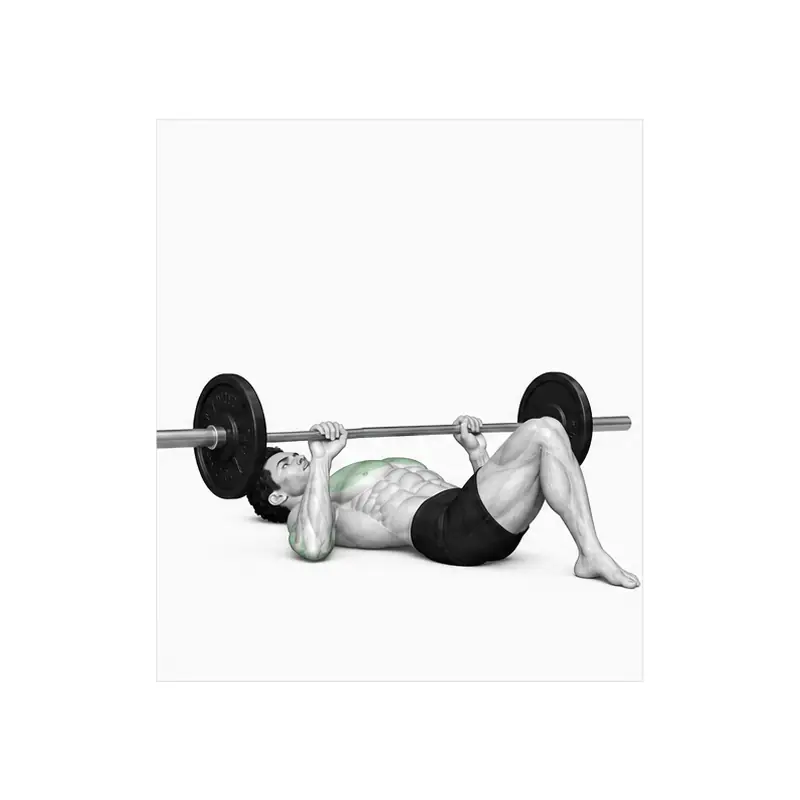
Key point: Cue to use right away: “Quietly lower your upper arms → Maintain tension → Push the bar without pushing the floor.”
WRIST & ELBOW
Stack your wrists and elbows under the barbell like a column.
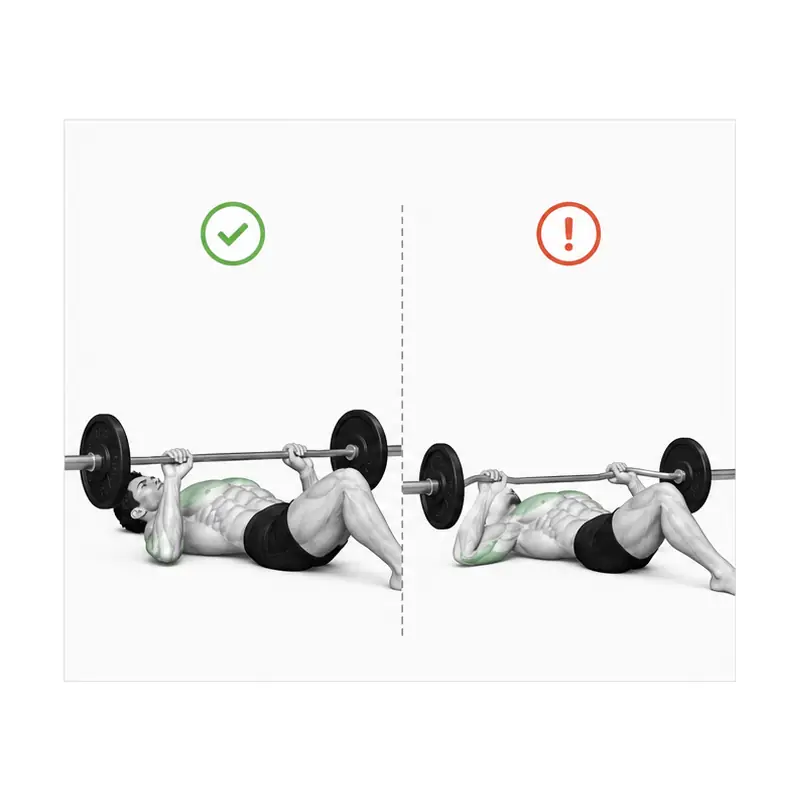
When the bar is pushed towards the fingers, the wrists bend back and it becomes difficult to transfer force to the elbows. Place the bar under your palms so that the backs of your hands and forearms are close to one line. If your wrists deviate too far inside or outside your elbows at the bottom, this is a sign that your grip width is incorrect.
If you spread your elbows too far to shoulder height, the bar may move towards your face or cause discomfort in the front of your shoulders, and if you place your elbows too close to your torso, the bar may drop towards your stomach and your forearms may tilt. Prioritize a range where your forearm is vertical and your shoulders are comfortable when your upper arm touches the floor, rather than a single absolute angle.
BAR PATH & SETUP
The bar is above the chest and back above the shoulders, and must be started and finished in the rack.
Place the bar on top of the shoulder joint at the top, and move it slightly downward from the center of the chest as you descend. As you ascend, return over the shoulder the same way. It's a good idea to take a photo from the side to check the path and horizontality to ensure the bar doesn't fall over your neck or face.
The barbell floor press is particularly important in bringing the bar up from the floor and over your body. Do not set up a heavy bar by rolling it over your stomach or face or lifting it off the floor while lying down. Use a low rack and safety bar, or have a trained assistant take over horizontally, and return to the rack with both arms steady at the end of the set.
TROUBLESHOOTING
Fix the cause of a mistake, not just its appearance
Slamming elbow on the floor
- What you see
- A loud sound is heard from the bottom, the barbell immediately bounces up, and the left and right arms shake.
- Likely cause
- You may be descending too fast or using weight that is out of your control.
- How to correct it
- Lower the weight and lower it for 2-3 seconds, then pause for 1 second as soon as your upper arm touches it.
Wrist bent backwards
- What you see
- The bar is placed on the finger side and the wrists are folded behind the elbows.
- Likely cause
- Often the grip is loose or the bar is held with the upper palms.
- How to correct it
- After wrapping your thumbs, place the bar under your palms and place your elbows directly under your wrists.
Bar flows towards face or neck
- What you see
- As you rise, move the barbell toward your head and spread your elbows to shoulder height.
- Likely cause
- The starting point of the bar may be too high or the forearms may be out of alignment due to fatigue.
- How to correct it
- Start with an empty bar and practice the path of lowering the bar down from the center of your chest and returning it to your shoulders.
One arm touches the floor first
- What you see
- The barbell is tilted and only one elbow hits it first, or one plate comes up first.
- Likely cause
- Your hands may be in different positions, your torso may be off center of the rack, or the weight may be excessive.
- How to correct it
- Align your hand position with the scale on the bar, place your body in the center of the rack, and lower the weight so that the left and right contacts are the same.
Forcefully moving the barbell up from the floor.
- What you see
- Bring the loaded bar to the starting position by rolling it onto your stomach or twisting it from a supine position.
- Likely cause
- I am attempting a barbell variation with a low rack or no assistant.
- How to correct it
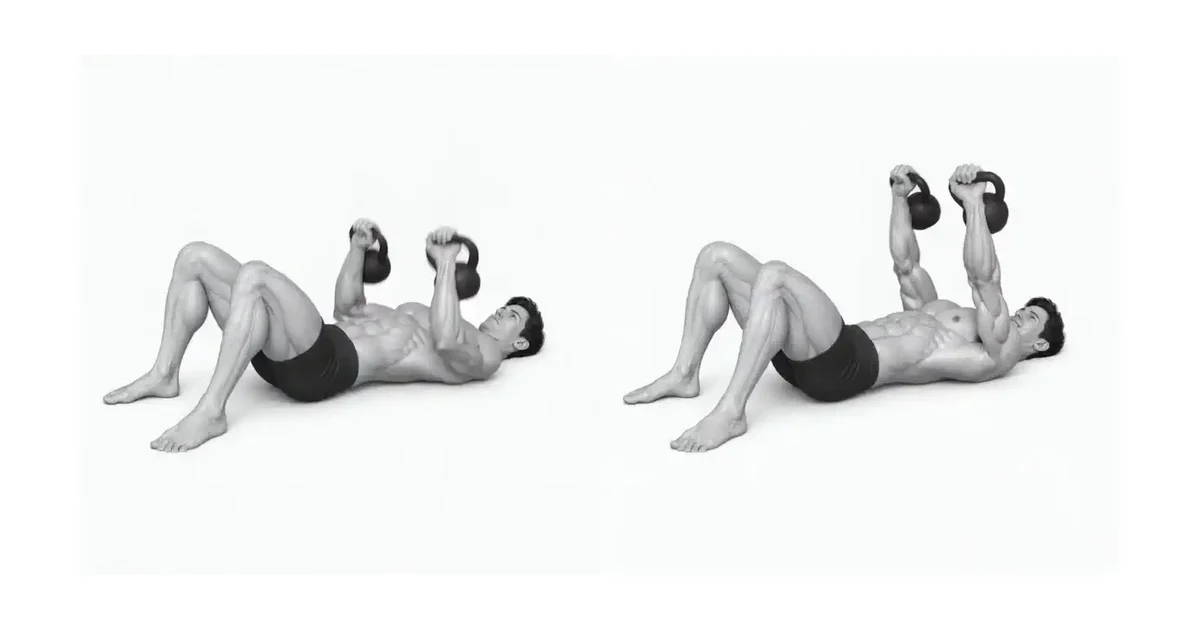
- Prepare a low rack and safety bar. If you don't have the equipment, you may want to switch to a lighter dumbbell floor press.
REGRESSION & PROGRESSION
Match the difficulty before adding load
Push-up or incline push-up
Learn torso alignment and horizontal pushing patterns first.
Dumbbell Floor Press
Handle light dumbbells independently on the left and right, practicing floor contact and wrist alignment.
Empty Barbell Floor Press
Remove the bar from the low rack and repeat the process, quietly lowering your upper arms to the floor.
Regular barbell bench press
If you need a longer range of motion, learn it as a separate exercise and do not apply the floor press weight as is.
BEGINNER PROGRAM
A practical starting framework
Deploy as a technique or accessory exercise for the horizontal press 1-2 times a week. Start your first session with an empty bar or a weight you can comfortably control for at least 10 repetitions, maintaining the same floor contact and barbell path for all repetitions. Don't start with heavy weights because the range of motion is short due to the floor.
Count
6–10 times
0.5–1 second pause after upper arm contact
Set
2–4 sets
2–3 minutes recovery between sets
Increase
+2.5–5%
Only when left and right contacts and bar path are the same
- If your upper arms touch smoothly and your wrists remain straight on all repetitions, increase slightly for the next session.
- If the bar drifts toward your face or your elbows hit the floor, immediately lower the weight and slow your descent.
- Since the range of motion is different from the regular bench press, do not apply the same 1RM ratio but record it as a separate exercise.
Frequently asked questions
Can my elbows rest completely on the floor?
Touch your upper arms and triceps to the floor, but do not relax your entire body. You can reduce recoil and practice starting power by quietly stopping for 0.5 to 1 second and then pushing up in the same alignment.
Can I do the barbell floor press without a rack?
Setups that involve rolling a loaded barbell over your body or twisting it while lying down are not recommended. If you have difficulty securing a low rack and safety bar, choose a variation that you can safely start with with each hand held independently, such as a light dumbbell floor press.
Can I use the same weight for the floor press as the bench press?
It is difficult to directly convert because the operating range and starting conditions are different. Some people can lift heavier weights over shorter ranges, while others cannot because of the stops and setup. Separate recordings of both exercises and increase each based on rep quality.
Evidence and references
- 1. Martínez-Cava et al. — Bench press range of motion, bar speed, and stagnation zone
- 2. Stastny et al. — Systematic literature review of bench press electromyography studies
- 3. Król & Gołaś — Bench press structure and bar path depending on barbell weight
- 4. NSCA — Barbell Bench Press Exercise Technique Instructions
- 5. ACSM — 2026 Resistance Exercise Guidelines Update