FORWARD FOLD
Forward fold is not a posture that forces the back to be round to touch the floor, but rather a movement that adjusts the knees, folds at the pelvis, and comfortably stretches the posterior chain.
Standing with your upper body forward-folded can create a sense of extension in your hamstrings, calves, and back, but the depth of your hands touching the floor is not the goal. Locking your knees and forcibly pulling your lower back can cause discomfort around your sit bones or lower back. Press your entire foot, bend your knees sufficiently, place your stomach close to your thighs, and straighten your legs little by little only within a pain-free range.
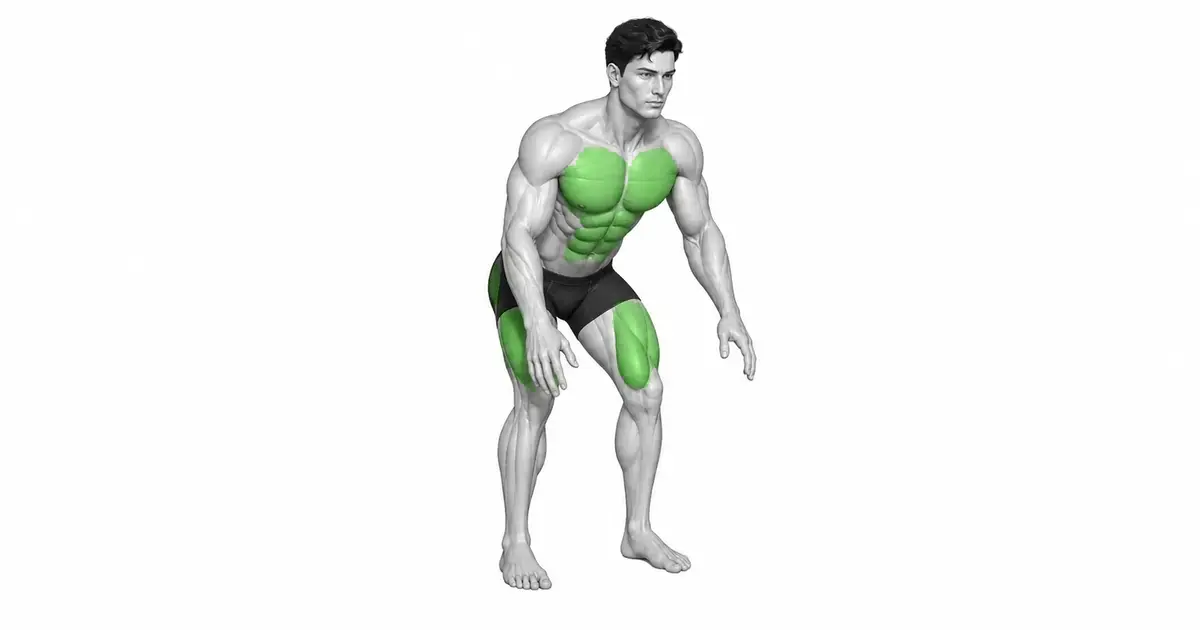
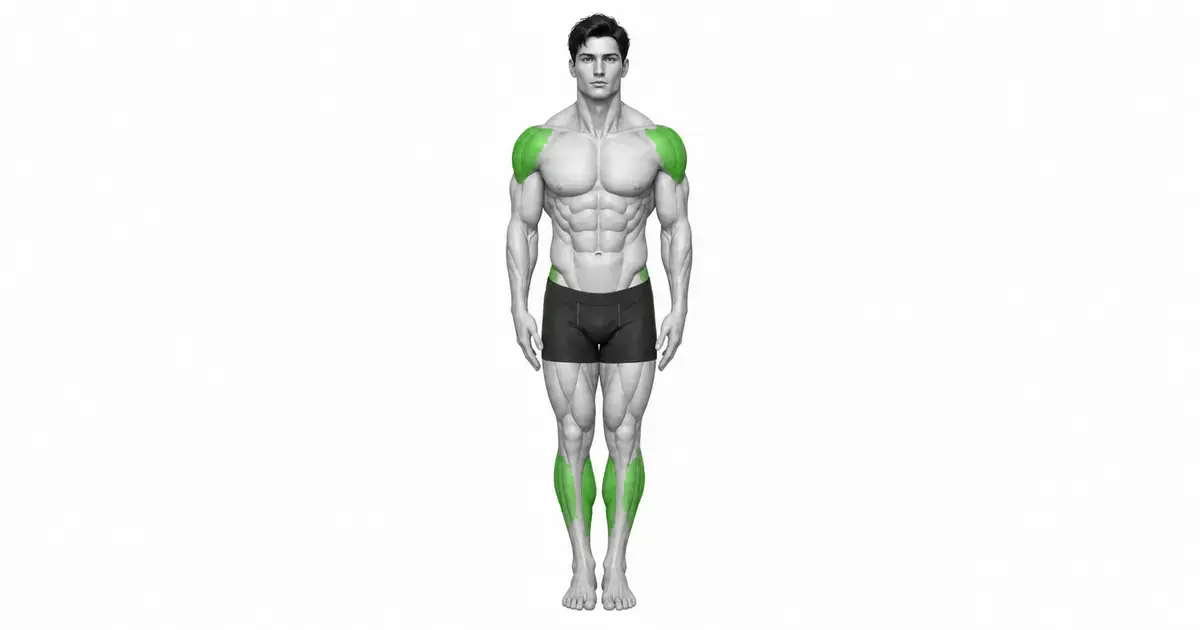
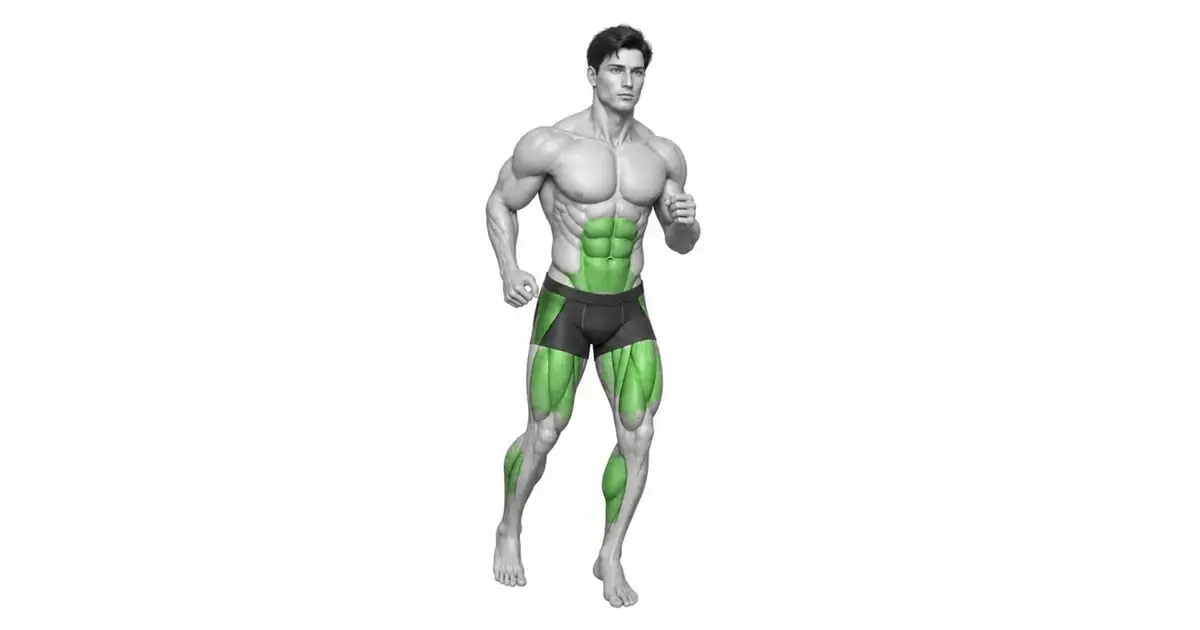
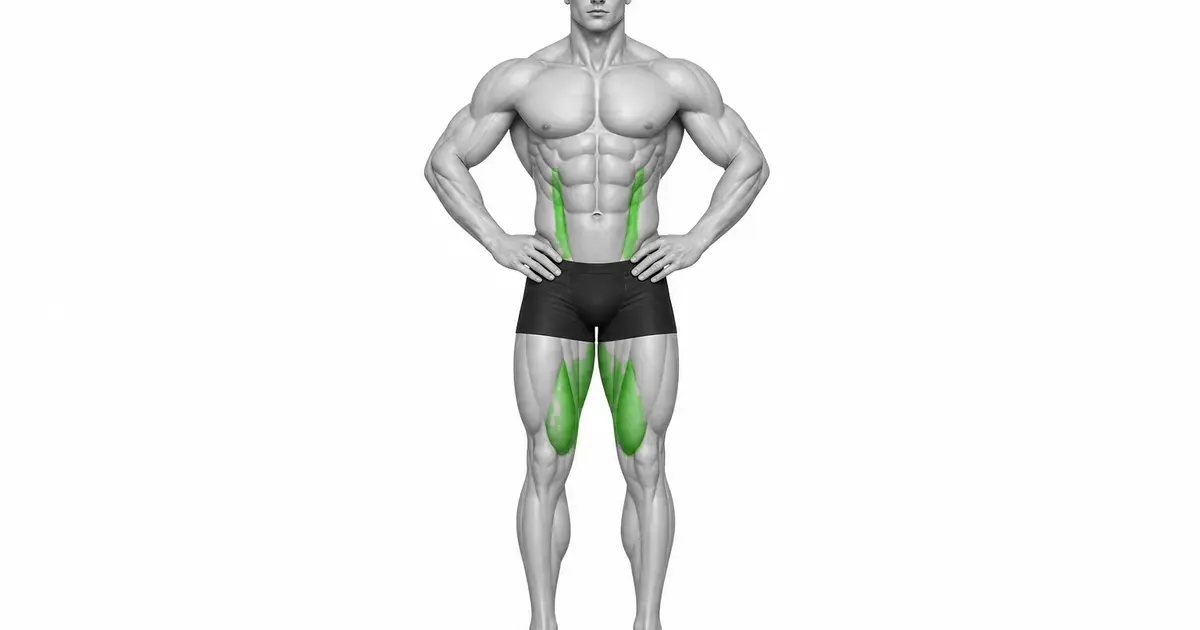
- Primary muscles
- Hamstrings, erector spinae
- Secondary muscles
- Calf, gluteal muscle, adductor muscle
- Difficulty
- Beginner
- Movement type
- Standing hip flexion and torso relaxation
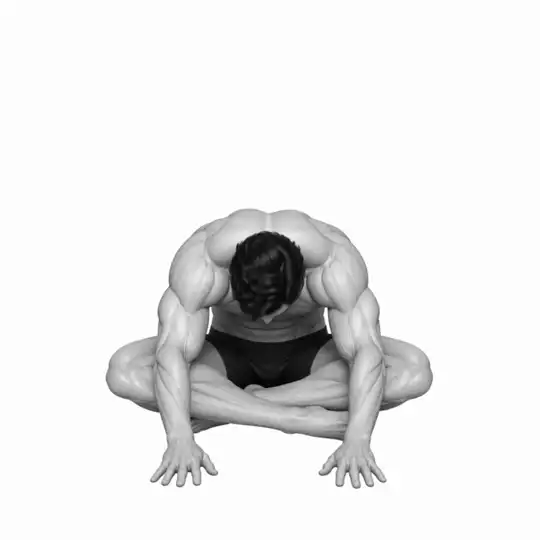
Is it done correctly if your hand touches the floor?
No. Hand positioning depends on your body type and flexibility, and is more important than being able to fold and breathe comfortably in your pelvis.
STEP BY STEP
4 Steps for One Complete Rep
- 1
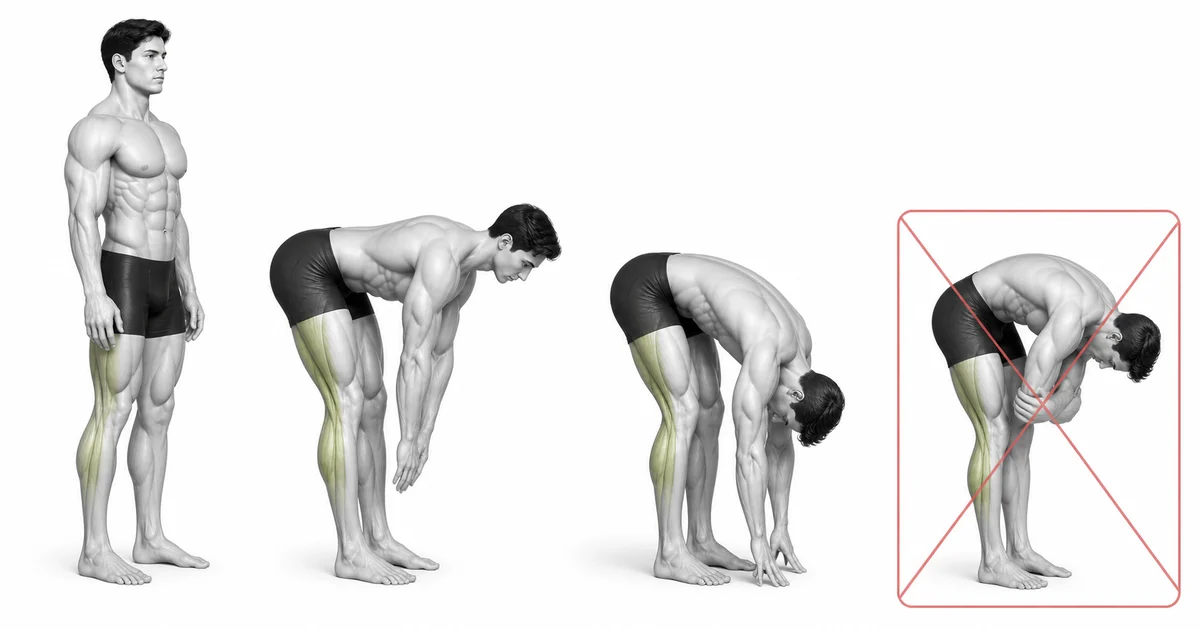
Create entire feet and soft knees
Place your feet hip-width apart and press your heels and the balls of both feet evenly. Bend comfortably without locking your knees.
- 2
Fold the torso forward from the pelvis
Exhale, send your hips back and fold them in your pelvic crease. At first, keep your back long and bring your stomach toward your thighs.
- 3
Support your hands and relax your neck
Place your hands lightly on your shins, blocks, or floor. Release the weight of your head, but do not pull your neck or the back of your head forcefully with your hands.
- 4
Bend your knees and stand up slowly
Tighten your abdominals and bend your knees more. Place your hands on your hips, keep your back long, and return your hip hinge to stand up.
BEND TO LENGTHEN
Bending your knees creates a sense of folding at the pelvis rather than at the waist and creates space for the torso
Limited hamstring flexibility causes the pelvis to roll backwards with the knees straight. Bend your knees and bring your stomach and thighs closer together.
In that position, adjust the stretching intensity by slightly straightening your legs only when your lower back and seat bones are comfortable.
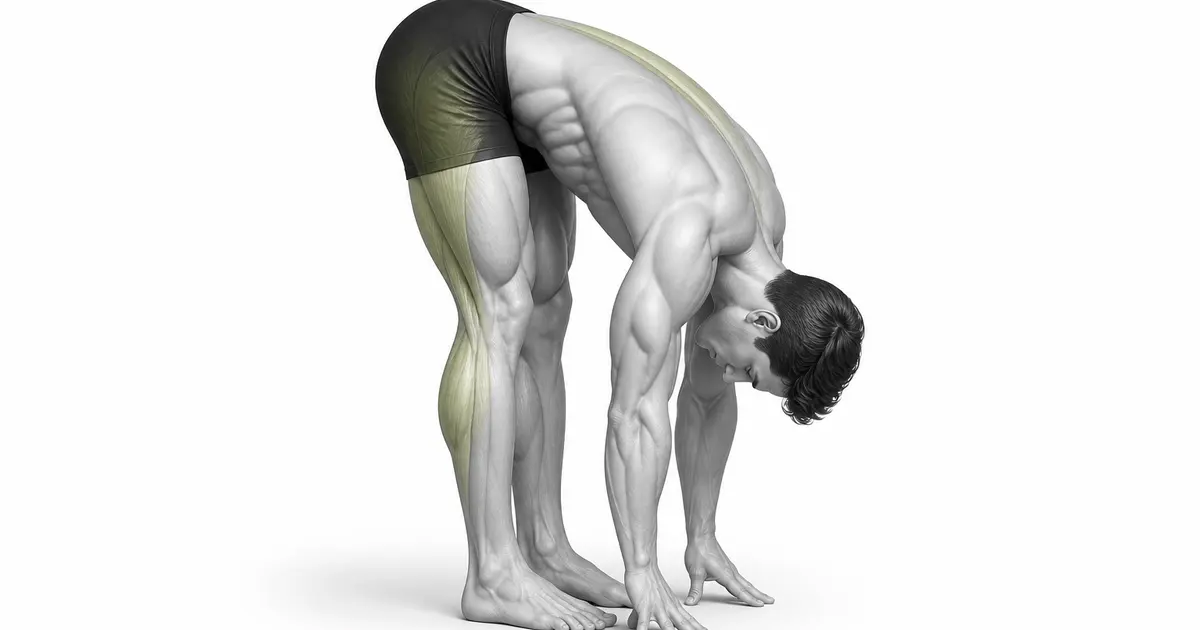
Key point: Cue to use right away: “pelvis rather than hands, breathing more comfortably than deeply”
NO FORCED PULL
Does not pull deeper with arm strength and recoil
A broad, gentle pull on the muscle is okay, but tingling, numbness, or joint pain are not normal signs of stretching.
Relax your torso with each breath, but let the range change naturally and do not forcefully pull in your toes or legs.
TROUBLESHOOTING
Fix the cause of a mistake, not just its appearance
Lock your knees and extend your hands to the floor.
- What you see
- The pelvis is left behind, the lower back is rounded, and the hamstrings are pulled sharply.
- Likely cause
- I aimed for my hand to touch the floor.
- How to correct it
- Re-establish a folded position at the hips, with your knees fully bent and your hands on blocks.
Pull neck and back of head by hand
- What you see
- The back of the neck is compressed and the chin is forced against the chest.
- Likely cause
- Trying to create depth beyond the weight of the upper body.
- How to correct it
- Place your hands on the floor or shins and let your head hang naturally.
Getting up quickly while feeling dizzy
- What you see
- Blurred vision or loss of balance immediately after returning.
- Likely cause
- After lying down for a long time, I woke up quickly without breathing and circulation adaptations.
- How to correct it
- Bend your knees and slowly come halfway up, breathe, and then stand up completely.
REGRESSION & PROGRESSION
Match the difficulty before adding load
Time and Frequency Zoom
Gradually increase performance time or add more times per week.
Difficulty Variant
Challenge yourself with deeper ranges of motion or higher resistance.
BEGINNER PROGRAM
A practical starting framework
Breathe comfortably for 20 to 40 seconds and repeat 2 to 3 times. You can keep them short and dynamic before a workout, or a little longer in the pain-free range after a workout or in a separate flexibility session.
Frequency
3 to 5 times a week
It is recommended to perform it as a habit in your daily life.
Volume
15~30 minutes
Please move sufficiently without putting too much strain on your body.
- Always check your condition first and do not overdo it.
- Practicing with joy and rhythm is the key to sustainability.
Frequently asked questions
Can I stretch my hamstrings even if I bend my knees?
Yes. By adjusting your knee bends, you can fold your pelvis while reducing the strain on your back. Adjust the intensity by slightly stretching your legs within a comfortable range.
If my back hurts, should I keep stretching it?
No. Bend your knees more and reduce the range. If you experience sharp pain or numbness in your legs, stop immediately and consult a specialist.