FRONT SQUAT
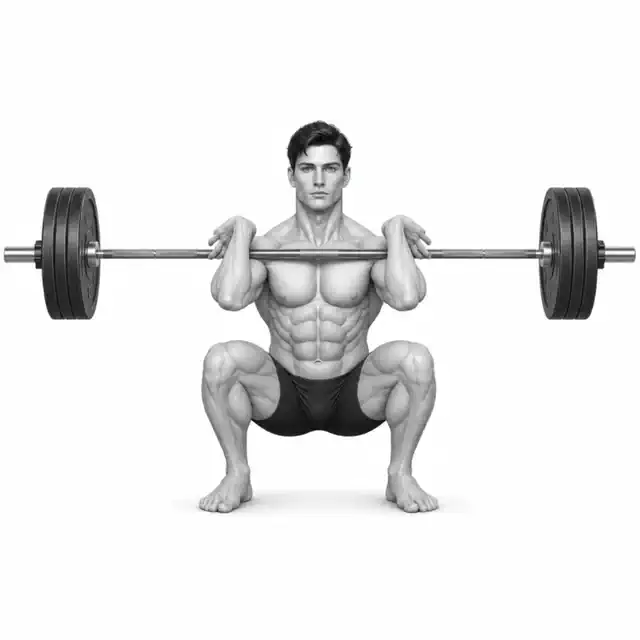
The front squat is not an exercise where you support the bar with your hands, but rather a squat where you support the bar with a shelf above your shoulders and high elbows.
If you hold the barbell in front of your body, it's easy for the bar to roll forward when your upper body collapses, so front rack and torso control are important. The bar is placed near the front deltoids and clavicle, not in the palms, and the fingers assist with positioning. If you lack wrist range of motion, use a strap or cross-arm grip, but practice in a rack and safety.
- Primary muscles
- Quadriceps, gluteus maximus
- Secondary muscles
- Abdominal muscles, erector spinae, upper back, adductors
- Difficulty
- Intermediate
- Movement type
- Front Rack Squat
Can I do front squats if my wrists are stiff?
Reduce wrist extension requirements with a strap or cross-arm grip. Just make sure the bar is above your shoulders and your elbows are kept high.
STEP BY STEP
4 Steps for One Complete Rep
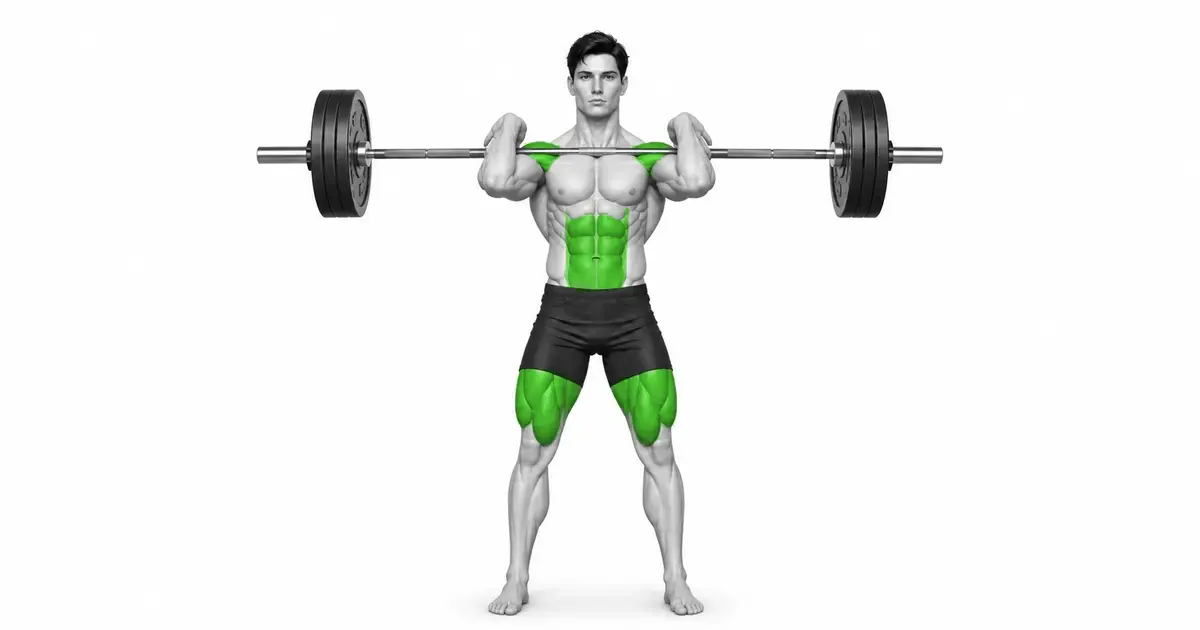
- 1
Align rack and safety height
Hang the bar at upper chest height and place the safety just below the depth of failure. Practice front racking and safe placing with an empty bar first.
- 2
Creating a front rack over the shoulder
Step under the bar, resting on the front deltoids and raising your elbows forward. Place your hands slightly wider than shoulder width and use 2 to 4 fingers to assist with bar position.
- 3
Sit upright with elbows raised
Create abdominal pressure and bend your knees and hip joints together. Place your entire foot on the floor, let your knees follow the direction of your toes, and go down to the depth before your elbows drop.
- 4
Stand up straight under the bar
Push into the floor with your middle foot and straighten your knees and hips together. Keeping your elbows high, stand fully, approach the rack one step at a time, check the bar on both hooks, and lower it.
FRONT RACK
The bar rests on a shelf above your shoulders, not your wrists
If you grab the bar with your hands, your wrists and elbows will bend excessively and your upper body will easily collapse. Move your shoulders slightly forward to make room for the bar to rest on your front delts.
If your wrists are uncomfortable, you can wrap the strap around the bar or use a cross-arm grip. Regardless of the grip, you must maintain elbow height and center of gravity on the left and right sides of the bar.
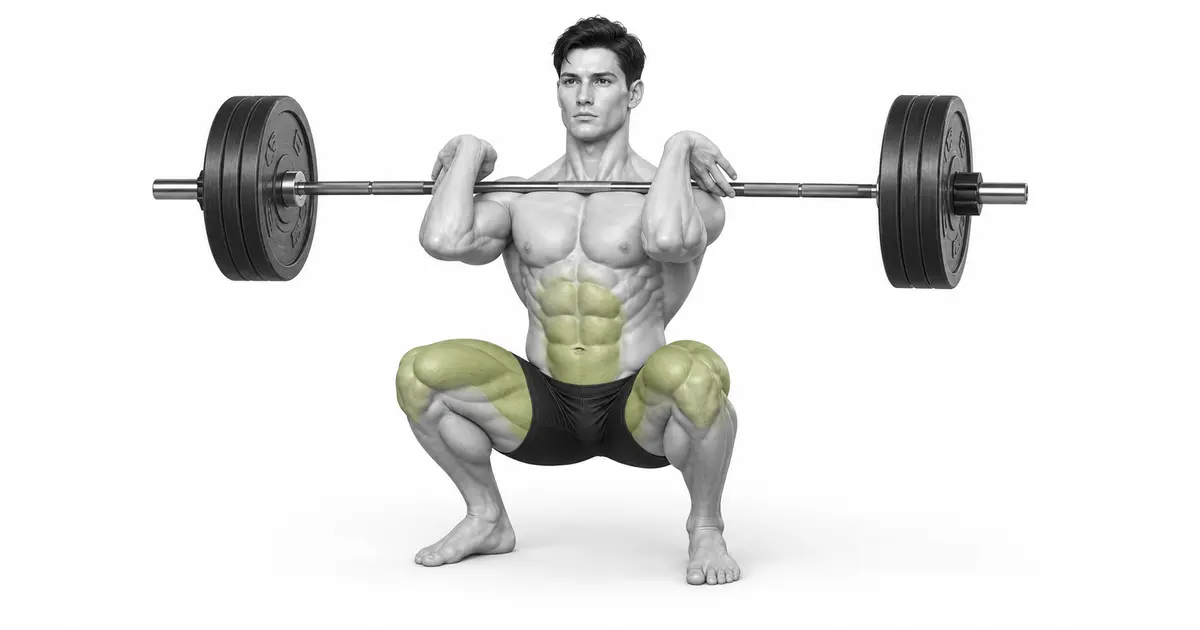
Key point: Cue to use right away: “Stand with your shoulders and elbows against the front wall.”
TORSO & BRACE
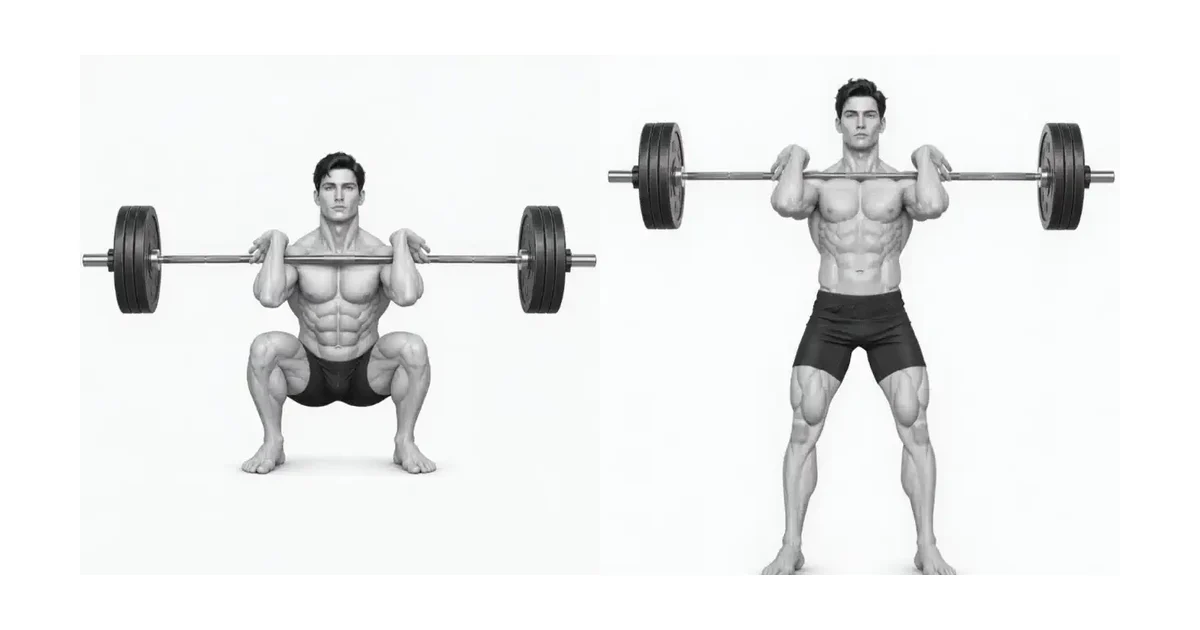
Rather than forcing your upper body to be vertical, allow the bar to remain over your midfoot.
Depending on body type and ankle range of motion, the upper body can be tilted to some extent. The bar should track over the center of your feet without leaning so much that your elbows drop and your back rounds.
When the breath and abdominal pressure are released at the bottom, the bar tends to roll. Tighten your torso before going down each rep and control your breathing after the difficult part of the ascent.
TROUBLESHOOTING
Fix the cause of a mistake, not just its appearance
Elbows drop to the floor
- What you see
- During descent or ascent, the bar rolls towards the fingers and the back is rounded.
- Likely cause
- The front rack is unstable or the upper back and abdominal pressure are fatigued.
- How to correct it
- Reduce the weight and depth and use the cue to bring your elbows to the front wall.
Lift and support the bar with your hands
- What you see
- My wrist is severely bent and my palms and elbows hurt.
- Likely cause
- The bar is hanging from the hands instead of resting on the anterior deltoids.
- How to correct it
- Place the bar back on your shoulders and use fewer fingers or a strap grip.
Heels lifted and knees turned in
- What you see
- At the bottom, foot pressure shifts forward and the knees move inwards toward the toes.
- Likely cause
- Stance/ankle range of motion or load does not match.
- How to correct it
- Reduce the depth and weight and stabilize the entire foot and knee direction first.
REGRESSION & PROGRESSION
Match the difficulty before adding load
Goblet Squat
Learn upper body and foot pressure with front load.
Strap Front Squat
Reduce wrist strain and practice elbow height.
Empty Bar Front Squat
Repeat the same bar path as the rack return.
Progressive Front Squat
Slight increase only when front lag is maintained.
BEGINNER PROGRAM
A practical starting framework
Begin when you can maintain elbow and foot pressure on goblet squats and an empty bar, and use a load that leaves the bar above your shoulders later in the set.
Count
3–8 times
Reset abdominal pressure every repetition
Set
3–5 sets
2–3 minutes recovery between sets
Frequency
1–2 times a week
Different squat volumes and adjustments
- If elbow height and bar path are maintained, increase the number of repetitions first.
- If you experience wrist pain, upper body collapse, or heel lifting, reduce the weight and depth.
- Repeat failure must only be attempted within a safety configured rack.
Frequently asked questions
Must the elbows be parallel to the floor?
The exact angle will vary depending on your body type, but it should be high enough to prevent the bar from rolling forward. If your elbows keep dropping during the descent, reduce the weight or depth.
Is it always safer for your back than back squats?
Load and upper body angle can vary, but no squat is automatically safe. Choose based on front rack, abdominal pressure, range of motion and personal pain history.