GOBLET SQUAT
Goblet squats are not an exercise in which you hold dumbbells far away, but rather learn a squat pattern with the weight close to your chest.
If you hold the head of one dumbbell or the horn of a kettlebell in front of your chest, the front load will help balance your upper body and make it easier to learn the squat path. The further away the equipment is from your body, the greater the strain on your arms and back, so keep your elbows close to your body, press through your entire feet, and bend your knees and hips together.
- Primary muscles
- Quadriceps and gluteus maximus
- Secondary muscles
- Adductors, hamstrings, core, upper back
- Difficulty
- Beginner
- Movement type
- Front Load Squat
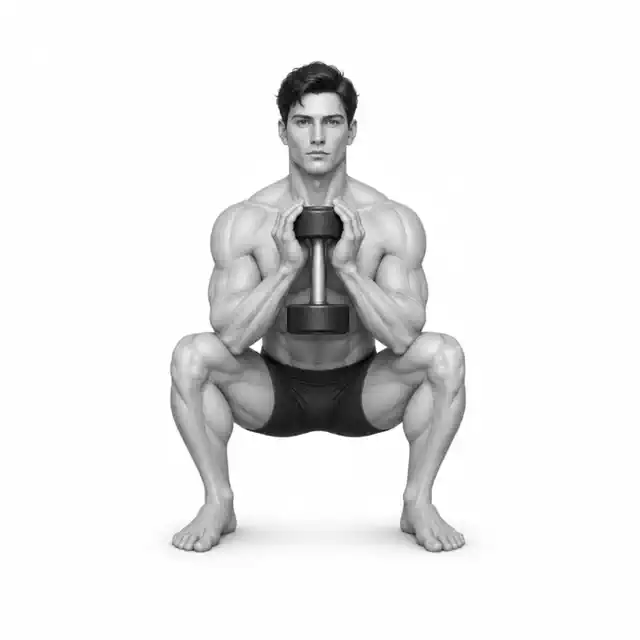
Do your elbows have to touch the inside of your knees?
Not required. Use a depth that maintains full foot and spinal alignment. Do not twist your knees or waist to force your elbows in.
STEP BY STEP
4 Steps for One Complete Rep
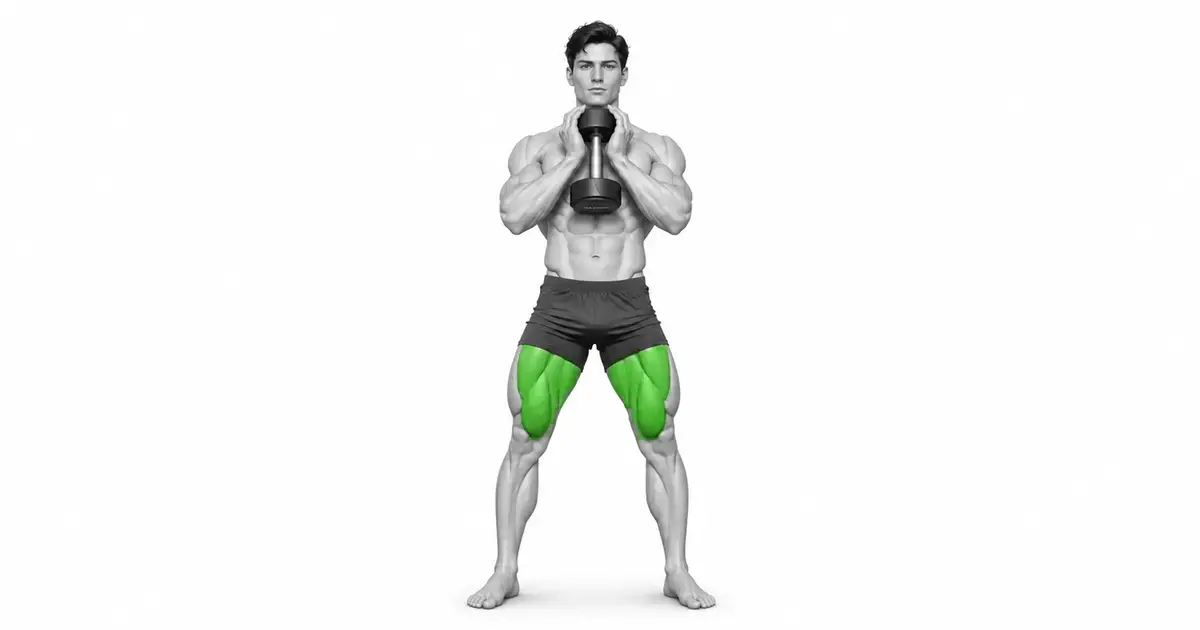
- 1
Bringing Dumbbells Safely to Chest
Pick up a light dumbbell from a high rest or lift it with a hip hinge, wrapping both hands around one head. Make sure your palms and fingers do not slip.
- 2
Creating a goblet grip close to the chest
Hold the dumbbells in front of your chest bone and point your elbows down your torso. Place your feet about shoulder-width apart and your toes slightly apart for comfort.
- 3
Controlled sitting between feet
Inhale and bend your knees and hips together to lower your pelvis between your feet. Make sure your entire foot remains on the floor and your knees follow the direction of your toes.
- 4
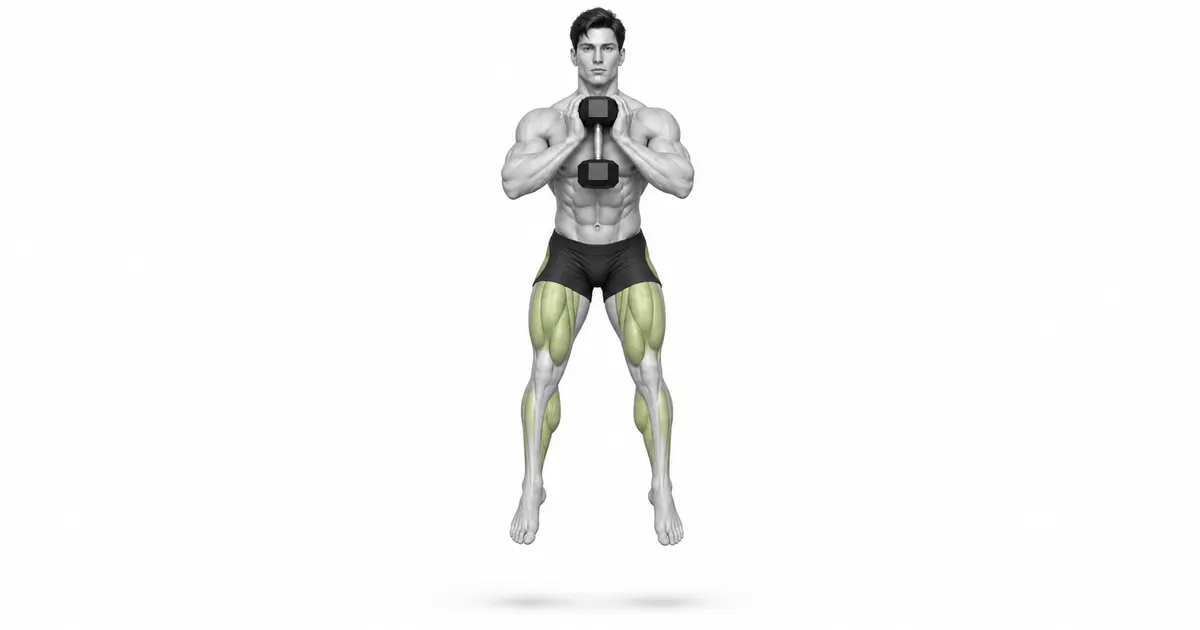
Stand up with weight attached
Rises like a footstool at a controllable depth. Do not allow the dumbbells to move away from your chest or your knees to move inward, and reset your breathing after standing fully.
LOAD POSITION
The closer you hold the weight to your chest, the easier it is to stabilize your torso.
If the dumbbells are lowered forward, your upper body will slump and you will have unnecessary leverage on your arms and lower back. Keep your wrists neutral and support your upper head directly in front of your chest.
The kettlebell can be held with both hands on the horn or supported on the floor. Whatever grip you use, make sure the device doesn't slip and your wrists are comfortable.
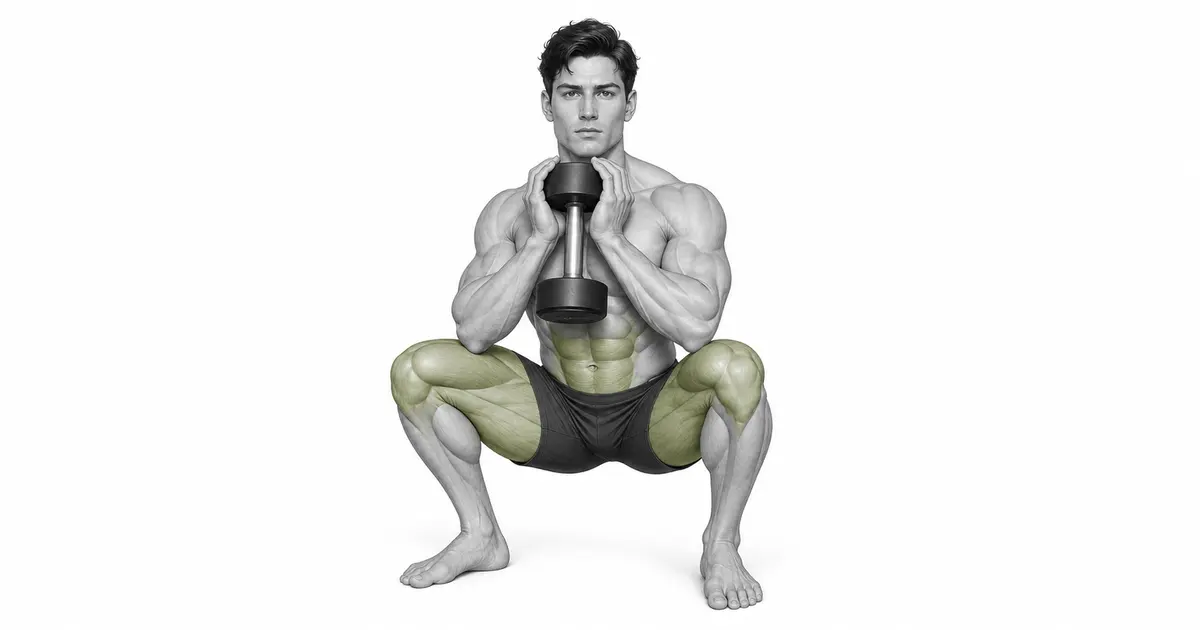
Key point: Cue to try right away: “Weight on the chest, hips between the feet.”
SQUAT DEPTH
The standard is the depth at which the feet and spine are stable rather than where the elbows and knees touch.
Putting your elbows between your knees may be a depth criterion for some people, but it is not required. Stop before your heels lift or your lower back curls excessively.
If your ankle range of motion is limited, you can use a small wedge or weightlifting boot, but first reduce the weight and depth to make sure you can squat under control.
TROUBLESHOOTING
Fix the cause of a mistake, not just its appearance
Dumbbells move away from chest
- What you see
- As you go down, your arms straighten and your upper body falls forward.
- Likely cause
- The weight is heavy or the grip and upper back are tired.
- How to correct it
- Lower the weight and keep the dumbbells close to your chest with your elbows under your torso.
Knees gathered inward
- What you see
- Knee moves inward towards big toe during descent or rise.
- Likely cause
- Stance/toe direction or load does not match current control ability.
- How to correct it
- Adjust your foot position, bring your knee toward your second toe, and reduce the depth.
Heel lifts and body leans forward
- What you see
- Lift your heels at the bottom and support yourself on your toes.
- Likely cause
- Ankle range of motion is exceeded or the weight is placed far away from the body.
- How to correct it
- Decrease the depth, keep the weight close to your chest, and find a range that maintains full foot pressure.
REGRESSION & PROGRESSION
Match the difficulty before adding load
Box Bodyweight Squat
Learn foot pressure and controlled depth.
Light goblet box squat
Connects front weight and sitting position.
Goblet Squat
Repeat the same depth and knee path.
Front Squat
Progress to barbell front rack when goblet weight is limited.
BEGINNER PROGRAM
A practical starting framework
Use for learning squats or as a lower body assistance exercise, and choose a weight that allows you to stably control the process of lifting and putting down the dumbbell.
Count
8–15 times
Descent 2-3 seconds, hold full foot
Set
2–4 sets
60–120 seconds recovery between sets
Frequency
1–3 times a week
Different squat volumes and adjustments
- If the weight remains at the chest and the knee path is consistent, increase the number of repetitions first.
- If your heels lift or your upper body collapses, reduce the weight and depth.
- Do not twist your waist or support excessively with one hand while lifting and putting down the equipment.
Frequently asked questions
Which is better, dumbbells or kettlebells?
Both tools are possible. Choose a tool that you can hold securely close to your chest and that won't cause discomfort to your wrists.
Can I continue to increase weight with just goblet squats?
It is possible, but the process of moving one dumbbell to your chest may be limited at first. If your grip and setup become unstable, you can extend the load with front squats or machine exercises.