HACK SQUAT
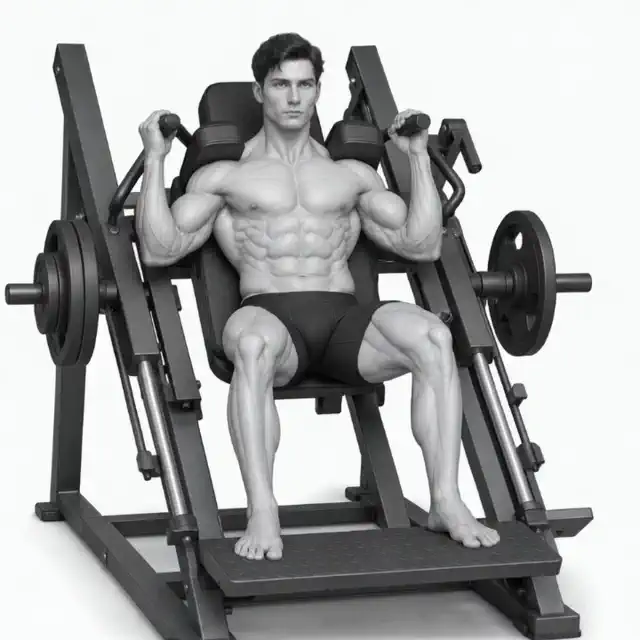
Hack squats are not an exercise that pushes a sled, but a machine squat that stretches the knees and hips together while placing the back and pelvis on the pad.
The hack squat machine has a backrest that guides the path, making it easy to focus on your lower body, but if your feet are positioned incorrectly or your pelvis is rolled up on the pad, it can cause discomfort to your knees and lower back. First check the safety levers and stops on an empty machine, and set them based on total foot pressure and pain-free depth.
- Primary muscles
- Quadriceps, gluteus maximus
- Secondary muscles
- Hamstrings, adductors, calves
- Difficulty
- Intermediate
- Movement type
- Machine Squat
Can I exercise my buttocks if I put my feet on the top of the footrest?
Joint angles and sensations may vary depending on foot position, but specific muscles are not isolated. First choose a position that allows you to maintain full contact with the pad.
STEP BY STEP
4 Steps for One Complete Rep
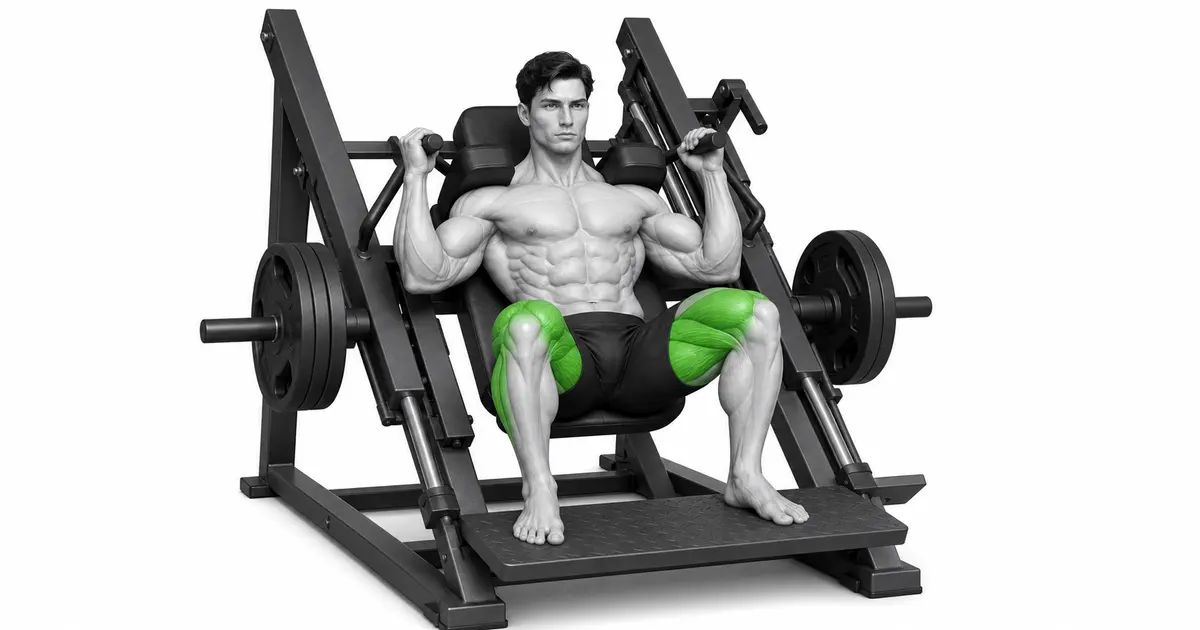
- 1
Check machine and safety devices
Check the lock/unlock direction of the safety lever and the position of the bottom stopper on the empty sled. Adjust the height of the shoulder pads and place your entire back and pelvis on the backrest.
- 2
Positioning your feet on the footboard
Place your feet about shoulder-width apart, with your toes slightly apart for comfort. Make sure the base of your big and little toes and the heel are all in contact with the footrest.
- 3
Bending knees and hips together
Release the safety lever, inhale and slowly lower the sled. Bring your knees toward your toes and stop deep before your pelvis curls into the pad.
- 4
Pushing the sled with your entire foot
Exhale and push off the footrest, straightening your knees and hip joints together. Don't lock your knees hard at the top, but make sure to lock both safety levers at the end of the set.
FOOT POSITION
Rather than aiming for foot height, we first look at whether the joints are comfortable and the entire foot is connected.
Lowering your feet can increase knee flexion and place greater demands on your quadriceps, but if your heels lift or your knees feel uncomfortable, you're too low. Elevating your feet can increase hip involvement, but your pelvis should not lift off the pad.
Every machine has different footrest angles and sled paths, so don't just follow other people's markings - find your own position on an empty machine.
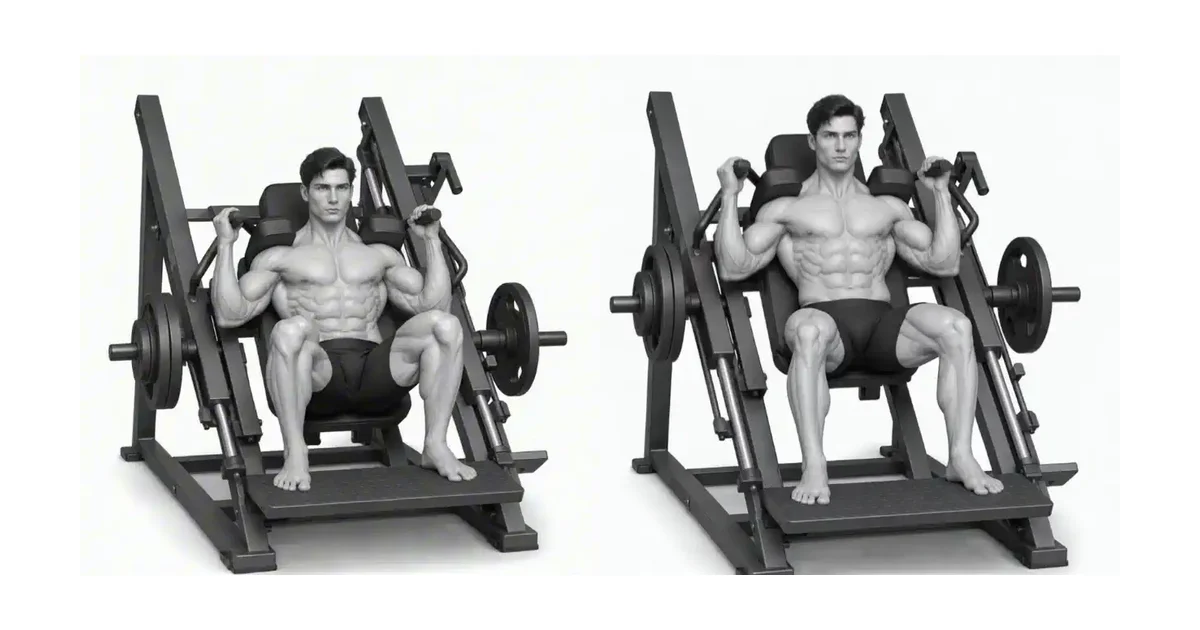
Key point: Cue to use right away: “Keep your entire feet together and your knees toward your toes.”
CONTROLLED DEPTH
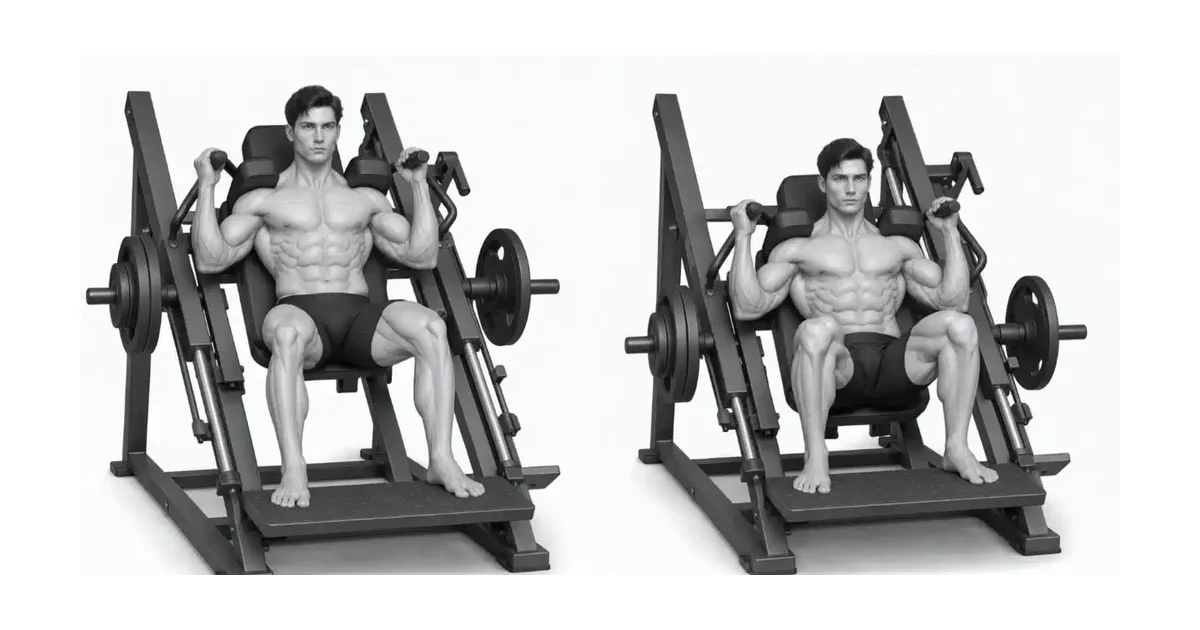
Depth is determined by the extent to which the pelvis and back remain on the pad.
If your pelvis rolls as you go down and your lower back rises from the backrest, you have exceeded your current range of motion. Stop just before that and adjust your foot position or stopper.
Instead of bouncing the sled at the bottom, slow down for close to a second and then change direction with the same foot pressure.
TROUBLESHOOTING
Fix the cause of a mistake, not just its appearance
Heel lifts off footrest
- What you see
- At the bottom, your weight shifts toward your toes and your heels rise.
- Likely cause
- Foot is too low or falls deeper than ankle range of motion.
- How to correct it
- Raise your feet a little and reduce the depth to find the range where your foot tripod will stay.
Knees turned inward
- What you see
- When pushing up, both knees bend inward towards the toes.
- Likely cause
- The load is too heavy or the foot width and toe direction do not match.
- How to correct it
- Lower the weight and keep your knee toward your second toe.
Pelvis comes off the pad at the bottom
- What you see
- As you get deeper, the area between your waist and pelvis moves away from the backrest.
- Likely cause
- Foot position or depth exceeds hip joint range of motion.
- How to correct it
- Adjust the bottom stopper and foot position, only going down to the point where pad contact is maintained.
REGRESSION & PROGRESSION
Match the difficulty before adding load
Box Squat
Learn foot pressure and sitting depth with your body weight.
Bin Machine Hack Squat
Check failsafe and sled paths.
Tempo Hack Squat
Apply 3 second descent and bottom control.
Progressive Hack Squat
Slight increase only when pad contact is maintained.
BEGINNER PROGRAM
A practical starting framework
Start with an empty machine, considering machine weight and sled friction, and select a load that maintains foot pressure and pad contact through all repetitions.
Count
6–12 times
Descent 2-3 seconds, transition without recoil
Set
3–4 sets
90–180 seconds recovery between sets
Frequency
1–2 times a week
Different squats, leg presses and volume control
- If the same depth and foot pressure are maintained, increase the number of repetitions first.
- If heel lift, knee collapse, or pelvic roll occurs, reduce the weight and depth.
- Do not use if the safety lever does not lock securely or if the machine shakes.
Frequently asked questions
How deep should I go?
Heels together, knees pointing towards toes, hips and back lowered to the remaining depth in the pad. Deeper coverage is not always better.
Do hack squats completely replace barbell squats?
Hack squats are good for focusing on lower body load as the machine supports the torso path. Free weight balance and torso control needs are different, so they can be used together or separately depending on your goals and experience.