HANGING KNEE RAISE
Hanging knee raises are not an exercise to raise the knees by swinging the legs, but rather a movement to stabilize the shoulders and roll the pelvis to control the hanging body with the abdomen.
Hanging from a pull-up bar and raising your knees trains your hip flexors, abdominals, and grip together. Swinging your leg back to create a kickback will raise your knee height, but you will lose control of your torso. Once you have a secure grip on the footrest, gently lower your shoulder blades and add abdominal contraction by curling your tailbone forward at the end of the knee lift.
- Primary muscles
- Rectus abdominis · Iliopsoas
- Secondary muscles
- Obliques, forearm, latissimus dorsi, serratus anterior
- Difficulty
- Intermediate
- Movement type
- Hanging hip flexion and posterior pelvic tilt
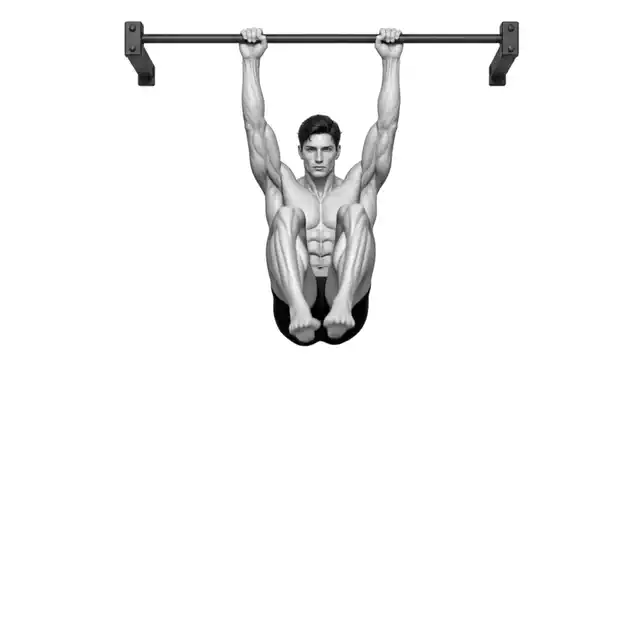
How high do you raise your knees?
Raise to hip level and then, if you can control it, roll your pelvis and bring it in a little more. If shaking occurs, reduce the height.
STEP BY STEP
4 Steps for One Complete Rep
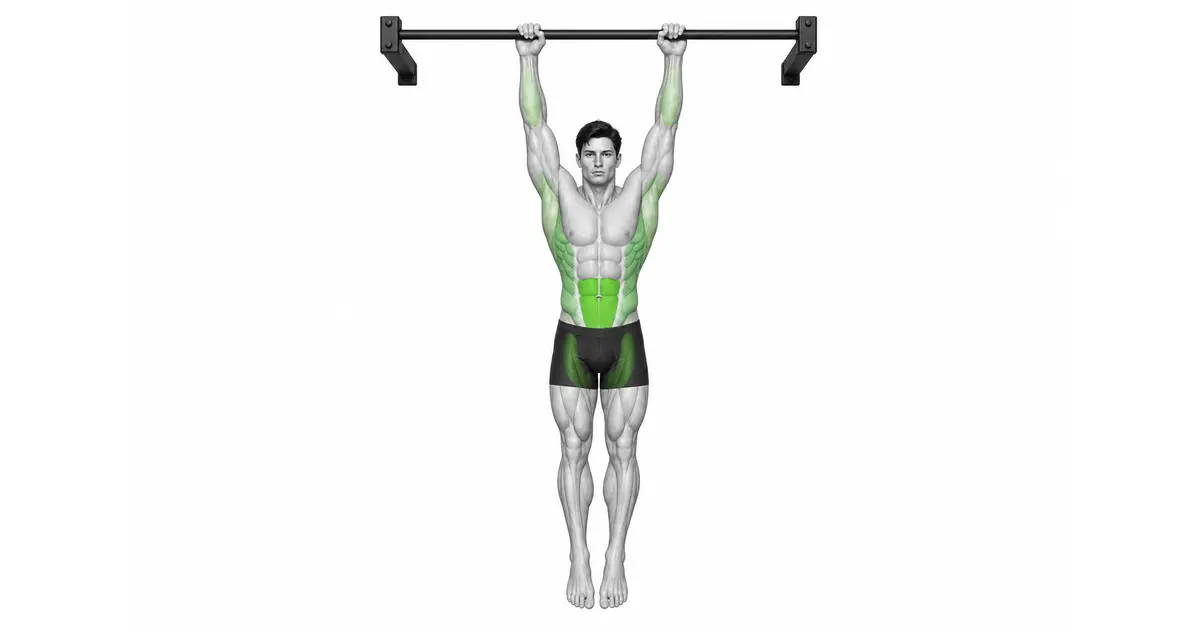
- 1
Creating a secure grip on footrests
Hold the bar about shoulder-width apart and wrap your thumbs around it. Step off slowly and make sure your grip and shoulders are comfortable.
- 2
Eliminate sway with active suspension
Gently pull your shoulder blades down and your ribs down. Bring your legs together and stop rocking back and forth.
- 3
Raise your knees toward your chest and curl your pelvis.
Exhale and raise your knees above hip height. At the top, curl your tailbone forward and bring your pelvis toward your ribs.
- 4
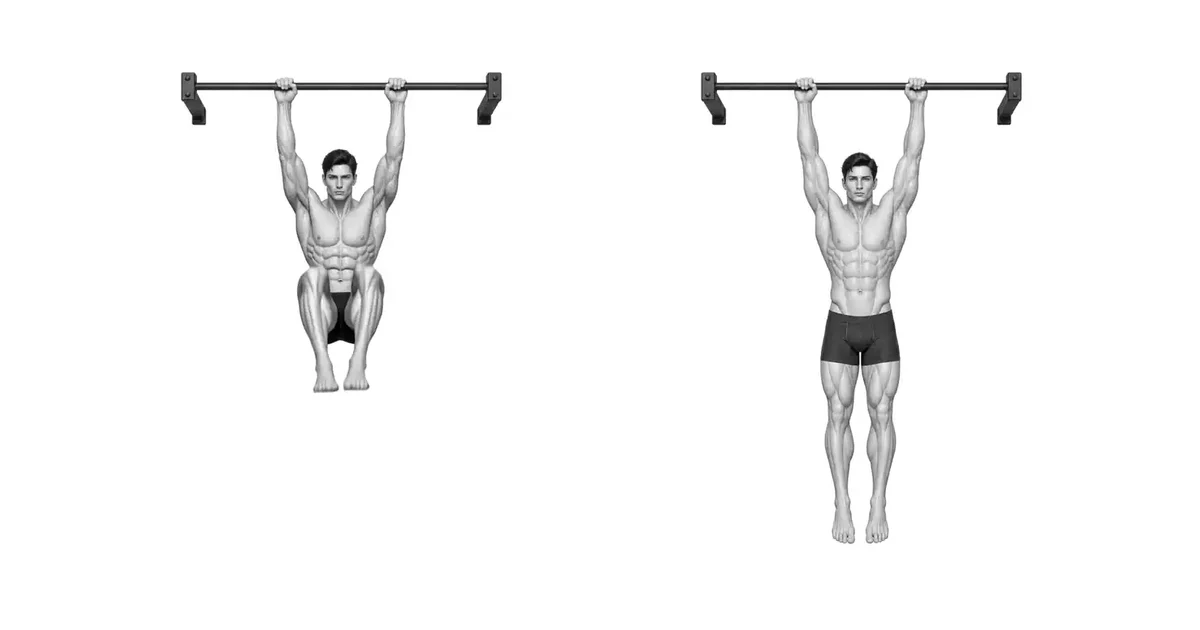
Slowly lower your legs without recoil
Lower your knees and lengthen your legs for 2 to 4 seconds. If you feel wobbly, stop completely or step down before the next repetition.
CURL THE PELVIS
Do not roll your pelvis after knee height to increase abdominal curvature.
If you only raise your knee to the hip joint, it is mainly hip joint flexion. At the top, bring your tailbone forward to shorten your belly.
For pelvic rolls, practice from a stationary position with reduced range rather than rocking your body backwards.
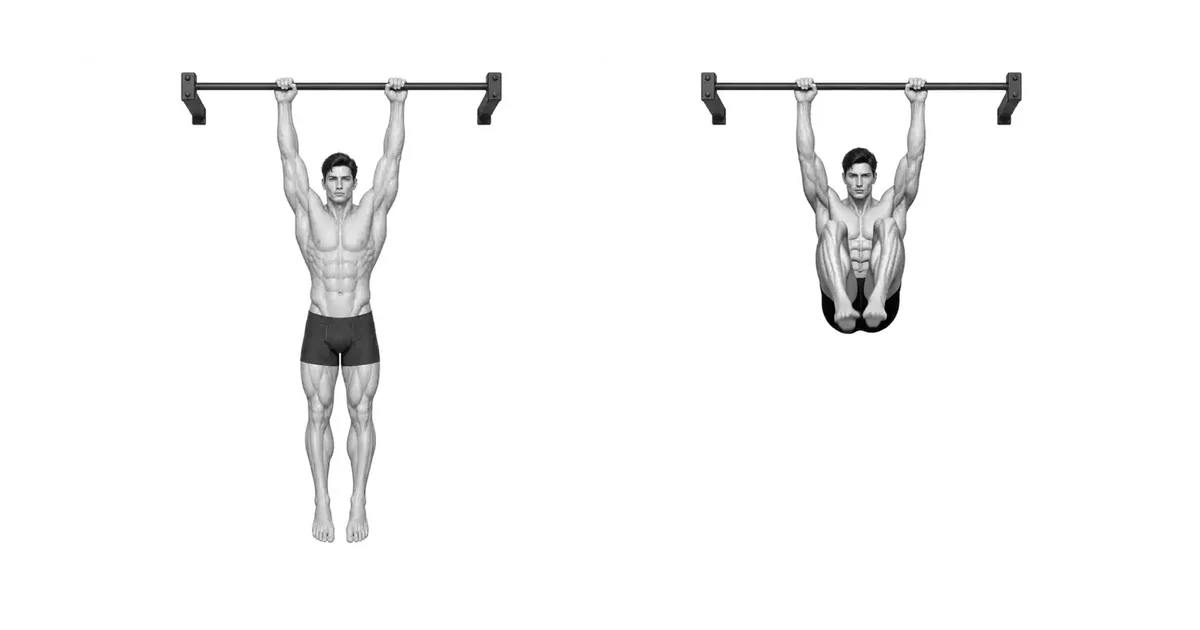
Key point: Cue to use right away: “Raise your knees and curl your tailbone forward.”
STOP THE SWING
Each repetition must start from a steady suspension
If the descent is fast, your legs will be behind your body and will be the kickback for the next repetition. Use 2-4 second descents.
If you experience any wobble, don't hold on to the bar and kip, instead get down to the steps and reset.
TROUBLESHOOTING
Fix the cause of a mistake, not just its appearance
Kick your leg back to use recoil
- What you see
- Your body will rock back and forth and the repetition rate will continue to increase.
- Likely cause
- Descent control and active suspension are disengaged.
- How to correct it
- After stopping the repetition and the shaking disappears, reduce the knee range and perform slowly.
Shoulders completely collapsed towards ears
- What you see
- The neck is shortened and the front of the shoulder is uncomfortable.
- Likely cause
- Repeated in passive suspension without scapular stabilization.
- How to correct it
- Lightly lower your shoulder blades and use a captain's chair variation if your shoulders are uncomfortable.
Only raises the knees and does not move the pelvis
- What you see
- Only the front of the thighs are fatigued and there is less upper abdominal contraction.
- Likely cause
- Movement ended in hip flexion.
- How to correct it
- Lower the weight and speed, curl your tailbone forward at the top and pause for 1 second.
REGRESSION & PROGRESSION
Match the difficulty before adding load
Increased load and strength
Increase intensity by gradually increasing weight or shortening rest periods.
Complex Variant Behavior
Increase the difficulty level by combining it with other exercises or adding unstable environments.
BEGINNER PROGRAM
A practical starting framework
If your grip or shoulders get tired first, split the purpose of the movement with a captain's chair or supine knee raise before relying on the straps.
Frequency
2-3 times a week
Place it appropriately in your whole body or relevant area routine.
Volume
3~5 sets, 8~15 times
Adjust the number of reps and sets according to your goals.
- Always put safety first and listen to your joint pain.
- Perform the entire operation within the scope of your control.
Frequently asked questions
Is it better to stretch your legs?
When you straighten your legs, the lever becomes longer, making it much more difficult. In knee variations, proceed after controlling pelvic extension and descent.
What if the grip loosens first?
Split into shorter sets or use captain's chairs. It doesn't hang and fall until it fails.