HIP ABDUCTOR MACHINE
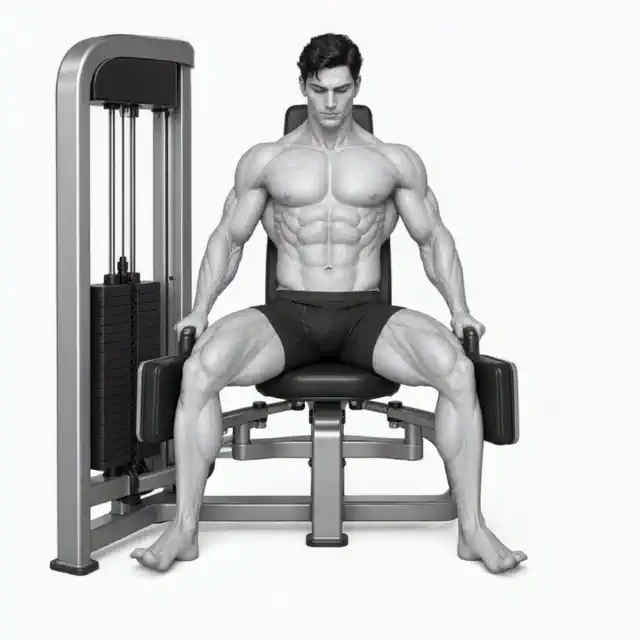
The hip abduction machine is an exercise that fixes the pelvis and opens the hip joint outward rather than an exercise that spreads the legs wide.
Seated Hip Abduction Machine can target your gluteus medius and gluteus minimus. Place your back and pelvis on the pad and push against the pad with your outer thighs, but don't arch your lower back or bounce back to full range. The standard is the area where the left and right hips remain on the seat.
- Primary muscles
- Gluteus medius and gluteus minimus
- Secondary muscles
- Upper gluteus maximus, tensor fascia lata
- Difficulty
- Intermediate
- Movement type
- Hip abduction
Is it more effective if I lean my upper body forward?
The areas you feel may vary depending on your posture, but it is difficult to determine that one posture is absolutely superior. First, choose an angle that you can repeat without moving your pelvis or lower back.
STEP BY STEP
4 Steps for One Complete Rep
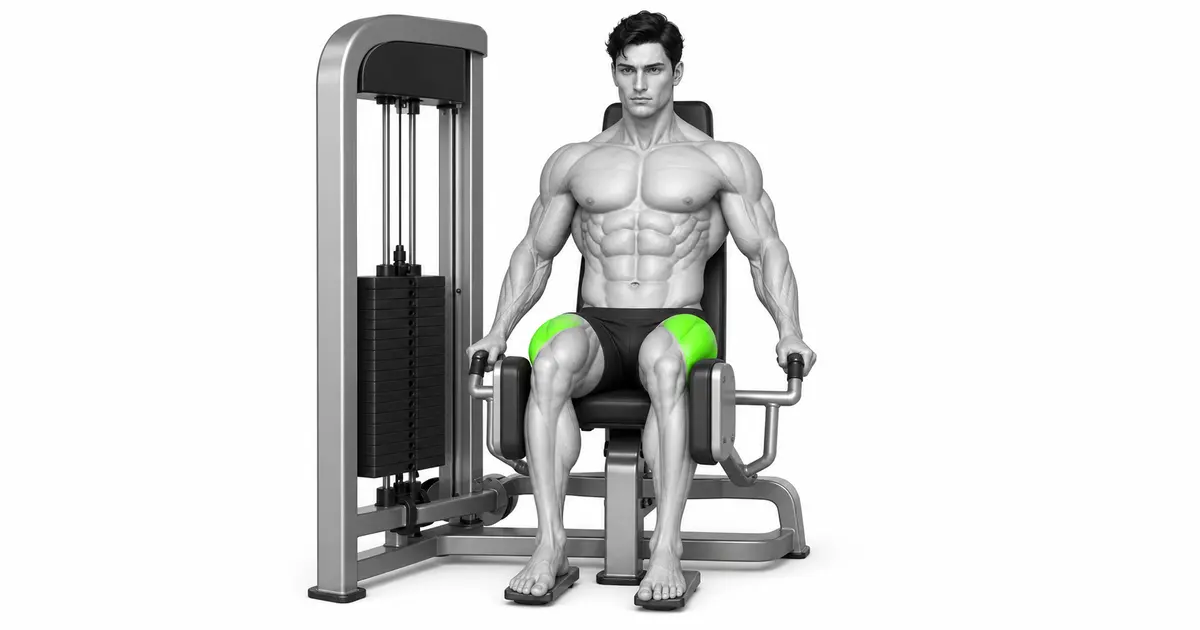
- 1
Adjusting pad and start width
Adjust so that the outer thigh touches the center of the pad, and choose a narrow starting width that does not cause discomfort to the hip joint. Do not press the knee joint itself into the pad.
- 2
Stabilizing the Pelvis and Torso
Place your back and buttocks against the seat and lightly hold the handle. Lock your abdomen so you don't lift your ribs and keep your feet in the same place.
- 3
Open thighs outward
Exhale and push both pads at the same speed. Move from the hip joint without pushing off with your feet or throwing your torso forward.
- 4
Controlled closing of weight stack
Pause at the outer point for 1 second, then inhale and bring your legs together for 2-3 seconds. Start the next iteration before the stack is hit.
PELVIS CONTROL
Spread your pelvis only to the extent that it does not rotate in the seat.
Rolling your pelvis back or lifting one hip to open yourself wider will take you beyond your actual range of hip abduction. Make sure your left and right sit bones are still in contact with the seat.
Consistency in the pelvis and lower back takes precedence over choosing to slightly erect or tilt the upper body.
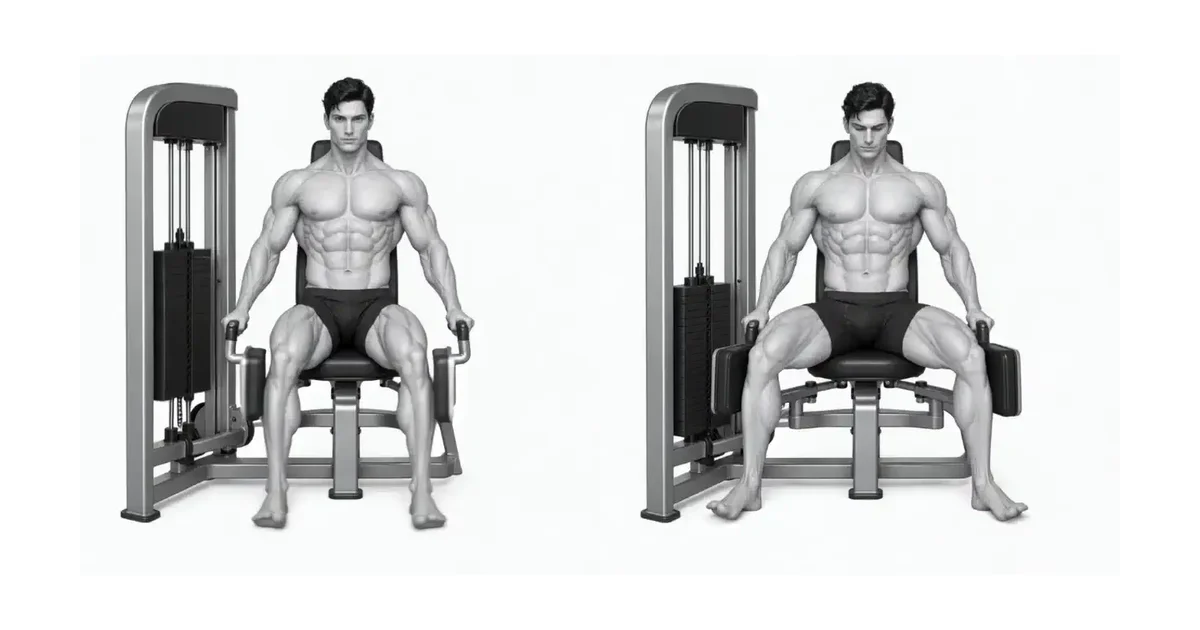
Key point: Cue to use right away: “Pelvis in the middle, pads on both sides.”
CONTROLLED RETURN
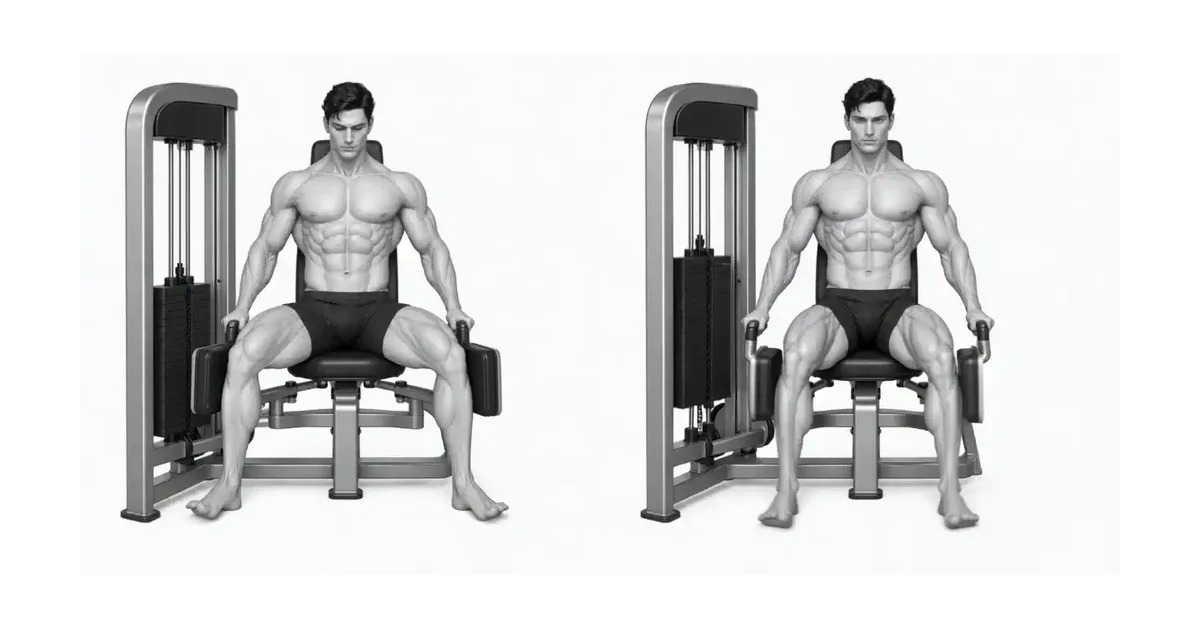
The abductor muscles control resistance even when the legs are brought together.
If the pad closes quickly, muscle tension disappears and the weight stack crashes. Make your return speed a little slower than your outward pushing speed.
If the left and right sides close at different speeds, lower the weight and match the range of the weaker side.
TROUBLESHOOTING
Fix the cause of a mistake, not just its appearance
Shake the torso to open the pads
- What you see
- For each repetition, move your upper body back and forth and pull hard on the handle.
- Likely cause
- This is a weight that is currently difficult to control with the abductors.
- How to correct it
- Lower the weight and start with short ranges, maintaining back and pelvic contact.
Pelvis tilted to one side
- What you see
- One pad moves first and seat pressure changes left and right.
- Likely cause
- Ignores differences in left and right strength or hip range of motion and forces the same end range.
- How to correct it
- Reduce the range of movement of both sides together and realign foot and pad positions.
Stack hit on return
- What you see
- When I bring my legs together, the pad suddenly closes and makes a sound.
- Likely cause
- The eccentric section is not controlled or fatigue has accumulated.
- How to correct it
- Lower to a weight that you can maintain for a 2-3 second return and stop before you reach the stack.
REGRESSION & PROGRESSION
Match the difficulty before adding load
Clamshell
Lie on your side and learn abduction with your pelvis fixed.
Band Seated Abduction
Practice simultaneous left and right movements with light resistance.
Machine Hip Abduction
Apply constant range and slow return.
Standing cable external rotation
Linking pelvic stability and unilateral control in standing posture.
BEGINNER PROGRAM
A practical starting framework
Start with 2 sets as an accessory exercise after the lower body exercise, increasing the number of repetitions and load as the outer point stop and slow return are maintained.
Count
10–15 times
Outward stop 1 second, return 2 seconds
Set
2–4 sets
45–90 seconds recovery between sets
Frequency
1–3 times a week
Single leg exercise and volume control
- Once your pelvis and torso are secure, increase the number of repetitions first.
- If recoil or left/right asymmetry occurs, reduce weight and range.
- Stop immediately if you feel sharp pain or sticking on the outside of your hip joint.
Frequently asked questions
Should I spread my legs as wide as possible?
No. It is sufficient as long as the pelvis does not move from the seat and there is no pain in the hip joint. Constant contraction and return control are more important than end range.
Will just doing this exercise improve pelvic stability?
It helps strengthen the abductors, but the actual movement also requires weight-bearing exercises like walking, lunges, and single-leg squats.