INCLINE DUMBBELL FLY
Set a stable incline, control the dumbbell arc, and stop before shoulder position or elbow angle changes.
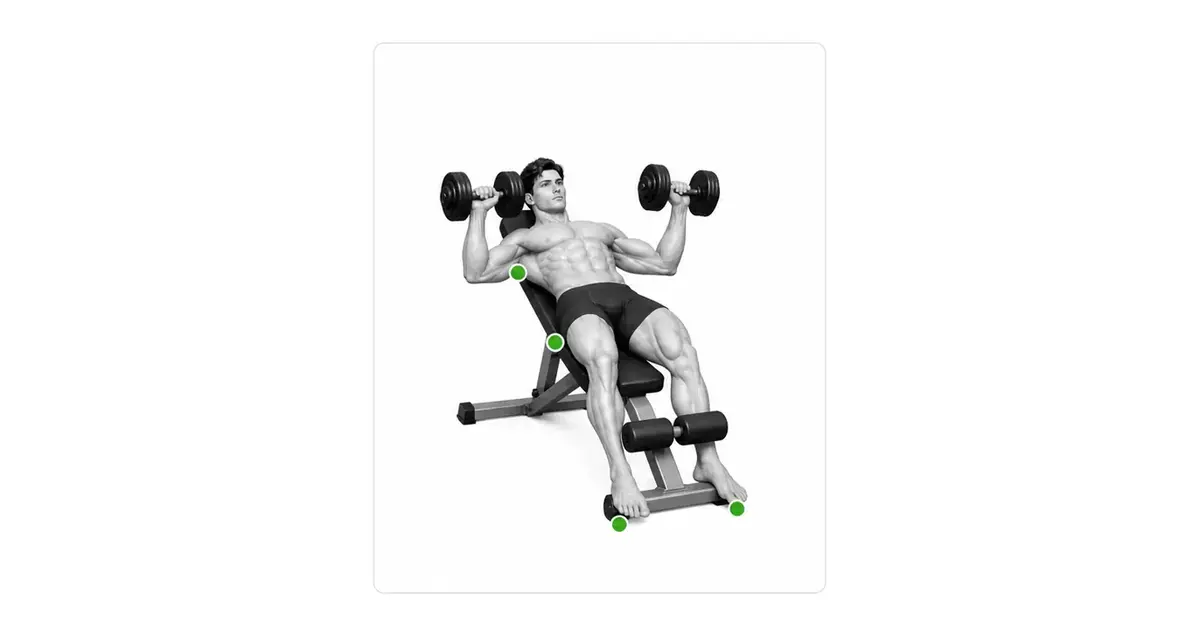
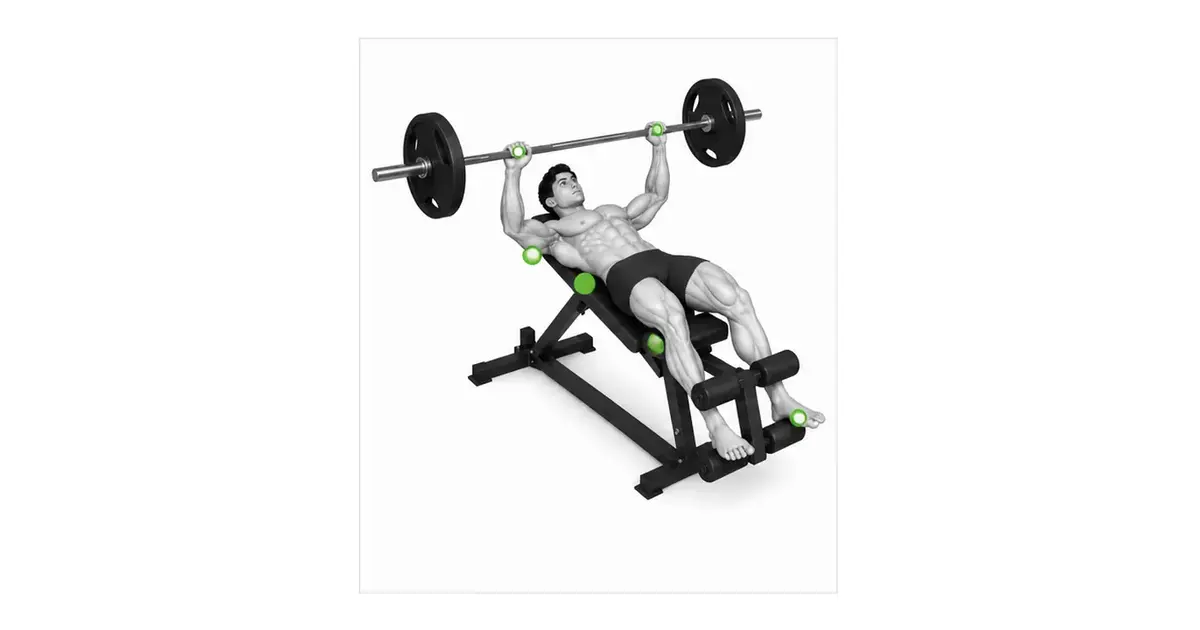
Incline dumbbell flyes are not a press, but rather an arc movement around the shoulders on an adjustable bench. Pick an appropriate bench angle that allows for a stable contact point and a comfortable shoulder path, but don't consider one angle to be universally best. Check your control locks, bench, floor, and dumbbells before you start. Start in a controlled seated position, maintain constant gentle elbow flexion and neutral wrists throughout the repetition, and move only at a pain-free depth that allows you to stabilize. Instead of turning the fly into a press by bending and straightening your elbows, return the dumbbells to your chest in horizontal adduction. To finish, guide the dumbbells to your thighs or a stable surface and never drop them. If you can't enter or exit safely, choose a lighter load or a different exercise. There are clear limitations to the evidence. Rodríguez-Ridao et al (2020) studied barbell bench presses, but not dumbbell flyes, in trained adults at different bench angles. Although the protocol showed the highest EMG of the upper pectoralis major at 30° and increased anterior deltoid EMG at higher inclines, it does not establish the optimal angle, direct technique, selective hypertrophy, safety, or outcomes of incline dumbbell flyes. Lauver et al. (2016) also studied the barbell bench press and reported differences in specific intervals, but did not report differences in upper pectoralis major EMG for the entire contraction. Solstad et al (2020) compared flat dumbbell flyes and barbell bench presses rather than incline flyes. EMG does not demonstrate superior hypertrophy or safety, so use angles and ranges that you can control without pain.
- Primary muscles
- Pectoralis major
- Secondary muscles
- Front deltoid · Biceps brachii
- Difficulty
- Intermediate
- Movement type
- Horizontal adduction
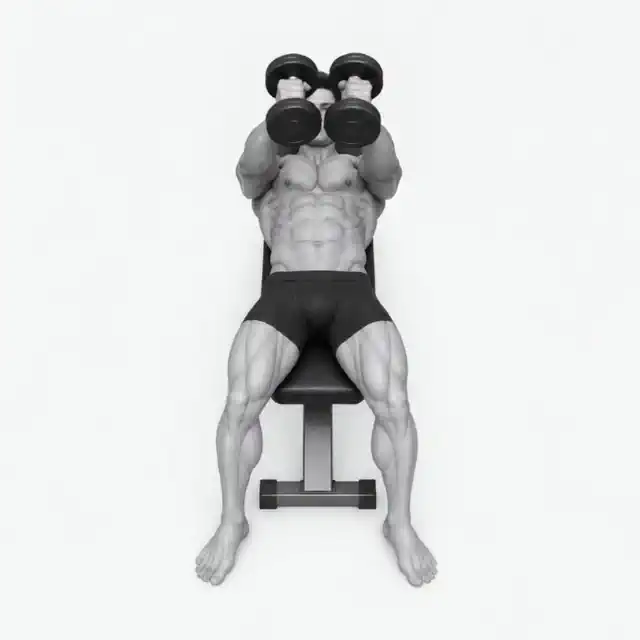
Is there a best bench angle for incline dumbbell flyes?
The universally best angle for this exercise has not been established. Bench press studies in trained adults have reported angle-related EMG differences, but none have studied incline dumbbell flyes, demonstrated selective hypertrophy, or predicted safety in individuals. Use an appropriate angle that is secure, supports stable contact points, and allows for a comfortable shoulder path.
STEP BY STEP
6 Steps for One Complete Rep
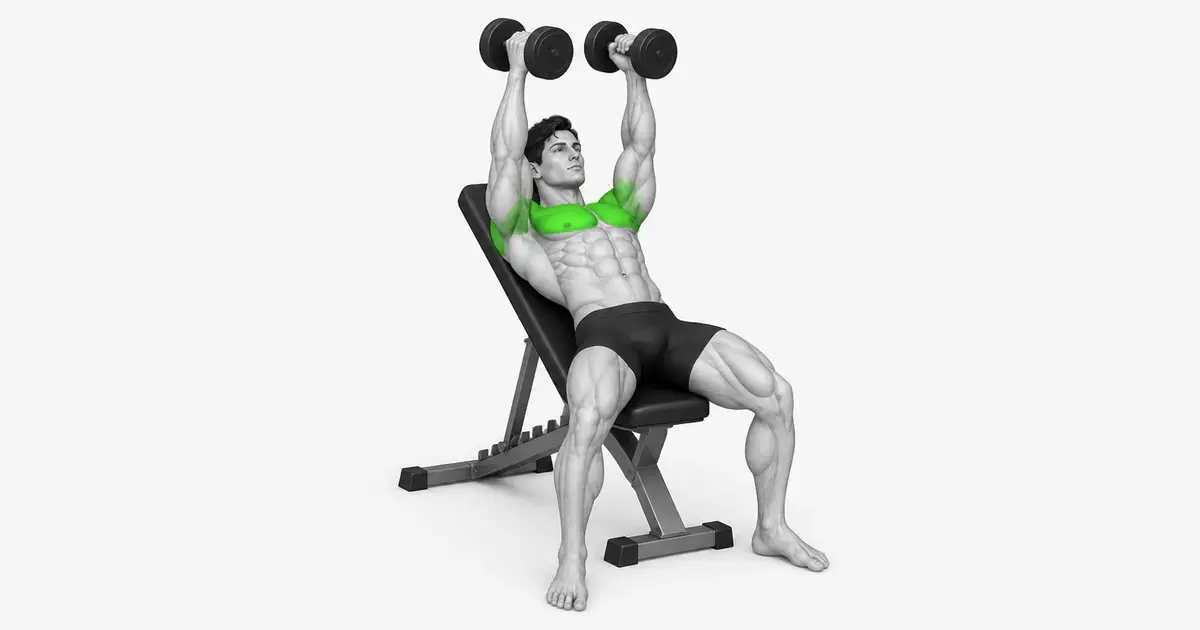
- 1
Checking bench and cargo space
Make sure the adjustment pins or locks are fully engaged, the bench is stable, the floor is clear, and both dumbbells are undamaged. Determine an appropriate angle that can stably support your head, upper back, buttocks, and feet. Do not use damaged, loose or unstable equipment.
- 2
Controlled seated start with dumbbells
Sit on the edge of the bench with your feet firmly planted. Stand each dumbbell on its corresponding thigh and hold it with a grip wrapped around your thumb, keeping your wrists neutral. Choose a load that can be controlled from entry, arc, and exit without dangerous transfer movements.
- 3
Create a controlled lying and top position
Lie under control with your torso firm and the dumbbells close to your torso. Guide both dumbbells above your chest, keeping your arms almost straight but with a gentle elbow bend that you can maintain throughout the set.
- 4
Creating a stable support surface
Support your head, upper back, and buttocks on the bench, and place your feet quietly and firmly on the floor. Do not arch your back excessively, lightly retract and stabilize your shoulder blades, and maintain rib and pelvis alignment and neutral wrists.
- 5
Lower only in a controllable arc
Inhale and lower the dumbbells in a wide, gentle arc starting at the shoulders. Maintain the same gentle elbow bend and neutral wrist. Pause at a pain-free and controllable depth, and do not force a deep stretch, mimic someone else's range, or change control before lowering your torso.
- 6
Intentionally returning and quitting
Exhale and horizontally adduct the dumbbells back to your chest, keeping the elbow bend constant. Do not press by bending or straightening your elbows. After the last repetition, guide the dumbbells to your thighs, stand up under control, and place them on a stable surface. Never drop the dumbbells.
BENCH ANGLE
Choose your angle for control, not promised muscle results
Use a moderate incline that holds the bench firmly while providing stable support for your head, upper back, buttocks, and feet. The correct setup is one that provides a comfortable shoulder path and controlled seated entry and exit. If you feel like the angle is causing you to slip, lose contact, cause you to shrug, or force a shoulder path, adjust the angle or choose a different variation.
The bench angle study cited here looked at barbell bench presses in trained adults, not incline dumbbell flyes. One protocol reported the highest upper pectoralis major EMG at 30° and increased anterior deltoid activity at higher angles, while another study reported both specific interval differences and specific differences in overall contraction. These results do not prescribe angles, demonstrate selective hypertrophy, or predict individual comfort or safety.
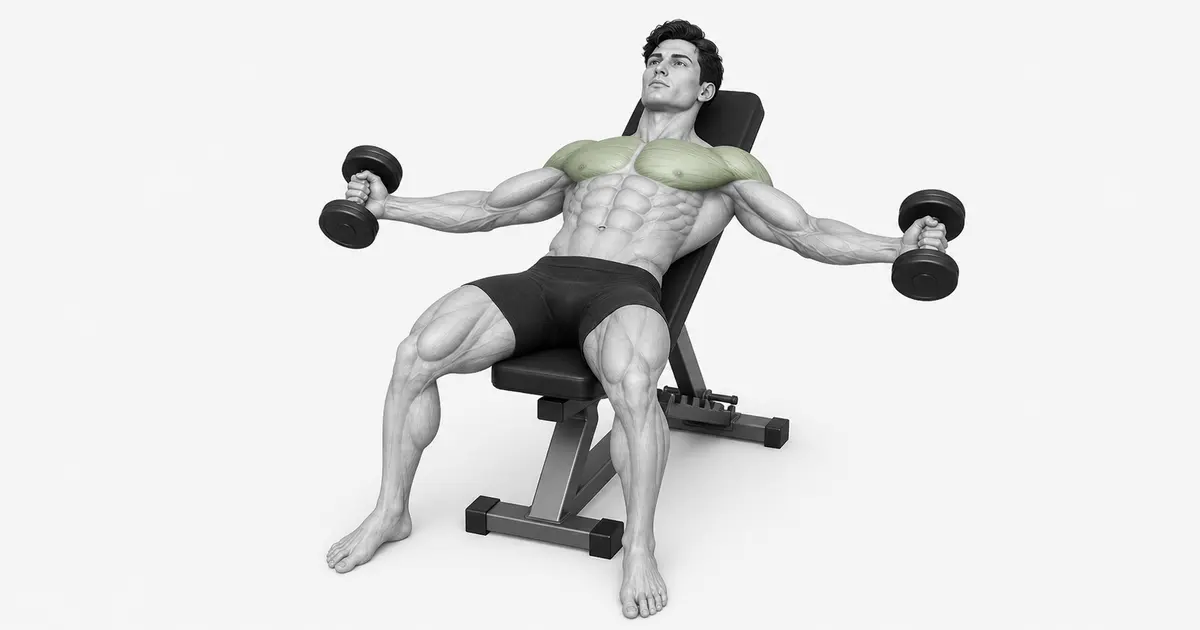
Key point: Use the lowest angle that remains stable and comfortable.
DUMBBELL ENTRY
Treat transitions as part of your workout
Begin seated with each dumbbell controlled above your thighs. As you lie down, keep the dumbbells close to your torso and balanced on your chest before starting the arc. This process reduces jerking and gives you time to check bench position, grip, wrist alignment, and shoulder comfort before repeating the task.
Follow the same steps in reverse to finish. Stabilize the dumbbells over your chest, then guide and control them with your thighs, rising and setting them down safely. No dramatic entry or exit is necessary. If you can't manage the transition without straining, losing control, or risky passing movements, reduce the load or choose a different exercise.
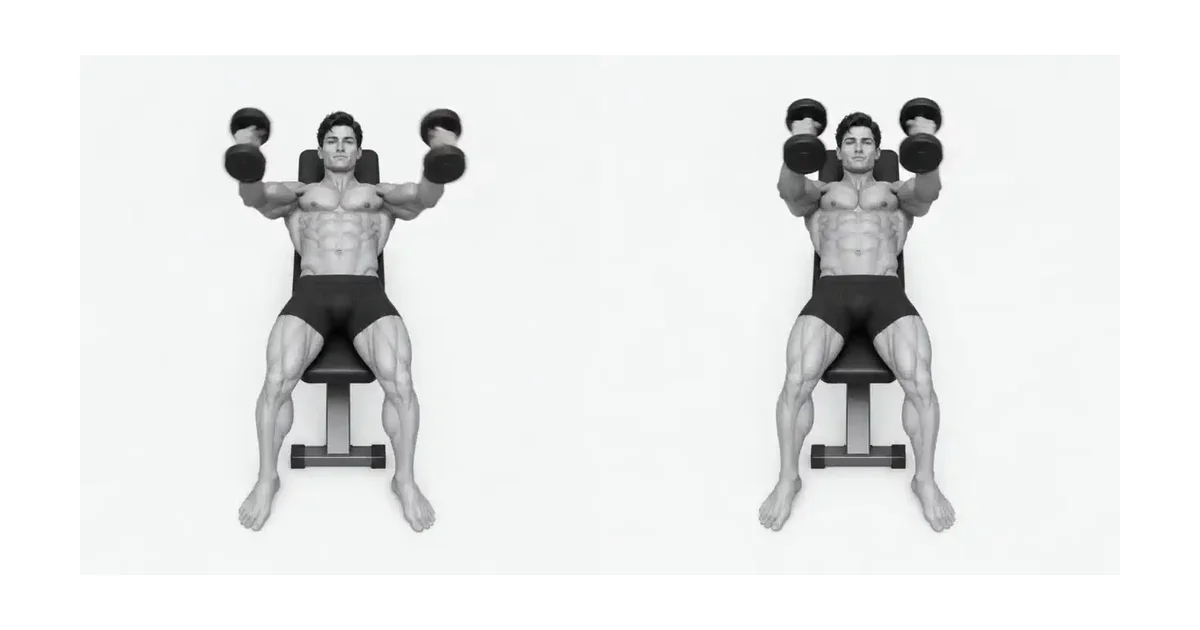
Key point: Control the dumbbells first before the first repetition and after the last repetition.
RANGE CONTROL
Maintain your elbow shape and define the lower range with comfort
Establish a slightly comfortable elbow bend and maintain that position while your upper arm moves outward and inward around the shoulder joint. Changing your elbow angle to move the weight turns the fly into a press. Strong elbow extension can lengthen your leverage and make the same load more difficult to control. Keep your wrists neutral and move both dumbbells at the same speed.
Stop where your shoulder blades are stable, your wrists are neutral, and your elbow bend does not change. Solstad et al standardized the elbow angle in the lowest position to be 150–160° in their flat fly study protocol, but this is not a universal prescription for incline fly studies. Don't force that angle or deeper stretch, only increase the range if it's pain-free and under control.
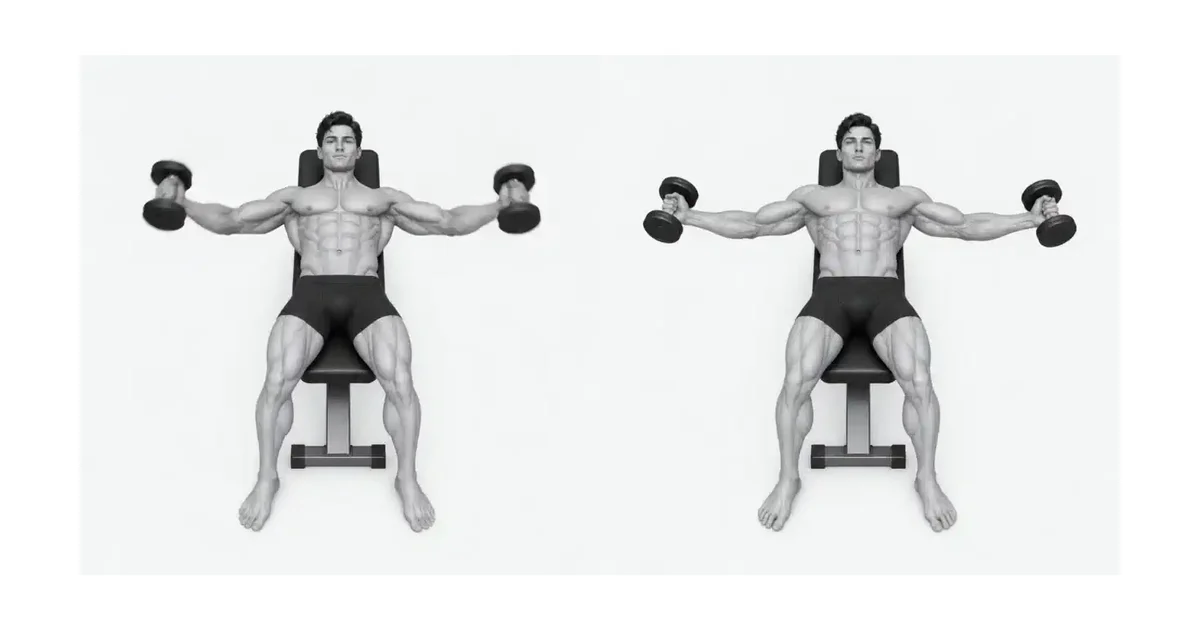
Key point: Stability·Comfort·Stop the arc before your elbow changes shape.
TROUBLESHOOTING
Fix the cause of a mistake, not just its appearance
Treat bench angle as a magic setting
- What you see
- Uses the angle known to be best, but feels like it slips, shrugs, or has a forced shoulder path.
- Likely cause
- Apply bench press EMG results as a universal prescription for incline flyes.
- How to correct it
- Use an appropriate setting that locks tightly, allows for stable contact and a comfortable shoulder path. Otherwise, lower or adjust the angle or choose a different exercise.
Converting Fly to Press
- What you see
- Elbows bend more during lowering, elbows straighten when lifting dumbbells, triceps fatigue is noticeable.
- Likely cause
- The load is too heavy or the focus is on pushing rather than horizontal adduction.
- How to correct it
- Reduce the load and maintain a gentle, constant elbow bend. Instead of pressing into your elbows, return the dumbbells in an arc centered around your shoulders.
Forcing bottom stretch
- What you see
- Dumbbells pass under the torso, shoulders roll forward, or shoulder/chest discomfort occurs.
- Likely cause
- Assume deeper stretch or fixed angle is always better.
- How to correct it
- Stop at a pain-free, controllable depth with your shoulders and wrists stable. Don't copy someone else's scope.
Losing bench support
- What you see
- Head lifts, upper back slips, hip contact is lost, or bench adjustments feel loose.
- Likely cause
- Unstable setup, excessive bench angle, or attempting to lower it further than you can control.
- How to correct it
- Stop immediately, relock the bench and inspect to restore stable contact. Do not proceed unless you can create a stable support surface.
Unsafe Dumbbell Conversion
- What you see
- Falling backwards while holding dumbbells, having difficulty getting up, or dropping the weight at the end.
- Likely cause
- The load is too heavy or the floor is cluttered to control entry/exit.
- How to correct it
- Use lighter dumbbells, clear the floor, and guide the dumbbells to and from your thighs. If switching isn't safe, choose a different exercise.
REGRESSION & PROGRESSION
Match the difficulty before adding load
Repeat stable settings first
Repeat the same bench setup and conservative range until the bench remains locked, contact is stable, and entry and exit are controlled. Don't proceed solely by claiming that one angle is superior.
Tempo Control
Controlled lowering over 3–4 seconds, optional 1 second pause within safe range. Instead of bending and straightening your elbows, return them gently.
Proceed within repetition range
Add 1–2 reps throughout the set only if you maintain equal elbow flexion, shoulder comfort, and safe entry and exit on all repetitions. Increase the load slightly next session only when your control does not change at the top of the range.
Alternative to limiting range
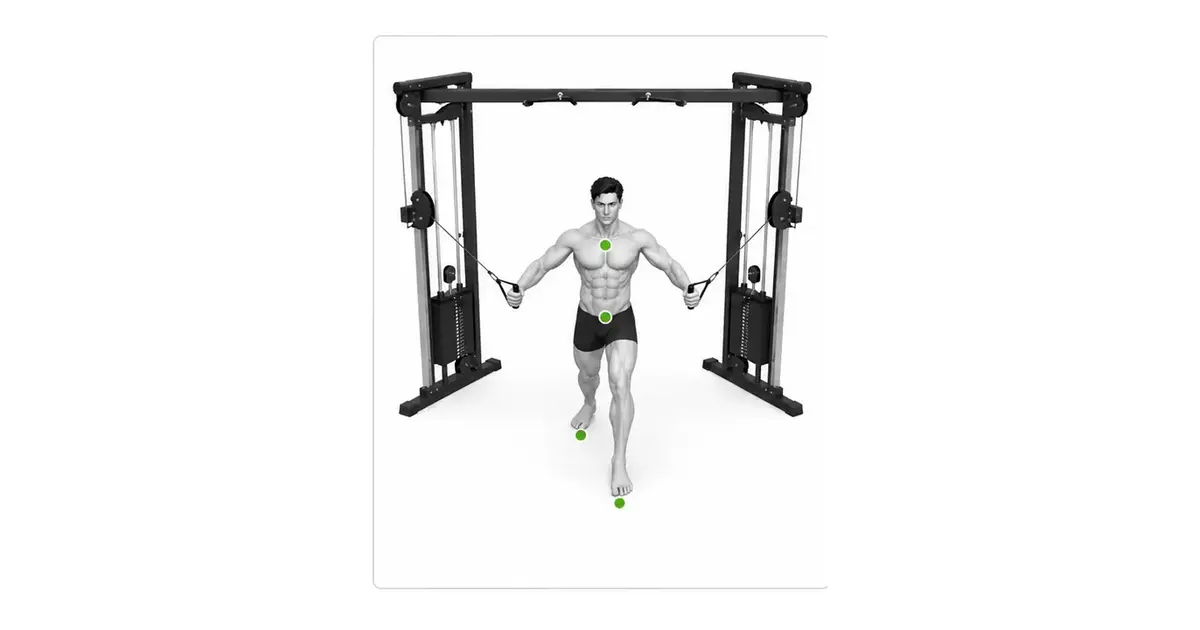
If you have difficulty controlling the bottom range on incline flyes, choose floor flyes, cable flyes, or another exercise that makes entry/exit and pain-free range easier to manage.
BEGINNER PROGRAM
A practical starting framework
Use as a controlled assistance exercise, not a maximal load test. Pick a load that allows you to leave room for 1–3 reps while ensuring all transitions, elbow positions, and lower ranges are intentional and pain-free.
Number of repetitions
10–15
Do not change elbow bend and wrist position, and stop before control changes.
Set
2–3
Rest 60–90 seconds and recheck bench lock before next set.
Progress
+1–2 times
Increase the load slightly next session only when all sets have reached the top of the range with safe transitions and stable form.
- Check bench adjustments and locks before each heavy set and stop if the bench feels loose or unstable.
- Maintain gentle, consistent elbow bend, and don't turn flyes into presses or force deeper ranges.
- Stop immediately if you experience shoulder, chest, elbow, or wrist pain, numbness, dizziness, loss of control, or unsafe termination.
Frequently asked questions
Do incline flyes develop certain chest areas better?
No direct long-term studies of incline dumbbell flyes support that conclusion. Although the cited bench press study measured EMG in specific protocols, EMG does not demonstrate superior muscle growth. View this exercise as one controlled chest assistance exercise, and choose a setting that you can perform safely and consistently.
How deep should the dumbbells be lowered?
Lower only to a depth where your shoulders are stable, your wrists are neutral, and elbow flexion remains constant without pain or loss of control. Flat fly studies have standardized elbow angles to 150–160° for comparison, but this is not a universal guideline or incline fly protocol. Don't force deeper stretches.