INCLINE PUSH-UP
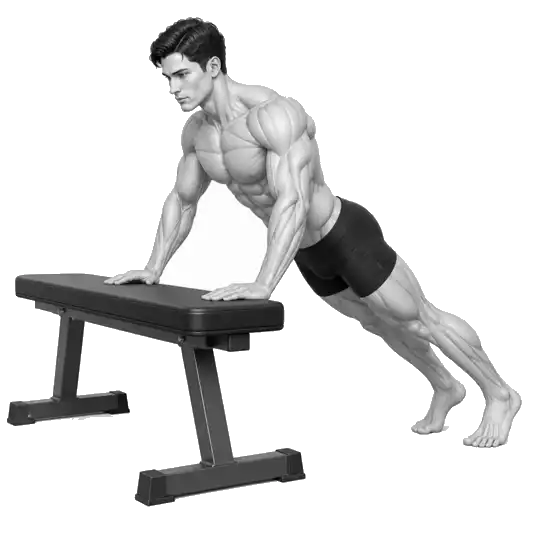
Incline push-ups are not easy push-ups, but are push-ups that accurately control the load by adjusting the height of the support.
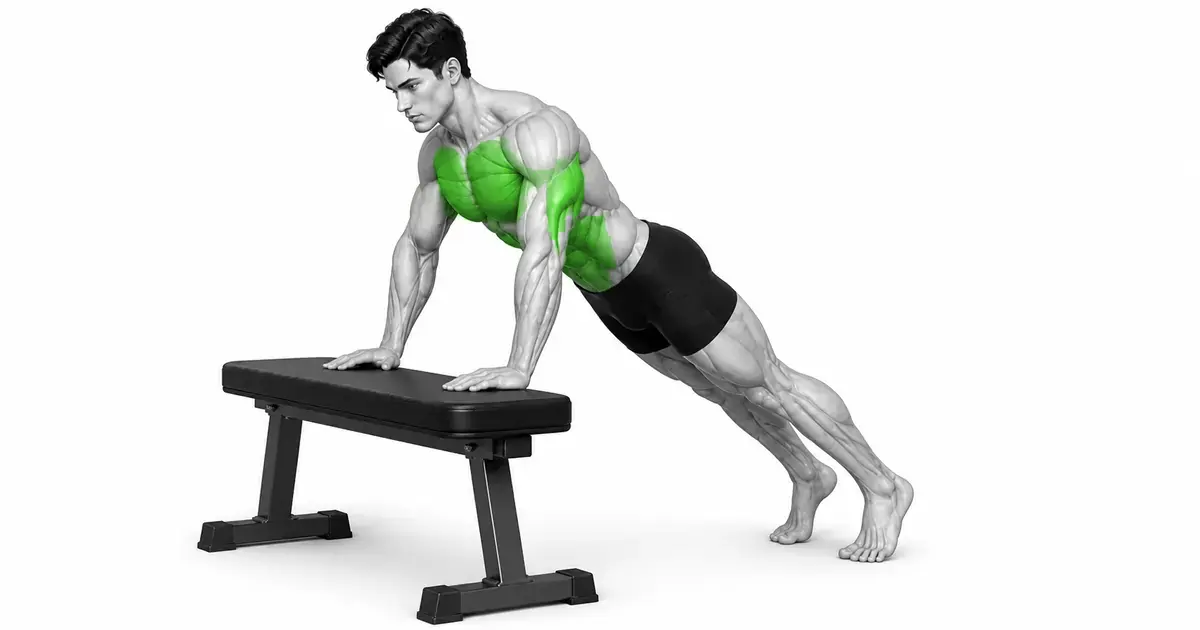
Incline push-ups are performed with both hands on a stable bench and feet on the floor, as shown in the video. As the hands are raised, the weight supported by the upper extremities is reduced, making it easier to access than a regular pushup, but the core is the same: practicing full-body plank and elbow paths while using the pectoralis major, triceps, and serratus anterior muscles. The lower the height, the closer it gets to a regular pushup, so note the same support height and torso alignment rather than just increasing the number of repetitions.
- Primary muscles
- Pectoralis major, triceps
- Secondary muscles
- Front deltoid, serratus anterior, abdominal muscles
- Difficulty
- Beginner
- Movement type
- Horizontal push with hands raised · Full body plank
What height is good for the bench?
The height that allows you to maintain a straight torso and constant chest depth for 8–15 repetitions is appropriate. Start at the level between your waist and chest, and gradually lower the support as it gets easier.
STEP BY STEP
5 Steps for One Complete Rep
- 1
Choose a support that doesn't move
Use a bench or fixed bar that won't shift or shift when you put your weight on it. Avoid rolling chairs, folding furniture, and wet surfaces, and initially choose a height between your waist and chest.
- 2
Let go and walk back one step at a time
Place your hands slightly wider than your shoulders and spread your fingers. With your arms straight, walk one foot back at a time to create a long diagonal line from your head to your heels, with your feet about hip width apart.
- 3
Overlapping the ribs and pelvis
Place your shoulders away from your ears and lightly tighten your abdomen and buttocks. Rather than arching your back and sticking out your chest or pulling your hips back, prepare your entire body as if it were one board.
- 4
Lower your chest between your hands
Inhale and bend your elbows diagonally back from your torso, about 30–60 degrees. Move your chest and pelvis at the same speed and stop before the front of your shoulder becomes uncomfortable.
- 5
Return to starting position by pushing against the support bar
Exhale while pushing the bench with your entire palm. Extend your elbows, but do not push your shoulders toward your ears. After completing the set, first walk close to the bench and straighten your upper body.
SUPPORT HEIGHT
The height of the support is a key variable in determining exercise intensity.
The higher you place your hands, the less weight is placed on your hands rather than your feet, making movements easier. As research has shown that the weight supported by the upper extremities varies depending on the push-up posture, the incline height is not just a convenience, but a load control device.
Even if the number of repetitions is the same, the difficulty level will vary if the bench height is different. Perform 8–15 reps at your current height with your torso straight and at a constant depth, then lower the support one level only for the next session.
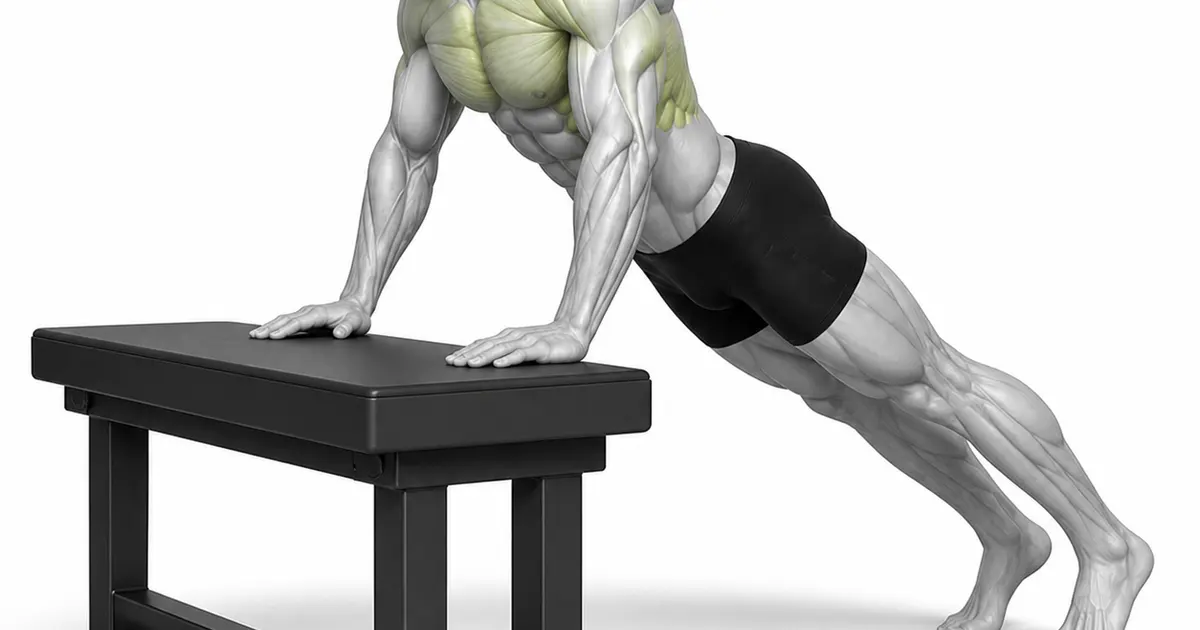
Key point: Recording criteria: Height of support + number of repetitions + location of chest contact.
PLANK ALIGNMENT
Don't just move your chest; tilt your entire body as one.
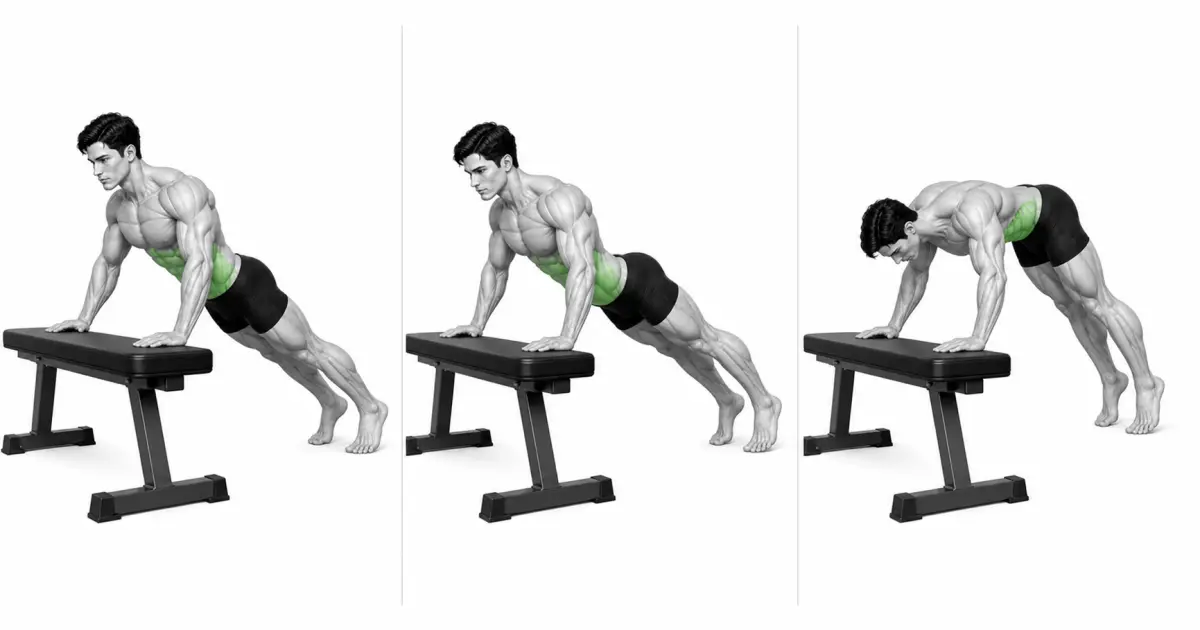
In an incline position, it is easy to pull your hips back or arch your back to reduce actual movement. Place your ribs on top of your pelvis, tighten your hips and thighs, and maintain the line of your ears, shoulders, pelvis, knees, and heels.
When photographed from the side, the top and bottom torso shapes should be approximately the same. If your stomach sags toward the bench first or your hips rise, increase the height or reduce the repetitions.
HAND & ELBOW PATH
Keep your hands still and fold your elbows diagonally back
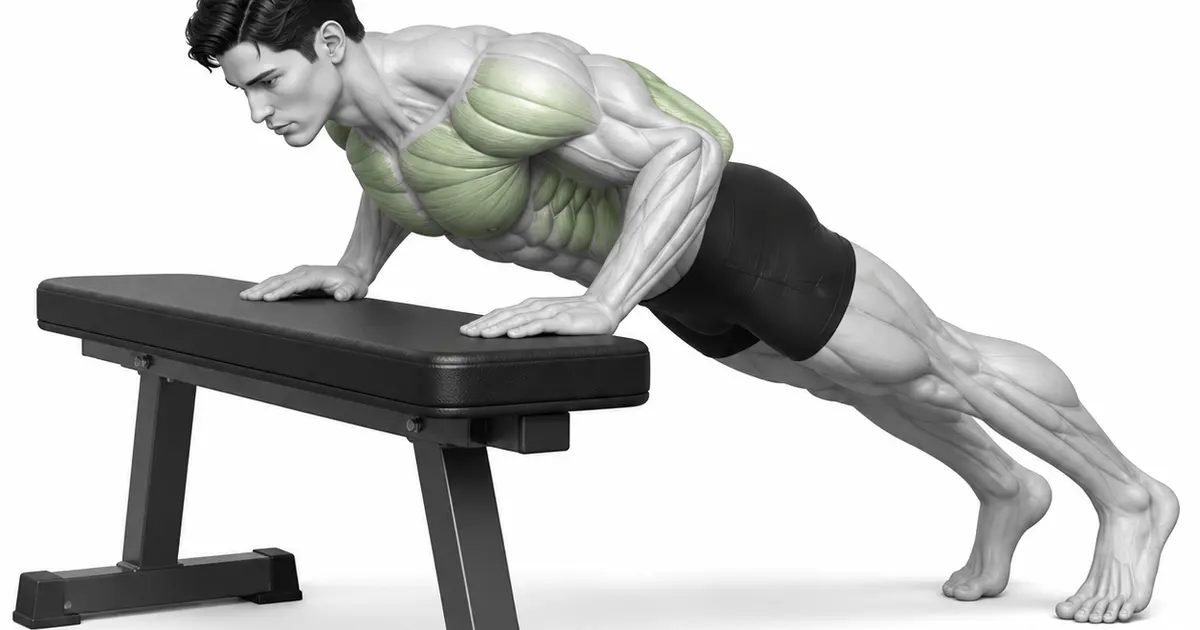
To prevent your wrist from bending excessively, place your entire palm on the support and press down to the roots of your thumb and index finger. Instead of spreading your hands too wide, start with them slightly wider than your shoulders.
Hand spacing can affect pectoralis major and triceps activation, but tighter isn't always better. Move your elbows approximately 30–60 degrees from your torso and use a comfortable distance between your wrists, elbows, and shoulders.
TROUBLESHOOTING
Fix the cause of a mistake, not just its appearance
Move your butt back and go down
- What you see
- Your arms are bent, but your pelvis is shifted toward your feet so your chest doesn't come close to the bench.
- Likely cause
- Even at your current height, upper body load is difficult or full body plank sensation is lost.
- How to correct it
- Raise the support, extend your hips toward your heels, and move your chest and pelvis forward together.
Sagging lower back and lifting ribs
- What you see
- Your stomach lowers toward the bench before your chest, and your back arches like a bow.
- Likely cause
- Your abdominals and hips may be tight, or your target rep count is beyond your current ability.
- How to correct it
- Stack your ribs over your pelvis and reduce repetitions. If alignment is not restored, use higher supports.
Elbows fully extended to the sides
- What you see
- At the bottom, the upper arm is parallel to the shoulder line and the front of the shoulder is pressed.
- Likely cause
- The distance between your hands is too wide or you are supporting yourself with your shoulders instead of your chest.
- How to correct it
- Close your hands slightly and place your elbows diagonally back. If pain occurs, reduce the range and stop.
Just stick your neck forward.
- What you see
- The chest is far away, but only the chin or forehead is close to the support.
- Likely cause
- It compensates for the distance with neck movements to reach the set depth.
- How to correct it
- Keep your gaze slightly ahead of your hands and your neck in line with your torso. Only the extent to which the breast moves between the hands is acknowledged.
Use of unstable furniture
- What you see
- The support wobbles or slides on the floor when pushed.
- Likely cause
- We only adjusted the height and did not check the anchorage and load-bearing capacity of the supports.
- How to correct it
- Use an exercise bench or a bar mounted on a wall and press firmly with both hands to make sure there is no movement before starting.
REGRESSION & PROGRESSION
Match the difficulty before adding load
wall pushups
Place your hands against the wall and learn your torso straight line and elbow path.
high bench incline pushup
Perform 8–15 reps at a consistent depth on a chest-level support.
low bench incline pushup
Gradually lower your hand height while maintaining alignment.
regular push up
Maintain the same full body plank and elbow path on the floor.
BEGINNER PROGRAM
A practical starting framework
Use 2–3 times a week as a main movement for learning regular push-ups or as a warm-up for upper body pushing exercises. Stack quality reps first at the same bench height, leaving room for 2–3 reps each set.
number
8–15 times
Range of movement of chest and pelvis together
set
2–4 sets
60–120 seconds recovery between sets
speed
2–3 second descent
Push without kickback on bench
- If you maintain the same depth and straight torso for all repetitions, add 1–2 reps to the next session.
- Only after you have achieved a steady 15 reps, lower the support one level and reduce the number of reps again.
- If your shoulders start to shrug or your lower back starts to sag, end the set without pushing yourself to failure.
Frequently asked questions
Are incline push-ups also a chest exercise?
yes. This is a horizontal pushing movement that uses the pectoralis major and triceps. However, the higher the hand is, the less weight the upper limb supports, which lowers the strength, so it is important to have a height that matches your current ability and sufficient range of motion.
How is it different from a knee pushup?
Incline pushups hold a long plank from your toes to your head, making it easy to practice a full-body alignment similar to a regular pushup. Knee push-ups are also a valid regression movement, but the fulcrum and body length are different.
What should I do if my wrist feels uncomfortable?
Use a higher support and distribute the pressure across your palms. Hold grips that allow you to place your wrists near neutral may also help, but if pain persists, stop exercising and get evaluated.
Evidence and references
- 1. Suprak et al. — Upper extremity weight bearing ratio by push-up position
- 2. Cogley et al. - Push-up pectoralis major and triceps activation by hand interval
- 3. Youdas et al. — Comparison of upper body muscle activity for regular push-ups
- 4. Borreani et al. — Upper limb muscle demands of selected push-up variations.
- 5. Kang et al. — Meta-analysis of push-up plus posture and scapular stabilizer activity