KETTLEBELL GOBLET SQUAT
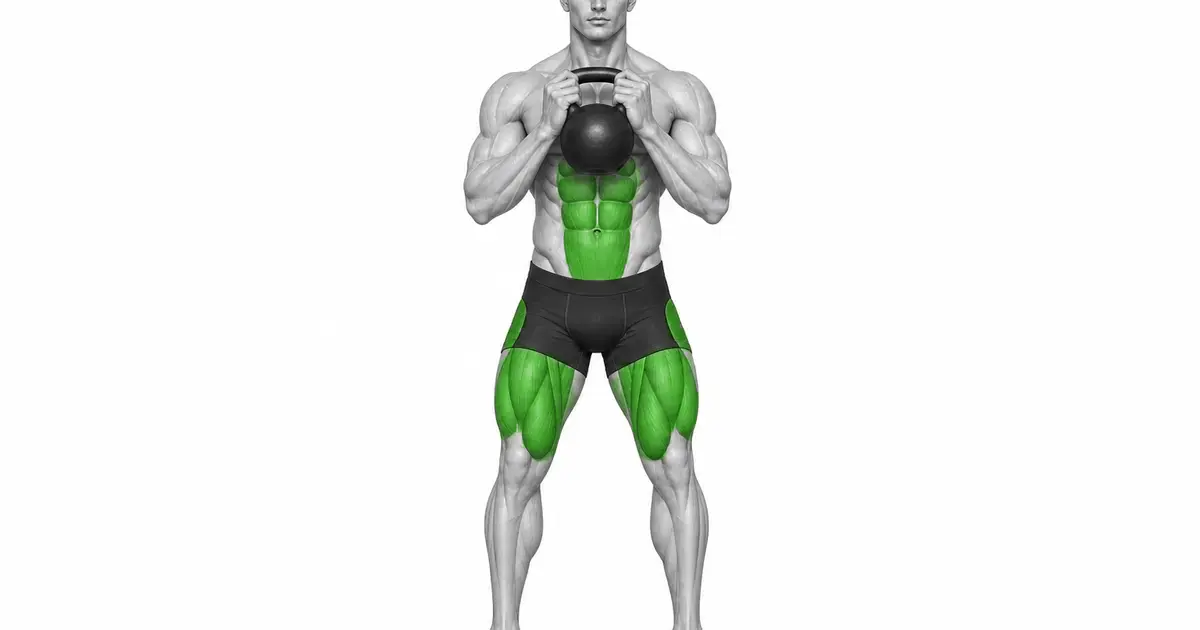
The kettlebell goblet squat is not an exercise where you squat down while supporting the bell with your arms, but rather a squat where you raise your torso using a front load close to your chest and stand up with all your feet.
Holding the kettlebell in front of your chest places the weight in front of your body, making it easier to balance and learn squat depth. However, if the bell moves away from your body, your arms and lower back will get tired first, and if the arches of your feet collapse, your knees may move inward. After safely cleaning the bell from the floor, place your elbows close to your ribs and press down on your heels and under your big and little toes.
- Primary muscles
- Quadriceps, gluteus maximus
- Secondary muscles
- Hamstrings, adductors, abdomen, upper back
- Difficulty
- Beginner
- Movement type
- Front load squat
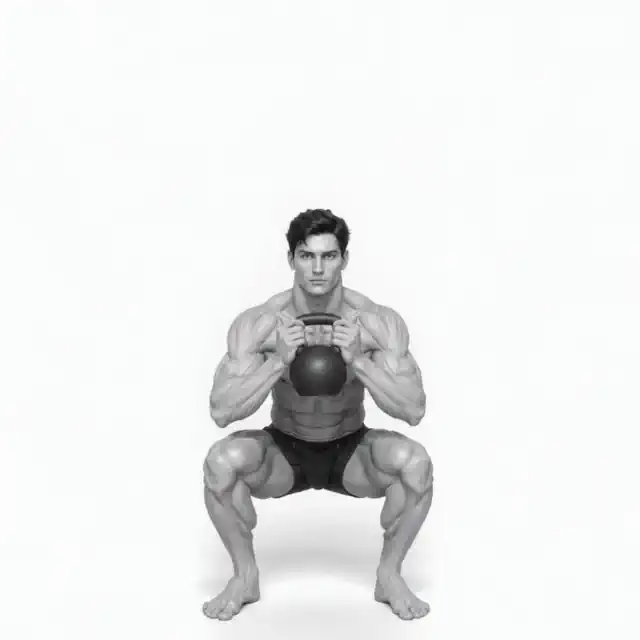
Where do you hold the kettlebell: the handle or the body?
It is common to hold the horn from both sides, and a light bell can also support the bottom of the body. Choose a grip that is comfortable on your wrists and allows you to hold the bell close to your chest.
STEP BY STEP
4 Steps for One Complete Rep
- 1
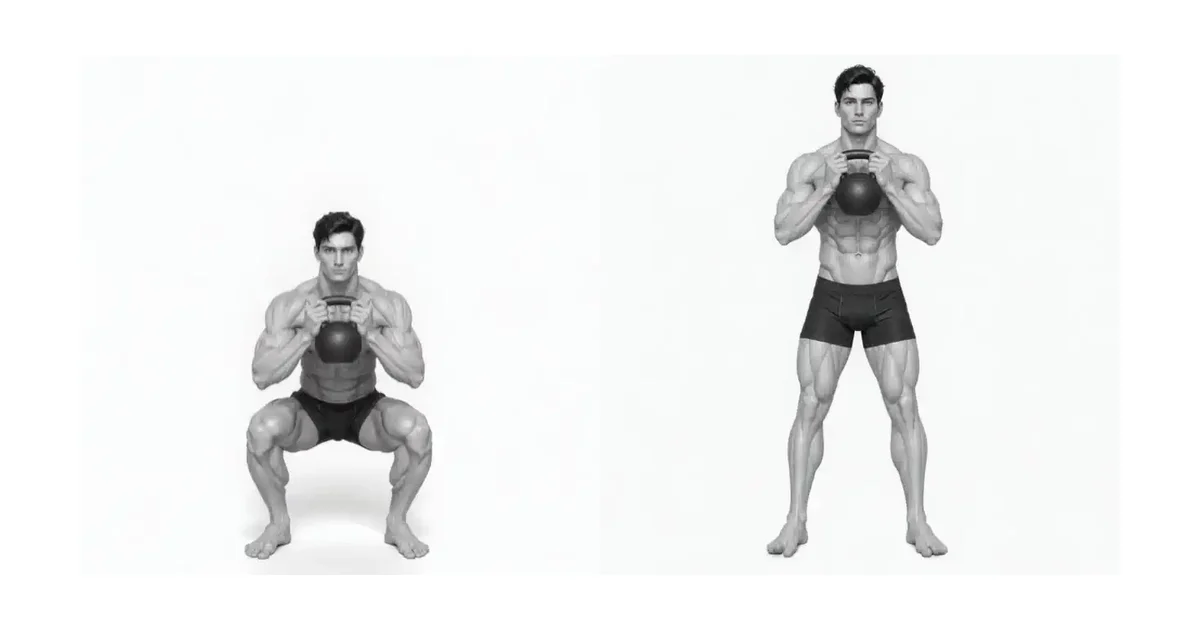
Raising the kettlebell to the chest safely
Grab the bottom bell with the hip hinge and clean with both hands. Hold the horn or support yourself under the body of the bell and keep your elbows close to your ribs.
- 2
Creating Foot Tripod and Torso Alignment
Press your heel, under your big toe, and under your little toe into the floor. Overlap your ribs over your pelvis and keep your gaze slightly below the front.
- 3
Bend knees and hips together to go down
Inhale, tighten your torso, then send your knees toward your toes and lower your pelvis. Keep the bell close to your chest.
- 4
Push the floor with your entire foot to stand up
Change direction at a depth before your lower back rolls or your heels float. Keep your knees toward your toes, exhale and stand up straight.
OWN THE WHOLE FOOT
Press the three points of the foot to ensure stable knee and pelvic movement
When the inside of the foot collapses or the heel floats, the knee path and balance are disturbed. Continue to feel the three contact points as you descend.
If ankle mobility is limited, use a thin, firm wedge under the heel but without losing pressure across the foot.
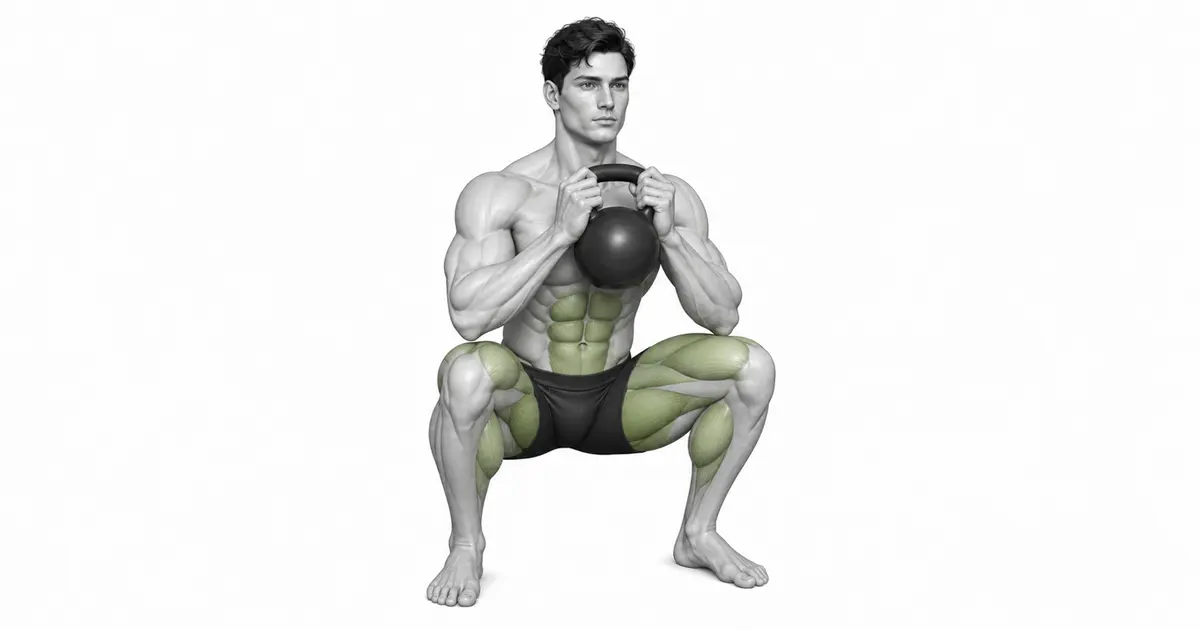
Key point: Cue to use right away: “Push the bell to your chest, knees to your toes, and your entire foot.”
CONTROLLED DEPTH
Depth of spine and foot control takes precedence over deepest position
If the pelvis rolls significantly at the bottom or the chest collapses, the current effective range is just before that. You can practice depth consistently with the height of the box.
Rather than forcing your knees apart with your elbows, use your glutes and foot pressure to maintain the path of your knees.
TROUBLESHOOTING
Fix the cause of a mistake, not just its appearance
Bell moves away from chest
- What you see
- Arms extend forward, shoulders and lower back get tired first.
- Likely cause
- The grip is uncomfortable or the weight is too heavy.
- How to correct it
- Pull the bell close to your chest and choose between horn grip or bottom up support, whichever is more comfortable for you.
Knees and arches collapse inward
- What you see
- When going down or standing up, your knees are pulled inwards towards your big toes.
- Likely cause
- Lack of foot tripod pressure and hip control.
- How to correct it
- Lower the weight and depth and move your knees toward your second and third toes.
Waist rounded at the bottom
- What you see
- At the very bottom, the pelvis rolls and the bell and chest drop sharply.
- Likely cause
- It has gone deeper than the current range of motion of the ankle and hip joints.
- How to correct it
- Using boxes or wedges, repeat only to a depth that maintains a neutral spine.
REGRESSION & PROGRESSION
Match the difficulty before adding load
Increased weight and speed
Gradually increase the weight or increase the speed of the movement while maintaining correct posture.
Continuous performance (complex)
Combine with other movements to strengthen cardiorespiratory endurance and muscular endurance simultaneously.
BEGINNER PROGRAM
A practical starting framework
Master the form with 8 to 12 moderate repetitions, increasing only when bell position and foot pressure are maintained through the final repetition. If you find it difficult to lift a heavy bell, choose two light bells or another squat variation.
Frequency
1-2 times a week
High nervous system fatigue, so allow ample recovery time.
Volume
3~5 sets, 3~6 times
Low reps are recommended to focus on maintaining quality movement and explosiveness.
- If you become tired and lose your posture, end the set immediately.
- Protect your spine by maintaining abdominal pressure with powerful breathing.
Frequently asked questions
Should your elbows touch the inside of your knees?
Not necessarily. Even if you do make contact, do not use your knees as leverage to force them apart, but maintain alignment with your feet and hips.
Can I place a disc under the heel?
A firm, non-slip, thin wedge can compensate for ankle restrictions. If the temporary disc is wobbly, use a dedicated wedge.