KETTLEBELL SNATCH
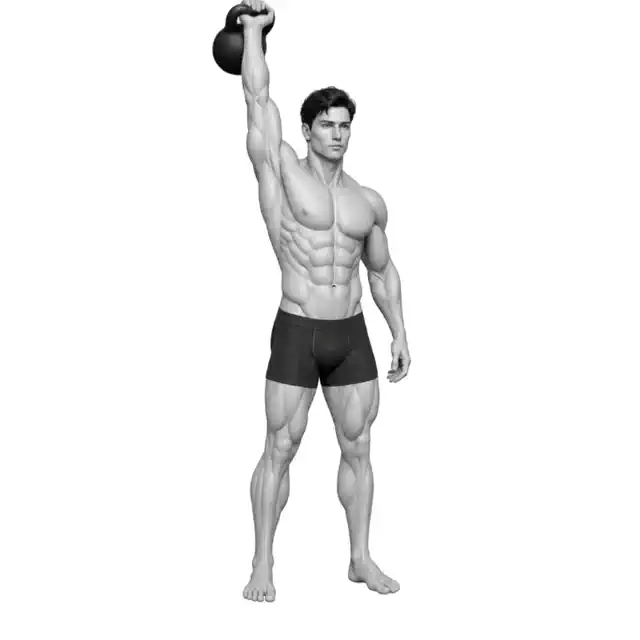
The kettlebell snatch is not an exercise in which you swing the kettlebell widely and drop it over your wrist, but is a technical exercise where you accelerate with your hips, put your hand inside the handle, and quietly catch it overhead.
The kettlebell snatch uses the hip power of a one-hand swing to bring the bell into an overhead lockout position. As the bell circles away from your hands, hit your forearms hard at the top and pull your shoulders forward. First, master one-handed swings, high pulls, and overhead holds, and then practice catching with a light bell by quickly putting your hand inside the handle.
- Primary muscles
- Gluteus maximus, hamstrings, deltoids
- Secondary muscles
- Lats, trapezius, core, forearm
- Difficulty
- Advanced
- Movement type
- Overhead catch with one arm hip hinge
Why do kettlebells hit my wrists?
This is because the bell draws a large circle away from the body or puts its hand in late. Practice close routes and upward catches, like high pulls.
STEP BY STEP
4 Steps for One Complete Rep
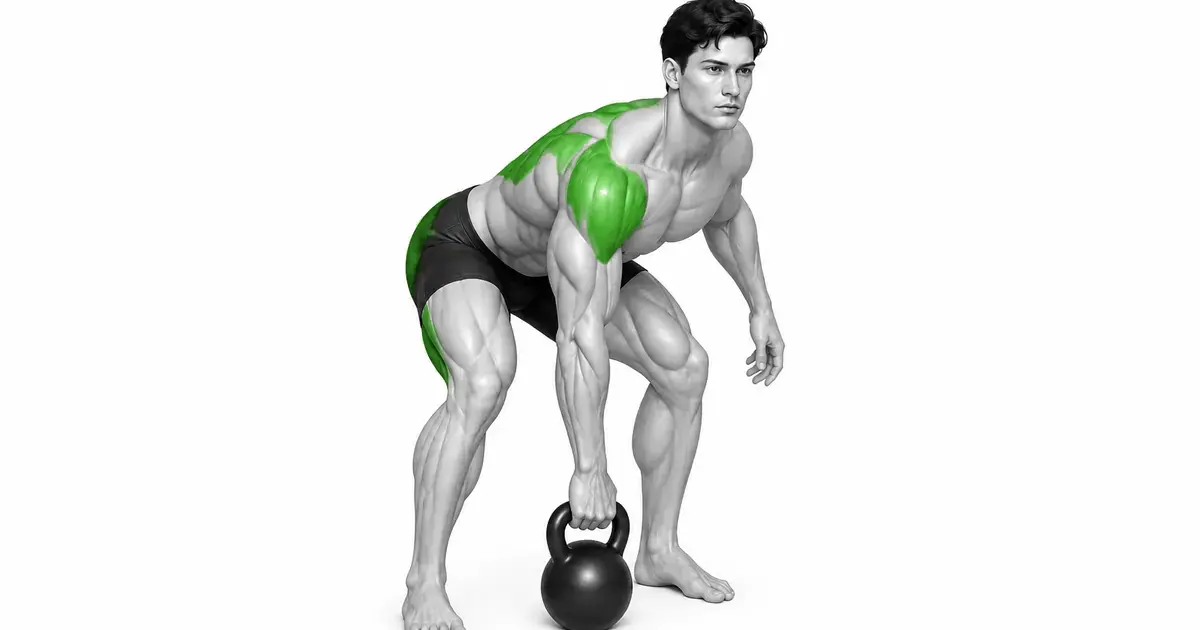
- 1
One-hand hike and hinge making
Place the bell one foot in front of you and hold it with one hand. Stabilize your shoulders down and hike the bell high between your legs, sending your hips back.
- 2
Extend hips to give vertical speed to the bell
Push your feet into the floor and tighten your glutes to quickly stand up. Rather than lifting it with your arms, the force from your hips drives the bell up to chest level.
- 3
Bend your elbows and guide the bell closer to your body
As the bell rises, pull your elbows back and up to create a path close to your body instead of a large circle. Do not flip the bell over by tilting your wrist.
- 4
Reach in and receive quietly overhead
When the bell is at hand height, extend your fist toward the ceiling and place your hand inside the handle. Lock the bell over your shoulders with your elbows straight and your ribs down.
PUNCH THROUGH
Rather than crossing the bell over the back of your hand, extend your hand upward into the handle.
The cause of hitting the forearm at the top is usually because the bell makes a large circle and then flips over. Pull it close like a high pull and then stab the ceiling with your fist.
If you grip the handle too tightly, your hand may not be able to rotate and your calluses may tear. Only at the moment of catch do you hold it tight again.
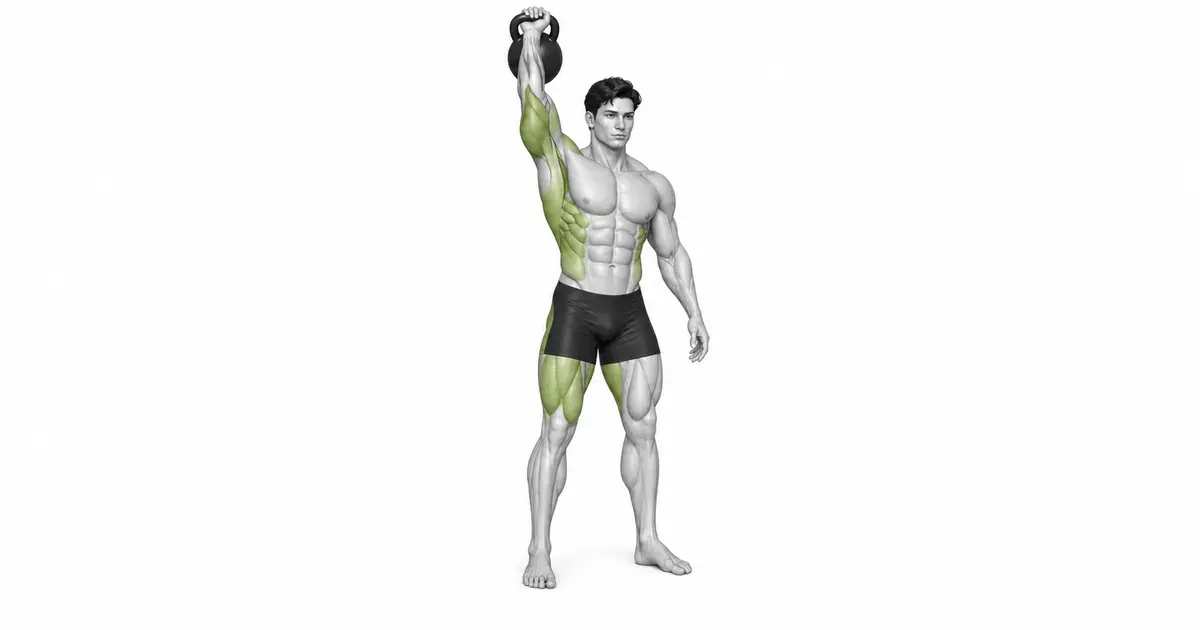
Key point: Cue to try right away: “Lift with hips, pull close, put hands up.”
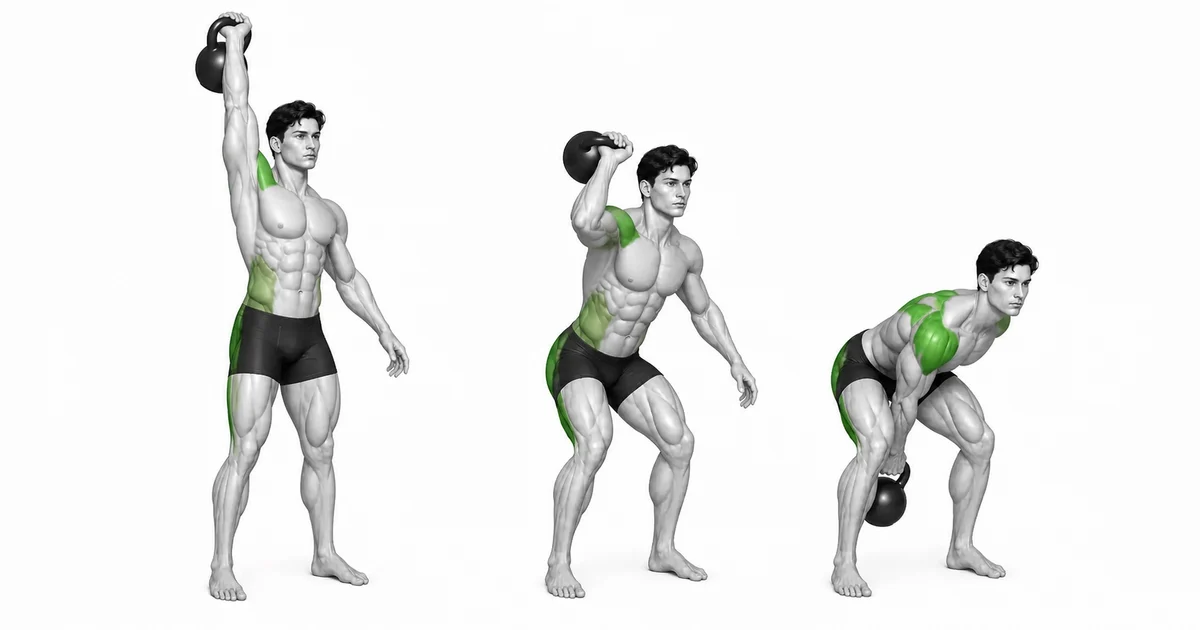
CONTROL THE DROP
Even when descending, the bell must be turned close to the body and held by the hinge.
Turn the handle slightly so the bell passes out of your hand and bend your elbow close to your body. Make sure the bell doesn't move too far away from your body.
Once past chest level, extend your arms, send the bell between your legs, and fold your pelvis back.
TROUBLESHOOTING
Fix the cause of a mistake, not just its appearance
Bell hits forearm hard
- What you see
- During the upper catch, the body of the bell falls on the wrist, causing shock and bruising.
- Likely cause
- The timing of swinging in a large circle or putting the hand into the handle is delayed.
- How to correct it
- Practice the high pull followed by upward fist drill with a lighter bell.
Lift the bell with your arms
- What you see
- Biceps and shoulders tire first, no hip extension velocity.
- Likely cause
- Lack of backswing and lower body drive.
- How to correct it
- Return to a one-handed swing and place your arms like a rope and lift the bell with your glutes.
Retracted from overhead
- What you see
- Ribs are lifted and the bell is placed behind the middle of the foot.
- Likely cause
- Weight exceeds shoulder mobility or core stability range.
- How to correct it
- Lower your ribs and practice overhead holds with a lighter bell. Stop if pain occurs.
REGRESSION & PROGRESSION
Match the difficulty before adding load
Increased weight and speed
Gradually increase the weight or increase the speed of the movement while maintaining correct posture.
Continuous performance (complex)
Combine with other movements to strengthen cardiorespiratory endurance and muscular endurance simultaneously.
BEGINNER PROGRAM
A practical starting framework
Start with skill sets of 3-5 reps per side and increase reps only when all catches are quiet. Stop immediately if hand friction and shoulder locking worsen.
Frequency
1-2 times a week
High nervous system fatigue, so allow ample recovery time.
Volume
3~5 sets, 3~6 times
Low reps are recommended to focus on maintaining quality movement and explosiveness.
- If you become tired and lose your posture, end the set immediately.
- Protect your spine by maintaining abdominal pressure with powerful breathing.
Frequently asked questions
Should I learn the kettlebell swing first?
Yes. A stable one-handed swing and hip hinge are the foundation for creating acceleration and safe descent in the snatch.
When descending, do you drop it right between your legs?
It is easier to control by first rotating the bell overhead, close to your body, lowering it to chest level, then holding it with the hinge while extending your arms.