KETTLEBELL SWING
Kettlebell swing is not a squat in which the bell is lifted with the arms, but a ballistic hip hinge in which the bell is lifted forward by rapid extension of the pelvis.
Hike the kettlebell between your legs and explosively straighten your hips so that the bell floats forward like a pendulum. Squatting with your knees deeply bent or holding a bell with your shoulders reduces hamstring elasticity and glute drive. Learn kettlebell deadlifts and hike passes first, then start with the Russian swing, where the bell naturally rises to chest height.
- Primary muscles
- Gluteus maximus · Hamstrings
- Secondary muscles
- Erector spinae, latissimus dorsi, abdomen, forearm
- Difficulty
- Intermediate
- Movement type
- Explosive hip hinge
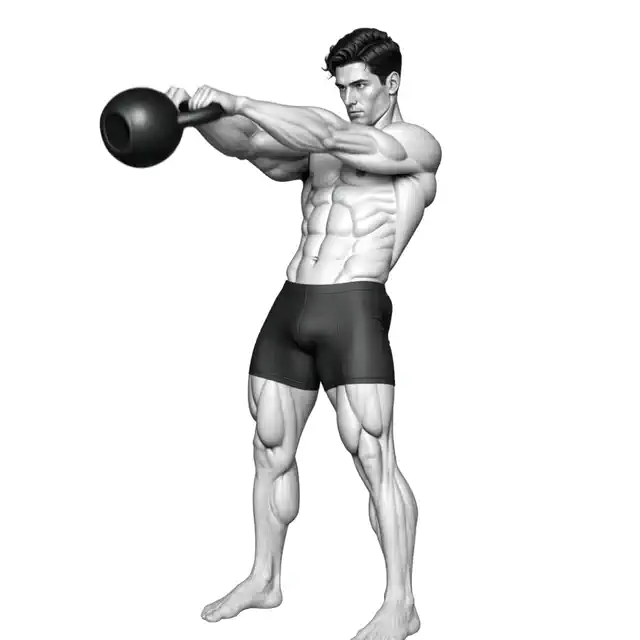
Do I need to raise the bell above my head?
No. For the Russian swing, a natural rise to chest height is usually sufficient. Don't force the height with your arms.
STEP BY STEP
4 Steps for One Complete Rep
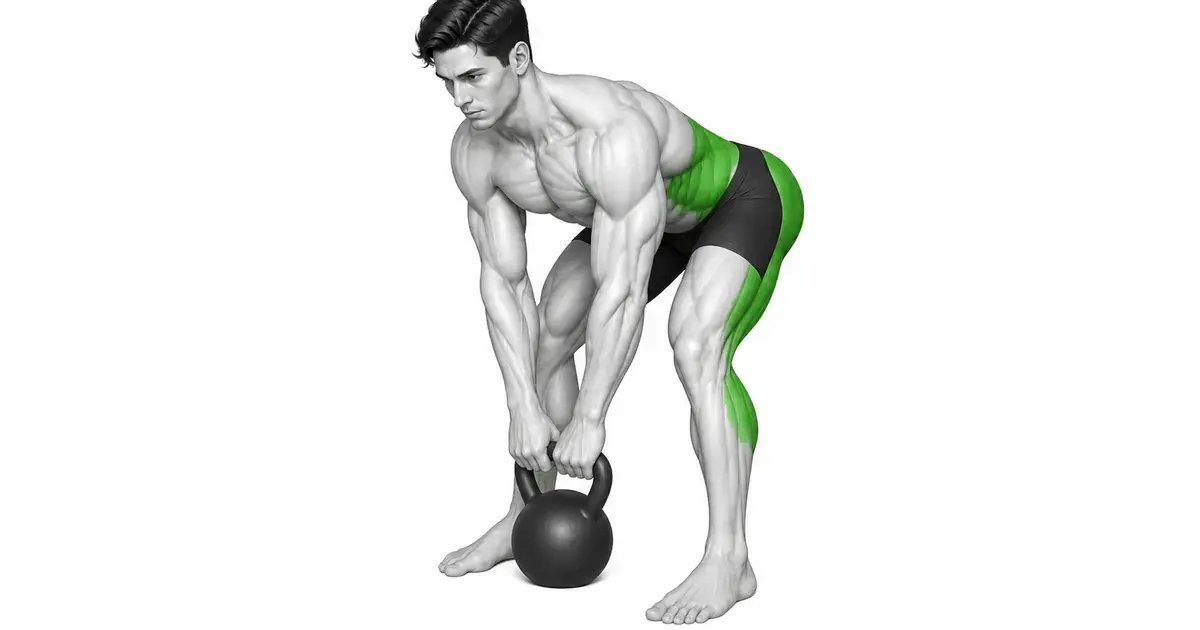
- 1
Hip hinge access to kettlebell in front of feet
Place your feet about shoulder width apart and the bell approximately one foot in front of you. Send your pelvis backward, grab the handle with both hands, and tighten your armpits.
- 2
Hike the bell between your legs
Tilt the bell back and pull it high between your legs like a football snap. Make sure your wrists pass close to your inner thighs and the bell does not fall below your knees.
- 3
Quickly straighten the pelvis to lift the bell
Push your feet into the floor and stand up straight, squeezing your glutes. The arms guide the bell like a rope and do not lift it with the shoulders.
- 4
Receive bell, hinge and park safely
Send your pelvis back as the bell comes down and your arms come closer to your torso. For the final repetition, place the bell between your legs and return it to its original position in front of your feet.
HINGE, DON'T SQUAT
The bell accelerates from a hip hinge that folds back, not a squat that sits down
When the shins move significantly forward and the pelvis moves down, the bell path is lowered. Send your hips toward the back wall to create hamstring tension.
The bell passes deep close to the groin and hinges at the timing when the arm touches the thigh.
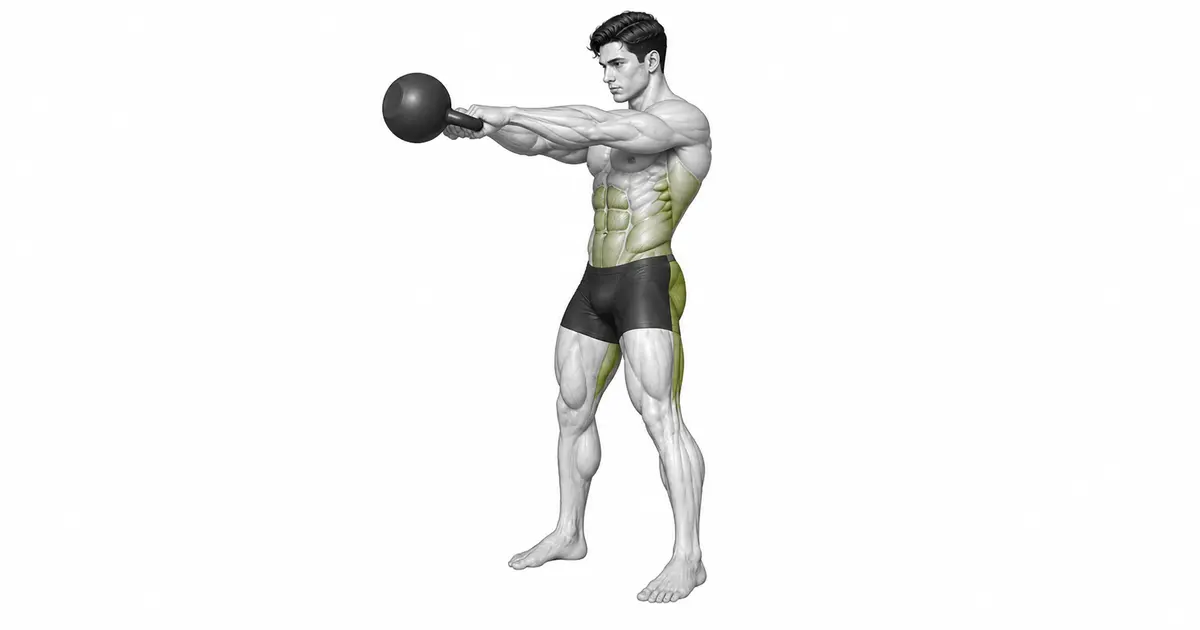
Key point: Cue to try right away: “Hike the bell back and quickly lock your hips.”
LET THE BELL FLOAT
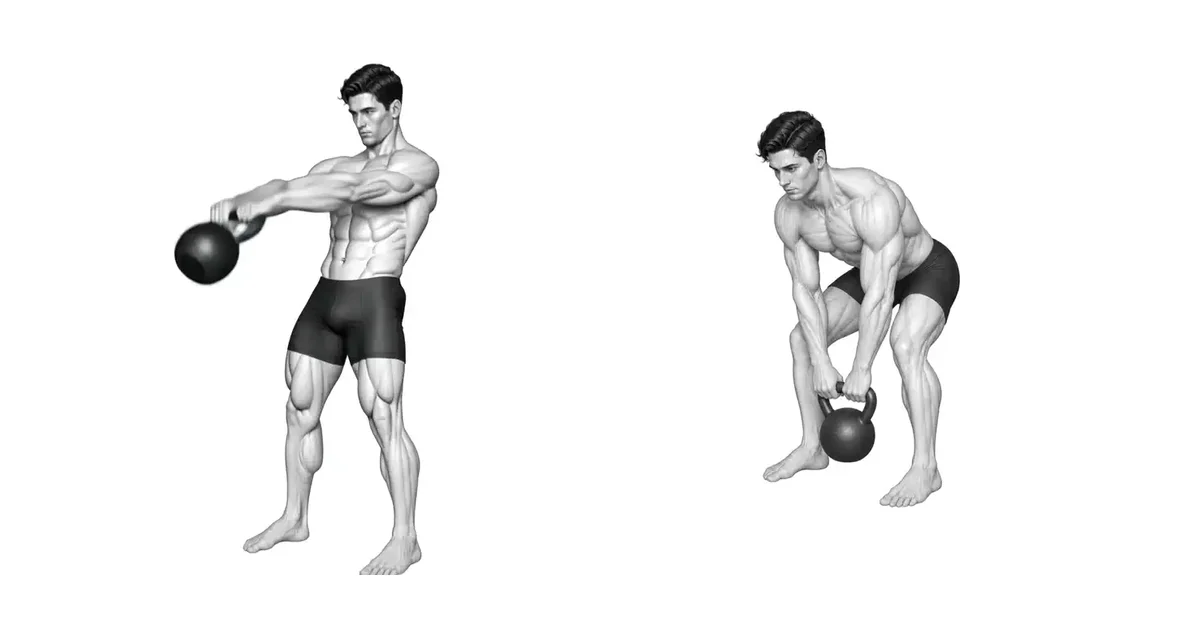
Top height is a result of hip power, not arms
After stretching your glutes, let the bell naturally float to chest level. Do not bend your elbows or shrug your shoulders.
At the top, your body is straight like a plank and your lower back is not tilted back.
TROUBLESHOOTING
Fix the cause of a mistake, not just its appearance
Sit down like a squat
- What you see
- Knees move significantly forward and bell passes low and close to the floor.
- Likely cause
- Got the bell with a knee bend instead of a hip hinge.
- How to correct it
- Return to the kettlebell deadlift and wall touch hinge to practice moving the back of your pelvis.
Lift the bell with your arms and shoulders
- What you see
- Elbows are bent, shoulders are shrugged, and the arms get tired first.
- Likely cause
- Insufficient speed of pelvic extension or forced bell height.
- How to correct it
- Lower the bell height, keep your arms like long strings, and use only glute snaps.
Recline at the waist at the top
- What you see
- The ribs are lifted and the pelvis is pushed forward, putting pressure on the lower back.
- Likely cause
- Hip lock followed by lumbar extension adds range.
- How to correct it
- At the top, squeeze your glutes and abs together to bring your body to a vertical plank position.
REGRESSION & PROGRESSION
Match the difficulty before adding load
Increased load and strength
Increase intensity by gradually increasing weight or shortening rest periods.
Complex strain behavior
Increase the difficulty level by combining it with other exercises or adding unstable environments.
BEGINNER PROGRAM
A practical starting framework
Use short sets and plenty of rest until your technique stabilizes. For cardiorespiratory benefits, the hike, hinge, and park should be the same for each repetition before increasing fatigue.
Frequency
2-3 times a week
Place it appropriately in your whole body or specific area routine.
Volume
3~5 sets, 8~15 times
Adjust the number of reps and sets according to your goals.
- Always put safety first and listen to your joint pain.
- Perform the entire operation within the scope of your control.
Frequently asked questions
How much do you bend your knees in the swing?
Bend just enough to allow hip hinge. The shins are relatively vertical and the pelvis is primarily shifted backwards.
Why do I feel it in my lower back?
The hinge timing may be late or the waist may tilt at the top. Lower the bell and practice your deadlifts and hike passes again.