KETTLEBELL WINDMILL
The kettlebell windmill is not a side stretch where the lower hand touches the floor, but a rotating hip hinge that stabilizes the overhead arm and sends the pelvis sideways and back.
The windmill, which involves holding a kettlebell overhead with one arm and lowering the opposite hand to the inside of the leg, simultaneously requires shoulder stability, hip hinge and torso rotation. Before lifting weights, you need to learn the foot angle and hip movement with your arms upright without the kettlebell. The depth of the lower hand is more important than the depth of the upper arm and lower shoulder, with the upper arm and lower shoulder stacked close to vertical and the comfortable range of the lower back being preferred.
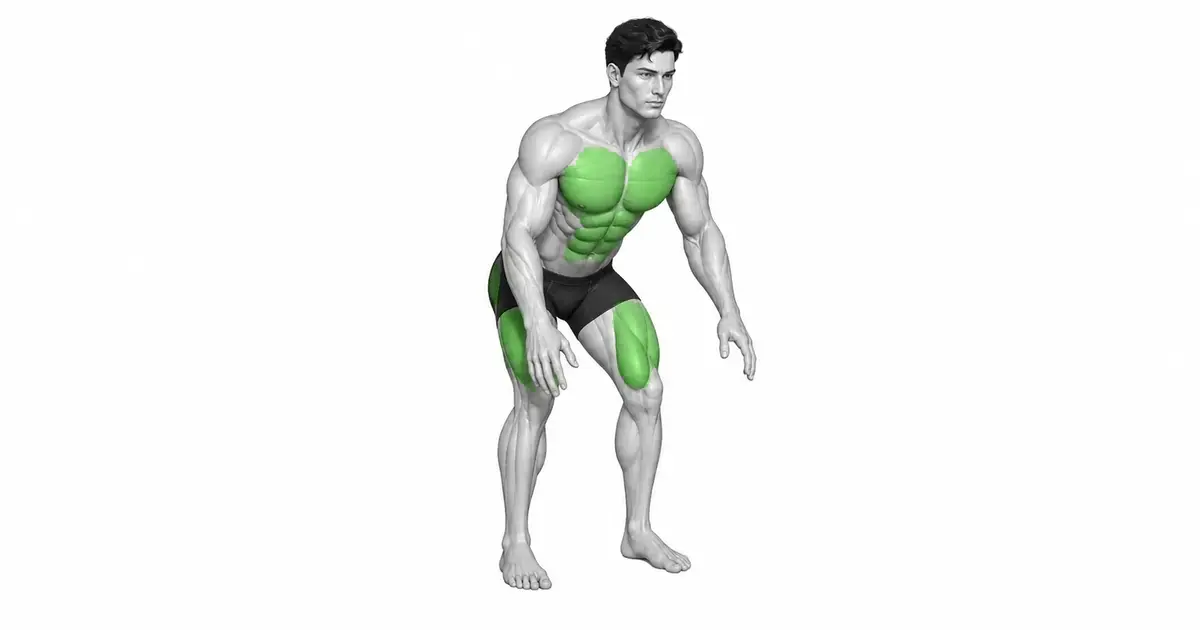
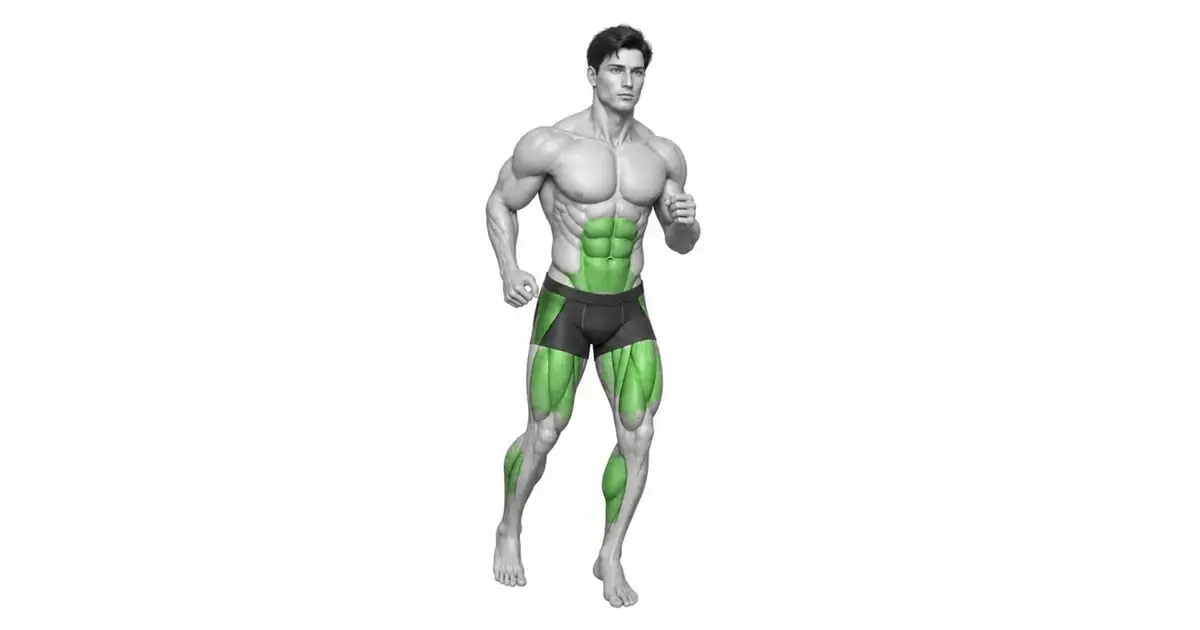
- Primary muscles
- Obliques, gluteus medius, hamstrings
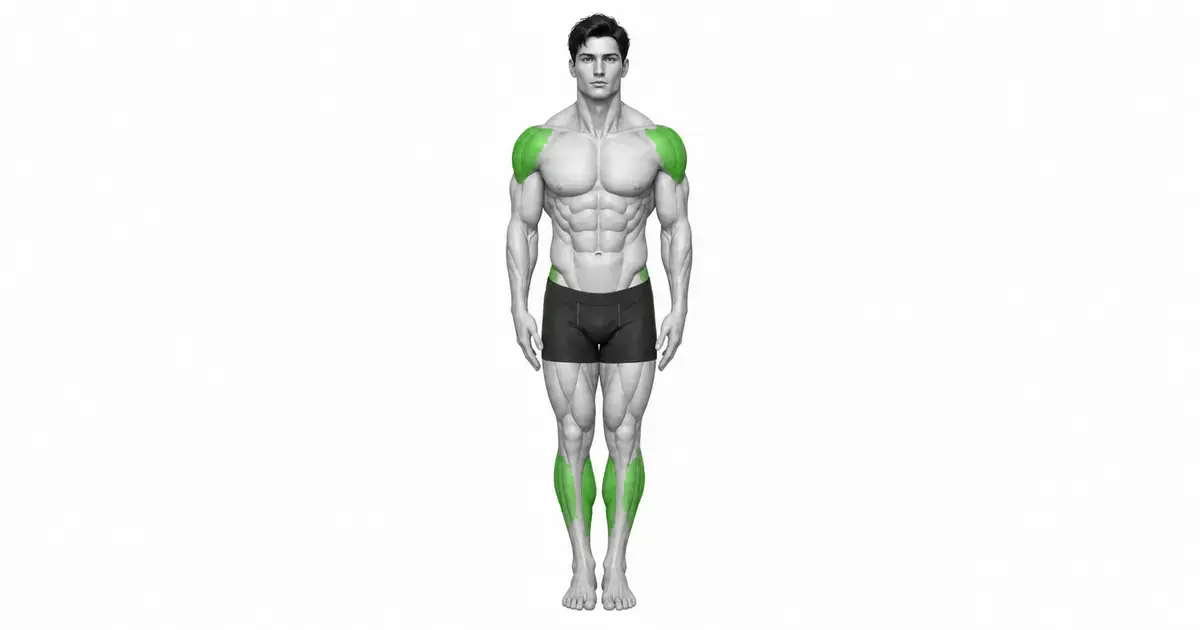
- Secondary muscles
- Deltoid, rotator cuff, gluteus maximus, adductor
- Difficulty
- Advanced
- Movement type
- Overhead fixed and rotated hip hinge
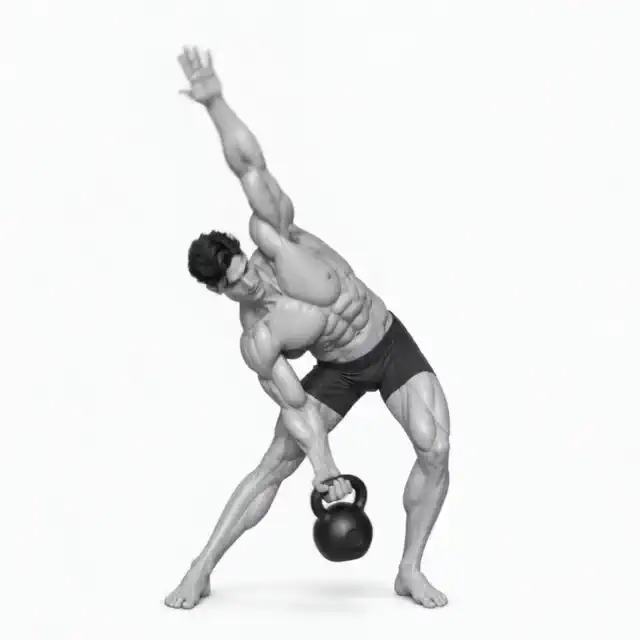
Should the lower hand touch the floor?
No. Shin or knee height is also sufficient to maintain shoulder stack and pelvic hinge.
STEP BY STEP
4 Steps for One Complete Rep
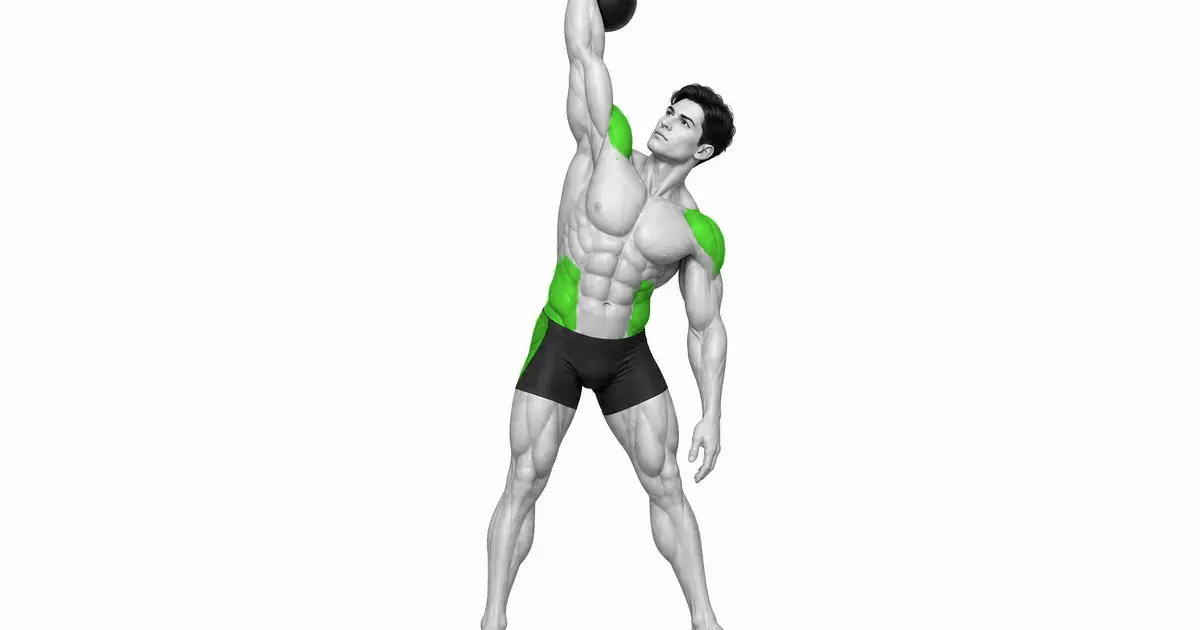
- 1
Securely securing a lightweight bell overhead
Clean the kettlebell and then press or assist to lift it above your head. Keep your elbows straight, your wrists neutral, and your shoulders steady and away from your ears.
- 2
Align both feet and pelvis direction
Turn both feet to the side that is not holding the kettlebell approximately 30 to 45 degrees. The leg on the side of the raised arm is relatively straight and the opposite knee is comfortably bent.
- 3
Hinge by moving the pelvis toward the raised arm
Look at the bell and push your pelvis back towards your raised arm. The lower hand moves down the inside of the opposite leg and the chest opens to the side.
- 4
Return by pushing the pelvis under the upper arms
Stand by using your glutes and hamstrings to bring your pelvis forward, maintaining shoulder stack and foot pressure. After standing fully, safely lower the kettlebell to the rack.
HINGE SIDEWAYS
Instead of bending down, move your pelvis away from your arm to create space.
Simply bending your torso to the side places pressure on your lower back and reduces hip movement. Think of your hips facing the back wall.
The lower hand is not a depth target, but only a guide along the inside of the leg.
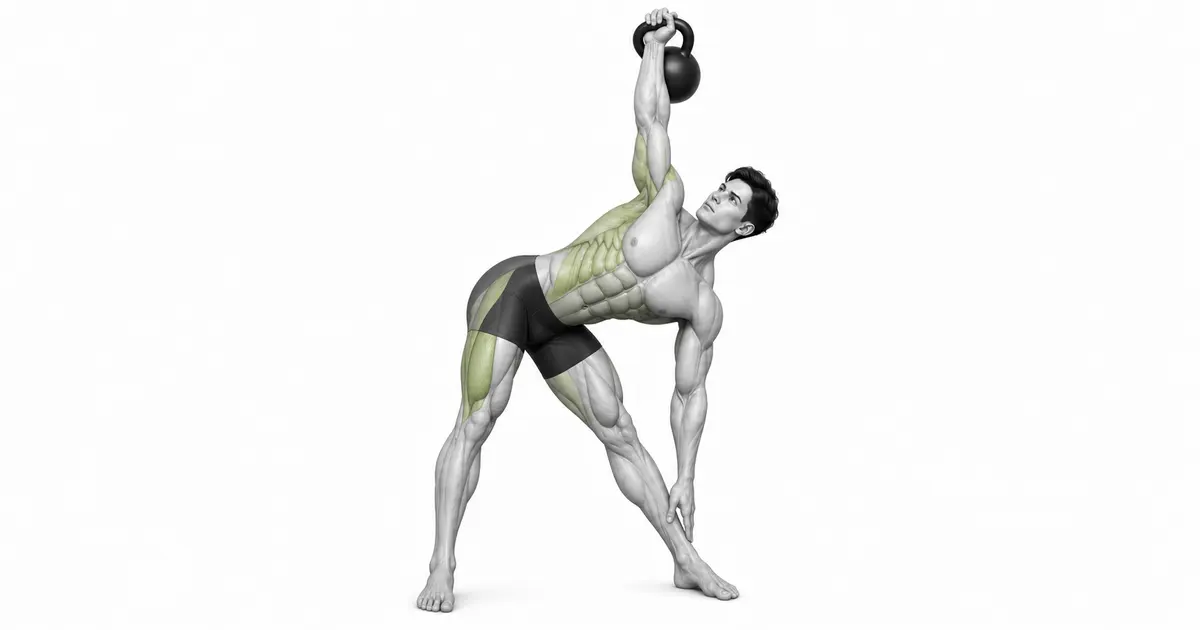
Key point: Cue to try right away: “Stack your shoulders under the bell and send your pelvis back and forth.”
STACK THE SHOULDERS
Kettlebells should be stacked vertically above the shoulder joints
Shoulder torque increases as the bell moves forward or behind the body. Keep your upper wrist, elbow, shoulder and lower shoulder close to one line.
If you have trouble seeing or have a sore neck, use a light load that doesn't require you to look at the bell but doesn't cause you to lose arm position.
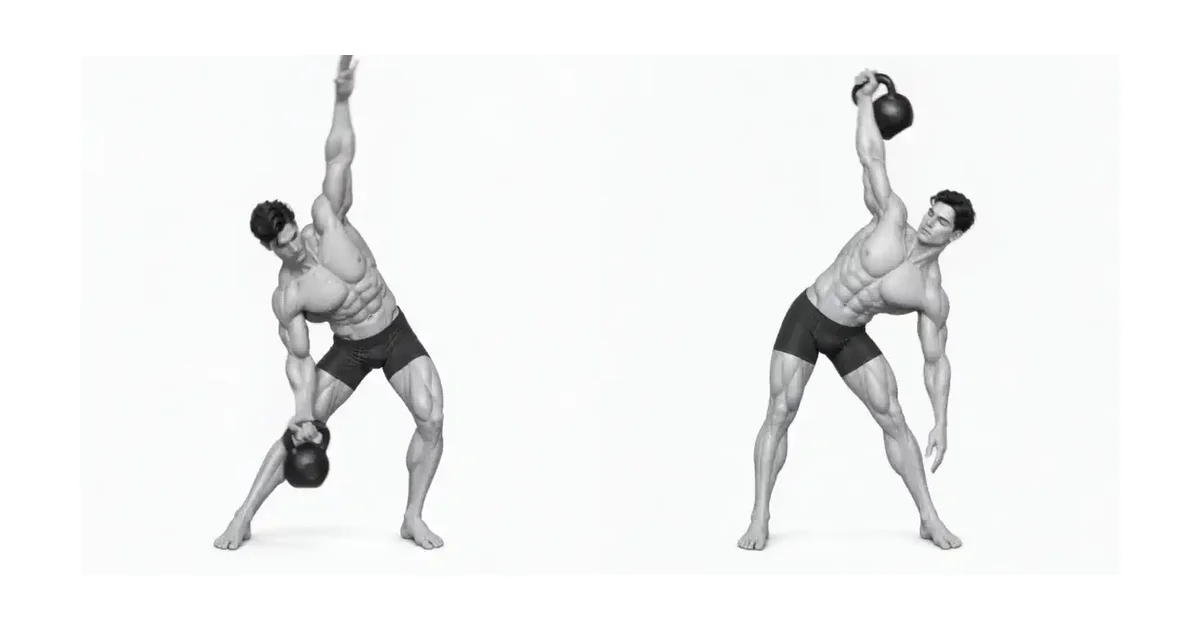
TROUBLESHOOTING
Fix the cause of a mistake, not just its appearance
Bend at the waist to touch the floor with your lower hands.
- What you see
- The pelvis barely moves and only the torso is bent to the side.
- Likely cause
- Targeted hand depth rather than hip hinge.
- How to correct it
- Reduce the range and lower your lower hands only to your shins to learn the pelvic movement first.
Kettlebell is off to the front of the shoulder
- What you see
- Arms tilt and create a lot of pressure on the front of the shoulder.
- Likely cause
- Shoulder stack is collapsed or overweight.
- How to correct it
- Practice without a bell or use a lighter bell to keep your wrists, elbows, and shoulders close to vertical.
Deeply bend both knees
- What you see
- Like a squat, the pelvis goes down and hamstring tension disappears.
- Likely cause
- Hip hinge and foot angle were not created sufficiently.
- How to correct it
- Relatively straighten the leg on the side of your raised arm and practice sending your pelvis sideways and back.
REGRESSION & PROGRESSION
Match the difficulty before adding load
bare body windmill
Learn foot angles and pelvic movements.
Bottom load windmill
Practice the hinge by holding a light bell in your lower hand.
Overhead bare body windmill
Check the shoulder stack with an empty hand.
Light Kettlebell Windmill
Add load when all alignments are maintained.
BEGINNER PROGRAM
A practical starting framework
This is an exercise that requires greater skill and mobility than strength. After warming up, use low reps with a light bell and compare your left and right ranges.
Count
3–8 times each
Descent 3 seconds, maintain shoulder stack
Set
2–4 sets each
60–120 seconds recovery after both sides
Frequency
1–3 times a week
Consider shoulder and hamstring recovery
- Increase depth slightly if shoulder stack and hip hinge are maintained.
- If you experience side bending of the waist, separation from the bell, or shoulder pressure, immediately lower the load and range.
- Does not use bottom touch as a criterion for progress.
Frequently asked questions
Which leg do you extend?
Typically, the leg on the same side as the arm holding the kettlebell is relatively straight and the opposite knee is slightly bent.
Is Kettlebell a must-see?
Looking at the bell will help you determine its location, but if your neck is uncomfortable, you can adjust your gaze. In all cases, light loads and stable shoulders come first.