L-SIT
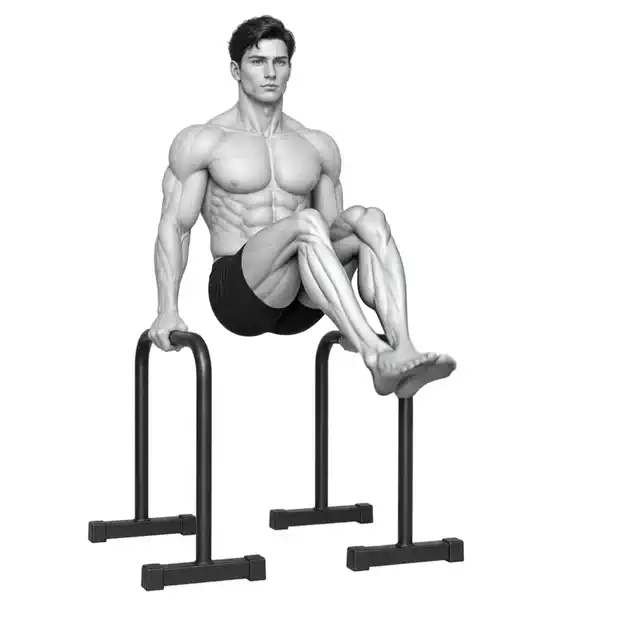
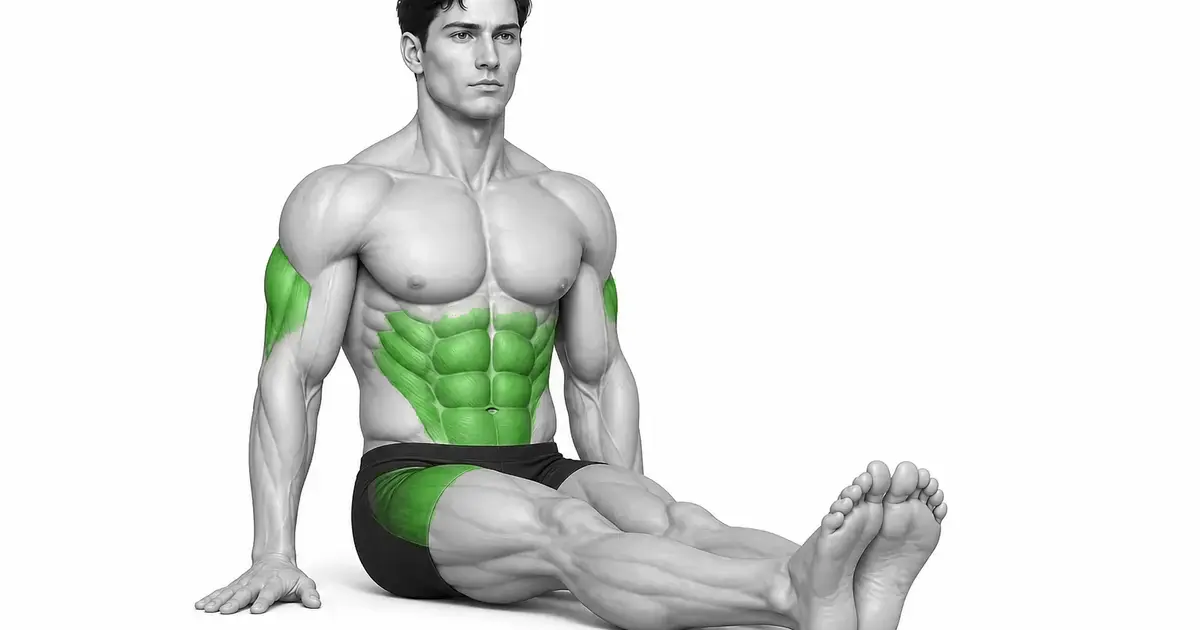
The L-sit is not a posture in which the legs are forced to be horizontal, but is a high-level static exercise that involves pushing off the floor with the arms to raise the pelvis and simultaneously maintain hip flexion and knee extension.
The L-sit, which lifts the pelvis and legs off the floor while pressing a parallel or parallel bar, requires not only core, but also triceps and shoulder stability, and strong hip flexion. If you try to straighten your legs straight off the floor, your pelvis won't rise or your shoulders will collapse towards your ears. Starting with a chin support in a high parallet with your knees pulled into your chest, straighten one leg at a time.
- Primary muscles
- Rectus abdominis, iliopsoas, quadriceps femoris
- Secondary muscles
- Triceps, serratus anterior, latissimus dorsi, forearm
- Difficulty
- Advanced
- Movement type
- Arm support and hip flexion isometric
Should your legs be parallel to the floor?
No. It is sufficient to bend your knees while keeping your pelvis open and your shoulders stable.
STEP BY STEP
4 Steps for One Complete Rep
- 1
Placing Hands and Wrists on Elevated Support
Place the parallette or block next to your pelvis and hold the handle firmly. Get ready by straightening your elbows and pressing your shoulders away from your ears.
- 2
Push the floor to raise the pelvis
Press firmly into the support with your hands, lower your shoulder blades and lift your pelvis between your hands. Lower your ribs to prevent your torso from collapsing backwards.
- 3
Adjusting the leg lever at the knee tuck
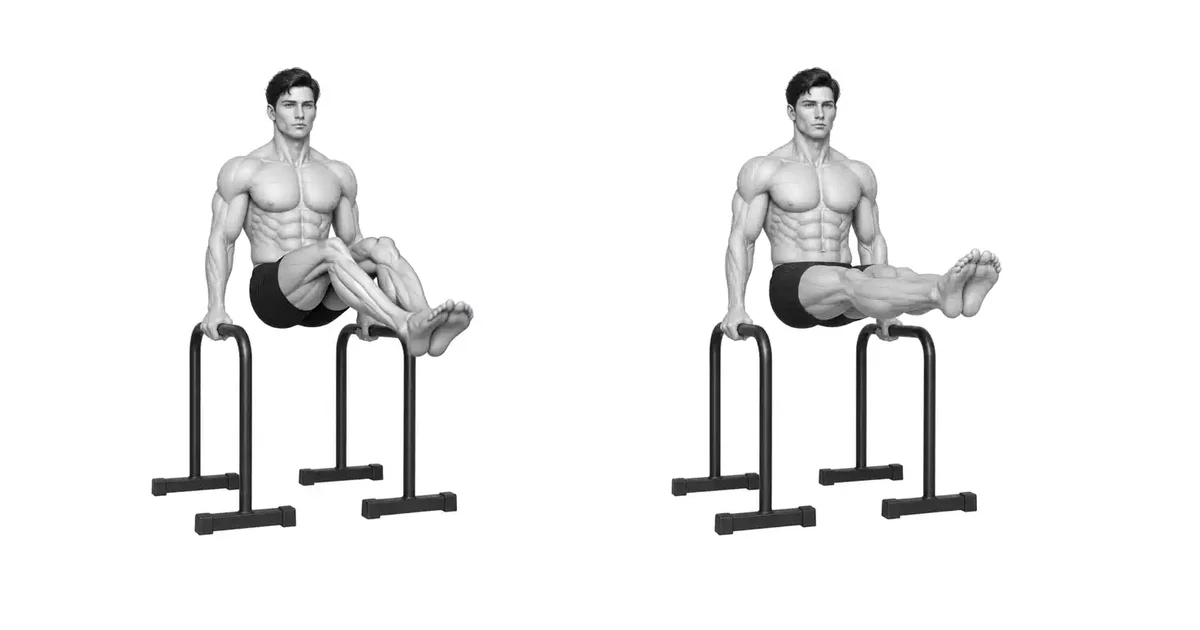
Start by pulling both knees toward your chest. Once stable, extend one leg at a time and only extend both legs forward at the end.
- 4
Take a short breath and come down under control.
Pull your toes toward your body or extend them comfortably and hold for 5 to 15 seconds. Slowly place your pelvis and feet on the floor before collapsing your shoulders or wrists.
PUSH DOWN TO LIFT
To raise your pelvis, you should push down on the floor with your hands instead of shrugging your shoulders
Lowering your shoulder blades and lengthening your arms creates space under your pelvis. Do not bend your elbows and pull yourself up.
The parallet, which is higher than the floor, creates space for the pelvis and feet, which is advantageous for regression.
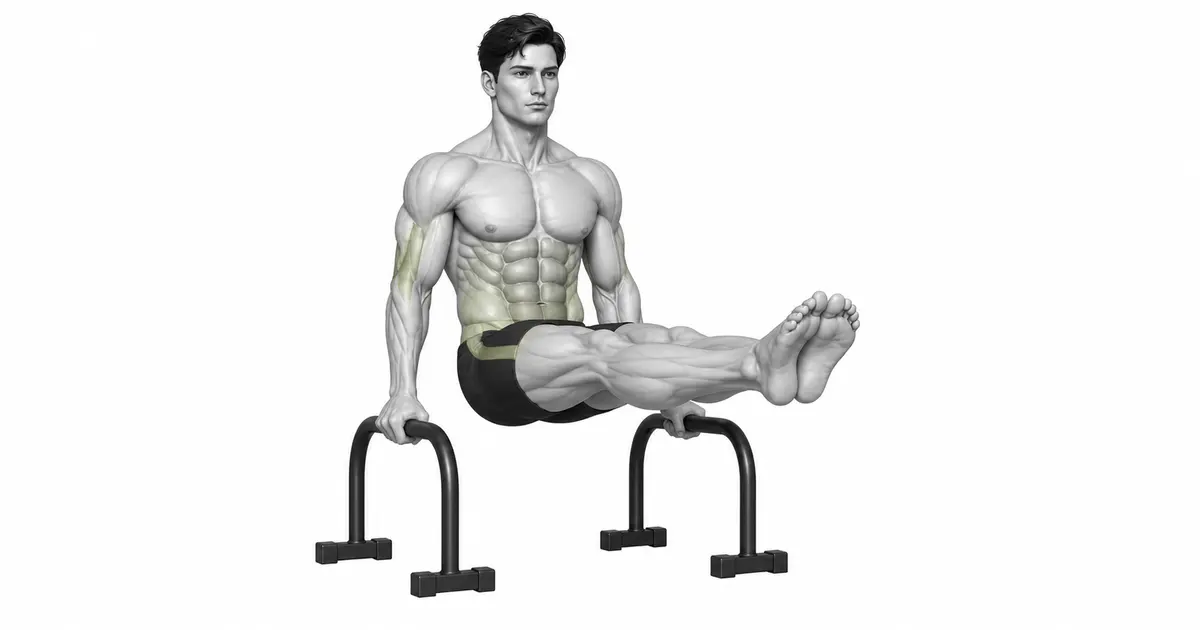
Key point: Cue to try right away: “Push your hands down and your knees toward your chest.”
ONE LEG AT A TIME
From chin position, extend the lever step by step by extending one leg
If you straighten both legs at the same time, your pelvis is likely to fall to the floor. Extend one leg alternately for 2 to 3 seconds.
If hamstring flexibility is limited, a slight bend in the knees is acceptable and hip height is a priority.
TROUBLESHOOTING
Fix the cause of a mistake, not just its appearance
Shoulders rise toward ears
- What you see
- The neck becomes shorter and the pelvis moves closer to the floor.
- Likely cause
- Lack of scapular depression and hand push strength.
- How to correct it
- Practice only support holds in high parallets and press your shoulders down.
Bend your elbows and brace yourself
- What you see
- Triceps tremble rapidly and pelvis pushes behind hands.
- Likely cause
- I couldn't raise my arms like a pillar.
- How to correct it
- Extend your elbows without locking them and return to a short chin hold.
Pelvis drops while straightening legs
- What you see
- Feet extended, but hips touch the floor and torso falls back.
- Likely cause
- Leg lever exceeds current hip flexion and support capacity.
- How to correct it
- Return to a knee tuck or single leg stance to keep your pelvis level.
REGRESSION & PROGRESSION
Match the difficulty before adding load
Increased load and strength
Increase intensity by gradually increasing weight or shortening rest periods.
Complex strain behavior
Increase the difficulty level by combining it with other exercises or adding unstable environments.
BEGINNER PROGRAM
A practical starting framework
Perform multiple short quality sets of 5 to 15 seconds. If wrist and shoulder fatigue occurs first, rest well between sets and increase the support height.
Frequency
2-3 times a week
Place it appropriately in your whole body or specific area routine.
Volume
3~5 sets, 8~15 times
Adjust the number of reps and sets according to your goals.
- Always put safety first and listen to your joint pain.
- Perform the entire operation within the scope of your control.
Frequently asked questions
Which is easier: bottom or parallel?
Parallel is generally easier as it provides wrist angle and floor clearance. Start with a high, stable support.
Can I do it if my hamstrings are stiff?
You can use the chin L-sit with knees bent and the one-legged variation. Build your pelvic support first.