LEG CURL
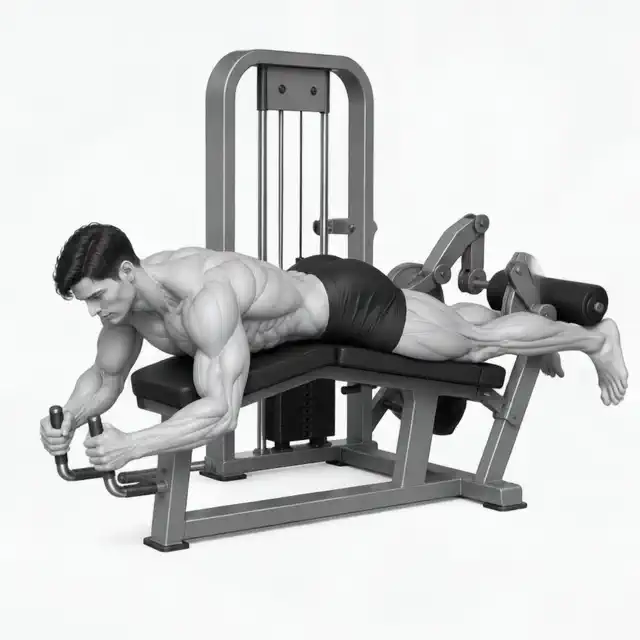
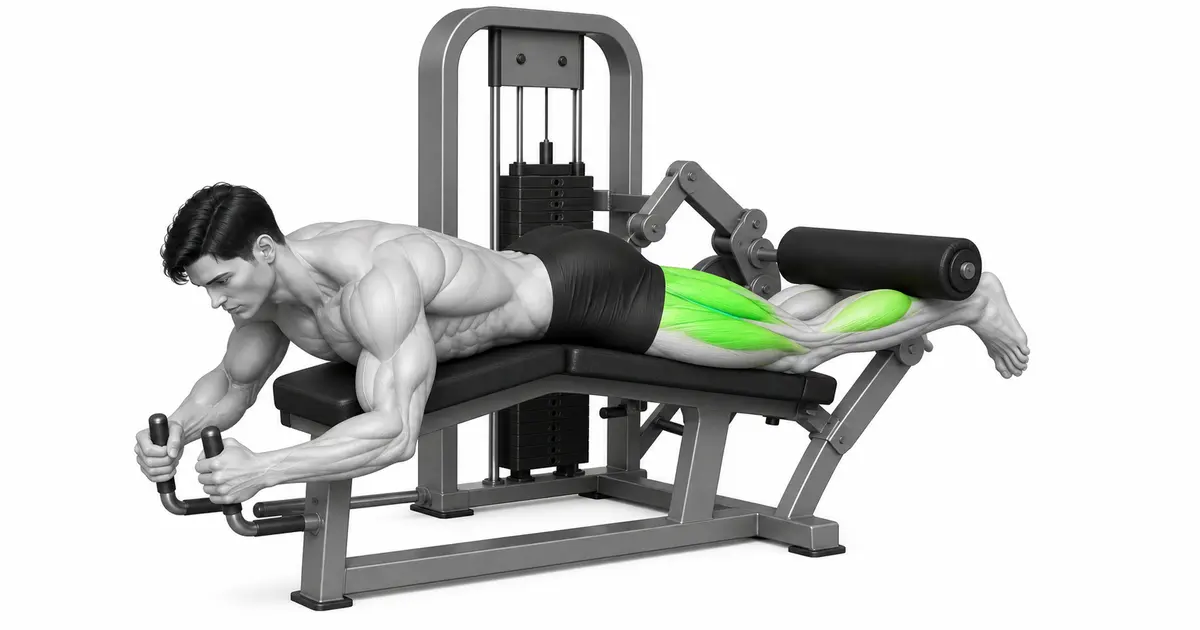
Leg curl is an exercise that involves bending the knees while keeping the pelvis fixed rather than lifting the heels high.
Prone leg curls target the knee flexion function of the hamstrings. Align your knees with the machine's rotation axis, place the roller just above your ankles, and pull your heels in without lifting your buttocks or wetting your lower back. In particular, if you control the descending section, you can create sufficient stimulation even with a small weight.
- Primary muscles
- Hamstrings
- Secondary muscles
- Gastrocnemius/hamstrings
- Difficulty
- Intermediate
- Movement type
- Knee bend
Should the toes be pulled in or extended?
Maintaining alignment is easy if you are in neutral or lightly pulling your toes towards your body. Calf participation may vary depending on ankle position, so use a pain-free position.
STEP BY STEP
4 Steps for One Complete Rep
- 1
Aligning Knee Axis and Rollers
When lying down, adjust your knees so that they are close to the end of the bench or the axis of rotation of the machine. The roller touches the lower part of the calf above the ankle joint.
- 2
Stabilizing the pelvis and torso
Hold the handle lightly and strengthen your abdomen and buttocks. Place your head in line with your spine and place both sides of your pelvis in contact with the pad.
- 3
Pull your heels toward your buttocks
Exhale and bend your knees, keeping your ankles neutral or pulling your toes toward your body. Tighten your hamstrings throughout the range of pelvic lift.
- 4
Unfold without dropping the weight
Inhale and lower the roller for 2-3 seconds. Extend your knees just before roughly locking them out and, maintaining tension, begin the next repetition.
MACHINE AXIS
If your knee and the axis of the machine are misaligned, you will feel the roller pushing your leg.
Resistance will naturally follow when the machine's rotation axis is close to the knee joint line. If your body slides up or down during a repetition or the roller moves toward your ankles, readjust the seat length.
If the roller is too low and presses on the Achilles tendon, or if it is too high and presses on the center of the calf, it may cause discomfort and change the range of motion.
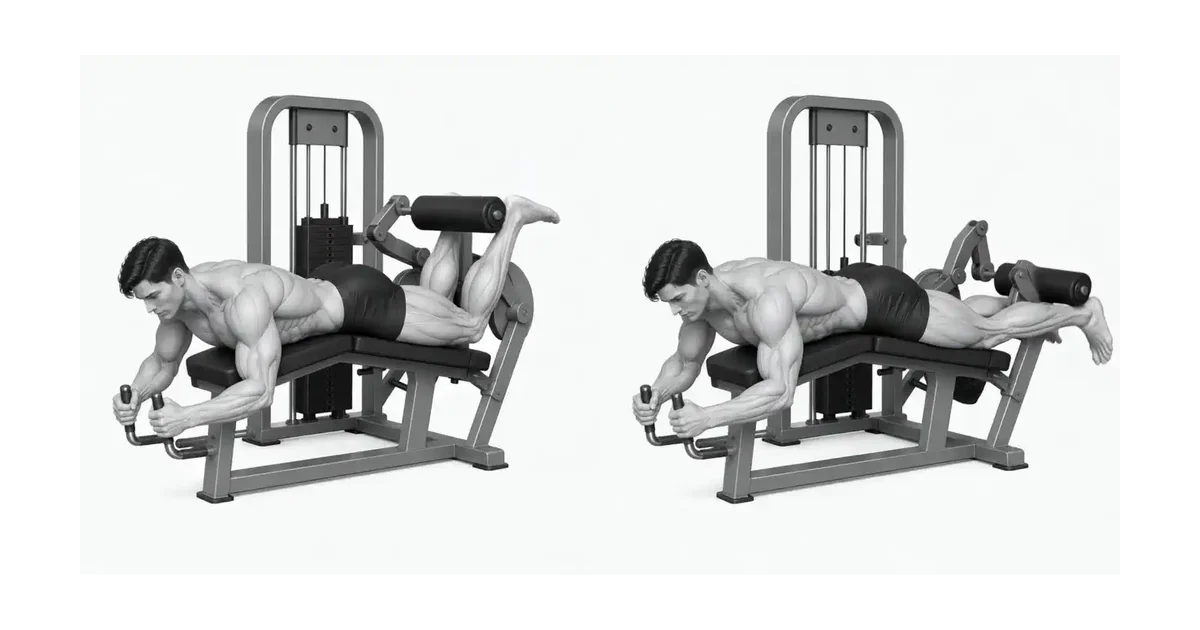
Key point: Cue to use right away: “Knees on axis, pelvis on pad.”
HIP CONTROL
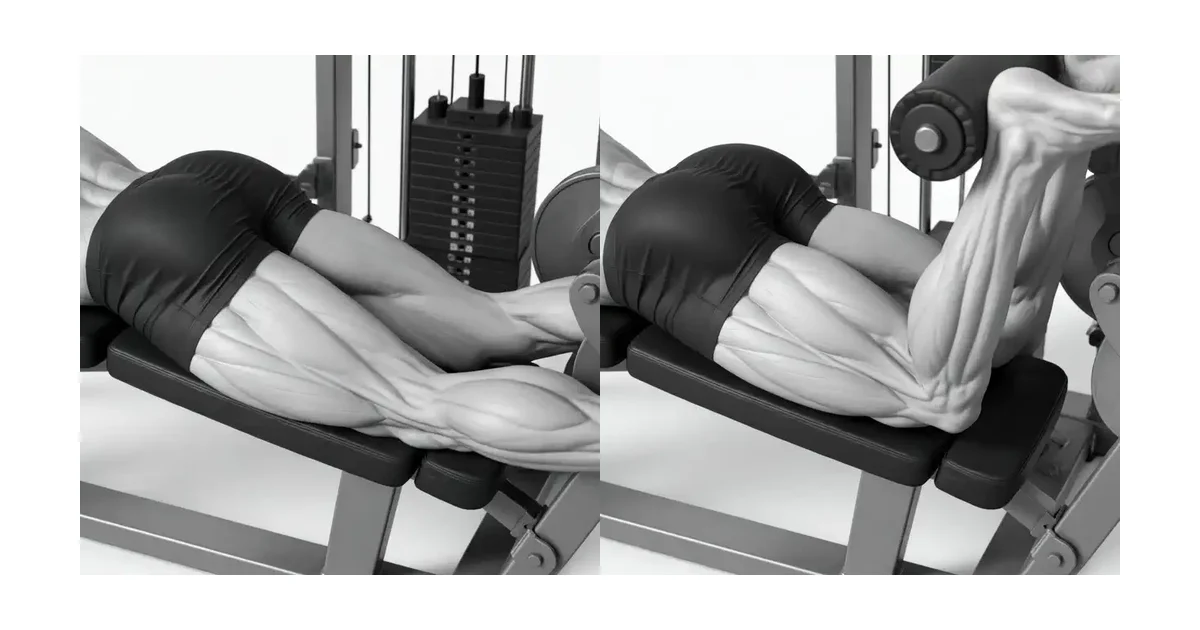
The point where your hips lift is a sign that you are overweight or reaching
At the top where the hamstrings are shortened, it is easy for the pelvis to lift and the lower back to become wet. Maintain pelvic contact even if you lower the top height slightly.
Do not turn your toes excessively outward or inward, but keep your knees and ankles facing the same direction.
TROUBLESHOOTING
Fix the cause of a mistake, not just its appearance
Butt lifting off pad
- What you see
- As the roller goes up, the pelvis rises and the lower back bends.
- Likely cause
- Heavy weight or forcing the range of your heels to touch your hips.
- How to correct it
- Reduce the weight and upper reach and press your abdomen and pelvis into the pad.
Dropping weight on descent
- What you see
- After the top, the rollers descend quickly and hit the weight stack.
- Likely cause
- This is a weight that cannot be sustained through fatigue or eccentric sections.
- How to correct it
- Lower the weight to maintain a 2-3 second descent and avoid stacking at the bottom.
Toes turn with each repetition
- What you see
- The foot moves out or in and the knee position also fluctuates.
- Likely cause
- Rolling up the roller with the ankle and left and right hamstring control are different.
- How to correct it
- Keep your ankles neutral and your knees pointing down. If necessary, practice lightly on one side at a time.
REGRESSION & PROGRESSION
Match the difficulty before adding load
Band Leg Curl
Learn knee bending and pelvic fixation with light resistance.
Light two-leg leg curl
Repeat machine axis and roller settings.
Tempo Leg Curl
3-second lowering strengthens hamstring control.
Single Leg Curl
Check left and right differences and perform in the same range.
BEGINNER PROGRAM
A practical starting framework
Integrate with hip hinge exercises, starting with 2 sets and increasing volume as you maintain pelvic contact and slow descent.
Count
10–15 times
Rise 1 second, Fall 2~3 seconds
Set
2–3 sets
60–90 seconds recovery between sets
Frequency
1–2 times a week
Combined with hamstring volume such as deadlifts
- Once your pelvis remains on the pad and you control your descent, increase the number of repetitions first.
- If the weight stack bumps or butts, lower the weight.
- If you experience sharp pain or cramping in the back of your knee, stop immediately and check the roller and scope.
Frequently asked questions
Should your heels touch your buttocks?
Not required. The current upper range is before the pelvis lifts or the lower back wets. Keep your hamstrings contracted and use as much range as possible.
What is the difference from seated leg curls?
Both exercises train knee flexion, but the hip angles are different, so the hamstrings feel different length and machine support. You can choose a comfortable and controllable version or alternate them.