LEG EXTENSION
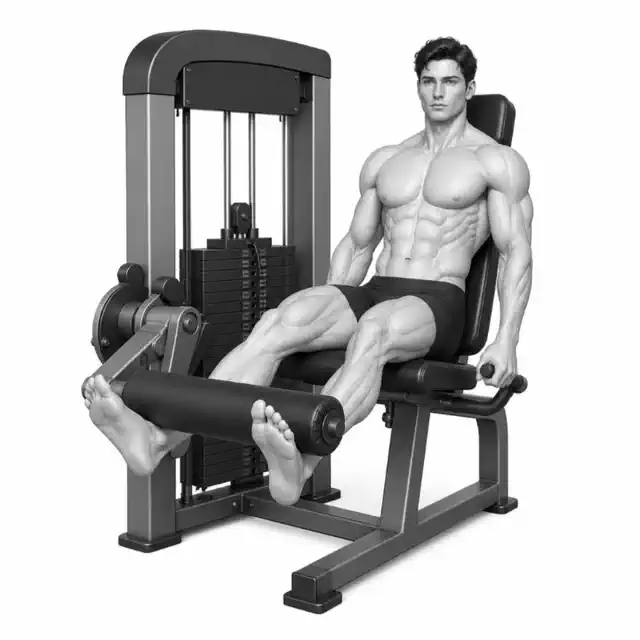
Leg extension is not an exercise where you kick up a heavy stack, but rather an exercise where you control and straighten your knees with your quadriceps muscles.
Seated leg extensions are easy to train by isolating the quadriceps, but if your knees are misaligned with the machine axis or you use a kickback at the bottom, it can cause discomfort. Secure your back and pelvis to the pad, place the roller over your ankles, then raise and slowly lower within a pain-free range.
- Primary muscles
- Quadriceps
- Secondary muscles
- Tibialis anterior muscle, hip stabilizer muscle
- Difficulty
- Intermediate
- Movement type
- Knee extension
Can I fully straighten my knees?
It is possible to straighten it with control without pain, but do not lock it hard due to inertia. If uncomfortable, stop just before full extension and maintain contraction.
STEP BY STEP
4 Steps for One Complete Rep
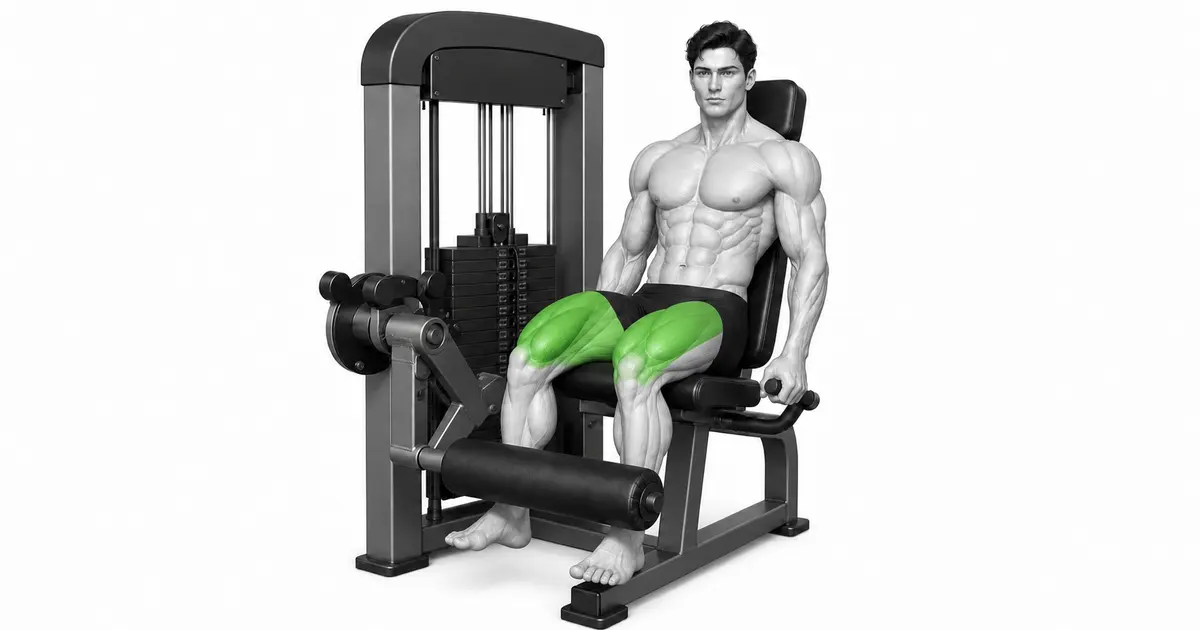
- 1
Aligning the backrest and knee axis
Adjust the seat depth so that the knee joint line is closer to the machine axis of rotation. Place your buttocks and back on the pad and hold the handle lightly.
- 2
Adjusting rollers and starting range
Place the roller on the bottom of your shin just above your ankle joint. Adjust the starting angle so that your knees do not bend excessively or cause pain.
- 3
Knee extension with quadriceps
Exhale and lift your shins. Point your toes and knees forward and avoid lifting your pelvis off the seat.
- 4
Control the top and lower slowly
Slow down to squeeze the front of your thighs before snapping and locking your knees. Inhale and return to the starting point for 2 to 3 seconds.
KNEE AXIS
The knee joint line and the machine axis must be close for the roller to naturally follow.
Off-axis can cause the rollers to push your shins up and down or cause your body to move in the seat. Visually align the joint line next to your knee with the center of rotation of the machine.
Depending on the machine structure, it may not match perfectly, so give priority to a position that causes no pain and slippage during repetitions.
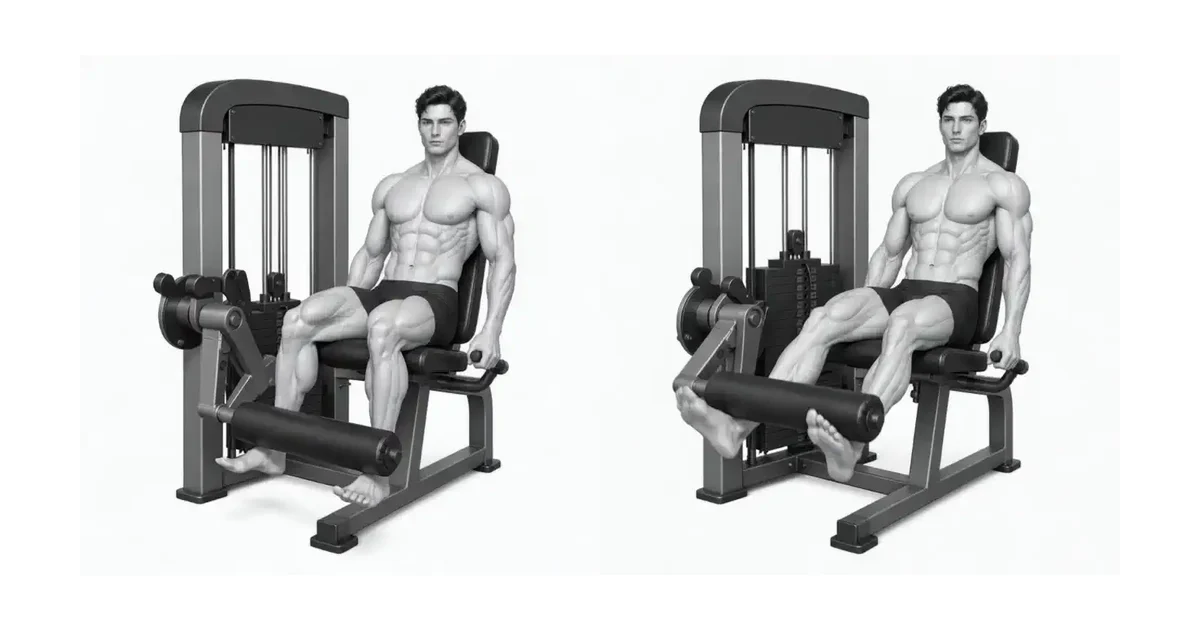
Key point: Cue to use right away: “Knees on axis, pelvis on seat.”
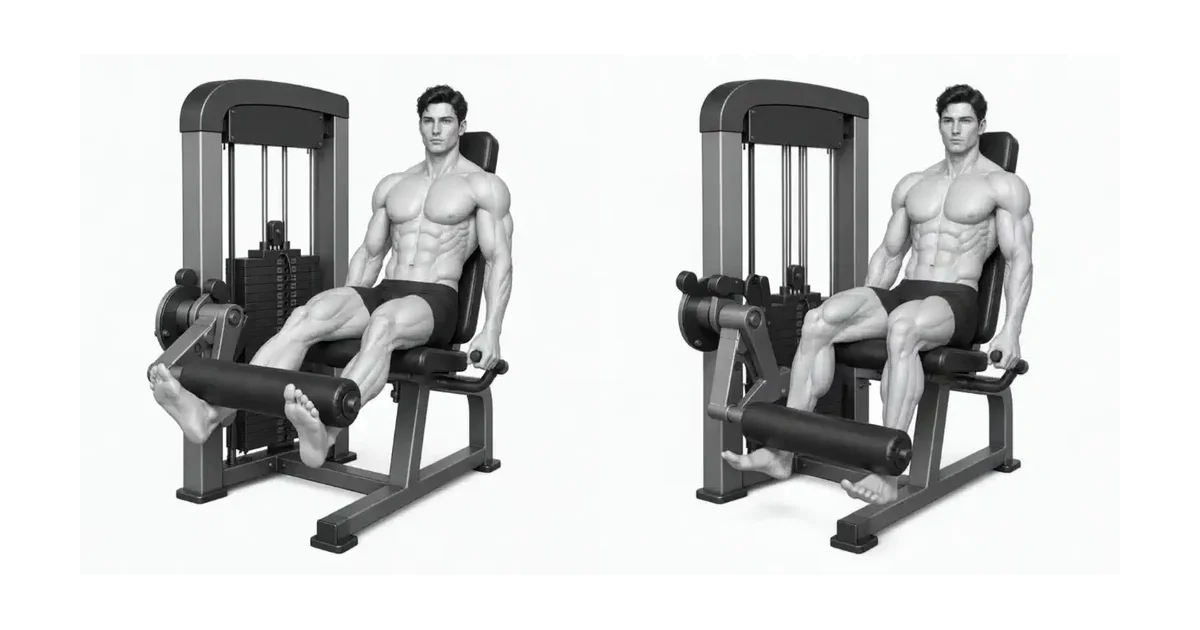
CONTROLLED LOCKOUT
The top is not the point where you kick hard, but the point where you slow down and contract
When you quickly straighten your knees due to inertia, the weight stack shakes and shock is transmitted to the joints. Slow down as you get closer to the top.
If full extension is uncomfortable, you can stop at an angle that does not cause pain. Identical paths and slow descents are prioritized over repetition ranges.
TROUBLESHOOTING
Fix the cause of a mistake, not just its appearance
kick up from the bottom with recoil
- What you see
- Shins pop and weight stacks wobble on the first leg.
- Likely cause
- The starting angle is too deep or the weight is too heavy.
- How to correct it
- Reduce the starting range and weight, pause for 1 second and then raise gently.
Pelvis lifted off the seat
- What you see
- As you get to the top, your hips slide forward and your lower back rises.
- Likely cause
- Compensates with the torso and hip joints to raise the roller.
- How to correct it
- Refit the back and seat, stabilize yourself with the handles, and lower the weight.
Roughly locking knees
- What you see
- Jobs pop at the top and thigh tension disappears.
- Likely cause
- Ending the rep through inertia or trying to rest at the top.
- How to correct it
- Slow down and support with your quadriceps for 1 second at a point where you are almost straight.
REGRESSION & PROGRESSION
Match the difficulty before adding load
Sit and straighten your knees
Check pain-free knee extension range without resistance.
Light both feet extension
Learn machine axis and roller settings.
Tempo Leg Extension
Increase quadriceps control with a 3-second descent.
Single leg extension
Check the difference between left and right, but place your pelvis in front.
BEGINNER PROGRAM
A practical starting framework
Start with 2 sets as an accessory exercise after squats or leg presses, increasing reps when your knees are comfortable and you can control the descent.
Count
10–15 times
1 second for top, 2-3 seconds for descent
Set
2–3 sets
60–90 seconds recovery between sets
Frequency
1–2 times a week
Total quadriceps volume and summation
- Once you control the top and bottom without knee pain, increase the number of repetitions first.
- If you experience kickback or pelvic lift, reduce the weight and starting range.
- If you experience sharp pain or swelling in the front of your knee, stop exercising and seek professional evaluation.
Frequently asked questions
Can changing the direction of my toes only strengthen certain quadriceps muscles?
Significantly turning your toes can throw your knees out of alignment. Basically, prioritize stable ranges and progressive loads with your feet and knees in front.
If my knees hurt, can I continue with light weights?
Sharp pain or discomfort that gets worse with repetition is not considered normal muscle fatigue. If it persists even after adjusting the settings and range, stop and get an evaluation.