LEG PRESS
In leg press, the range of stable folding and straightening of the pelvis and knees takes precedence over the force of pushing the footrest.
The leg press can provide great resistance to the lower body with the support of the backrest, but if you are greedy for depth and curl your pelvis or lock your knees roughly, you lose the advantage. Perform with your entire foot in contact with the footrest, your knees following the direction of your toes, and your lower back and pelvis stable on the pad.
- Primary muscles
- Quadriceps/Gluteus maximus
- Secondary muscles
- Hamstrings, adductors, calves
- Difficulty
- Intermediate
- Movement type
- Simultaneous extension of knee and hip joints
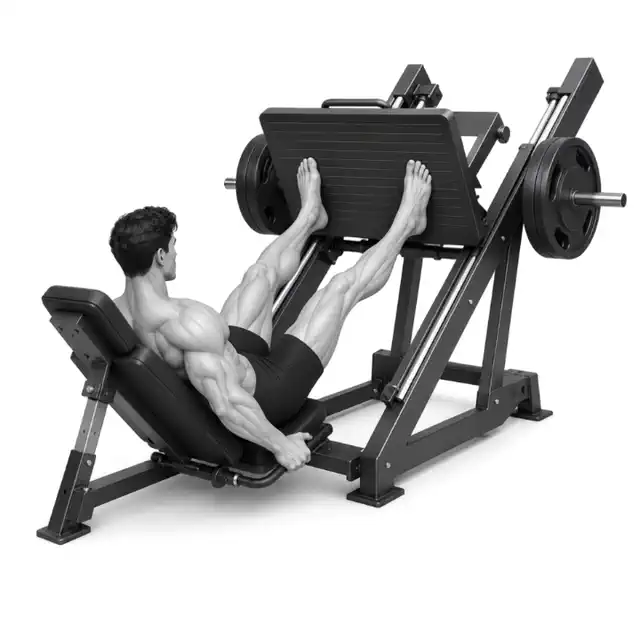
Where should I place my feet on the footrest?
The default is shoulder width and around the center of the footrest. Raising or lowering your feet can change joint angles and muscle strain, so prioritize a position where your heels and pelvis are stable.
STEP BY STEP
4 Steps for One Complete Rep
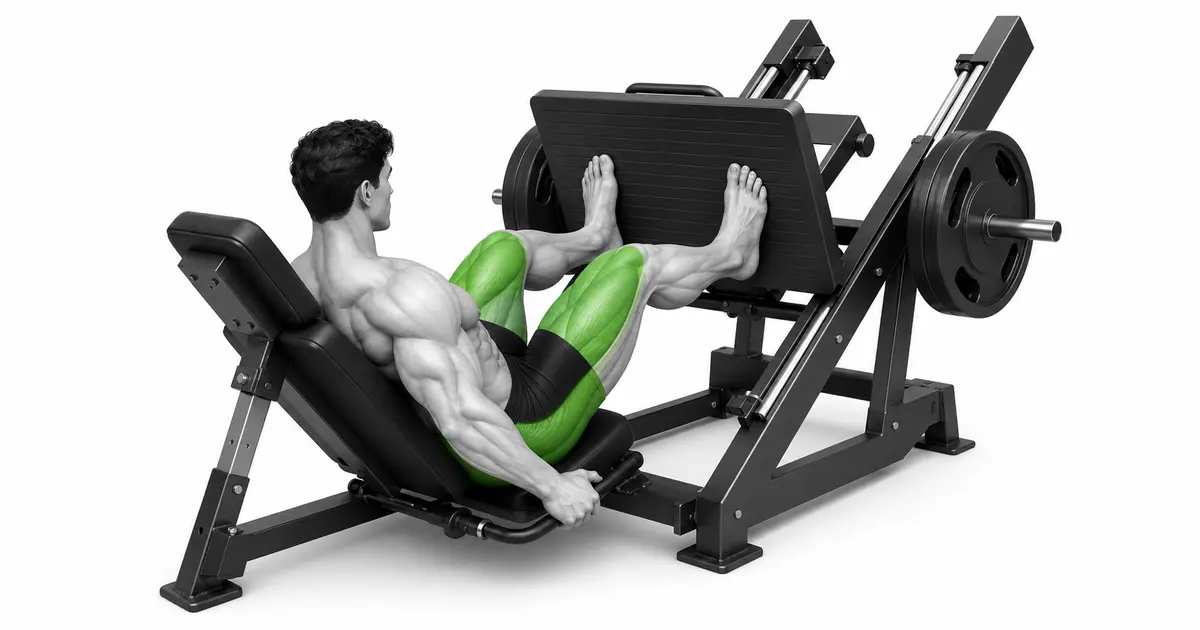
- 1
Matching seats and safety devices
Adjust the seat and stopper so that your joints do not lock at the starting point where your hips and lower back are in contact with the backrest and your knees are straight. Check the lock operation with an empty machine first.
- 2
Support the footrest with your entire foot
Place your feet about shoulder-width apart and place your heel, the base of your big toe, and the base of your little toe on the footrest. Align your knees similarly to the direction of your second toe.
- 3
Lower until your pelvis curls.
Inhale, keeping your abdomen fixed, bend your knees and hips together. Just before your lower back or hips lift off the pad is your current lower range.
- 4
Controlled straightening by pushing with the heel
Push the footrest with your entire foot and do not let your knees move inward. Avoid locking your knees hard at the top and regain balance before the next repetition.
PELVIS & DEPTH
Depth is determined by the extent of the pelvis remaining on the pad rather than the knee angle
If you try to bring your knees closer to your chest and your pelvis rolls, your lower back may fall off the backrest and place unnecessary strain on your lumbar spine. Check the contact between your lower back and pelvis from the side.
Comfort depth varies depending on foot position and hip joint structure. Use the range before your heel lifts off the footrest or pain in your knee or hip joints begins.
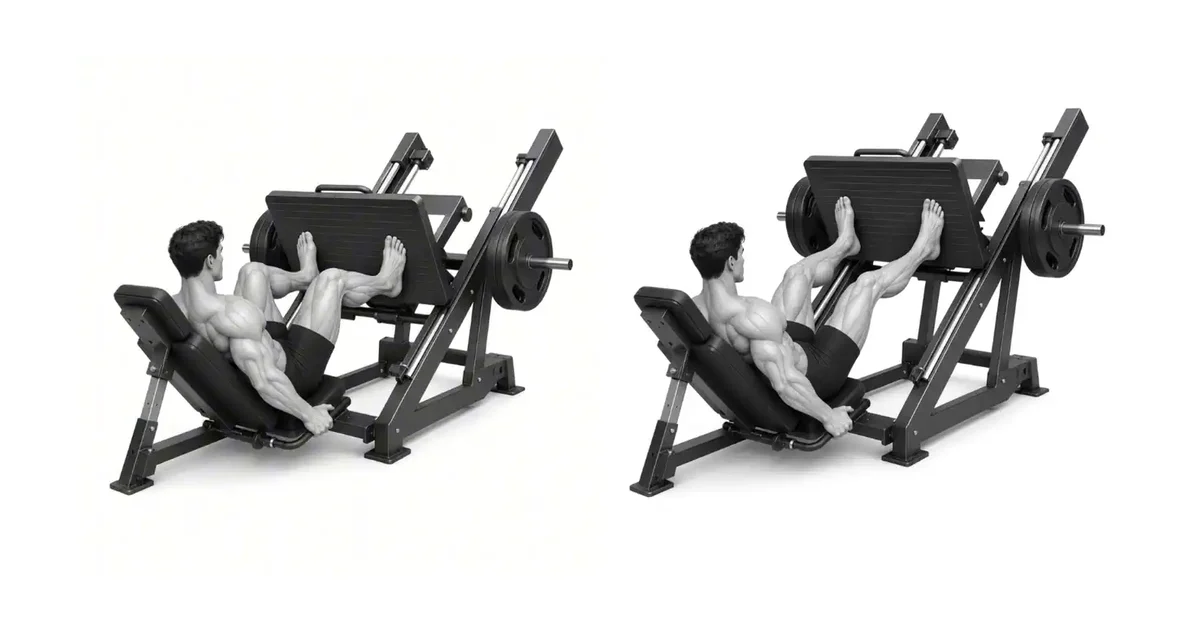
Key point: Cue to use right away: “pelvis on pad, knees towards toes”
FOOT PRESSURE
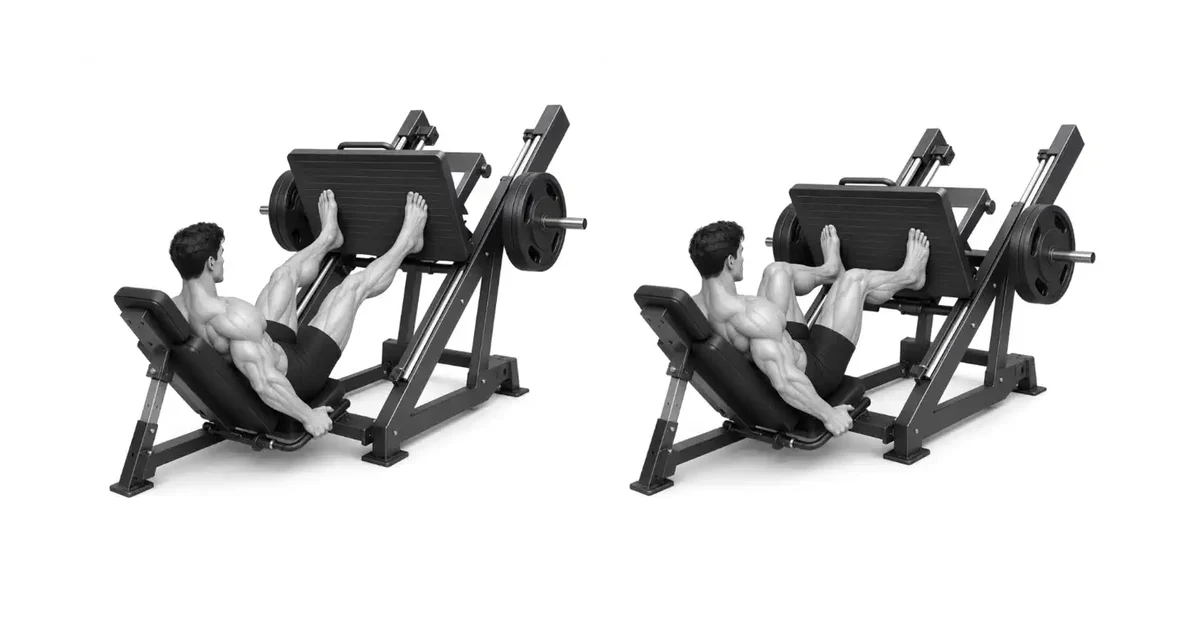
Push on the footrest with your entire foot, not just one toe or heel
If the heel floats, the burden increases on the front of the calf and knee, and if the front of the foot floats, there is a risk of slipping on the footrest. Move while maintaining three-point pressure.
If the left and right foot pressure varies or the pelvis rotates while straightening the knees, lower the weight and realign both foot positions.
TROUBLESHOOTING
Fix the cause of a mistake, not just its appearance
Pelvis rolled at the bottom
- What you see
- The deeper you lower your knees, the more your hips and lower back rise from the pad.
- Likely cause
- The seat is too close or lowered deeper than the current range of motion of the hip joint.
- How to correct it
- Adjust your seat and change direction to maintain pelvic contact.
Knees turned inward
- What you see
- When pushing up, both knees collapse into the feet.
- Likely cause
- The weight is too heavy or the foot position and hip stability are incorrect.
- How to correct it
- Lower the weight, bring your knee toward your second toe, and maintain pressure across your foot.
Lock by snapping knees at the top
- What you see
- At the end of each repetition, the knee quickly straightens and a shock is felt in the joint.
- Likely cause
- Supporting weight through inertia or creating a resting point.
- How to correct it
- Slow down when your knees are almost straight and don't lock your joints hard.
REGRESSION & PROGRESSION
Match the difficulty before adding load
Bodyweight box squat
Learn foot pressure and knee path without load.
Light leg press
Practice pelvic contact and use of restraints.
Full Range Leg Press
Increase the number of iterations within a controllable range.
Single-sided leg press
Check left and right differences, but perform without pelvic rotation.
BEGINNER PROGRAM
A practical starting framework
Initially, use a load that includes the machine's own weight with some room left over for the last 2-3 reps, and prioritize hip contact and knee path over depth.
Count
8–12 times
Depth control with 2-3 second descent
Set
2–4 sets
Recovery around 2 minutes between sets
Frequency
1–2 times a week
Combined with lower body volume such as squats
- Increase weight only when pelvic contact and foot pressure are maintained through all repetitions.
- Lower the weight by at least 10% if your knees come together or you bounce at the top.
- If you feel sharp pain in your knees, hips or lower back, stop immediately and readjust the seat and range.
Frequently asked questions
How deep should I drop my knees?
Lower your pelvis and lower back to the range where they remain on the pad, your heels do not float, and there is no pain. There is no need to force a particular angle on everyone.
Can't I fully straighten my knees?
It is possible to almost straighten it under control, but do not lock it hard by inertia or rest it against the joint. Even at the top, the load is supported by muscles.