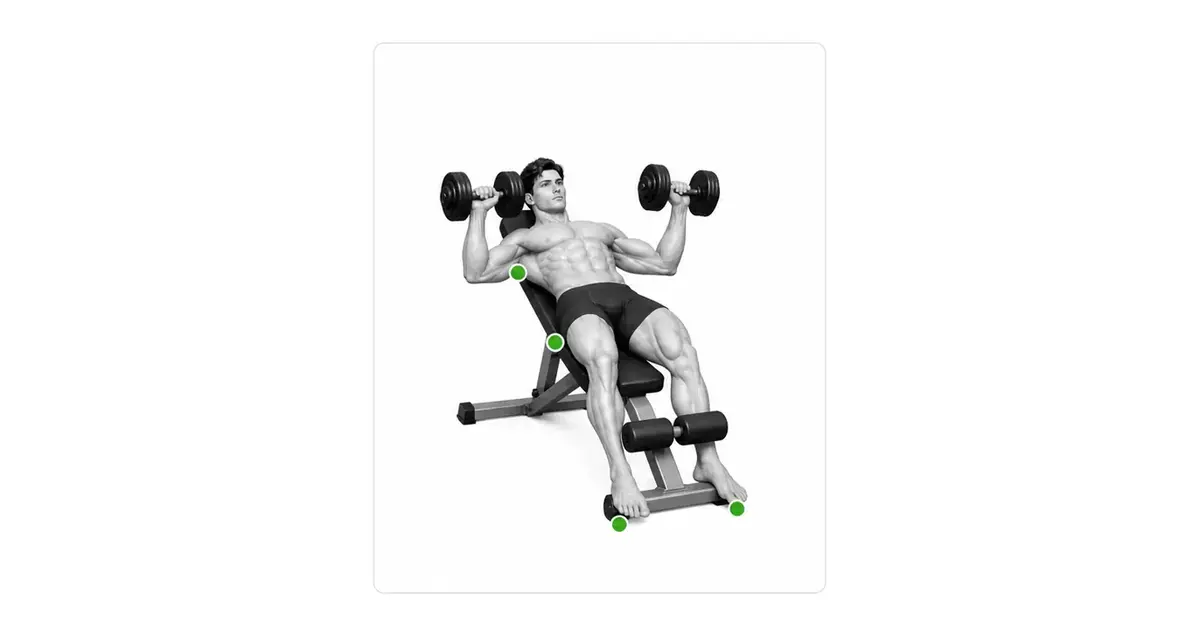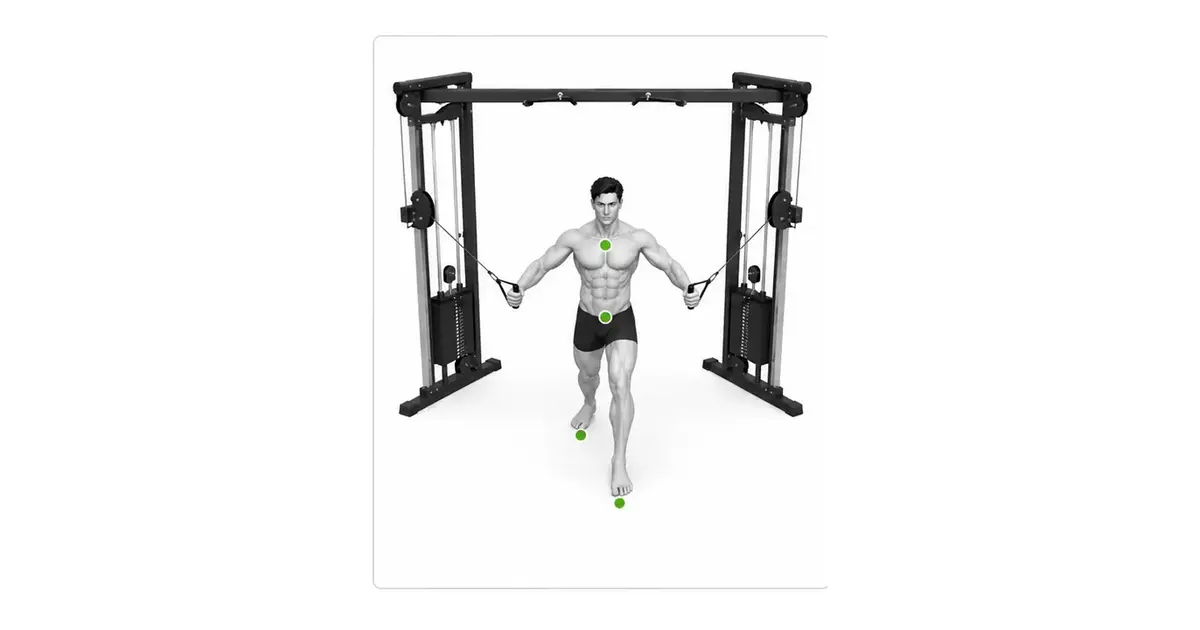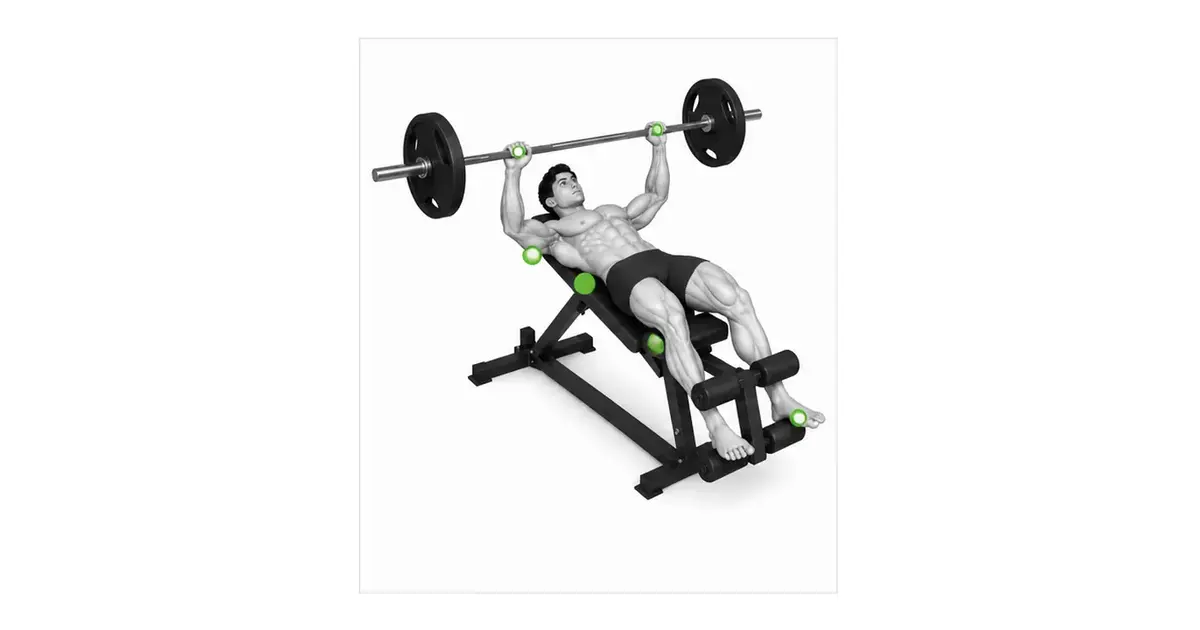
ONE-ARM DUMBBELL PRESS
The one-arm dumbbell press is not about pressing a single dumbbell—it is the skill of holding bench support and a level trunk under asymmetric load
The one-arm dumbbell press is a horizontal press performed lying on a flat bench, driving a dumbbell from beside the chest up over the shoulder with one hand while the opposite hand and both feet control the body's rotation. The pectoralis major, triceps, and anterior deltoids of the working arm move the dumbbell, while the obliques and the upper back and pelvis in contact with the bench resist the trunk turning toward the working side. Research comparing single- and double-dumbbell conditions observed greater shoulder complex range of motion with one dumbbell, but that does not mean going deeper is always safer or better for growth. As in the demonstration, extend the opposite arm out to the side, support yourself with a wide foot base, and work within the personal range where the wrist and elbow stay aligned beneath the dumbbell.
- Primary muscles
- Pectoralis major · triceps
- Secondary muscles
- Anterior deltoids · obliques · scapular stabilizers
- Difficulty
- Intermediate
- Movement type
- Single-arm horizontal press · trunk anti-rotation
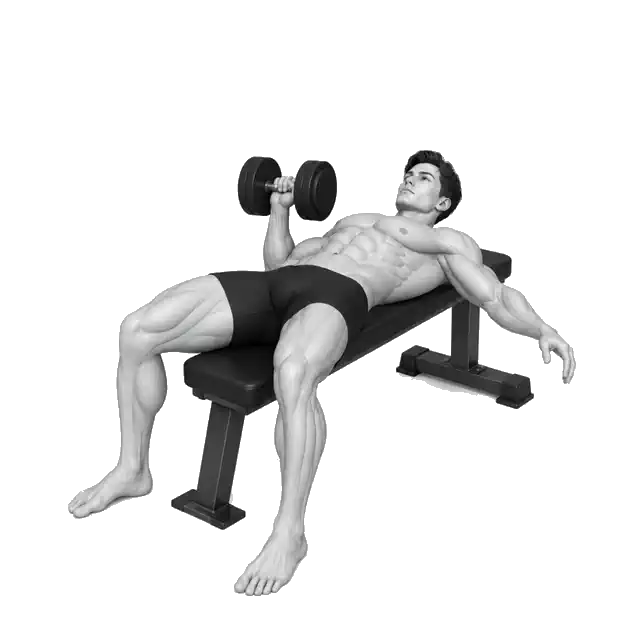
Should the opposite arm rest on my chest or extend out to the side?
The movement on this page extends the opposite arm out to the side to use it as an additional support point. Resting it on the chest can increase the anti-rotation demand, so stabilize a level trunk with the side support shown here first, then progress to that as a separate variation.
STEP BY STEP
5 Steps for One Complete Rep
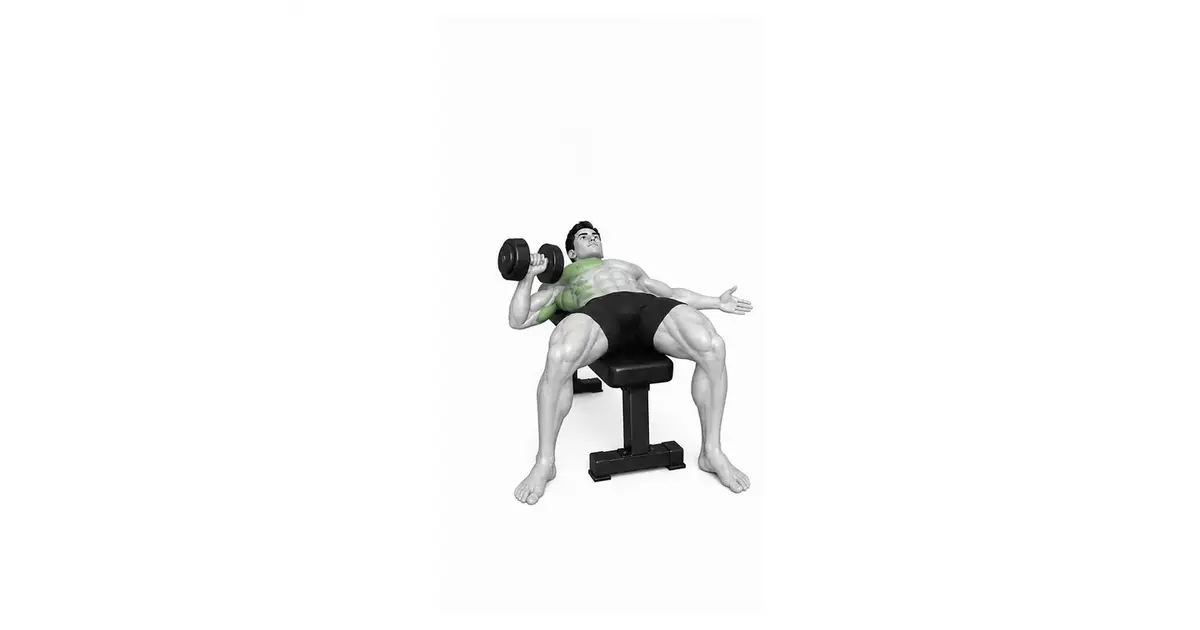
- 1
Set up the bench and the dumbbell safely first
Check that the bench does not rock and place the dumbbell on the floor near your working side. Do not twist to pick a heavy dumbbell off the floor while lying down—sit, rest it on your thigh, and use both hands to bring it to the start position beside your chest.
- 2
Build support through head, upper back, pelvis, and both feet
Lie lengthwise on the bench with your head, upper back, and pelvis on the pad. Take the feet slightly wider than your shoulders and press through the whole of both, then brace the abdomen and glutes lightly so the ribs and pelvis stay level.
- 3
Extend the opposite arm and align the working arm
Extend the opposite arm out to the side near shoulder height, as in the demonstration, and press lightly toward the bench or floor with the palm. Place the working dumbbell from mid-chest toward the lower side, and take a near-neutral grip so the elbow sits directly beneath the wrist.
- 4
Press the dumbbell while keeping the trunk level
Maintain pressure through both feet and the opposite arm as you press the dumbbell up over the working shoulder. Do not carry it toward the midline or your face, and hold the height of the chest and pelvis so the ribs and pelvis do not turn to one side.
- 5
Bend the elbow diagonally and lower on the same path
Inhale and bend the elbow roughly 45–70 degrees diagonally downward from the torso. Keep the wrist over the elbow and stop at a depth before the front of the shoulder lifts or the trunk rotates. When the set ends, take the dumbbell in both hands over your chest, move it to your thigh, and sit up with it.
ANTI-ROTATION SUPPORT
The opposite arm and a wide foot base are your real anti-rotation supports
With a dumbbell on only one side, the trunk receives a rotational force pulling it toward the working arm. Rather than bracing against it by twisting the low back, control it by keeping the head, upper back, and pelvis on the bench and building a wide base with both feet and the opposite arm. Do not let the opposite arm hang limply—support lightly with the palm or the whole arm, but not so hard that the shoulder rides toward your ear.
Research using a single dumbbell observed the obliques controlling trunk rotation, and found differences in activity for some muscles between the one- and two-dumbbell conditions. One small EMG study cannot settle claims about core strengthening or transfer to sport, though. The practical standard here is whether your bench contact points and a level pelvis hold at the same load and range on both sides.
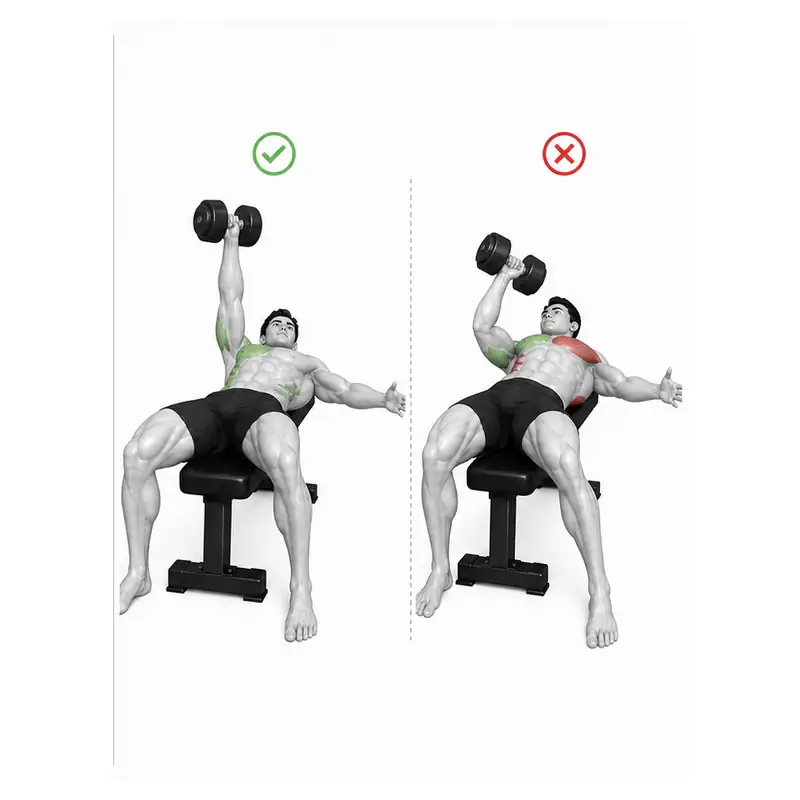
Key point: Practical cue: “Take a wide hold on the bench with the opposite arm and both feet, and keep the ribs and pelvis level.”
WRIST & ELBOW PATH
The dumbbell, wrist, and elbow form one column beneath the working shoulder
At the top, the dumbbell sits over the working shoulder joint, not over the midline of your body. Carrying it to the center increases trunk rotation and horizontal shoulder adduction, and letting it drift toward your face can take the wrist and elbow out from under the load. Set the handle low in the palm so the forearm sits close to beneath the dumbbell from both the front and the side.
As you descend, neither pin the elbow to the torso nor flare it to 90 degrees at shoulder height. It varies with your proportions and grip, but a diagonal path roughly 45–70 degrees from the torso is usually practical. Barbell bench press research likewise shows that elbow abduction and shoulder-blade position change shoulder joint loading, so comfortable alignment and a repeatable path matter more than maximum depth.
CONTROLLED LOCKOUT
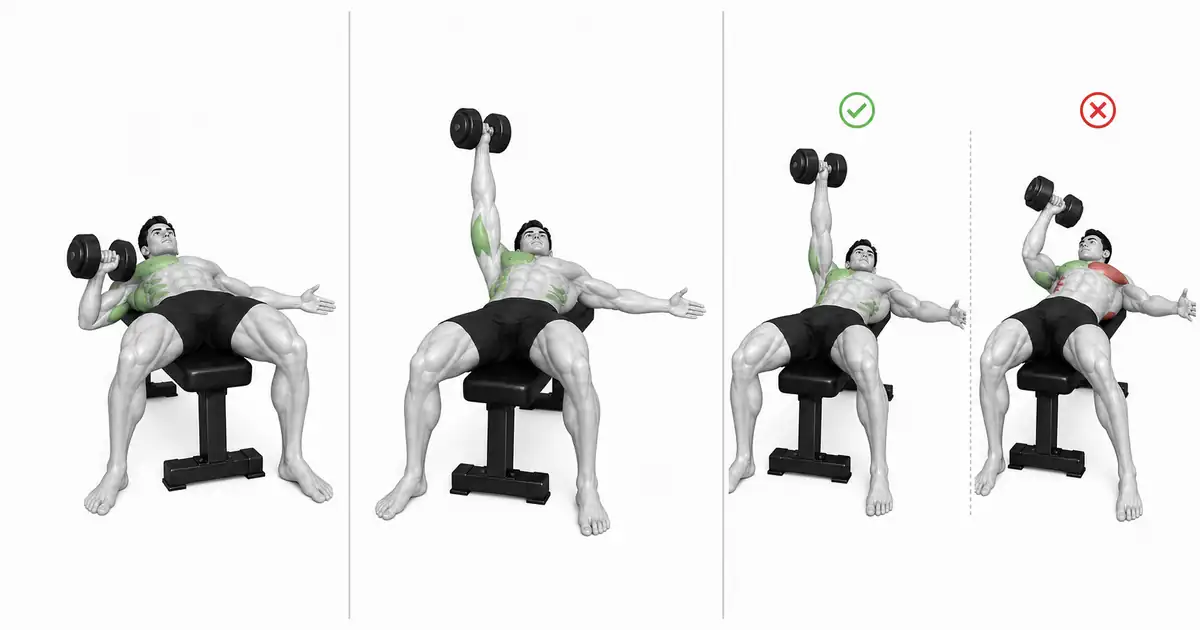
The top is where the dumbbell settles over the working shoulder, not where it meets the midline
As you press, the working elbow should extend while the chest and pelvis stay level together. Carrying the dumbbell across to the other side at the top, or lifting the working shoulder off the bench, trades your support structure for a little extra range. Do not slam the elbow into lockout—let the dumbbell come quietly to rest over the working shoulder.
The finding that a single-dumbbell condition produced greater shoulder complex range of motion than a two-dumbbell one is not a prescription to lower deeper. Use only the range where the working shoulder stays on the bench and wrist and elbow alignment holds. If your range differs side to side, match it to the controllable depth of the weaker side.
TROUBLESHOOTING
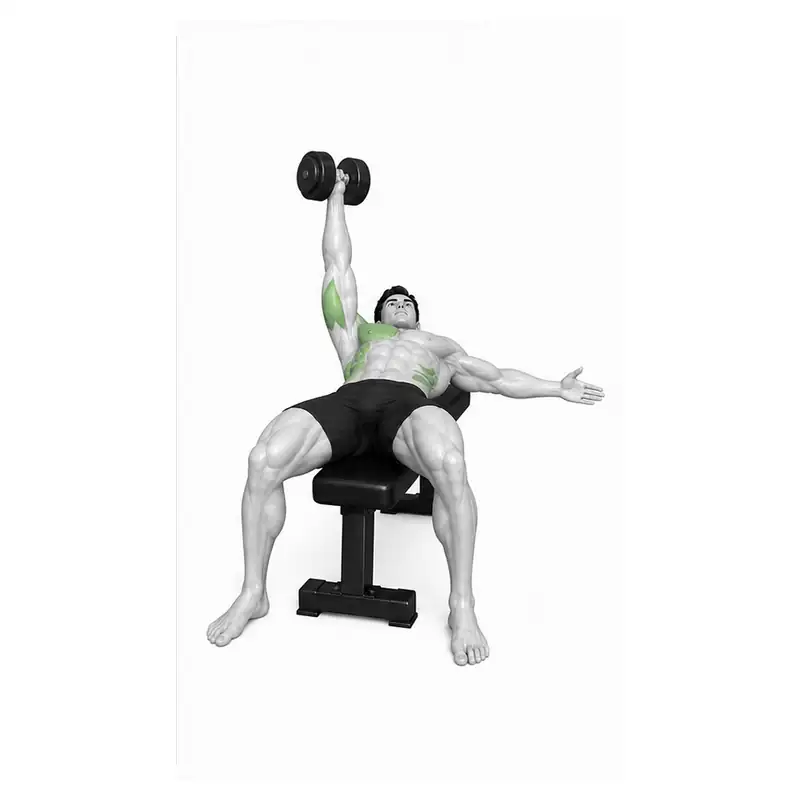
Fix the cause of a mistake, not just its appearance
The trunk rotates toward the working arm
- What you see
- The ribs on the working side rise as the dumbbell goes up and the opposite shoulder lifts off the bench.
- Likely cause
- The load may exceed your trunk anti-rotation control, or support from the opposite arm and both feet may be weak.
- How to correct it
- Reduce the load, widen the feet, and rebuild a level position by pressing the bench with the opposite palm and your upper back.
One hip lifts off the bench
- What you see
- The hip on the working side rises during the press and the low back twists.
- Likely cause
- You are using rotational momentum from the legs and low back to move the dumbbell.
- How to correct it
- Even out the pressure through both feet, align the ribs toward the pelvis, and end the set at a rep count you can control.
The dumbbell drifts toward the face or the midline
- What you see
- At the top the wrist sits over your eyes or the opposite side of the chest rather than over the shoulder.
- Likely cause
- You may be combining trunk rotation with the dumbbell path, or converging at the top as if pressing two dumbbells.
- How to correct it
- Pick an imaginary target directly over the working shoulder and repeat the same path with a lighter dumbbell.
The wrist folds back and the elbow flares
- What you see
- The dumbbell sits toward the fingers and the elbow points toward shoulder height at the bottom.
- Likely cause
- The handle may be held high in the palm, or the bottom depth and load may be excessive.
- How to correct it
- Set the handle low in the palm, line the elbow up beneath the wrist, and bend the elbow diagonally.
Twisting to pick the dumbbell off the floor while lying down
- What you see
- You turn your trunk to the side to lift or set down a heavy dumbbell with one hand before or after the set.
- Likely cause
- You planned the repetitions but not how to start and finish the set or whether to use a spotter.
- How to correct it
- Sit, rest the dumbbell on your thigh, and start with both hands. For heavy sets, ask a spotter to hand it over and take it back.
REGRESSION & PROGRESSION
Match the difficulty before adding load
Two-hand dumbbell floor press
With the floor limiting the bottom range, learn wrist and elbow alignment and a safe start.
Two-hand dumbbell bench press
Stabilize bench support and a symmetrical path with both dumbbells first.
Alternating dumbbell bench press
Hold both dumbbells and move one arm at a time, keeping the balancing help of the opposite weight.
One-arm dumbbell press
Use a single dumbbell and control the asymmetric load with the opposite arm and both feet.
BEGINNER PROGRAM
A practical starting framework
Use it once or twice per week as a chest accessory or as practice for side-to-side control. Start with the weaker side and match the stronger side to the same load, repetitions, and depth. Leave about two repetitions in reserve on both sides while holding bench contact and a level trunk through the final rep.
Reps
8–12 per side
Matched to the weaker side's controllable range
Sets
2–4
Rest 90–150 seconds after completing both sides
Tempo
2–3s descent
Check alignment for one second at the top
- If head, upper back, and pelvic contact and wrist and elbow alignment hold for 12 reps on both sides, add the smallest available increment next session.
- Do not add load and increase bottom depth at the same time—at a new load, start from the range you already control.
- If trunk rotation or hip lift begins, end the set even with repetitions left on your target and reduce the load on the next set.
Frequently asked questions
Does the one-arm dumbbell press automatically correct a left-right imbalance?
It makes differences in load, range, and trunk rotation easy to observe, but it does not diagnose the cause or correct an imbalance automatically. Match the stronger side to what the weaker side can control, and if a large difference or pain persists, get a professional assessment.
Should I use half the load of my regular dumbbell bench press?
It is hard to convert by simply halving the combined weight. Single-sided loading adds an anti-rotation demand and makes the start and finish harder, so confirm a level trunk and wrist alignment with a lighter dumbbell and progress it as a separate log.
Should I lower the dumbbell below chest level?
Research has observed greater range of motion in the single-dumbbell condition, but maximum depth is not the goal. Use only the depth where the working shoulder stays on the bench, the wrist sits over the elbow, and the trunk does not rotate.
Evidence and references
- 1. Patterson et al. — Muscle activity and range of motion in one- versus two-dumbbell chest pressing
- 2. Saeterbakken et al. — Chest press variations with differing stability demands
- 3. Noteboom et al. — Bench press technique variations and shoulder joint loading
- 4. Pallarés et al. — Meta-analysis of range of motion, strength, and hypertrophy in resistance training