PUSH PRESS (JERK)
Push press and push jerk are power techniques that do not bend the knees and force the bar, but lift the bar with a vertical dip and lower body drive and then lock it at different heights.
For both movements, place the barbell in front of your shoulders, lower it briefly, and then stand up strongly to transfer the power of your lower body to the bar. The push press is completed with your upper body straightening your legs, and the push jerk is done by bending your knees again to catch under the bar while the bar is floating. If your torso leans forward on a dip or the bar separates from your shoulders, you will lose power, so practice the vertical path with an empty bar and distinguish between the two catch methods.
- Primary muscles
- Deltoid muscle, quadriceps muscle, gluteus maximus muscle
- Secondary muscles
- Triceps, Calves, Abdomen, Upper Back
- Difficulty
- Intermediate
- Movement type
- Lower body deep-drive and overhead catch
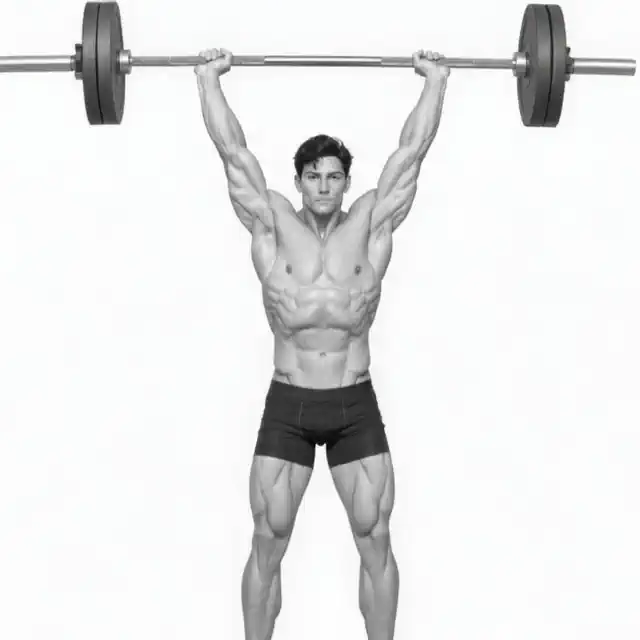
What is the key difference between push press and push jerk?
The push press is completed with the arms extended after the drive, and the push jerk is completed with the knees bent back under the bar and the arms extended.
STEP BY STEP
4 Steps for One Complete Rep
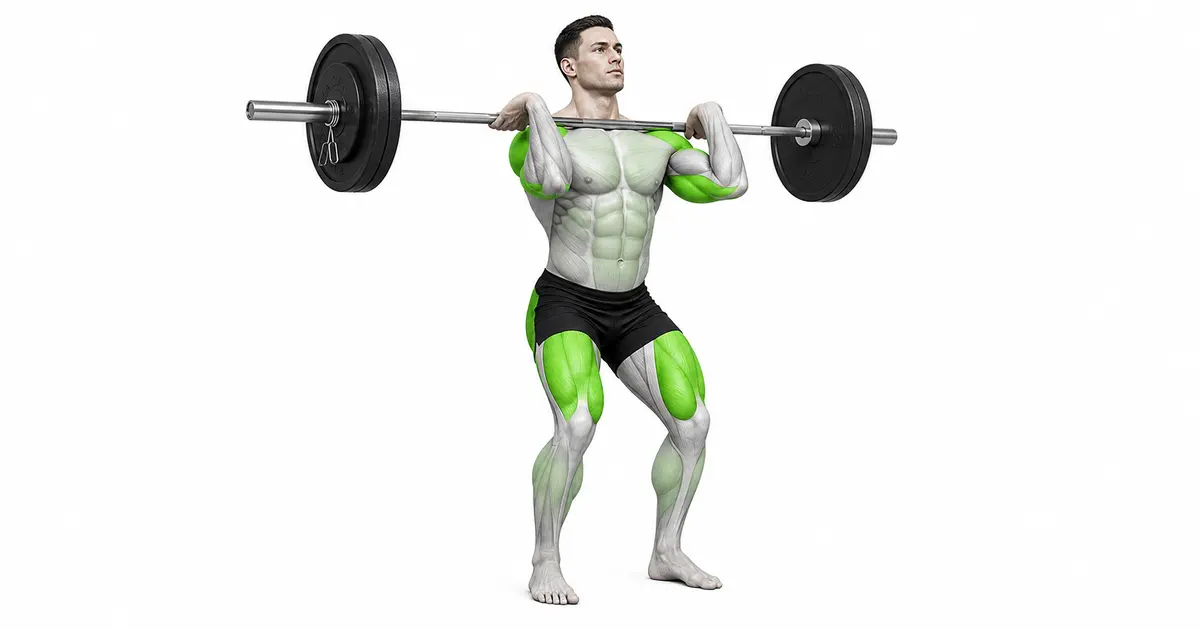
- 1
Creating a stable front rack
Hold the bar from the rack over your clavicle and anterior deltoid. Grab it with all your hands, with your elbows slightly in front of the bar and your feet hip-width apart.
- 2
Short vertical dips with the entire foot
Keep your torso erect and briefly bend your knees and hip joints. Keep the bar close to your shoulders so that your heels do not float or your chest does not lean forward.
- 3
Stretch your legs and lift the bar
Push the floor with your feet to quickly straighten your ankles, knees, and hip joints. Let the bar rise from your shoulders and connect your arms.
- 4
Get overhead aligned with target behavior
The push press locks your arms with your legs straight, while the push jerk quickly bends your knees again and locks your arms under the bar. After stabilizing, stand straight and lower to the rack.
VERTICAL DIP
In dips, the bar and body must be vertical together to deliver drive upward.
Pull your hips back, sink your chest and let the bar roll forward. Press your entire foot and send your knee toward your toes.
Dips are not deep squats. Change direction quickly over a short range that allows you to keep your torso upright.
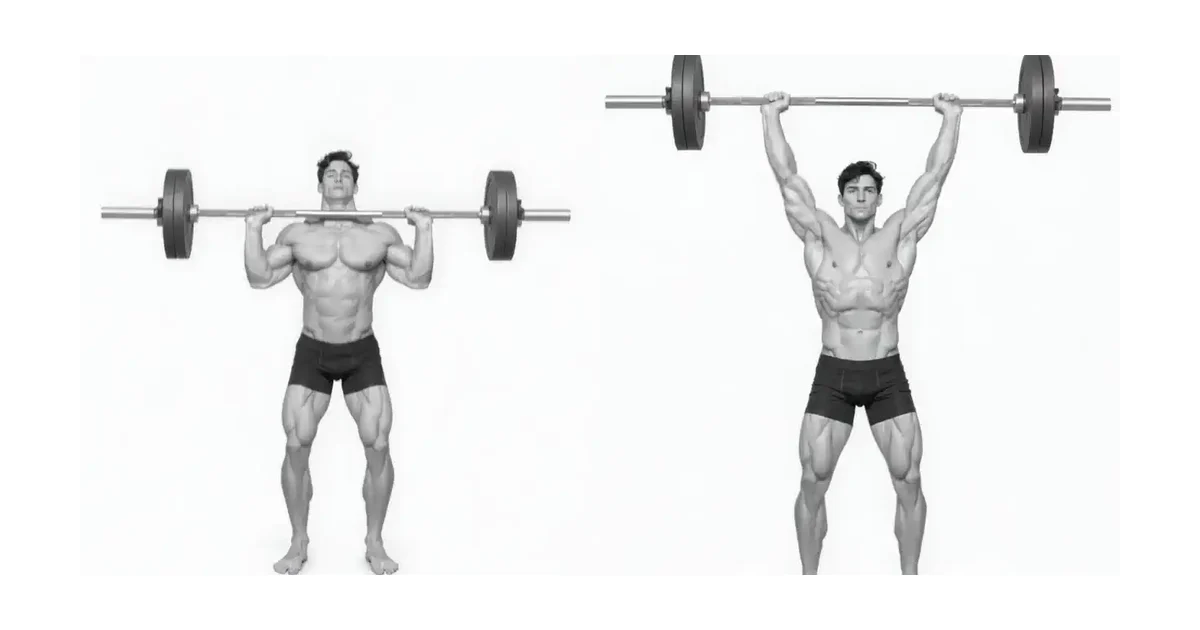
Key point: Cue to try right away: “Dip vertically and lift the bar with your legs first.”
PRESS OR RE-DIP
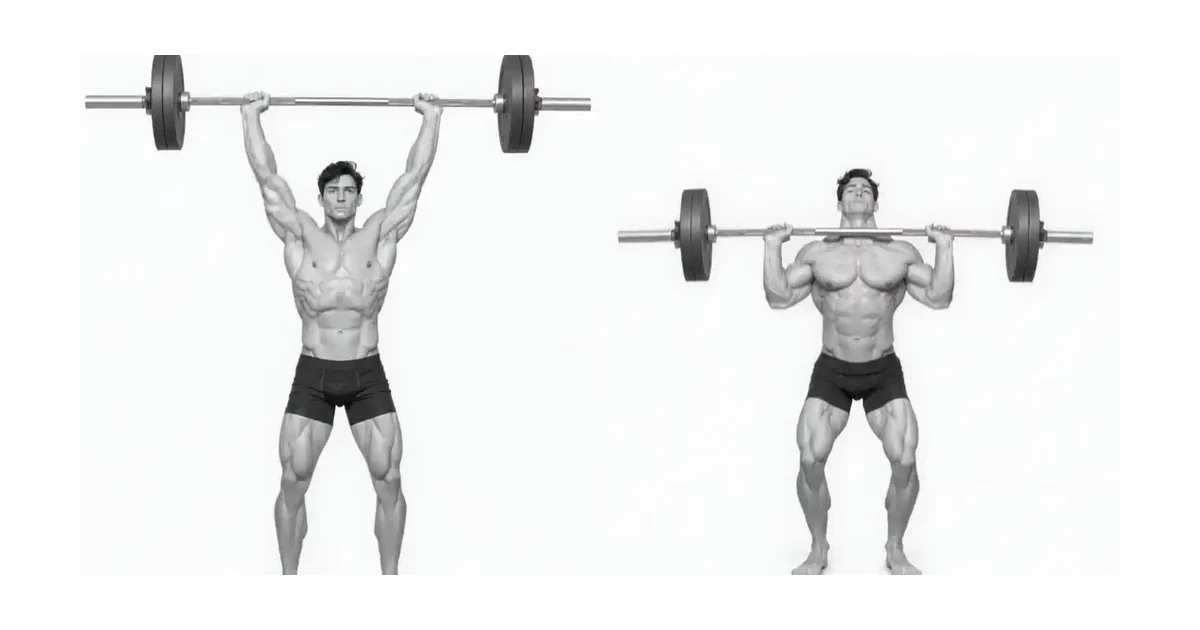
Push press extends the legs once, jerk brings them back under the bar
In a push press, bending your knees twice results in a jerk, and a slow re-entry from the jerk results in a heavy press. Decide on your target movement before your set.
In the jerk catch, bend your knees with your arms outstretched, check your balance, and then straighten your legs to complete the catch.
TROUBLESHOOTING
Fix the cause of a mistake, not just its appearance
Chest and bar are pulled forward during dips
- What you see
- Bar rolls off shoulders and moves in front of face after drive.
- Likely cause
- Pelvis pulled back or loss of heel pressure.
- How to correct it
- Practice short vertical dips with an empty bar, keeping your feet full and your torso upright.
Arms start pushing before legs
- What you see
- Starting at the bottom of the dip, the elbows move and the shoulders and triceps tire first.
- Likely cause
- The bar cannot be supported by the shoulders or the drive timing is abrupt.
- How to correct it
- Keep your arms relaxed and focus on extending your legs until the bar lifts from your shoulders.
Excessive arching of the lower back from overhead
- What you see
- Ribs are lifted and the bar is placed behind the middle of the feet.
- Likely cause
- Compensates for shoulder mobility and torso stability.
- How to correct it
- Lower the weight, keep your ribs down and lock the bar above your mid-feet.
REGRESSION & PROGRESSION
Match the difficulty before adding load
Interval Training
improve calorie consumption efficiency by repeating high and low intensity.
Increased time and resistance
Strengthen your stamina by increasing performance time or increasing the resistance level of the machine.
BEGINNER PROGRAM
A practical starting framework
Short sets of 3 to 6 reps for the push press and 1 to 3 reps for the jerk technique are appropriate. If your deep path and overhead balance is off, don't keep repeating failures.
Frequency
3 to 5 times a week
If your goal is to lose body fat, it is important to do it consistently.
Volume
20~40 minutes
Gradually increase the time according to your fitness level.
- Do this while drinking plenty of water.
- Protect your joints through light stretching before and after exercise.
Frequently asked questions
How deep should the dip be?
A short range with the torso upright and full foot pressure maintained is sufficient. If the chest becomes deeper and the chest is lowered, force transmission becomes worse.
Do the elbows have to be as high as the front squat?
Place the bar in front enough to support your shoulders, but not so high that it blocks the press path. Find a comfortable position for your wrists and shoulders.