REVERSE CURL
A functional curl exercise that simultaneously strengthens the three-dimensional feel of the forearm and the thickness of the upper arm muscles through an overhand grip.
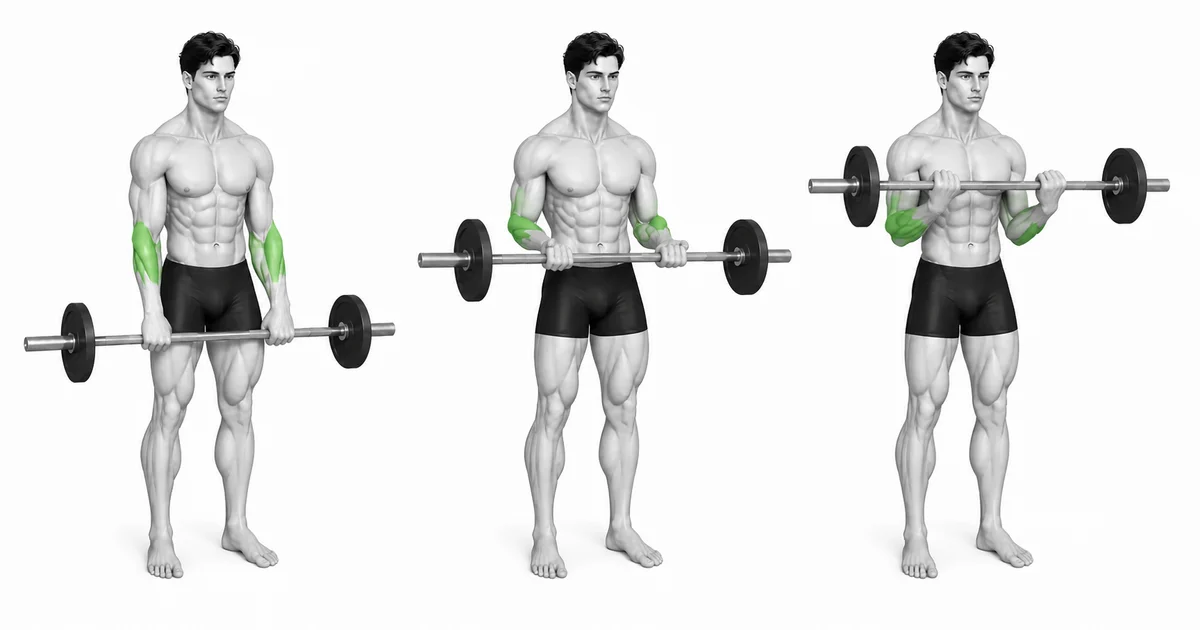
Hold a barbell or easy bar at shoulder width. At this time, use an overhand grip with the back of your hand facing the sky. Stand up straight, keep your elbows at your sides, exhale and lift the bar toward your shoulders. Pause briefly at the top while feeling the contraction of your forearm muscles, and then slowly return to the starting position.
- Primary muscles
- Brachioradialis·Forearms
- Secondary muscles
- Brachialis · Biceps Brachii
- Difficulty
- Beginner
- Movement type
- Elbow Flexion
Do I need to lift less weight than a regular curl?
Yes, the forearm muscles are relatively weaker than the biceps, so it is usually recommended to start with a weight of 60-70% of a normal curl.
STEP BY STEP
4 Steps for One Complete Rep
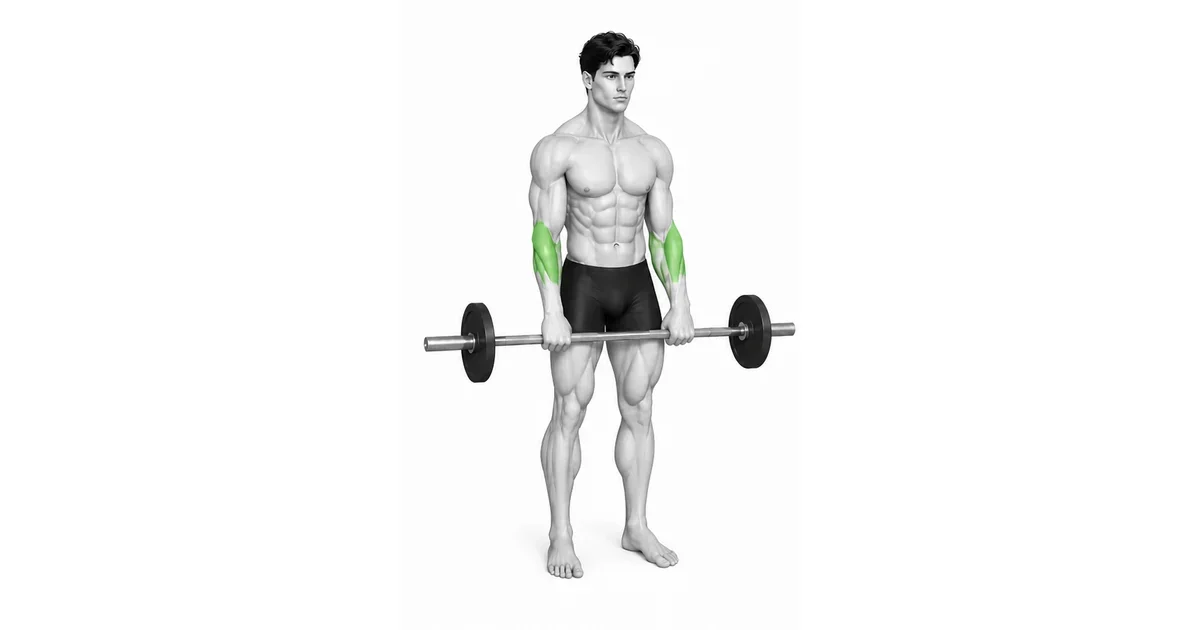
- 1
Ready and Overhand Grip
Hold the barbell shoulder-width apart and have the backs of your hands face forward. Open your chest and stabilize your shoulders.
- 2
Lift Bar
Keeping your elbows locked, raise the bar up. Secure your wrists tightly so they do not bend downward.
- 3
Vertex Contraction
At the highest point, feel the stimulation of the outer forearm muscle (brachioradialis muscle) and pause for 1 second.
- 4
Slow down
Slowly straighten your arms while controlling the weight. Be careful not to relax your forearms.
FOREARM AND GRIP STRENGTH
Perfection of strong forearms and grip strength
Reverse curls are an exercise that goes beyond simply shaping your arms and actually improves your performance. The main target, the brachioradialis, is one of the largest muscles in the forearm, and when developed, the arm appears much stronger when viewed from the side.
The overhand grip also goes a long way in strengthening your wrist extensors and improving your grip strength. This will help you grip the barbell more tightly during heavy pulling exercises such as deadlifts or pull-ups, thereby improving your overall exercise performance.
RANGE, LOAD & TEMPO
Choose a range and load that keep the Reverse Curl repeatable
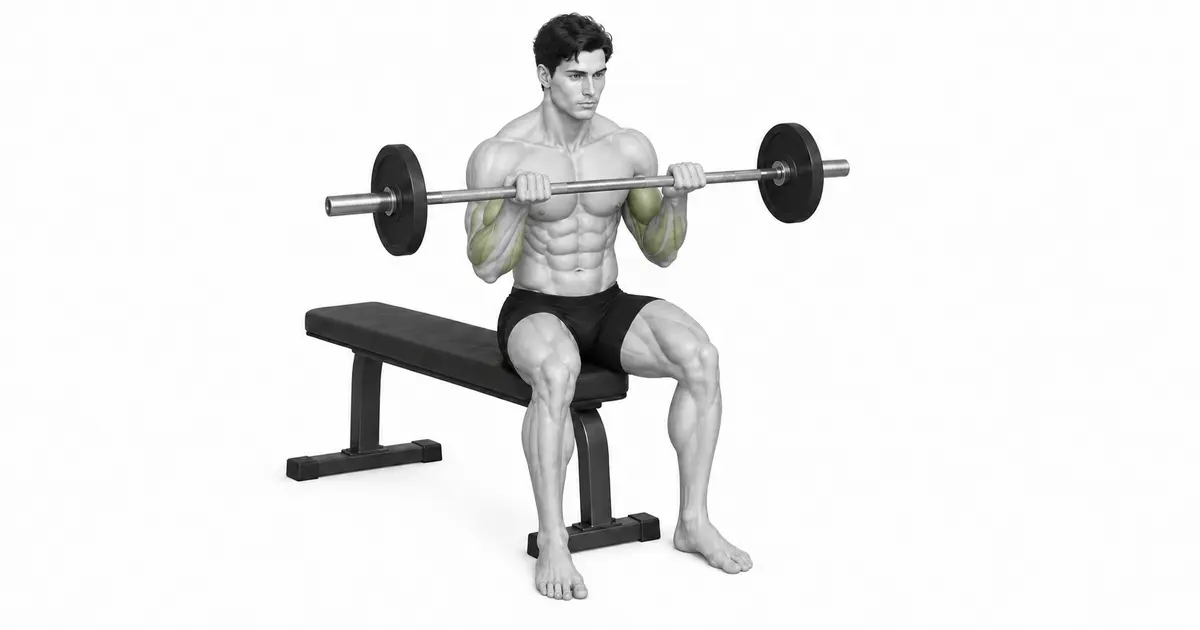
The useful range of motion ends before your torso or working joints have to change position to move the load. Keep the brachioradialis·forearms producing the movement while the brachialis · biceps brachii support the same alignment from the first repetition to the last.
Use a controlled lowering phase of about two to three seconds and avoid bouncing through the transition. If the final repetitions become shorter, faster, or visibly different from the first, reduce the load or stop the set before technique breaks down.
Key point: Progress the Reverse Curl only after every repetition follows the same path without joint pain.
TROUBLESHOOTING
Fix the cause of a mistake, not just its appearance
Wrist bent down
- What you see
- A movement in which the wrists loosen and droop when raising the bar.
- Likely cause
- Insufficient forearm strength or too heavy a weight.
- How to correct it
- Keep your wrist straight or firmly lift it upward.
Elbows off the sides
- What you see
- A movement that uses shoulder strength by lifting the elbows forward when raising the bar.
- Likely cause
- Unable to control with biceps and forearm strength alone.
- How to correct it
- Keep your elbows at your sides and focus only on bending your arms.
REGRESSION & PROGRESSION
Match the difficulty before adding load
Dumbell Reverse Curl
Use dumbbells to balance your arms and allow greater range of motion in your wrists.
Easy Bar Reverse Curl
Utilizes the curved part of the Easy Bar to reduce strain on your wrists and perform more comfortably.
BEGINNER PROGRAM
A practical starting framework
Reverse curl improves arm perfection. Enjoy the searing stimulation of your forearms.
Frequency
1-2 times a week
Include it at the end of your biceps routine or as a forearm workout.
Volume
3~4 sets, 12~15 times
Isolation and stimulation are important, so it is recommended to focus on high repetitions.
- A full grip with your thumbs wrapped around the bar is recommended.
- Reduce the strain on your joints by keeping your movement speed constant.
- Breathe out when going up and inhale when going down.
Frequently asked questions
Is Easy Bar better?
If you lack wrist flexibility, using the Easy Bar is much more comfortable and safer.