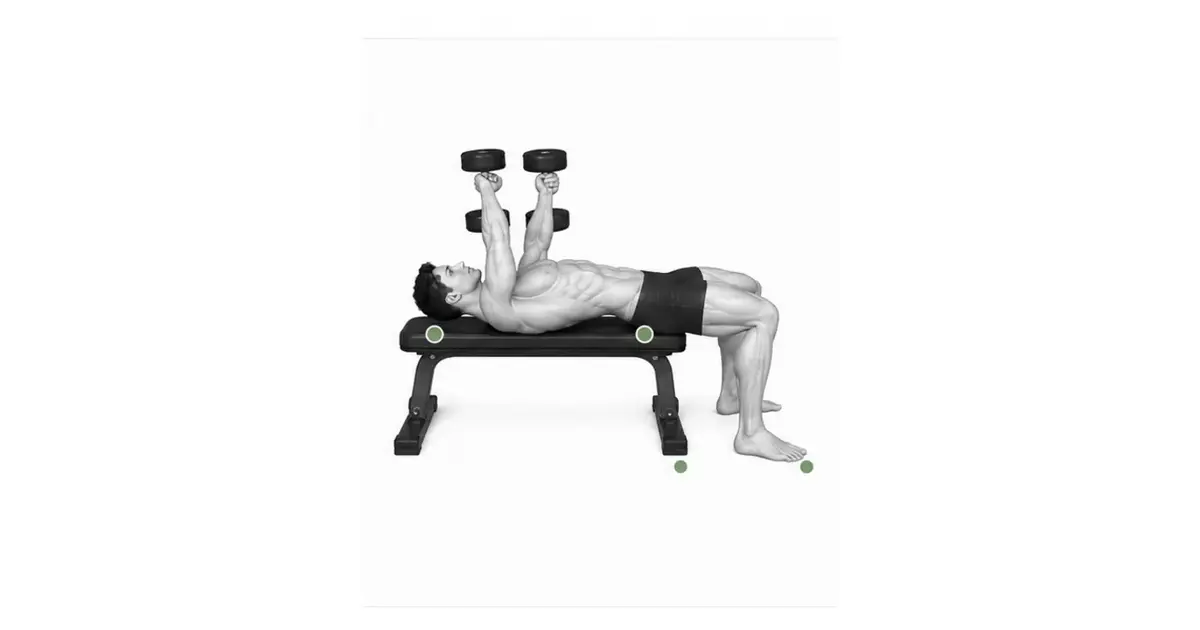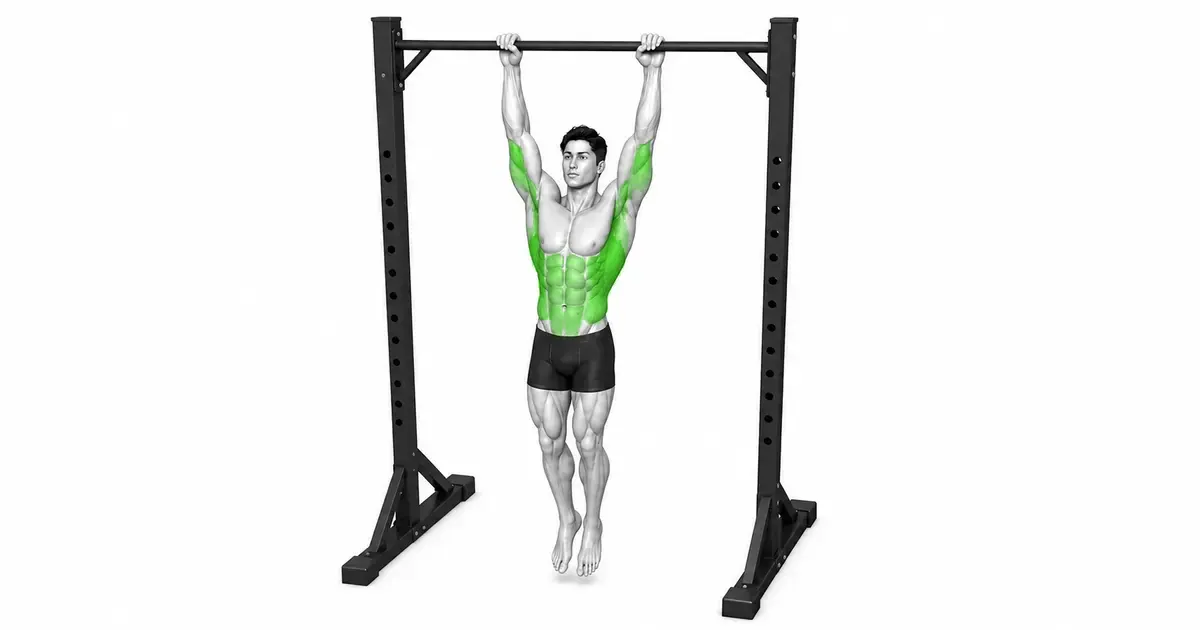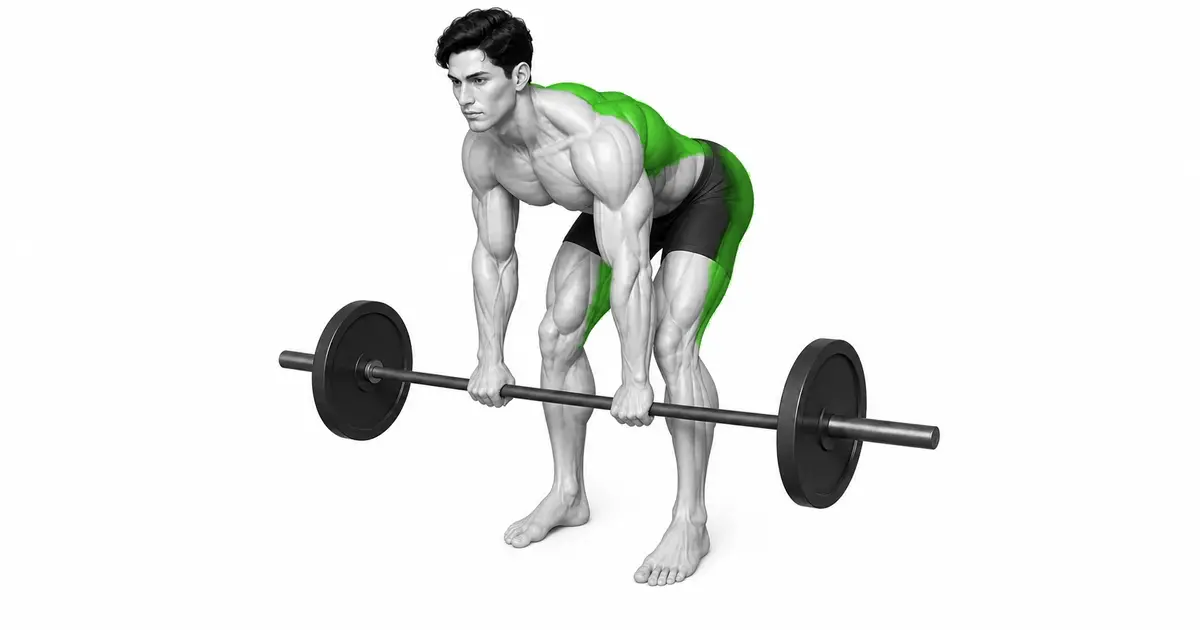
REVERSE FLY
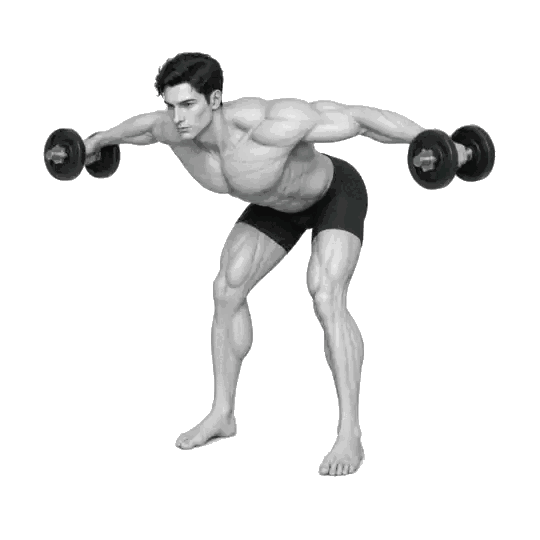
The reverse fly is not an exercise in which you lift dumbbells high, but an exercise in which you spread your arms wide from a fixed torso.
Reverse flyes are called reverse pec decks, cables, bands, and even incline bench variations by the same name, but the movement shown on this page is a standing dumbbell movement without chest support. In a study directly comparing dumbbell reverse flyes and band variations, both conditions primarily targeted the posterior deltoid, with the dumbbell condition showing slightly higher activity for that muscle. However, surface electromyography is data that compares the instantaneous electrical activity of muscles and does not directly guarantee long-term muscle growth. Machine and prone studies are used separately as a supplementary basis for understanding hand position and shoulder movements.
- Primary muscles
- rear deltoid
- Secondary muscles
- Central trapezius, rhomboids, infraspinatus, erector spinae, glutes, hamstrings
- Difficulty
- Intermediate
- Movement type
- Maintain hip hinge, shoulder width apart
What is the difference between a reverse fly and a lateral raise?
Lateral raises primarily train the middle deltoid muscles by raising your arms to your sides from a standing position. The reverse fly in this video increases the proportion of the rear deltoids and muscles around the shoulder blades by bending the torso and spreading the arms to the back and sides of the torso.
STEP BY STEP
5 Steps for One Complete Rep
- 1
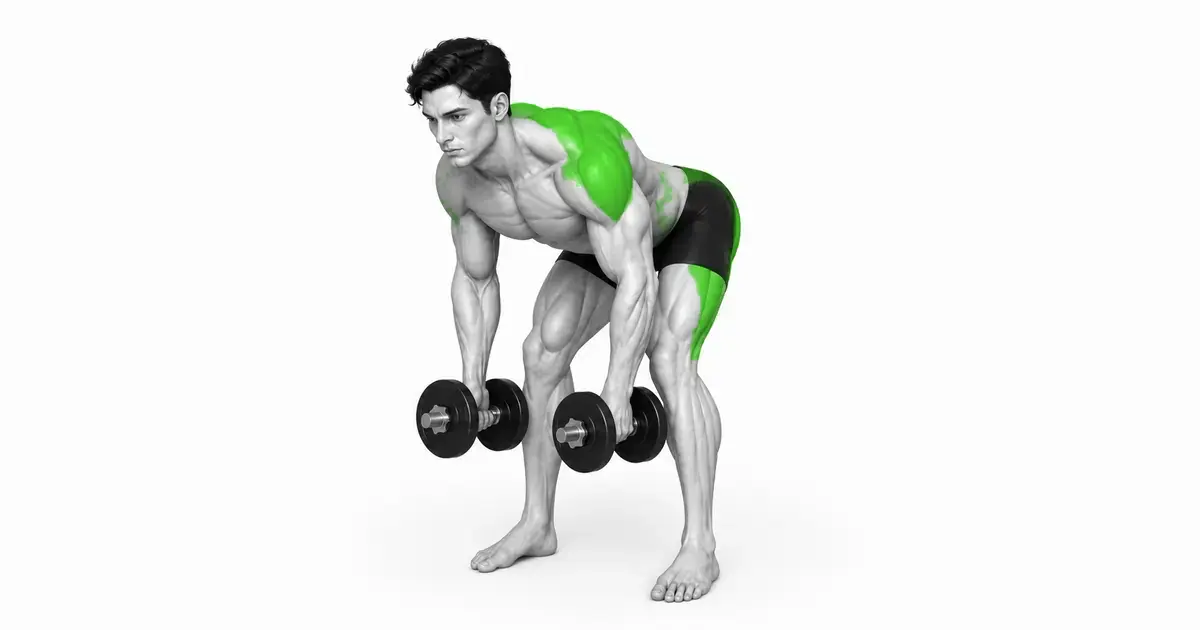
Prepare light dumbbells and a safe space.
Make sure to leave a space where people or equipment do not touch you when you spread your arms out to the sides. Reverse flyes start with lighter dumbbells than your usual rows or lateral raises, as small changes in weight significantly change shoulder torque due to the long lever.
- 2
Stabilize your feet and create hip hinge
Place your feet at hip width or slightly wider and gently bend your knees. Send your hips back, tilt your torso, and tighten your stomach while maintaining a near-neutral length from your head to your pelvis.
- 3
Align the dumbbells below your shoulders
Hold the dumbbells with your palms facing each other and let your arms hang below your shoulders. Bend your elbows only slightly, without locking them, and maintain this angle almost all the way to the top.
- 4
Open your arms wide to the sides of your body
Keeping your shoulders away from your ears, spread your elbows and dumbbells to your sides. Think of your upper arms, not your hands, as leading the movement, and stop at a control point where your upper arms are closer to your torso line or shoulder height.
- 5
Descend in the same orbit for 2–3 seconds
Without straightening your torso, slowly return the dumbbells below your shoulders. Do not bump the dumbbells against each other at the bottom or relax your torso; correct the shaking and then repeat.
HIP HINGE & TRUNK
In an unsupported position, the torso angle must be fixed before shoulder movement.
Since the movement in the video does not place the chest against the bench, the glutes, hamstrings, and erector spinae muscles support the hip hinge isometrically. Rather than squatting with your knees deeply bent or rounding your back, send your hips back and point your torso toward the floor. The closer your torso is to horizontal, the better the direction in which you open your arms to the sides matches the resistance to gravity, but if the angle causes your lower back to collapse, it is better to choose a slightly more upright posture.
If you raise the dumbbells and raise your chest with each repetition, the range of horizontal shoulder abduction will decrease and the whole body reaction will increase. When photographed from the side, check that the relationship between the ears, ribs, and pelvis and the angle of the torso are approximately constant. If your back gets tired first, you can lower the weight or switch to chest-supported incline reverse flyes to secure training for your target muscles.
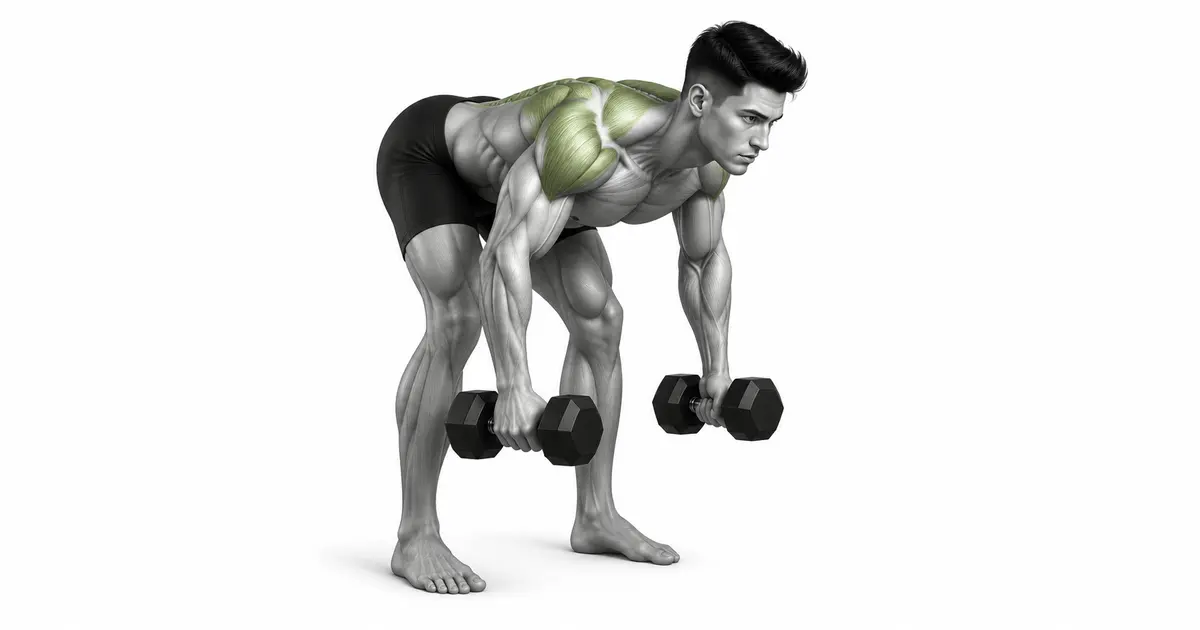
Key point: Check before setting: Even when you open your arms without dumbbells, does your torso lift at the top or does your back bend?
ARM PATH
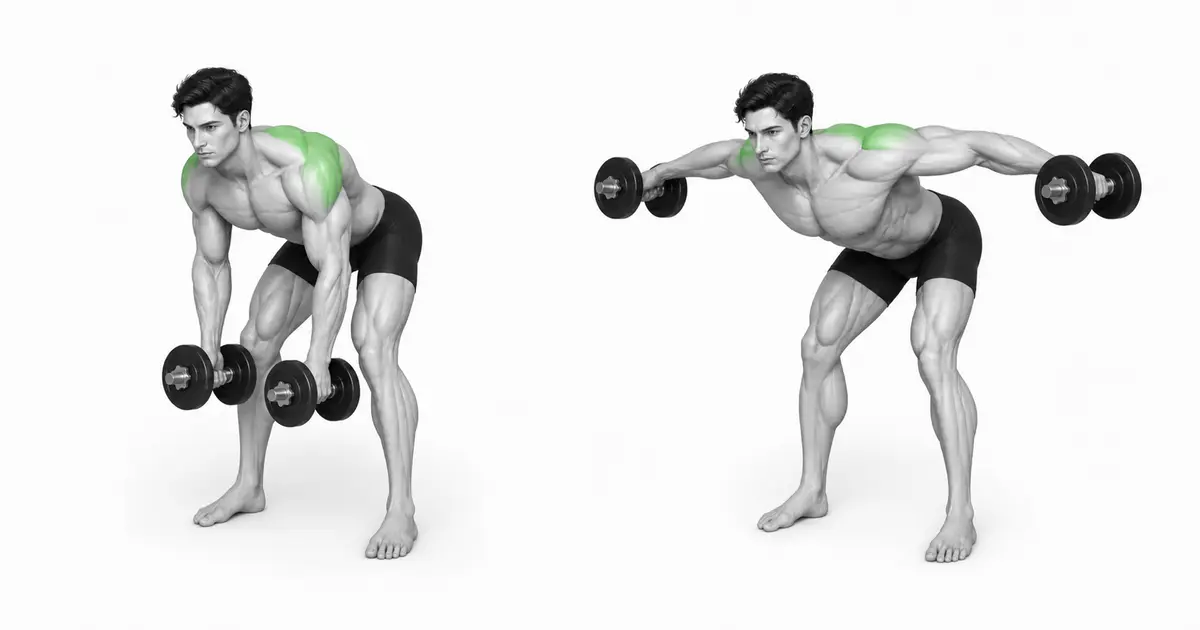
Maintain a small bend in your elbows and open your entire arms in a wide arc.
If you completely lock your elbows, your joints may be uncomfortable, and conversely, if you bend and straighten them a lot, you will end up closer to a row than a reverse fly. Set a slight bend at the bottom and maintain it all the way to the top. The dumbbells start just below the shoulders and move in a wide arc from side to side.
As shown in the video, use a close to neutral hand position, but do not twist the dumbbells by bending your wrists. In a reverse fly machine study, the neutral hand position resulted in higher average muscle activity of the posterior deltoid and infraspinatus than the pronated position, but the machine path and dumbbell free weight were not the same. So rather than deciding on one hand shape as the answer, prioritize a neutral range that keeps your wrists comfortable and your shoulders not rolling forward.
SHOULDER & SCAPULA
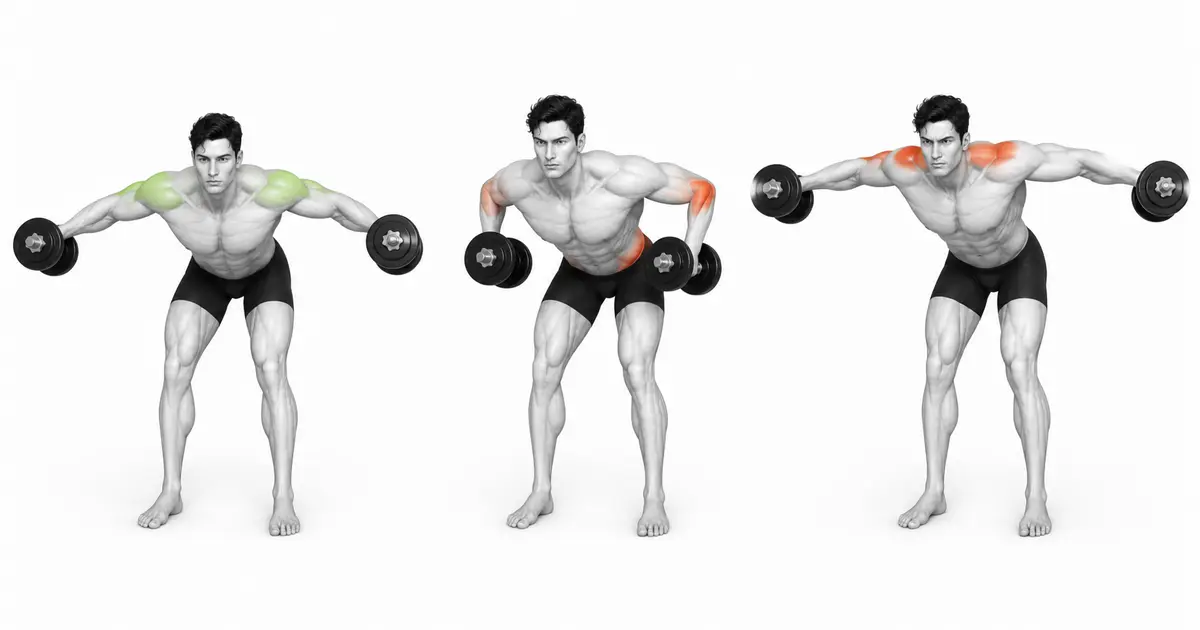
The rear shoulder and scapula move together but do not raise the shoulder toward the ear.
In the reverse pec deck study, rear deltoid activity was higher than seated rows and incline lat pulldowns, and in the prone horizontal abduction study, middle and lower trapezius muscle activity varied depending on the arm angle. These results show that the reverse fly is not a movement that simply isolates the rear deltoid muscle, but is a horizontal abduction that also uses the muscles around the shoulder blades. However, both studies differ from the standing dumbbell conditions in the current video.
As you open your arms, allow your shoulder blades to naturally move back over your ribs, but do not overtighten them from start to finish. If your neck is short at the top, your shoulders are closer to your ears, or your hands are much higher than your torso line, you have a lot of weight or range of motion. Find a point around shoulder height where your back shoulders and mid-back contract and your neck stays long.
TROUBLESHOOTING
Fix the cause of a mistake, not just its appearance
Raise your torso and swing the dumbbells
- What you see
- As the dumbbells rise, your chest lifts, your hips move forward, and your speed suddenly increases in the second half of the set.
- Likely cause
- The weight is beyond your ability to control your torso and shoulders, or you are trying to force the height of the top.
- How to correct it
- Lower the weight and top height and take a profile shot in front of a wall. Only repetitions are counted where the line from head to pelvis and torso angle are maintained.
Fold your elbows wide and change to a low position.
- What you see
- At the top, the dumbbells are closer to your torso and your elbow angle is much smaller than at the bottom.
- Likely cause
- I'm shortening my lever to lift heavier dumbbells.
- How to correct it
- First, set a slightly bent elbow angle at the bottom and spread it wide. Don't let the dumbbells come close to your torso.
shrugging shoulders to ears
- What you see
- The neck shortens, the upper trapezius muscles are fired first, and the shoulders rise toward the ears.
- Likely cause
- Aim to raise the dumbbells high, or bring your shoulder blades back and pull them up at the same time.
- How to correct it
- Think about keeping your neck long and your arms wide to the sides of your torso. Stop in the range just before your shoulders rise.
Hands raised too high above the torso line
- What you see
- At the top, the dumbbells are well above your back and the front of your shoulders are pinched or your wrists are twisted.
- Likely cause
- I think higher range of motion means better repetitions.
- How to correct it
- Raise your upper arms only to a point close to your torso line or shoulder height. Prioritize pain-free personal coverage.
Crashing the dumbbells at the bottom
- What you see
- With each repetition, the dumbbells hit, the arms open again in reaction, and the shoulders lean forward.
- Likely cause
- I let go of the descent or my torso relaxed due to fatigue.
- How to correct it
- Lower for 2–3 seconds, leaving a small gap between the dumbbells. Clean up any wobble at the bottom and start the next repetition.
REGRESSION & PROGRESSION
Match the difficulty before adding load
Prone body T-raise
Support your chest on the floor or a low bench and learn the path of your arms and shoulder blades without dumbbells.
Chest supported incline reverse fly
Place your chest on the bench to reduce the strain on your lower back and hip hinge and perform with light dumbbells.
band reverse fly
Stand and spread the band apart to learn the horizontal extension of your rear shoulders. Take into account that as the band increases, the resistance increases.
Light bent over dumbbell reverse fly
Prioritize lowering for 2–3 seconds and a fixed torso angle in an unsupported position as shown in the video.
Top 1 second pause reverse fly
When all repetitions are held steady, add a top stop and then increase in smallest increments.
BEGINNER PROGRAM
A practical starting framework
Can be used 1–3 times per week at the end of a back or shoulder workout as an accessory exercise for the posterior shoulder and shoulder area. On days when unsupported hip hinge fatigue is high, switch to a chest-supported variation, prioritizing a constant elbow angle and slow descent over weight.
number
10–20 times
Weight with 2–3 reps to spare
set
2–4 sets
1–2 minutes recovery between sets
speed
1–2 second abduction, 2–3 second lowering
Maintain torso and elbow angles
- The first set is with very light dumbbells to check your torso angle, shoulder height and elbow angle.
- Increase in smallest increments only when you have reached the top of your target repetitions and have no kicks, shoulder shrugs or elbow flexes on all repetitions.
- If your back or neck tires before your back shoulders, stop the set and lower the weight or use a chest-supported variation.
Frequently asked questions
How much should my elbows be bent?
Bend slightly, just enough not to lock completely, and maintain that angle throughout the repetition. As you fold your elbows more toward the top, your leverage becomes shorter, making the movement closer to a row.
Should dumbbells be held higher than shoulders?
no. A point where the upper arms are close to the torso line or shoulder height and the back shoulders and mid-back are controlled is sufficient. Don't shrug your shoulders or twist your wrists to raise them higher.
Should I keep bringing my shoulder blades back?
There is no need to fasten it strongly from beginning to end. The shoulder blades naturally move forward over the ribs when the arm is lowered, and backward when the arm is extended. Limit large compensations that raise your shoulders to your ears or lift your chest.
What should I do if my back hurts first?
Re-create the hip hinge by lowering the weight and gently bending your knees and sending your hips back. Still, if your lower back gets tired first, switch to a variation with torso support, such as a chest-supported incline reverse fly or reverse pec deck.
Evidence and references
- 1. Calatayud et al. — Comparison of upper body muscle activity between dumbbell and band flyes and reverse flyes
- 2. Schoenfeld et al. — Comparison of posterior shoulder muscle activity by hand position on the reverse fly machine.
- 3. Botton et al. — Comparison of deltoid muscle activity between reverse pec deck, seated row, and lat pulldown
- 4. Arlotta et al. — Middle and lower trapezius muscle activity by prone horizontal abduction angle
- 5. Tsuruike et al. — Changes in shoulder and shoulder muscle activity depending on shoulder position