SANDBAG SLAM
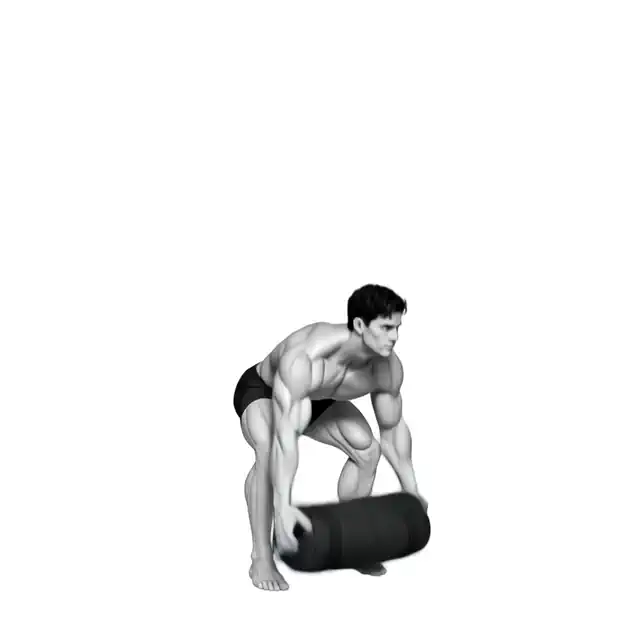
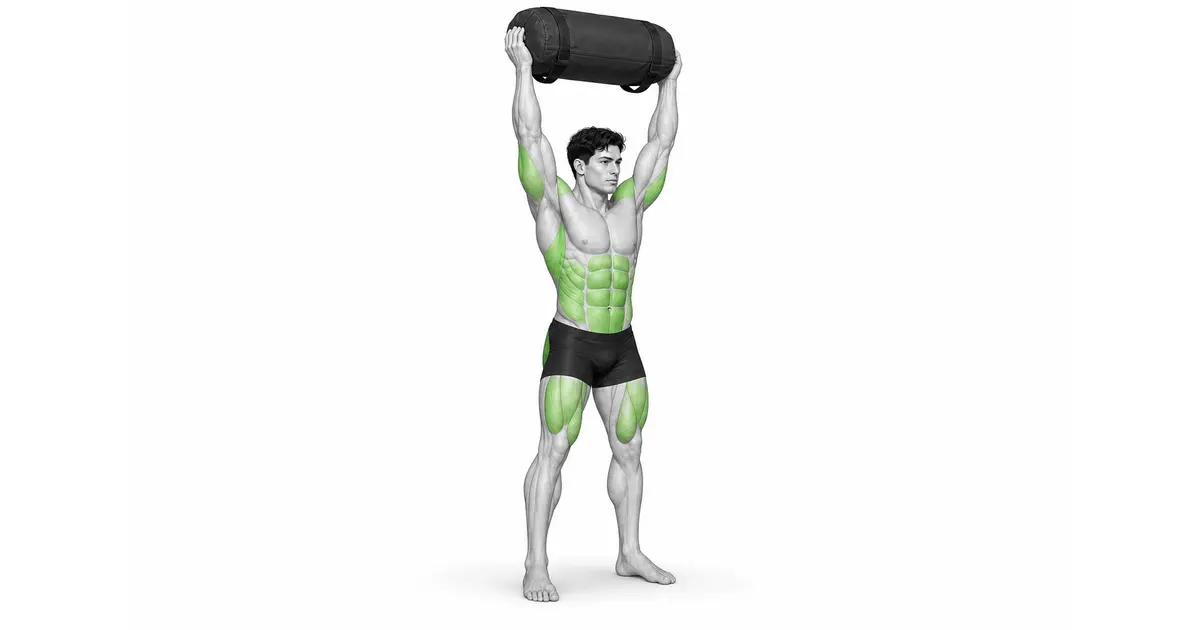
Sandbag slam is not an action of throwing a bag with the waist, but a full-body power exercise that involves lifting the bag with the lower body and accelerating it to the floor by folding the lats, abdomen, and hip joints together.
By raising the slam punching bag above your head and slamming it down hard on the floor, you can build upper and lower body power and cardiorespiratory demands at the same time. Regular weight sandbags or bags with weak sewing can be damaged, and if you bend over and pick them up repeatedly, fatigue will accumulate. Check the equipment and floor, and lift safely with hip hinges and squats every repetition.
- Primary muscles
- Latissimus dorsi, rectus abdominis, gluteus maximus
- Secondary muscles
- Deltoids, quadriceps, hamstrings, forearm
- Difficulty
- Advanced
- Movement type
- Overhead lift and full body downward slam
Can I use a regular sandbag or duffel bag?
Not recommended. Use only slam equipment designed to withstand repeated impacts.
STEP BY STEP
4 Steps for One Complete Rep
- 1
Check Slammable Equipment and Space
Make sure the sandbag sewing and handle are intact, and use a bottom that can withstand impact. Leave enough space front and back.
- 2
Raise the punching bag using your lower body
Grasp the bag with hip hinges and knee bends and press your feet into the floor to lift it close to your body. If necessary, press through your chest and over your head.
- 3
Accelerating down with abs and lats
Exhale, lower your ribs and pull the bag toward the floor with your lats. At the same time, bend your hips and knees and slam with your whole body.
- 4
Safely lift the bag again after it stops
When the non-bouncing sandbag comes to a complete stop, position your feet and hold it with the hip hinge. Don't just bend over and get ready for the next repetition.
WHOLE-BODY SLAM
Rather than throwing with the arms, the ribs, pelvis, and knees fold together to accelerate the bag.
If you only use your arms, your shoulders and triceps will tire first and your slam speed will be low. Fold your hips, shortening your abdomen above your head.
Place the bag on the floor directly in front of your feet and do not drop it on your feet.
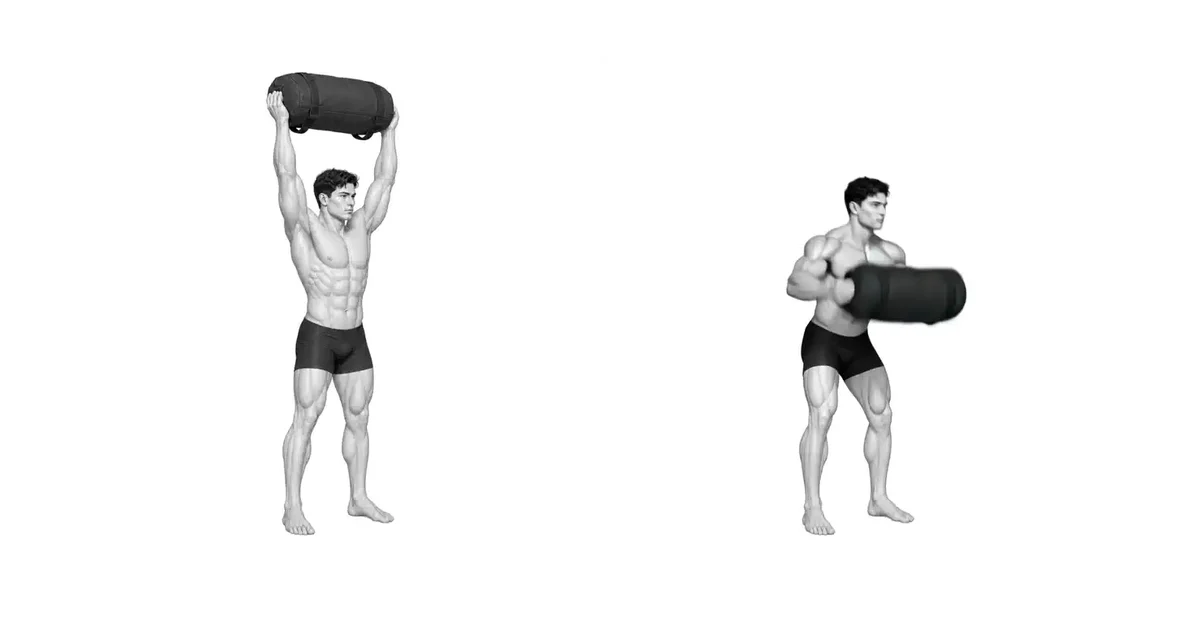
Key point: Cue to use right away: “Pull in your lats and fold your abdomen and hips into the floor.”
RESET THE PICKUP
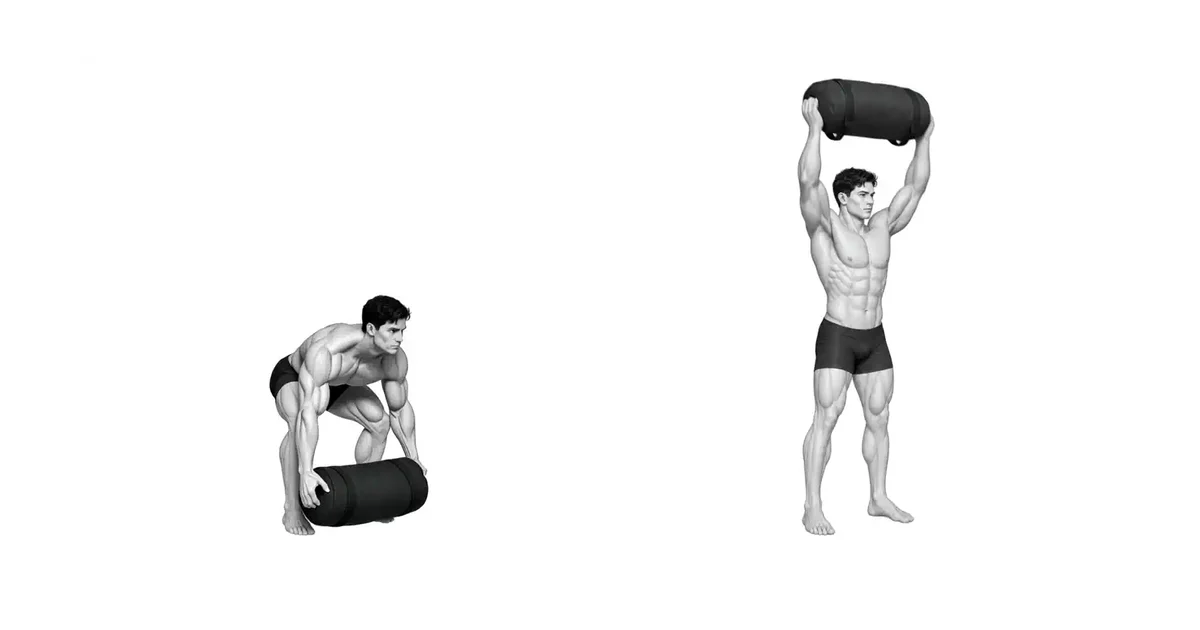
The section that is lifted again after each repetition is also a hip hinge lift.
When you're tired, it's easy to arch your back and just stretch out your hands. Move your feet closer to the bag and send your hips back.
Use a number of repetitions that maintain safe pickup rather than a continuous rate.
TROUBLESHOOTING
Fix the cause of a mistake, not just its appearance
Bend only at the waist and pick up the bag repeatedly
- What you see
- There is less movement in the knee and hip joints and the waist becomes rounder.
- Likely cause
- Pick-up position was omitted due to cardiorespiratory speed.
- How to correct it
- Pause between repetitions, place your feet close to the bag and lift with your hip hinge and legs.
Throw to the floor using only arms
- What you see
- Shoulders and arms get tired first, and there is little movement of the torso and hips.
- Likely cause
- Failed to connect full body downward acceleration.
- How to correct it
- Practice the rhythm of folding your ribs and hips together with a light bag.
Slams misfit bags
- What you see
- The seam opens or the filling moves to one side.
- Likely cause
- You used equipment that was not designed for slams.
- How to correct it
- Stop immediately and use only impact punching bags or slam balls.
REGRESSION & PROGRESSION
Match the difficulty before adding load
Increased weight and speed
Gradually increase the weight or increase the speed of the movement while maintaining the correct posture.
Continuous performance (complex)
Combine with other movements to strengthen cardiorespiratory endurance and muscular endurance simultaneously.
BEGINNER PROGRAM
A practical starting framework
If your goal is power, use short sets of 5 to 10 reps. If your goal is conditioning, use a speed that allows you to maintain the position for a set amount of time. When the pickup collapses, the set ends.
Frequency
1-2 times a week
High nervous system fatigue, so allow ample recovery time.
Volume
3~5 sets, 3~6 times
Low reps are recommended to focus on maintaining quality movement and explosiveness.
- If you become tired and lose your posture, end the set immediately.
- Protect your spine by maintaining abdominal pressure with powerful breathing.
Frequently asked questions
Should the sandbag bounce?
No. In most cases, there will be very little bounce, so stop and then lift back up with your hip hinge.
Is it normal to have back fatigue?
Your back muscles participate in stabilization, but if your back feels rounded or painful, reduce your pickup speed and weight.