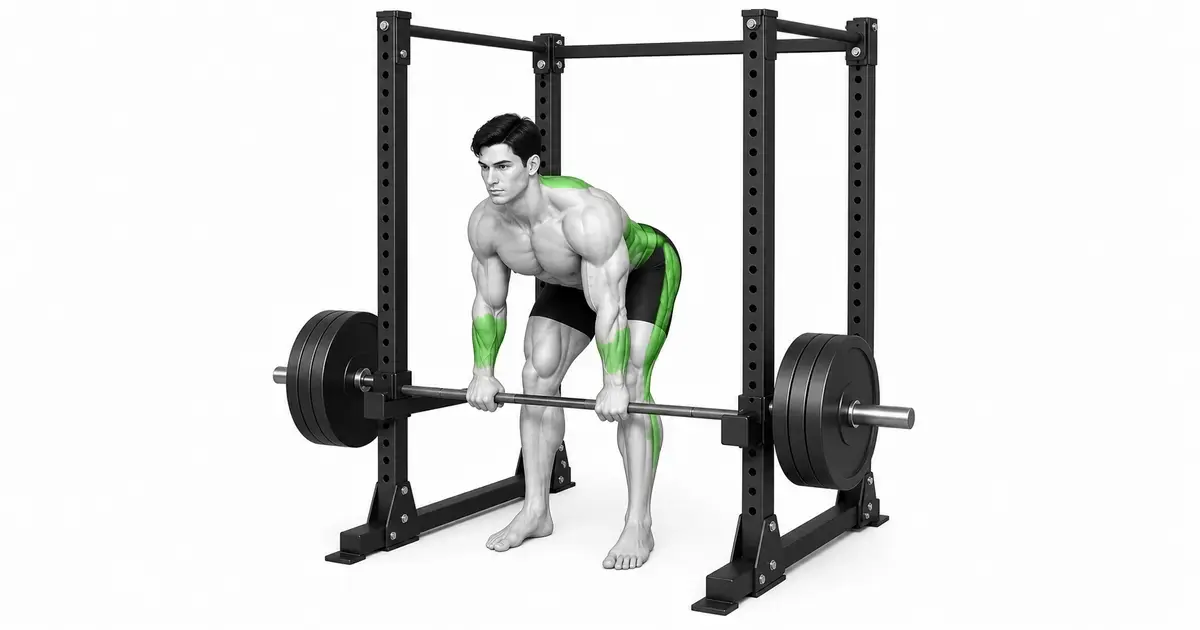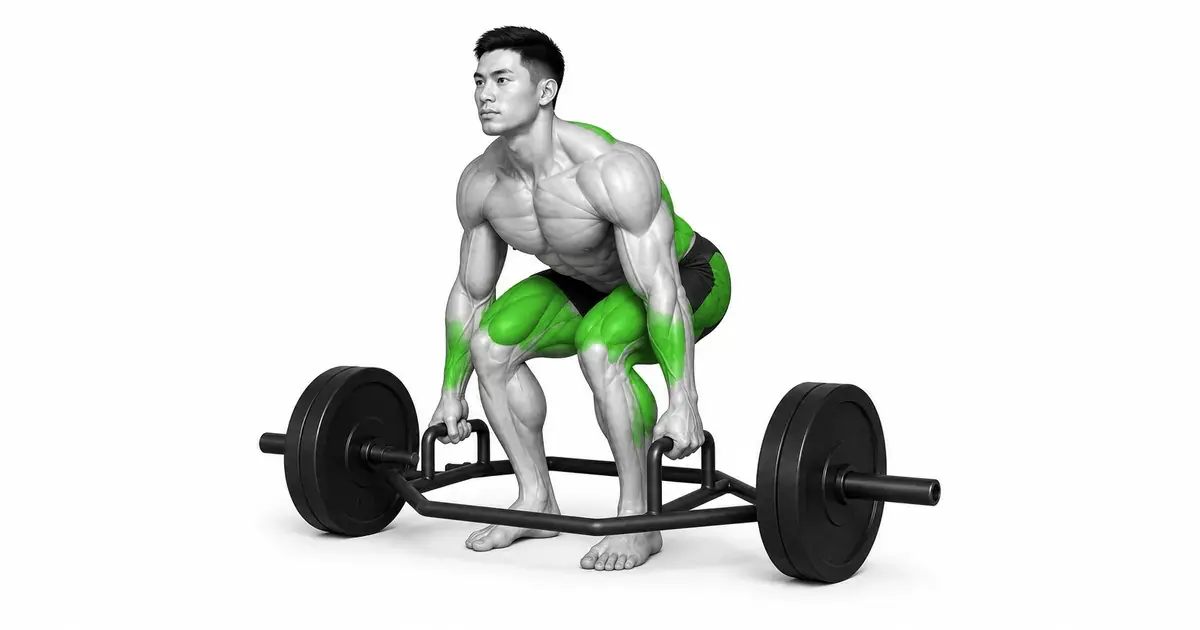
SINGLE-LEG DEADLIFT
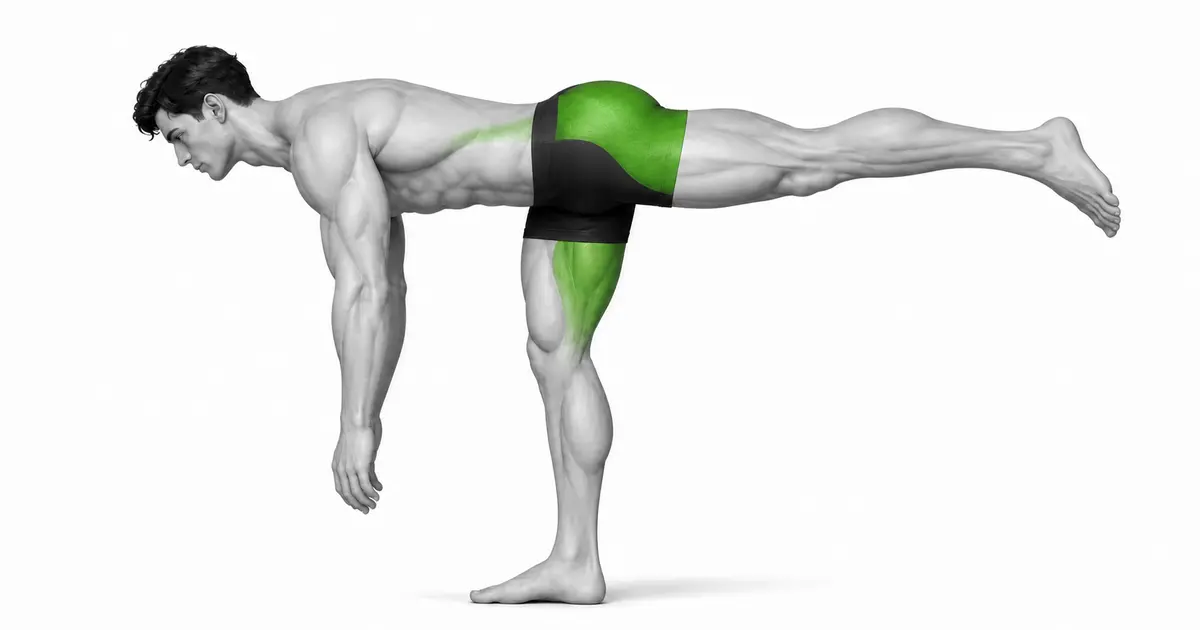
The single leg deadlift is not an exercise that lifts the hind leg high, but a hip hinge that moves the torso and hind leg as one around the hip joint of the supporting leg.
Hip hinges while standing on one foot require rotational control of the ankle and pelvis as well as the hamstrings and glutes. If you focus on the height of your back foot, it will be easy for your pelvis to open and your lower back to rotate. Lightly press against the wall and learn the entire supporting foot and pelvic level in a short range, then adjust the assistance and load with your hands.
- Primary muscles
- Hamstrings/Gluteus maximus
- Secondary muscles
- Gluteus medius, adductors, erector spinae, ankle stabilizers
- Difficulty
- Intermediate
- Movement type
- Single-sided hip hinge
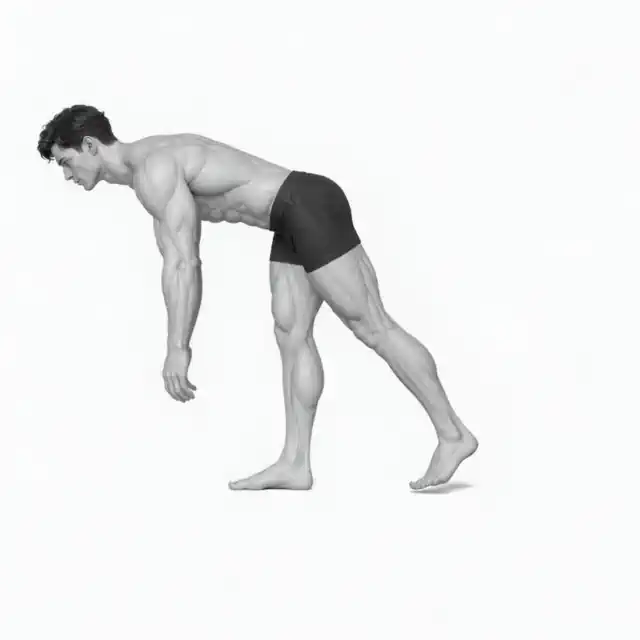
Should the back leg be raised parallel to the floor?
No. It is sufficient as long as the pelvis does not open and the supporting foot is at a stable height.
STEP BY STEP
4 Steps for One Complete Rep
- 1
Creating a tripod with support feet
Press the base of the big and little toe and the heel of one foot and slightly bend the knee. If necessary, place your opposite hand lightly on the wall.
- 2
Fixing the pelvis forward
Align both pelvic bones toward the floor so that the pelvis on the side of the leg that will be lifted does not open upward. Tighten your abdominals and buttocks of your supporting leg.
- 3
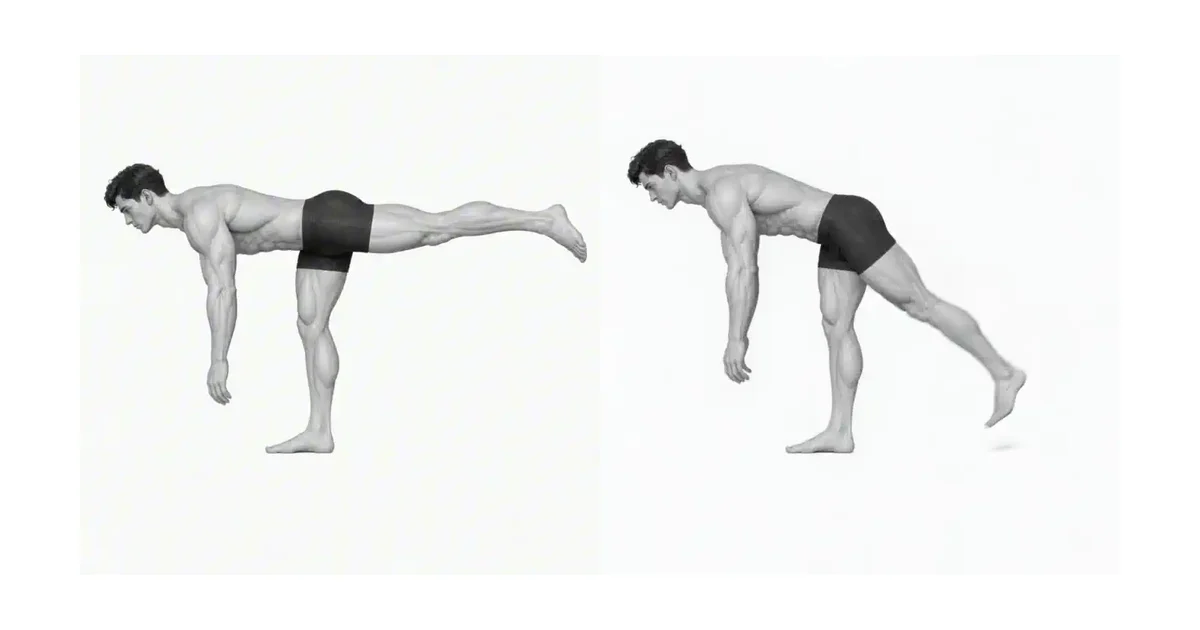
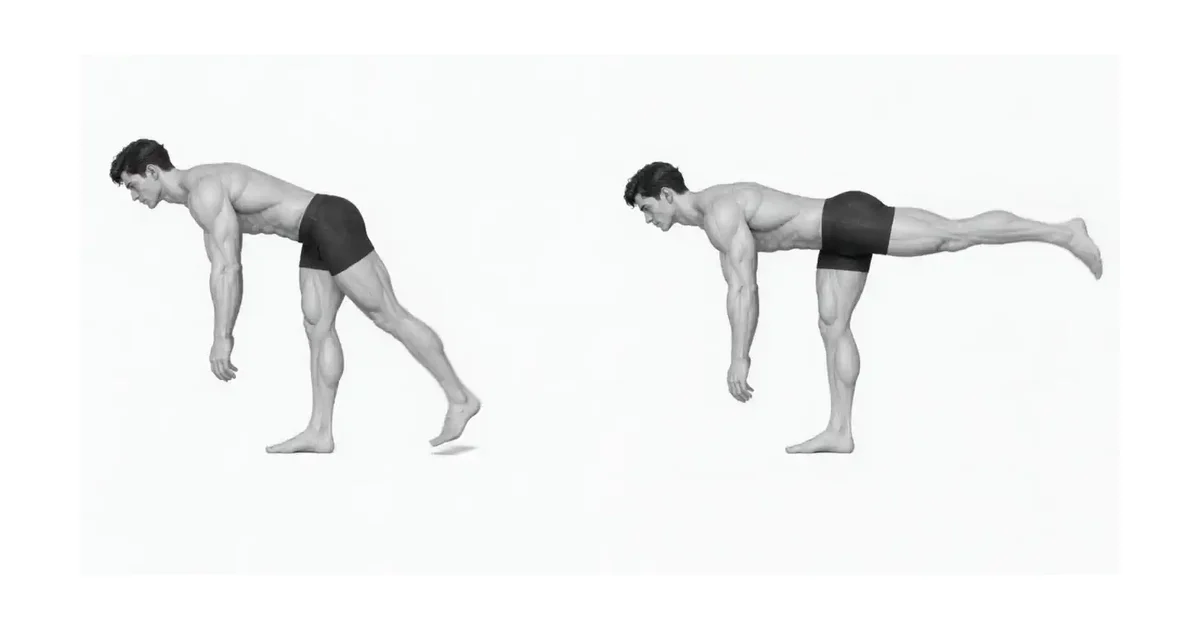
Tilting torso and hind legs together
Send the supporting hip joint backward, move the torso forward and the hind leg backward. Keep your spine long and stop before the pressure on your supporting feet breaks down.
- 4
Stand back with supported hips
Push your support foot into the floor, squeeze your glutes, and rotate your torso and back leg together to the starting position. Do not twist your pelvis or arch your back at the top.
SQUARE HIPS
When the pelvis on the hind leg is opened, the hinge changes into a rotational motion.
Point the toes of your back feet toward the floor and think of both pelvic bones as being at the same level. Rotation is easy to check by looking directly in the mirror or holding a bar against your pelvis.
The point where the pelvic level is broken is the current range of motion. Do not twist your torso to raise your back leg higher.
Key point: Cue to use right away: “Toes of the rear feet are down, pelvis headlights are on the floor.”
SUPPORTED PRACTICE
Support allows you to train balance and hip hinge strength separately
If you find yourself shortening your range or clenching your toes for balance, place one hand on the wall. This is not an easy trick, but rather a way to focus on target muscles and pelvic control.
Once foot pressure and pelvic level are maintained without support, you can add rotational resistance by holding a light dumbbell in the opposite hand.
TROUBLESHOOTING
Fix the cause of a mistake, not just its appearance
Pelvis on hind leg opens upward
- What you see
- Chest and belly facing to the side, toes of hind feet turned outward.
- Likely cause
- Focus on rear leg height or lack of rotational control of supporting hip joint.
- How to correct it
- Reduce the range and point the toes of your back foot toward the floor.
Squat with support knee
- What you see
- The pelvis does not go backwards and only the knees are deeply bent.
- Likely cause
- Focused on lowering hands to the floor rather than hip hinge.
- How to correct it
- Practice pelvic movement with the wall touch hinge and ignore the height of your hands.
Clutch your toes and shake
- What you see
- The supporting arch of the foot collapses and the ankle swings from side to side.
- Likely cause
- Balance request exceeded current range or load.
- How to correct it
- Hold the support and reduce the range to restore foot tripod pressure.
REGRESSION & PROGRESSION
Match the difficulty before adding load
Kickstand RDL
Place the front heel of your back foot on the floor and learn the hinge.
Supported single leg deadlift
Assists with balance with one hand.
Bodyweight single leg deadlift
Maintains pelvic level and foot pressure.
Opposite hand dumbbell variation
Increase load when performing without rotation.
BEGINNER PROGRAM
A practical starting framework
Start on the weaker side and don't mistake balance failure for strength failure. If necessary, use supports to match the range and speed on both sides.
Count
6–12 times each
Descent 2~3 seconds, pelvis horizontal
Set
2–4 sets each
60–120 seconds recovery after both sides
Frequency
1–2 times a week
Different hip hinge and volume adjustment
- Once pelvic level and foot pressure are maintained, increase the number of repetitions first.
- If rotation, ankle shaking, or back bending occurs, reduce the range and weight.
- Secure support in locations where there is a risk of falling.
Frequently asked questions
In which hand do you hold the dumbbell?
The hand opposite the support leg provides rotational resistance, and the same hand provides different balance demands. First, check your alignment with a light load in the opposite hand.
Is it ineffective if the balance is bad?
Holding the support can still sufficiently train your hamstrings and glute hinge. Balance and strength can be developed separately.