SISSY SQUAT
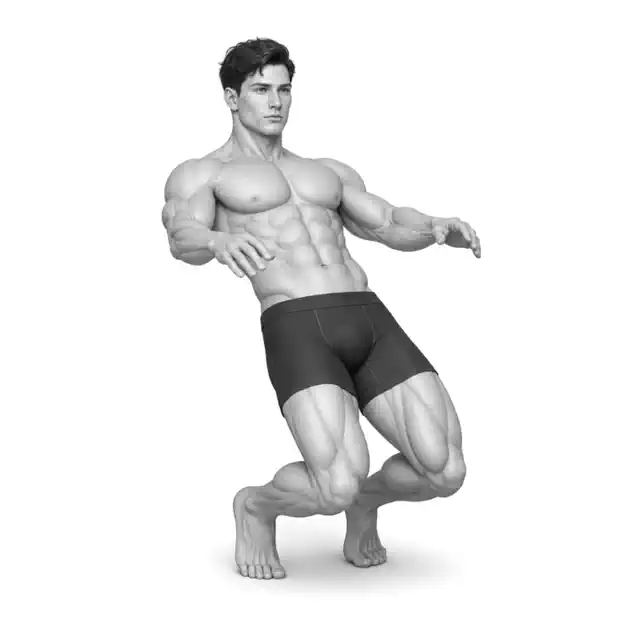
The Sissy Squat is not a trick of just leaning your upper body back, but a difficult exercise that lowers your body with your quadriceps muscles while maintaining a single line from your knees to your shoulders.
Sissy squats create a long lever in your quadriceps by lifting your heels and leaning your entire body back while driving your knees forward. Because it places greater knee bending and balance demands than a regular squat, there is no need to go deep from the beginning or perform it without support. Learn alignment in short, pain-free ranges by holding onto a solid structure with one hand.
- Primary muscles
- Quadriceps
- Secondary muscles
- Rectus abdominis, iliopsoas, calf
- Difficulty
- Intermediate
- Movement type
- Knee Dominant Bodyweight Squat
Can my knees go forward beyond my toes?
This exercise assumes a deliberate forward movement but pain-free progressive range. Don't judge safety based on location alone; look for symptoms and controls.
STEP BY STEP
4 Steps for One Complete Rep
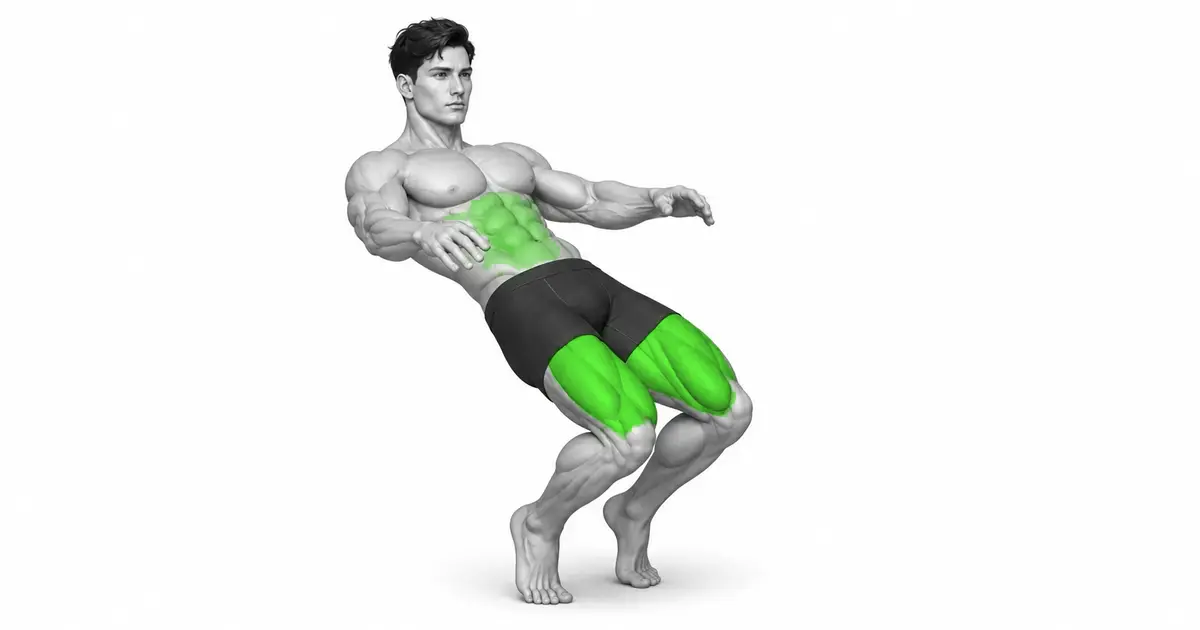
- 1
Prepare for solid support and short range
Hold a stationary support, such as a rack post, with one hand. Start with very shallow repetitions with your feet hip-width apart.
- 2
Lift your heels and bring your body into one line
Press the front of your foot into the floor and slowly lift your heel. Squeeze your glutes and abdominals to create as long a line as possible from your knees to your shoulders.
- 3
Full tilt with knees forward
Bend your knees and move them forward while simultaneously leaning your entire body backwards. Let your knees stop at a comfortable depth before your hips collapse or your lower back sinks.
- 4
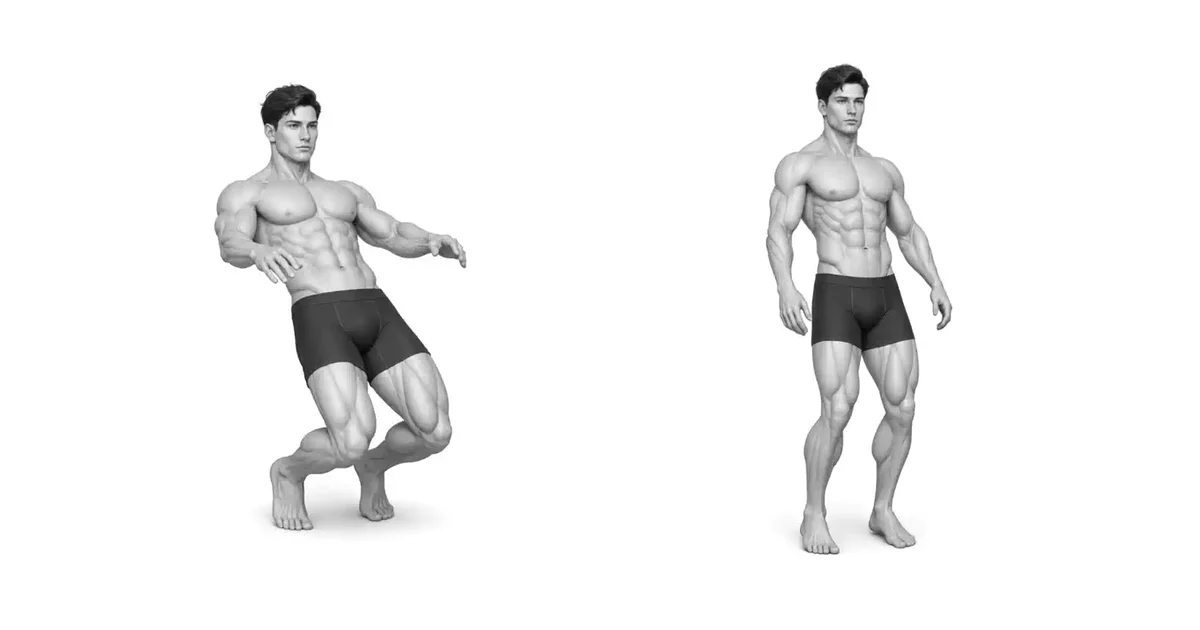
Push the front foot to return to the same line
Push into the floor with your quadriceps muscles, straighten your knees, and raise your entire body. The supports only help with balance and do not pull you up with your arms.
ONE LONG LINE
When the pelvis collapses, the long quadriceps lever of the sissy squat disappears.
If you pull your hips back during the descent, it becomes similar to a regular squat. Squeeze your abdominals and glutes together so that your thighs and torso move as one unit.
Prioritize small range repetitions that maintain alignment rather than pushing your body further back.
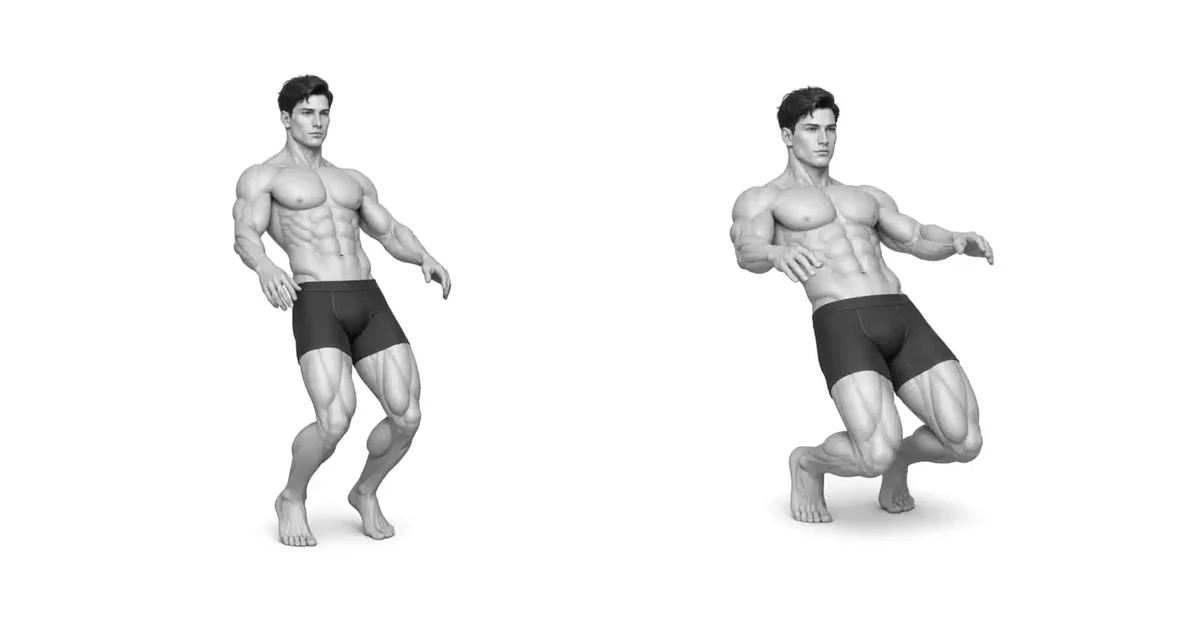
Key point: Cue to use right away: “Lean from knee to shoulder like one board.”
BUILD TOLERANCE
Loading in front of the knee should be adapted gradually
This does not mean that the knee moving forward itself is dangerous, but it should not exceed the range and speed that the tissue can handle. Lower the intensity with supports and short range.
If you experience stabbing pain, feeling unsteady, or pain that persists long after the exercise, reduce the range or substitute with another quadriceps exercise.
TROUBLESHOOTING
Fix the cause of a mistake, not just its appearance
Just bend your waist back
- What you see
- The ribs are lifted, pressure is placed on the lower back, and there is little knee movement.
- Likely cause
- Range is created with lumbar extension instead of full body tilt.
- How to correct it
- Squeeze your abs and glutes and move your knees, hips and shoulders together in very short ranges.
Down so deep that you lose your balance
- What you see
- Hold the support bar tightly or move your feet and experience recoil when returning.
- Likely cause
- Prioritized depth over quadriceps strength and ankle balance.
- How to correct it
- Raise the bottom and return to a two-hand support or dedicated machine.
Repeat with knee pain
- What you see
- Sharp pain or feeling of instability in the front of the knee.
- Likely cause
- Quickly increased initial volume and range.
- How to correct it
- Stop immediately and substitute Spanish squats or leg extensions in a pain-free range.
REGRESSION & PROGRESSION
Match the difficulty before adding load
Support Spanish Squat
Learn knee bending load with the torso erect.
Two-hand supported sissy squat
Practice one line at a short range.
One-hand supported sissy squat
Reduce balance assist.
Free Sissy Squat
Attempt only when there is sufficient control and tolerance.
BEGINNER PROGRAM
A practical starting framework
Place your quads-assisted exercises later in your session and differentiate between muscle burning and joint pain. During the first week, use only few repetitions and short ranges.
Count
6–15 times
Use of support, pain-free range
Set
2–3 sets
60–120 seconds recovery between sets
Frequency
1–2 times a week
Check knee reaction by next day
- Once one line and pain-free range are maintained, gradually increase the depth.
- If you experience recoil, back bending, or knee pain, immediately lower the difficulty level.
- Do not view unsupported performance as essential progress.
Frequently asked questions
How much should I lift my heel?
Lift only as much as you can to keep the front of your feet stable and your body in one line. There is no need to improve toe-toe height.
Does holding the support reduce the effect?
No. Supports reduce balance failures and allow you to focus on quadriceps action. Just don't pull yourself up with your arms.