SKI ERG
SkiErg is not an exercise where you pull the handle down with your arms, but rather a full-body aerobic movement that starts by pulling with your lats and abdomen and ends with your hips folded and your arms extended.
The SkiErg pulls both hands down from above the head, similar to the double poling of cross-country skiing. If you only use your arms, your triceps and shoulders will tire quickly, and if you arch your back, the repetition load will increase. With your hands high on a low damper, lower your ribs and start with your lats, then engage your hip hinge and knee bend so the handle passes next to your thigh.
- Primary muscles
- Lats, Triceps, Abdomen
- Secondary muscles
- Gluteus maximus, hamstrings, quadriceps, forearm
- Difficulty
- Intermediate
- Movement type
- Downward pull and hip hinge from overhead
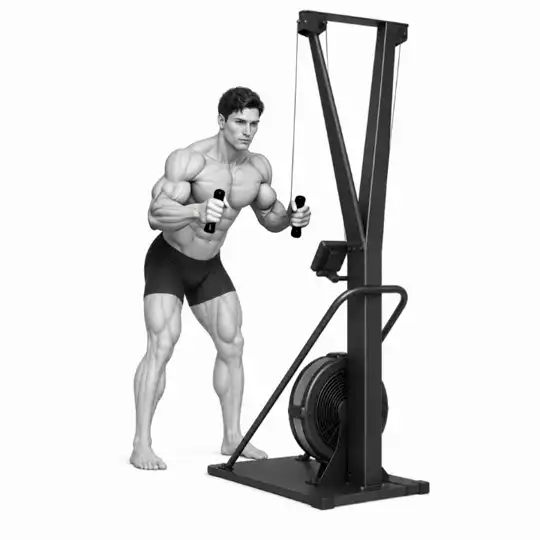
How low should the handle be lowered?
Usually, up to the side of the thigh is enough. There is no need to round your back to put your hands under your knees.
STEP BY STEP
4 Steps for One Complete Rep
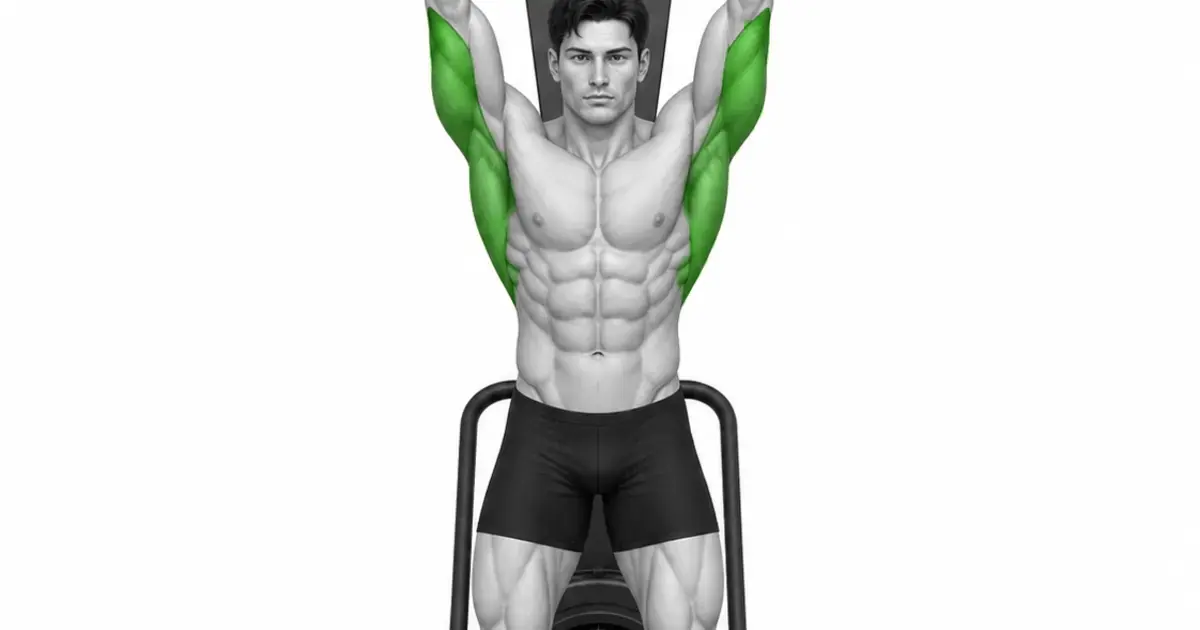
- 1
Align foot position with machine
Stand not too far or too close to the machine, with your feet hip-width apart. The damper starts at low to medium and holds the handle steady.
- 2
Starting to pull with lats and abdominals
With your arms extended high, lower your ribs and accelerate the handle downward. Keep your shoulders away from your ears.
- 3
Fold your hips and finish with your arms long
Bend your hips and knees, tilt your torso forward and place your hands next to your thighs. Don't just round your waist.
- 4
Raise arms first and then stand upright
Move your arms forward comfortably to raise the handle, then straighten your hips and knees to return to the starting position. Maintain a rhythm that does not allow the cable to slacken.
LATS, CORE, HIPS
Connecting the upper body pull and hip hinge eliminates fatigue from just the arms.
Move the handle with your lats, then add speed by folding your abdomen and hips. The elbows naturally bend and straighten at the bottom.
At the bottom, do not force your hands below your knees, but recover when your hands pass your thighs.
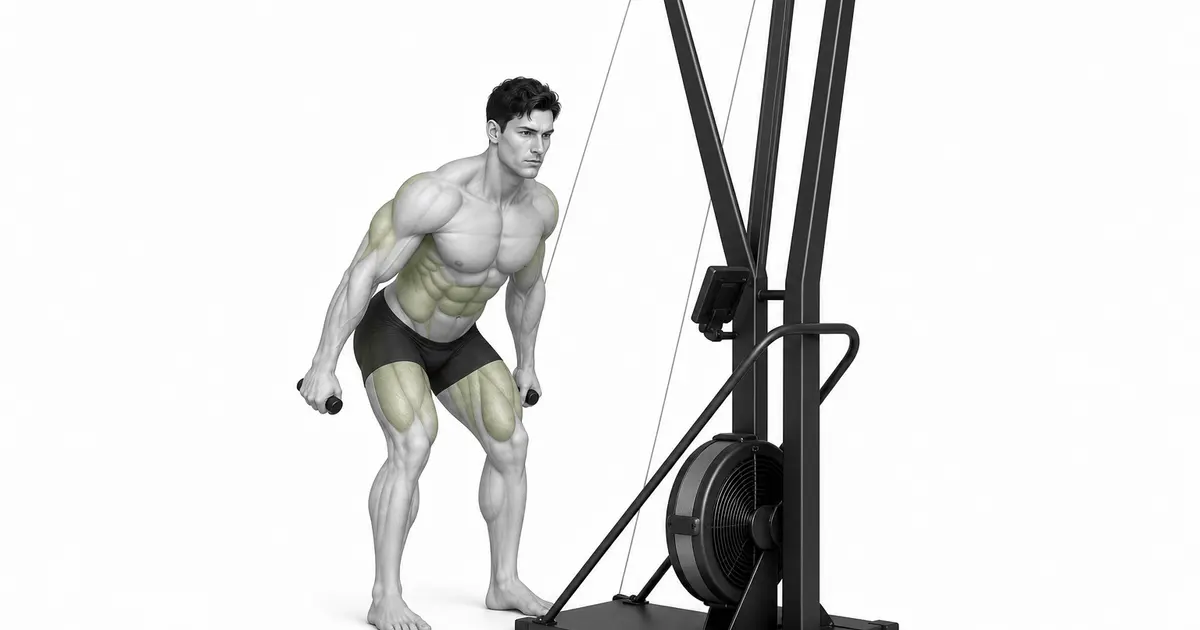
Key point: Cue to use right away: “Start with the lats and finish with the abdomen and hips.”
RELAX THE RETURN
The recovery period is not a period of time being pulled by the cable, but rather a period of preparation for the next pull.
Send your hands upward first and raise your torso so that the handle is above your head.
Avoid shrugging your shoulders or lifting your ribs excessively, and realign your torso before the next stroke.
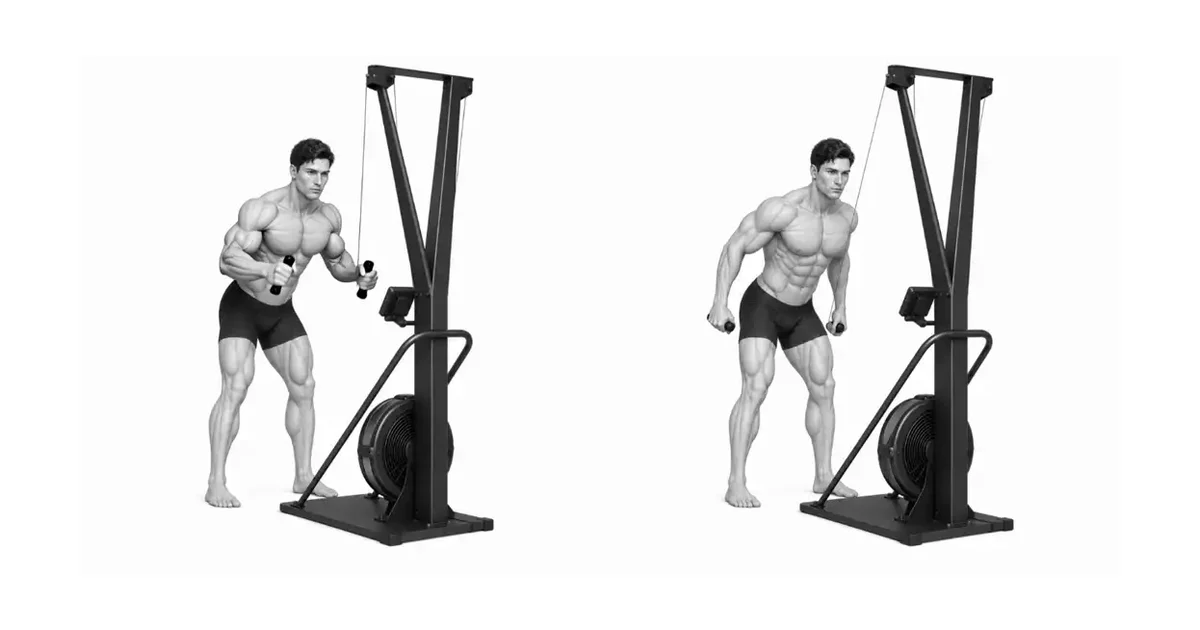
TROUBLESHOOTING
Fix the cause of a mistake, not just its appearance
Pull handle with arm only
- What you see
- Triceps and shoulders get tired first, and there is little movement in the lower body and torso.
- Likely cause
- Lack of lat origin and hip hinge connection.
- How to correct it
- Practice the arm-torso-hip sequence with slow separation at low resistance.
Fold your waist round
- What you see
- The pelvis barely moves, only the back is curled and the hands are lowered.
- Likely cause
- Obsessed with handle height or lacks hamstring/hip hinge control.
- How to correct it
- Bend your knees further, bring your pelvis back, and lower your hands only to the sides of your thighs.
Ribs lifted at startup
- What you see
- When you raise your arms, arch your back and eliminate abdominal tension.
- Likely cause
- Compensates shoulder range of motion with lumbar extension.
- How to correct it
- Start at range with your hands low and your ribs above your pelvis.
REGRESSION & PROGRESSION
Match the difficulty before adding load
Interval Training
Repeat high and low intensity to improve calorie consumption efficiency.
Increased time and resistance
Strengthen your stamina by increasing performance time or increasing the resistance level of the machine.
BEGINNER PROGRAM
A practical starting framework
Practice the technique for 5-10 minutes at a low stroke frequency, then choose continuous exercise or intervals. If the handle path and hip hinge are disturbed, the speed will be lowered before the damper.
Frequency
3 to 5 times a week
If your goal is to lose body fat, it is important to do it consistently.
Volume
20~40 minutes
Gradually increase the time according to your fitness level.
- Do this while drinking plenty of water.
- Protect your joints through light stretching before and after exercise.
Frequently asked questions
Is it better to leave the damper at 10?
A higher damper only increases resistance per stroke. Start with a setting that allows you to maintain your skills and duration.
Do I have to bend my knees too?
Yes. By naturally bending your knees with a hip hinge, you can share the force with your entire body and avoid curling only your lower back.