SPIDER CURL
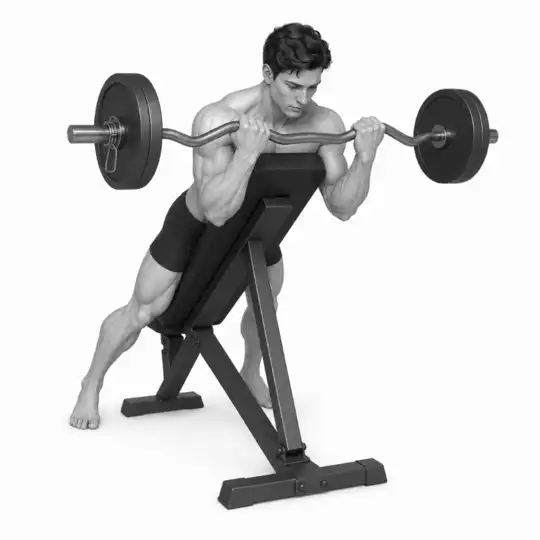
Spider curl is an exercise that eliminates recoil and sharpens biceps contraction in a position with arms hanging down.
If you support your chest on an incline bench and let your arms hang down toward the floor, it will be difficult to use your torso to kick back. If you perform curls by fixing your elbow position and wrist in that state, you can focus on the section where your biceps brachii is shortened. Rather than weight, the range of keeping your upper arms steady in front of the bench and the slow lowering motion are priorities.
- Primary muscles
- Biceps brachii
- Secondary muscles
- Brachialis, brachioradialis, forearm flexors
- Difficulty
- Intermediate
- Movement type
- Elbow flexion
Which is better, barbell or dumbbell?
An EZ bar is convenient if you can move both sides stably at the same time, and dumbbells are advantageous if you want to adjust the wrist angle or the difference between the left and right sides. Choose a tool that can stabilize your upper arm without pain.
STEP BY STEP
4 Steps for One Complete Rep
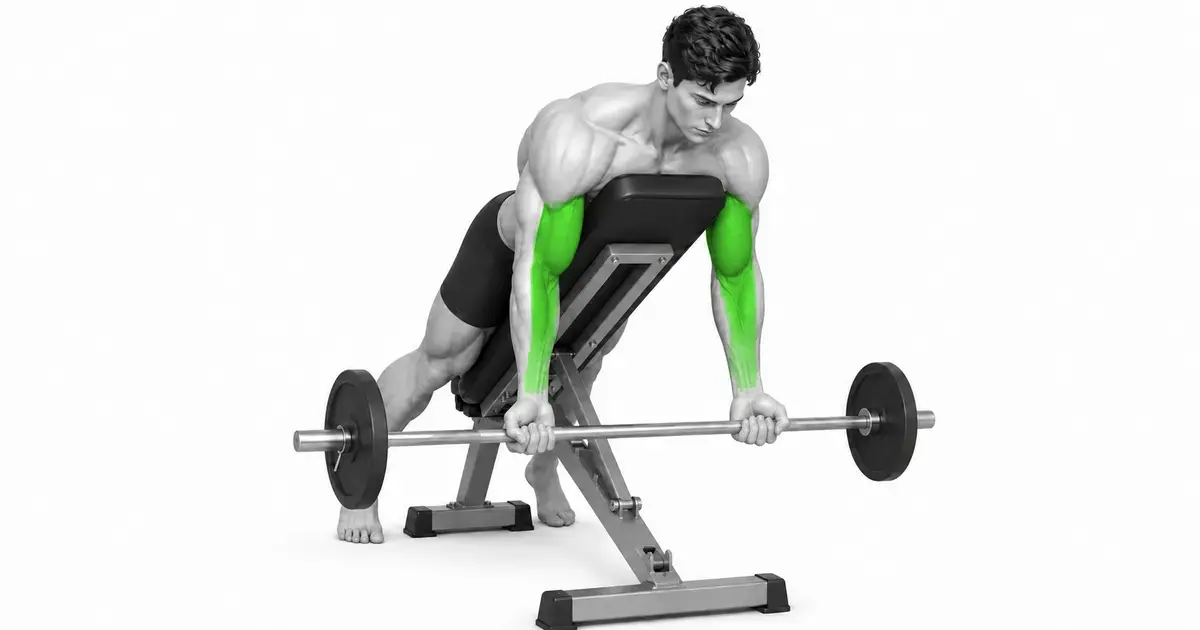
- 1
Fit bench and equipment
Set the incline bench at an angle of approximately 45 to 60 degrees and place your chest on the top of the pad. Prepare the EZ bar or dumbbells in front of the bench so that you can safely hold them with your arms almost straight.
- 2
Holding the upper arm vertically
Press both feet into the floor and tighten your abdomen. Without shrugging, place your arms toward the floor and keep your wrists in line with your forearms.
- 3
Pull up by bending only your elbows
Exhale, maintain upper arm position and raise the bar or dumbbell toward your shoulders. Raise only to the point where your elbows do not move forward or back or your chest lifts off the bench.
- 4
Slowly lower after deflation
Squeeze your biceps at the top for about 1 second, then inhale and lower over 2-3 seconds. Avoid locking your elbows roughly and make sure your body is stable before the next repetition.
UPPER ARM
Upper arm movement reduces the benefits of spider curls
When you pull your elbows back or your shoulders forward to lift the weight, the path of the curl is shortened and other muscles engage. Make sure your elbows stay at one point in front of the bench when photographed from the side.
Depending on arm length or bench height, a completely vertical position may be uncomfortable. Just choose an angle that keeps your upper arms stable without pulling the front of your shoulders.
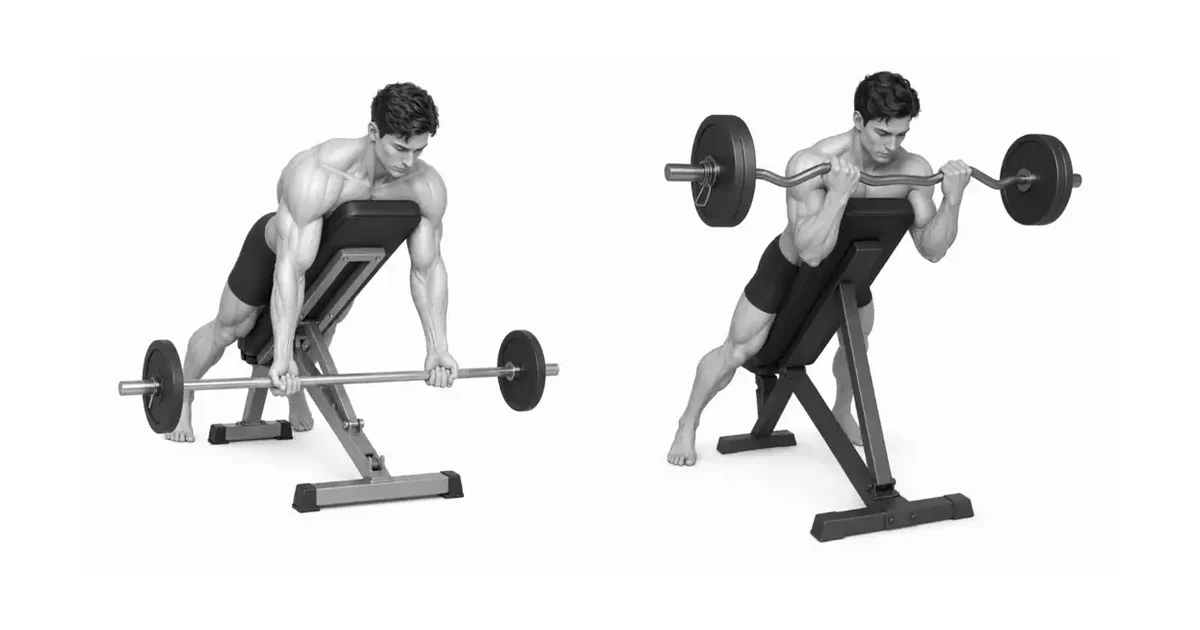
Key point: Cue to use right away: “Chest on the bench, elbows in the same place.”
WRIST & TEMPO
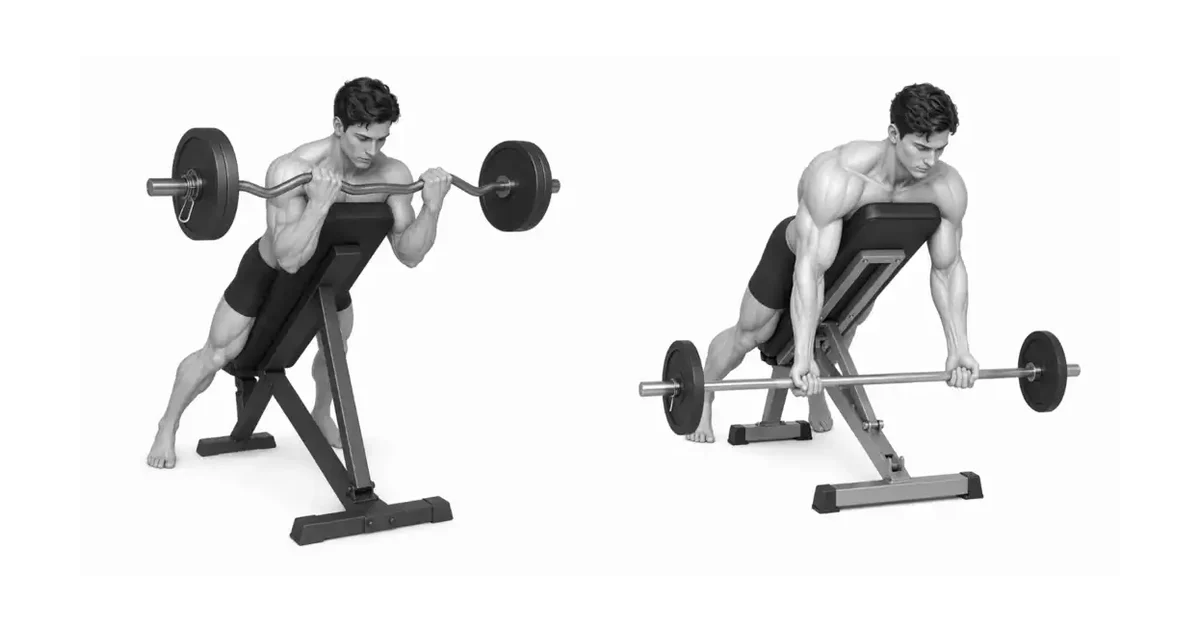
Do not curl your wrists and control the downward section
Folding your wrists inward to raise the bar higher can put strain on your forearms. Keep the back of your hand and forearm in one line, and repeat at the range before that alignment is broken.
By lowering slightly slower than rising, you can reduce the habit of leaning against the bench and creating a recoil. Do not fully relax at the bottom and bounce your elbows.
TROUBLESHOOTING
Fix the cause of a mistake, not just its appearance
Elbows fall back
- What you see
- As the dumbbells rise, your elbows move toward your torso.
- Likely cause
- The weight may be heavy or you may be obsessed with the top height and pulling it with your shoulder joint.
- How to correct it
- Lower the weight and position your reference point below your elbows. Raise your upper arm just before it moves.
Chest lifted from bench
- What you see
- In the second half of the repetition, straighten your torso and pull up the equipment.
- Likely cause
- Fatigue has accumulated or the bench support position and foot spacing are unstable.
- How to correct it
- Re-create chest contact and foot pressure and reduce reps. Complete the set when the support is released.
wrist folded inward
- What you see
- At the top, the palm curls toward the forearm and the front of the wrist feels uncomfortable.
- Likely cause
- The grip is on the finger side or you are forcing the final range with your forearm.
- How to correct it
- Center your grip on your palm and keep your wrist neutral. Find a comfortable grip using an EZ bar angle or dumbbells.
REGRESSION & PROGRESSION
Match the difficulty before adding load
Bench Supported Dumbbell Curl
First learn upper arm fixation and wrist alignment with light dumbbells.
Alternate Spider Curl
Perform one arm at a time and compare the left and right elbow positions and contraction sensation.
Both arms spider curl
Increase number of repetitions when both sides move at the same speed.
EZ Bar Spider Curl
Increase slightly only if you can maintain bench contact.
BEGINNER PROGRAM
A practical starting framework
Place after back exercises or other compound pulling exercises, using a weight that maintains upper arm and chest support for the last 2-3 reps.
Count
8–12 times
1 second upper contraction and 2-3 second lowering
Set
2–3 sets
60–90 seconds recovery between sets
Frequency
1–2 times a week
Adjustable according to elbow recovery status
- If elbow position and wrist alignment are maintained for all repetitions, first increase the number of repetitions in the next session.
- If your chest lifts off the bench or you lose control of your rate of descent, lower the weight by 10-15%.
- If you experience sharp pain in your elbow or wrist, stop the set and adjust your grip and range of motion.
Frequently asked questions
Do I have to raise the dumbbells up to my shoulders?
No. The upper practical range is before your elbows fall back or your wrists fold. Maintaining bicep tension and alignment is more important than higher positions.
What is the difference from preacher curls?
Preacher curls place the front of your upper arms against a pad, while spider curls place your arms hanging down with your chest supported on a bench. Both exercises reduce recoil, but the areas where the load is felt may be different.