STIFF-LEG DEADLIFT
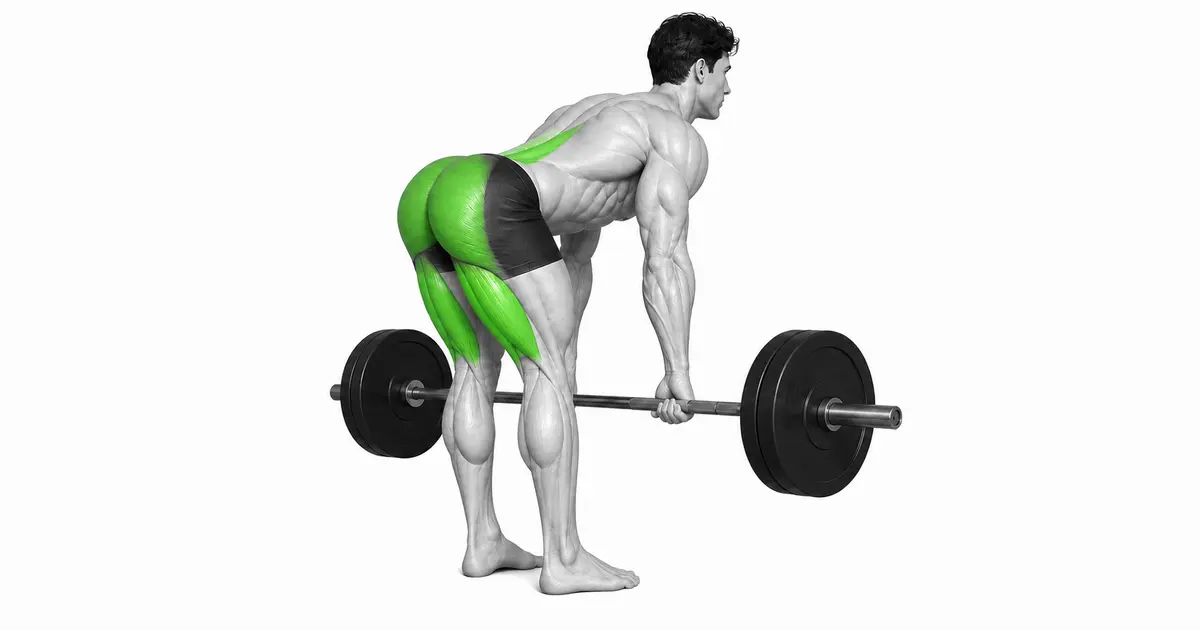
Stiff leg deadlift is not an exercise that forcefully locks the knees, but rather a hip hinge that sends the hip joint backward while maintaining a small knee angle.
You can emphasize the longer posture of your hamstrings by reducing the knee bend compared to the Romanian deadlift, but if you lock your knees excessively or force the bar to the floor, your lower back is likely to round. Keep the bar close to your legs and only lower it to the point before your pelvis goes further back or your spinal alignment changes.
- Primary muscles
- Hamstrings/Gluteus maximus
- Secondary muscles
- Erector spinae, adductors, latissimus dorsi, forearm
- Difficulty
- Intermediate
- Movement type
- Hip hinge with less knee bend
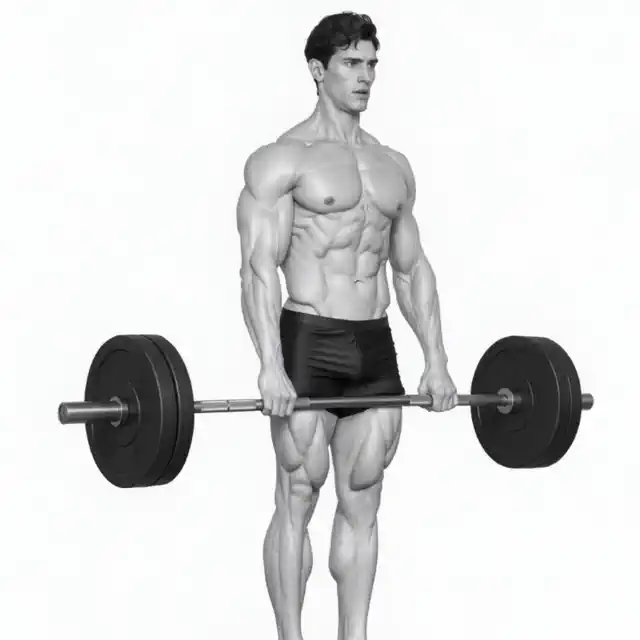
How is it different from the Romanian deadlift?
Both exercises are hip hinges, but the stiff leg variation generally maintains less knee bend. Choose the variant that is more comfortable for you depending on your individual range of motion and pain.
STEP BY STEP
4 Steps for One Complete Rep
- 1
Creating a stable top posture
Hold the bar outside shoulder width and stand up fully. Press through your entire feet, create abdominal pressure, and keep your shoulders away from your ears to hold the bar close to your body.
- 2
Fixing small knee angles
Do not lock your knees roughly, but rather bend them very slightly. Maintain no further bending or straightening during the repetition, like a squat.
- 3
Send the pelvis back to lower the bar
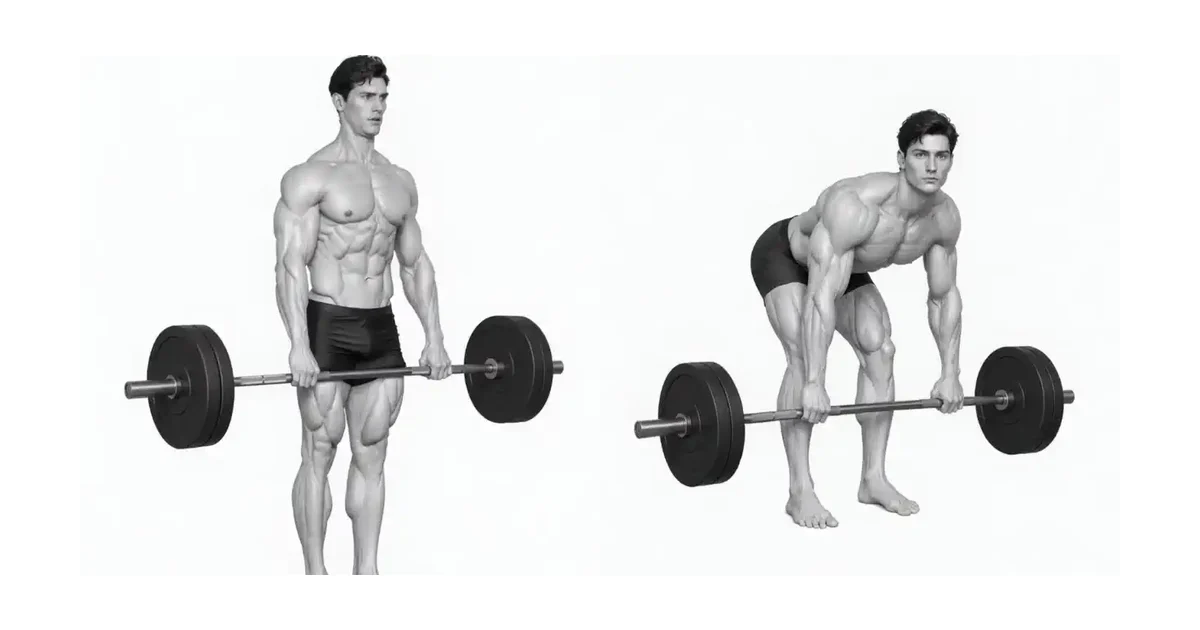
Inhale, send your buttocks toward the back wall and lower the bar close to your thighs and shins. Maintain alignment from your neck to your pelvis.
- 4
Stand up in hamstring range
Stop at the point where the hamstrings are sufficiently stretched and the pelvis does not move further. Push your feet into the floor and squeeze your glutes to bring your torso and pelvis together.
SOFT KNEES
Stiff does not mean locking the knee joint
Hyperextending the knee can cause discomfort behind the joint and limit pelvic movement. Pick a smooth angle and make sure that angle doesn't change during the repetition.
A lot of knee bend will get you closer to a regular deadlift, while not bending at all will create unnecessary tension for some people. Use minimal, pain-free bending.
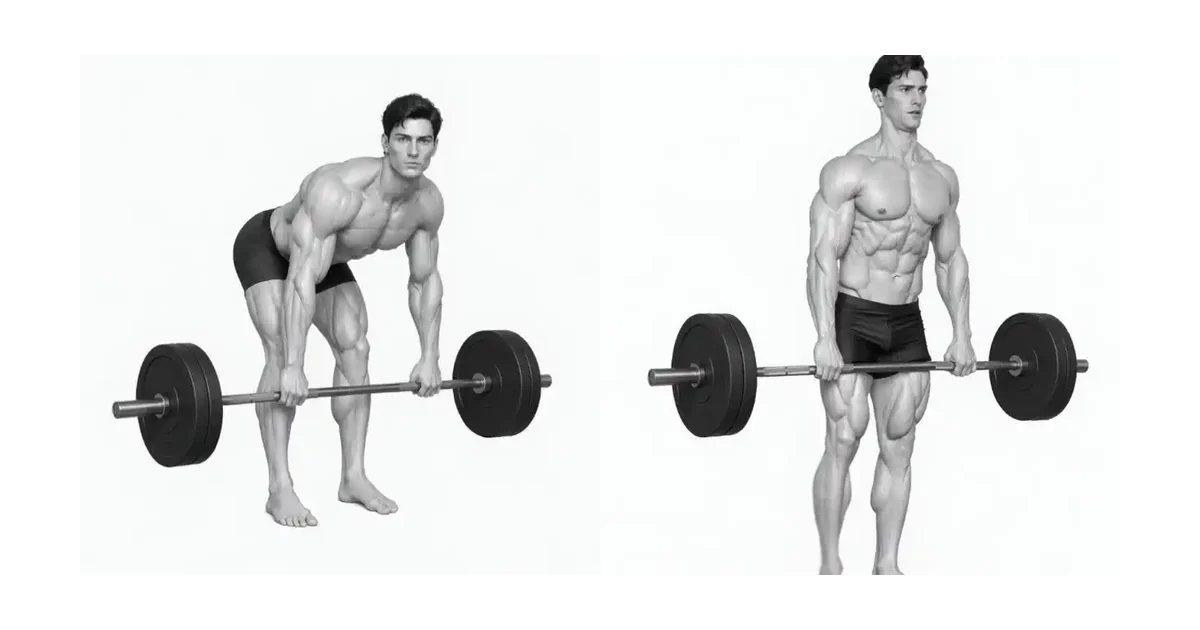
Key point: Cue to use right away: “Knees soft, hips far back.”
HAMSTRING-LIMITED RANGE
The end point is not the height of the bar, but the range your hamstrings and spine will allow
This is not an exercise that requires the disc to touch the floor. If your lower back rounds or your pelvic movement stops even in the middle of your shins, change direction at that point.
The farther the bar is from your legs, the more leverage you have on your lower back. Tighten your armpits with your lats to keep the bar close to your body.
TROUBLESHOOTING
Fix the cause of a mistake, not just its appearance
Excessively locking knees backwards
- What you see
- The back of the knee is compressed and the joint is hyperextended.
- Likely cause
- The movement name was misunderstood as full knee extension.
- How to correct it
- Gently loosen your knees to create a small angle and maintain it throughout the set.
Bend at the waist towards the floor
- What you see
- My pelvis has stopped, but my shoulders are lower and my back is rounded.
- Likely cause
- The height of the bar was used as the standard for the range of motion.
- How to correct it
- Stop at the point before your spinal alignment changes and increase your starting height with blocks.
Bar moves away from shins
- What you see
- As you descend, the bar moves towards your toes.
- Likely cause
- Tension in the lats is released or only the upper body is bent instead of the pelvis.
- How to correct it
- Lightly pull the bar against your legs and move your pelvis further back.
REGRESSION & PROGRESSION
Match the difficulty before adding load
Wall Touch Hip Hinge
Learn the pattern of sending your pelvis backward.
Dumbbell Romanian Deadlift
Practice soft knee and body line paths.
Light stiff leg deadlift
Apply short range and constant knee angle.
Progressive Barbell Transformation
Increase when lumbar alignment and descent speed are maintained.
BEGINNER PROGRAM
A practical starting framework
Use the hip hinge as an accessory exercise once you've mastered it, prioritizing 2-3 second lowering and controlled tension in the hamstrings over depth.
Count
6–12 times
Descent 2-3 seconds, bar close to legs
Set
2–4 sets
90–180 seconds recovery between sets
Frequency
1–2 times a week
Different hip hinge volumes and adjustments
- If the same knee angle and spine alignment are maintained, increase the number of repetitions first.
- If the bar moves further away or your back rounds, reduce your reach and weight.
- Stop immediately if you experience sharp pain in the back or back of the knee.
Frequently asked questions
Does the bar have to touch the floor?
No. The end point is where hamstring tension and a neutral spine are maintained. Start with blocks if necessary.
If my hamstrings are too tight, should I stretch them further?
Gentle muscle tension is expected, but stabbing pain or rounding of the back is a sign that something is out of bounds. Reduce depth and load.