SUMO DEADLIFT
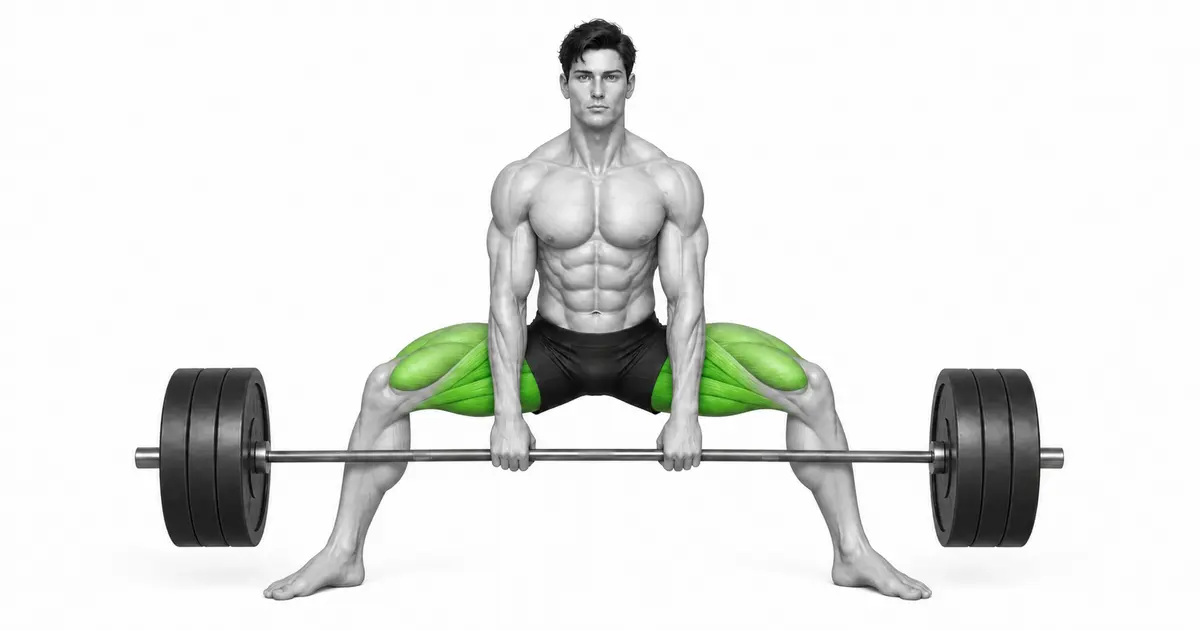
Sumo deadlift is not an exercise in which the feet are spread wide apart, but rather a deadlift that pushes the floor with the knees and toes aligned in a stance that the hip joint allows.
Placing your feet wide and your hands inside your knees creates a different starting position than the conventional deadlift. The widest stance is not the answer; you need to find a width where your shins are close to the bar, your knees stay pointed toward your toes, and your pelvis and chest rise together.
- Primary muscles
- Gluteus maximus, quadriceps femoris, adductors
- Secondary muscles
- Hamstrings, erector spinae, latissimus dorsi, forearm
- Difficulty
- Intermediate
- Movement type
- Wide stance deadlift
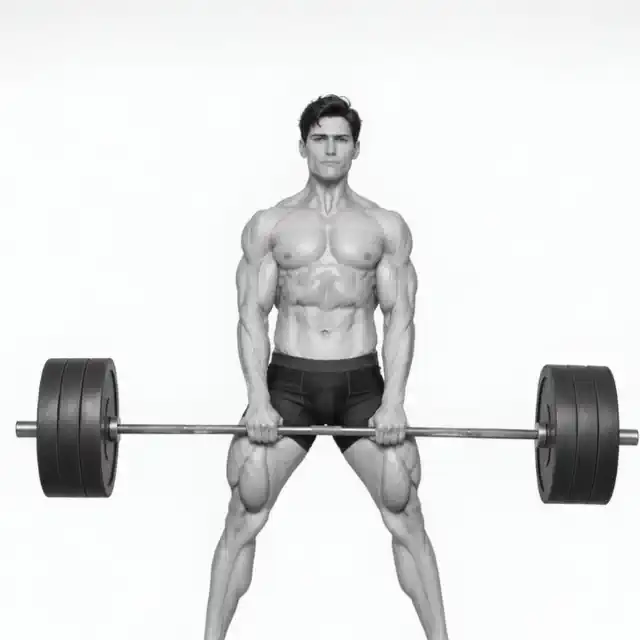
How wide should I spread my feet?
The standard is the width that allows you to keep your knees pointed toward your toes and push your entire foot into the floor. There is no need to unconditionally expand it close to the original plate.
STEP BY STEP
4 Steps for One Complete Rep
- 1
Find your stance and toe angle
Place your feet wider than shoulder-width apart and turn your toes outward. Start with a width that won't pinch your hips or keep your knees out of line with your toes.
- 2
Creating a narrow grip close to the bar
Place the bar over your midfoot, bend your hips and knees, and place your hands on the inside of your legs. Hold your arms vertically and at a width where your hands are not pressed against your legs.
- 3
Take slack off the bar and push the floor
Create abdominal pressure and tighten your armpits to pull the bar toward your body. Rather than snatching the bar suddenly, lift the bar by pushing the floor apart with your feet.
- 4
Eightening the pelvis and chest together
Let your pelvis and chest rise at the same speed while keeping your knees in the direction of your toes. At the top, without arching your back, stand with your glutes and lower the bar controlled close to your body.
STANCE
When it comes to stance, whether the hip joints and knees can transmit force is more important than the width.
If it's too wide, your pelvis will look closer to the bar, but it may make it difficult to push off the floor and cause groin discomfort. Find the width of the empty bar where your knees are over your toes and your shins are relatively vertical.
Toe angle depends on hip joint structure. The standard is the angle at which the entire foot remains on the floor without the knees collapsing inward.
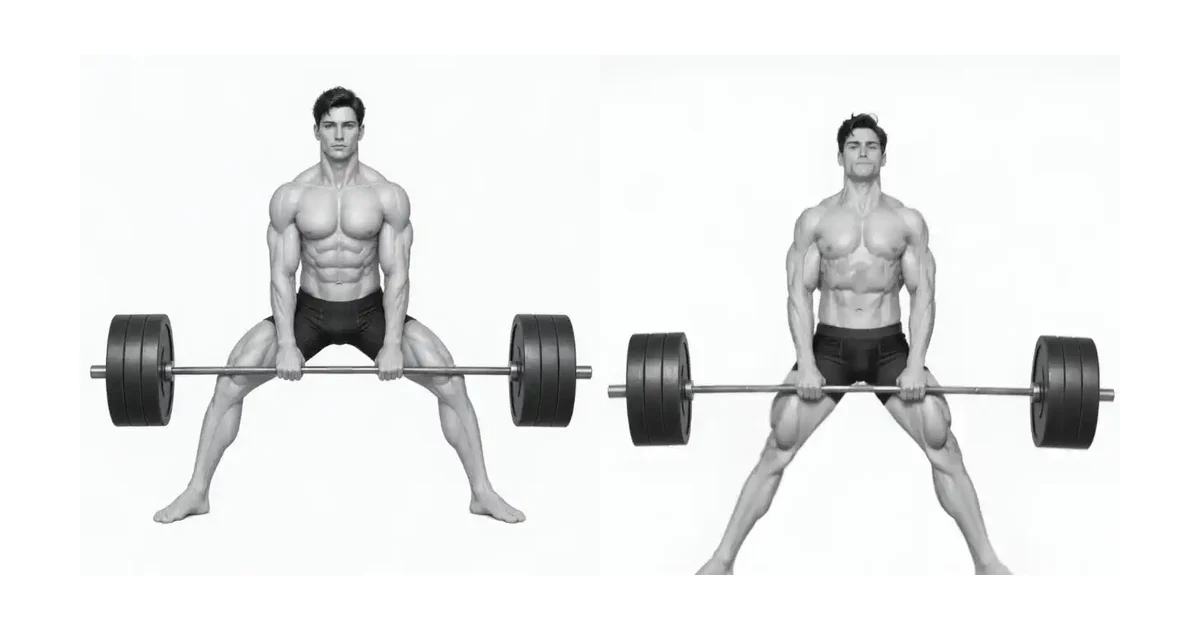
Key point: Cue to use right away: “Push your knees and toes in the same direction, pushing the floor to both sides.”
WEDGE & BAR PATH
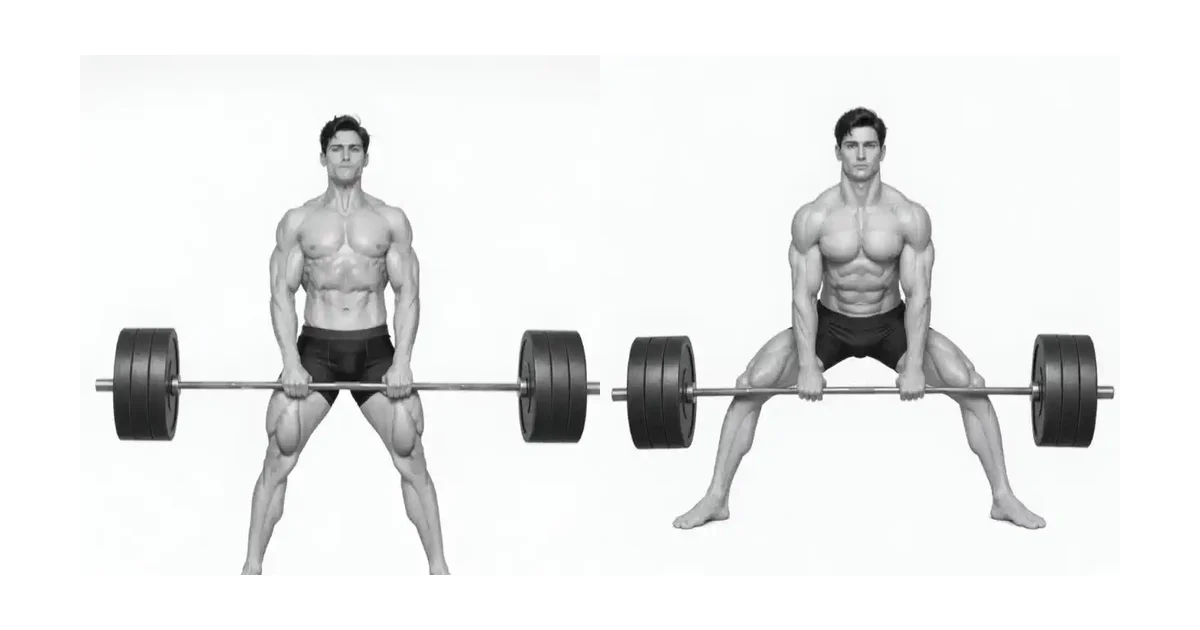
Place your body firmly between the bar and the floor before pulling on the bar.
Pulling with your arms first can cause your hips to pop and the bar to move away from your body. Eliminate any play on the bar, keep your chest straight, and create foot pressure first.
The bar rises close to vertical along the shins and thighs. Keep your chest and pelvis together, as pushing your pelvis forward before it passes your knees can block the path of the bar.
TROUBLESHOOTING
Fix the cause of a mistake, not just its appearance
Excessively wide stance
- What you see
- The inside of my foot floats, my groin gets stuck, and I can't use my strength on the floor.
- Likely cause
- I just thought it was advantageous because the wider it is, the shorter the travel distance is.
- How to correct it
- Move your feet slightly inward to restore knee-toe alignment and full foot pressure.
Knees collapse inward
- What you see
- The moment the bar lifts, your knees move inward towards your toes.
- Likely cause
- Toe angle/stance or load does not match the current hip joint control.
- How to correct it
- Lower the weight, push your knees toward your toes, and use the cue to spread the floor to the sides.
Buttocks rise first
- What you see
- Leave the bar on the floor, straighten your knees, and lean your back forward.
- Likely cause
- You haven't eliminated the play in the bar or you can't push off the floor with your quadriceps.
- How to correct it
- Before you start, keep the bar taut and return to light weights that engage your chest and hips.
REGRESSION & PROGRESSION
Match the difficulty before adding load
Kettlebell Sumo Deadlift
Learn your stance and knee path with weight between your legs.
Block Sumo Deadlift
Practice torso hold from a high starting point.
Light barbell sumo deadlift
Connects bar play removal and bottom push.
Progressive Sumo Deadlift
Increase when the same starting position is reproduced.
BEGINNER PROGRAM
A practical starting framework
Don't choose one just because it's more comfortable than conventional, but first make sure your hips and knees are comfortable with light loads and that you can repeat the starting position.
Count
3–8 times
Reset at bottom of every iteration
Set
3–5 sets
2–4 minutes recovery between sets
Frequency
1–2 times a week
Different heavy duty hinge and volume adjustment
- If the same stance and off-the-floor posture are reproduced, first increase the number of repetitions.
- Lower the weight if you experience knee collapse, hip advance, or bar path deviation.
- If you experience sharp pain in your groin or hip joint, narrow your stance or stop exercising.
Frequently asked questions
Are sumo deadlifts always safer for your back?
Some people may find it more comfortable to have a more erect upper body, but that doesn't mean it's automatically safer. The stance, abdominal pressure, load and individual hip joint structure must match.
Do I need to attach the bar to my shins?
The bar should be above your midfoot and close to your shins, but without harshly scraping your skin. Use long socks and keep the bar from moving forward.