THRUSTER
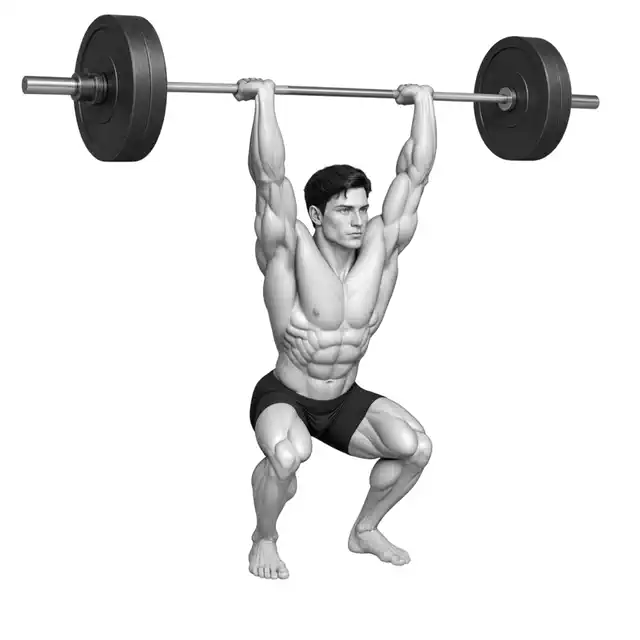
Thruster is not an exercise that combines squats and presses separately, but is a full-body movement that transfers the power of the lower body upward to the barbell and sends it overhead at once.
You can train power transfer between the lower and upper body by placing the barbell in the front rack, squatting, then standing up and immediately pressing overhead. If you stop at the top of the squat and push with only your shoulders, or if the front rack and depth collapse due to heavy weight, the movement efficiency and safety decrease. Maintain your entire feet on an empty bar and light weight, and learn the timing from when your arms connect the moment your hips and knees extend.
- Primary muscles
- Quadriceps, gluteus maximus, deltoids
- Secondary muscles
- Triceps, Hamstrings, Core, Upper Back
- Difficulty
- Intermediate
- Movement type
- Front Squat to Overhead Press Connection
Can I pause and press after front squat?
Although possible with training variations, the key to the thruster is to couple the lower body rise with a press. Start with light weights and learn the timing.
STEP BY STEP
4 Steps for One Complete Rep
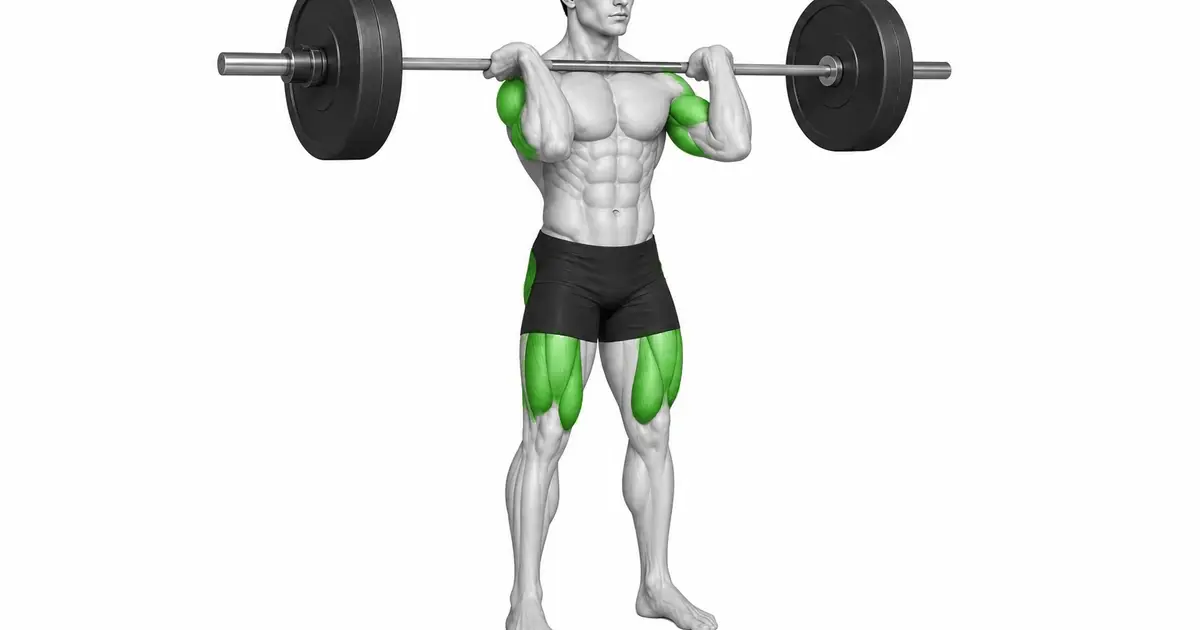
- 1
Creating front rack and foot positions
Place the bar over your front shoulders and hold your hands slightly wider than shoulder width. Point your elbows forward and place your entire foot on the floor.
- 2
Squat with the bar on your shoulders
Inhale to create abdominal pressure and bend your knees and hips together. Go down to the depth before your elbows drop or your heels lift.
- 3
Standing on your legs and transferring speed to the bar
Push the floor with your feet to get up quickly, and as soon as your knees and hip joints straighten, let the bar lightly rise from your shoulders. Then continue pressing with your arms.
- 4
Rack the bar after locking overhead
Extend your elbows above your head and place your ribs over your pelvis. Controlly lower the bar to your shoulders, absorb the impact with your knees, and prepare for the next repetition.
LEGS START THE PRESS
The press takes over lower body strength just before the end of the squat rise.
If you push with your arms too early, you won't be able to use lower body propulsion, and if you push after stopping completely, you'll end up with a hard press. As soon as the bar feels light off your shoulders, connect your arms.
Learn the rhythm of continuous movements on a light bar and then increase the weight.
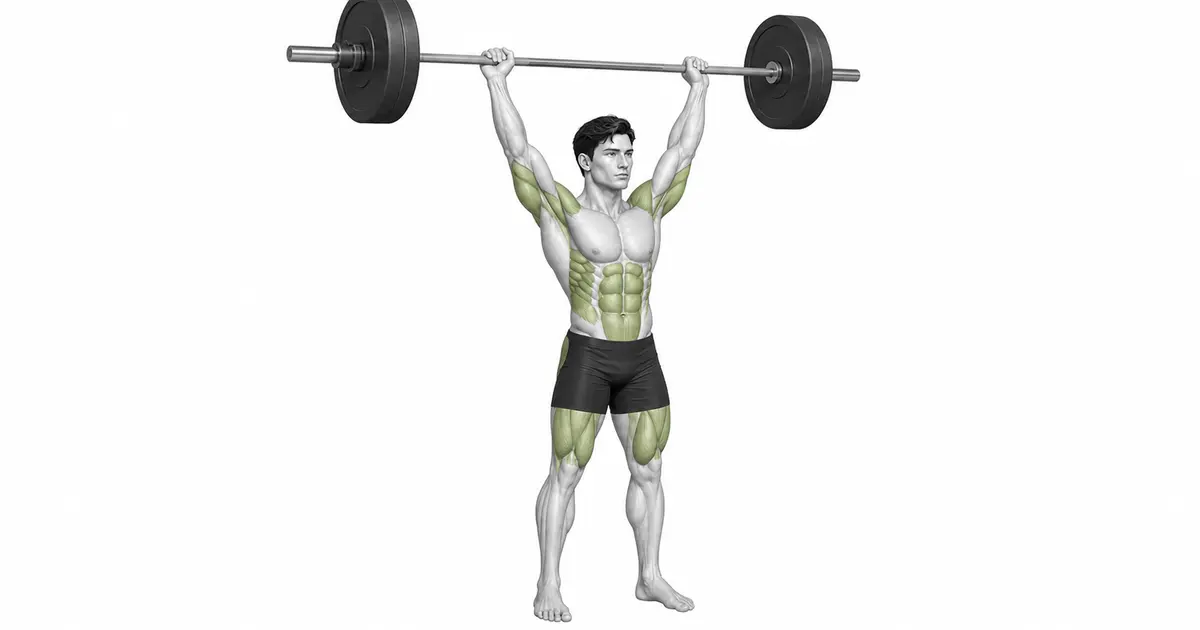
Key point: Cue to use right away: “Lift the bar with your legs and your arms maintain the strength.”
RECEIVE THE BAR
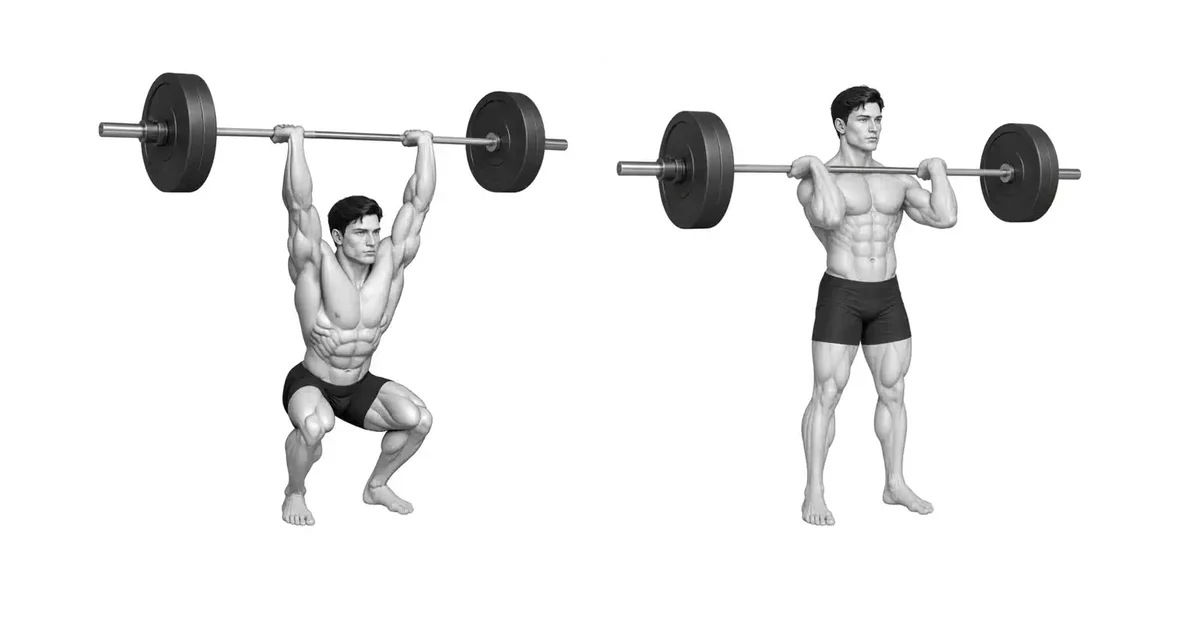
When lowering the bar, you must gently support it with your shoulders and knees to stabilize the next squat.
If you hold it slowly with just your arms and drop it on your shoulder, the impact on your wrists and collarbone will be high. Bend your knees slightly as the bar touches your shoulders.
Don't rush the next descent before regaining front lag.
TROUBLESHOOTING
Fix the cause of a mistake, not just its appearance
Stop at the top and press only with your shoulders
- What you see
- Your legs are already fully extended, but the bar stops at your shoulders and your arms get tired first.
- Likely cause
- Lower body rise and press timing were interrupted.
- How to correct it
- Lower the weight and at the end of standing up, connect your arms as soon as the bar rises.
Elbows drop and bar rolls forward
- What you see
- At the bottom of the squat, the bar is placed in the hands and the torso is folded.
- Likely cause
- The front rack and upper back have been relaxed.
- How to correct it
- Adjust your grip and raise your elbows to reduce depth with the bar resting on your shoulders.
Recline at the waist overhead
- What you see
- The ribs are lifted and the bar remains in front of the body.
- Likely cause
- Locked position was enforced rather than shoulder range of motion or weight.
- How to correct it
- Lower the weight, tighten your glutes and abs, and stack the bar above your ears.
REGRESSION & PROGRESSION
Match the difficulty before adding load
Increased weight and speed
Gradually increase the weight or increase the speed of movement while maintaining correct posture.
Continuous performance (complex)
Combine with other movements to strengthen cardiorespiratory endurance and muscular endurance simultaneously.
BEGINNER PROGRAM
A practical starting framework
This is a full-body exercise that is prone to breakdowns in technique and power, so use short sets and plenty of rest. Even for cardiorespiratory purposes, end the set if your front rack and overhead alignment is broken.
Frequency
1-2 times a week
High nervous system fatigue, so allow ample recovery time.
Volume
3~5 sets, 3~6 times
Low reps are recommended to focus on maintaining quality movement and explosiveness.
- If you become tired and lose your posture, immediately end the set.
- Protect your spine by maintaining abdominal pressure with powerful breathing.
Frequently asked questions
How deep is the squat?
To the depth at which the entire foot and front rack are maintained. Don't lose alignment by forcing parallelism.
Can this be done with dumbbells?
Yes. Dumbbells allow for independent adjustment of wrist and shoulder positions, but increase side-to-side stability requirements.