Z-PRESS
A high-level seated press that eliminates leg drive to test the limits of shoulder strength and core control
Sit on the floor with your legs extended straight in front of you. Sit tall and hold a barbell at collarbone height in the front rack position. Brace your core and abs intensely to keep your torso from swaying. Exhale as you press the bar vertically overhead. Avoid leaning back or letting your legs lift off the floor. Pause briefly at the top, then slowly lower the bar back to the starting position under full control.
- Primary muscles
- Anterior Deltoid · Core
- Secondary muscles
- Lateral Deltoid · Triceps Brachii · Upper Back
- Difficulty
- Advanced
- Movement type
- Vertical Push
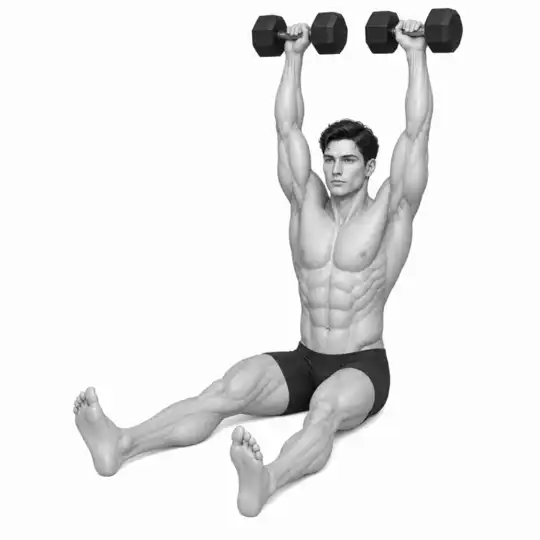
Do I have to keep my legs straight?
Yes, having the legs extended on the floor is what makes it a Z-press. If your hamstrings are tight, widening your stance can help.
STEP BY STEP
5 Steps for One Complete Rep
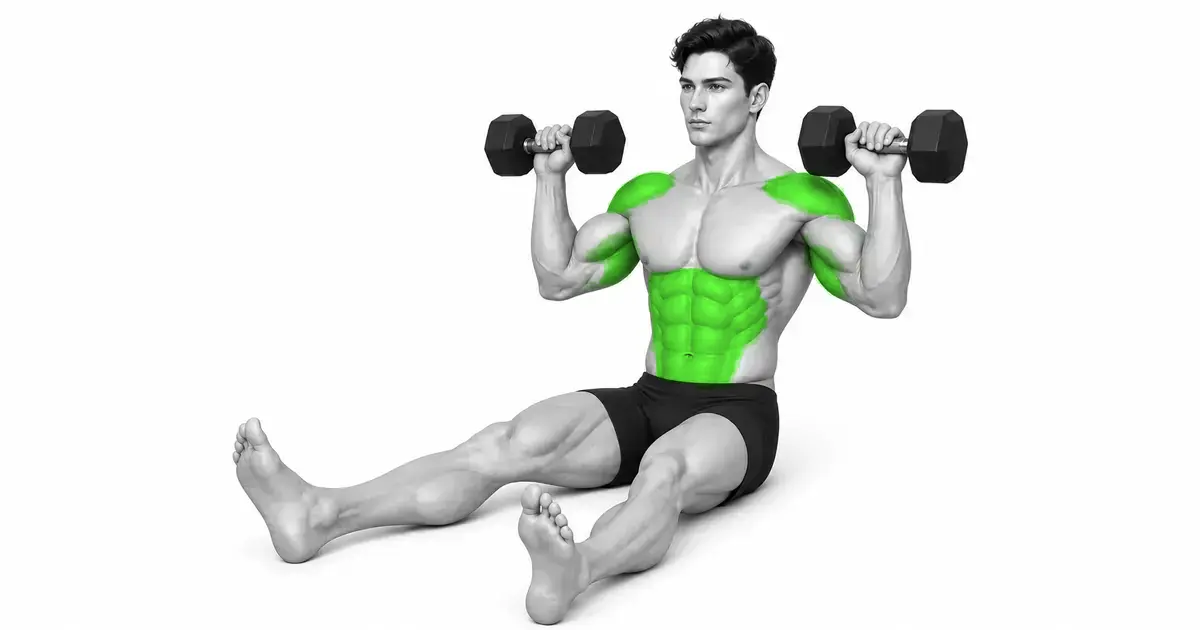
- 1
Setup and posture
Sit on the floor with legs out. Grip the barbell slightly wider than shoulder-width and rest it on your upper chest.
- 2
Brace and align
Chest up and back flat. Create immense internal core pressure to prevent your torso from moving back or forth.
- 3
Strict vertical press
Drive the bar overhead using only the strength of your shoulders and arms. No leg drive is possible here.
- 4
Lockout and head through
Fully extend your arms and push your head slightly forward to align the bar with your spine at the top.
- 5
Controlled return
Slowly lower the bar back to your collarbones while maintaining a rigid upright torso.
STRICT PRESSING MECHANICS
Zero momentum, pure power
The Z-press is the ultimate test of pressing mechanics because it is impossible to 'cheat'. In a standing press, it's easy to use a bit of knee or hip drive, but sitting on the floor forces the deltoids to do 100% of the work.
Furthermore, the lower back and abdominals must work overtime to keep the torso upright. If you cannot maintain a straight back, it often points to a lack of thoracic mobility or tight hamstrings, making the Z-press a diagnostic tool as well as a strength builder.
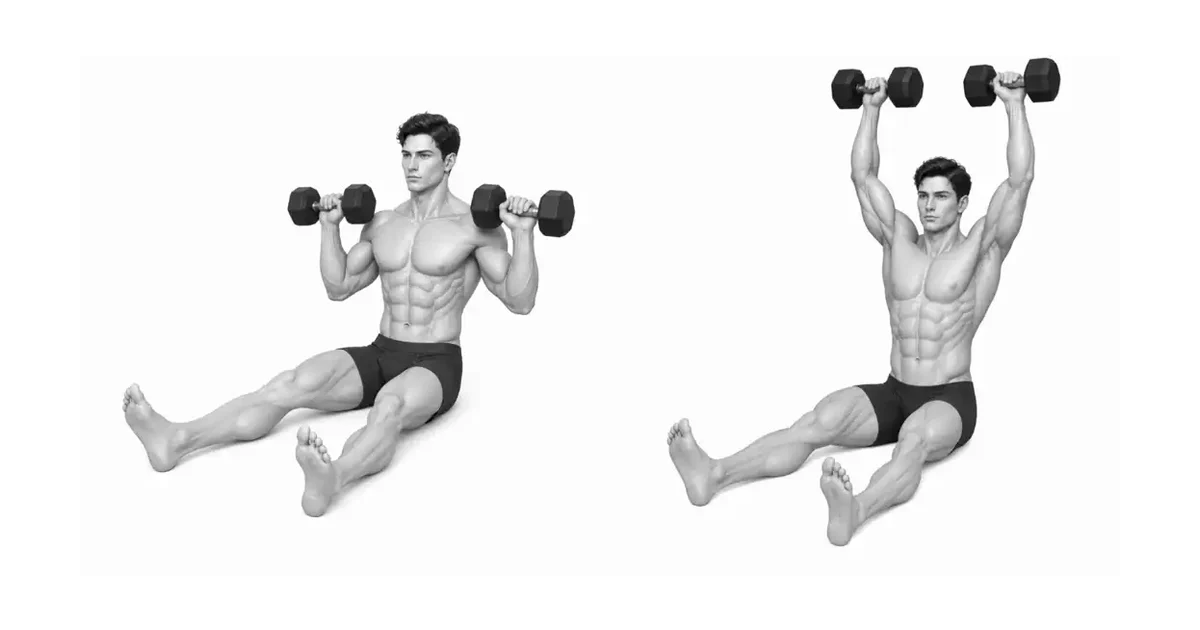
RANGE, LOAD & TEMPO
Choose a range and load that keep the Z-Press repeatable
The useful range of motion ends before your torso or working joints have to change position to move the load. Keep the anterior deltoid · core producing the movement while the lateral deltoid · triceps brachii · upper back support the same alignment from the first repetition to the last.
Use a controlled lowering phase of about two to three seconds and avoid bouncing through the transition. If the final repetitions become shorter, faster, or visibly different from the first, reduce the load or stop the set before technique breaks down.
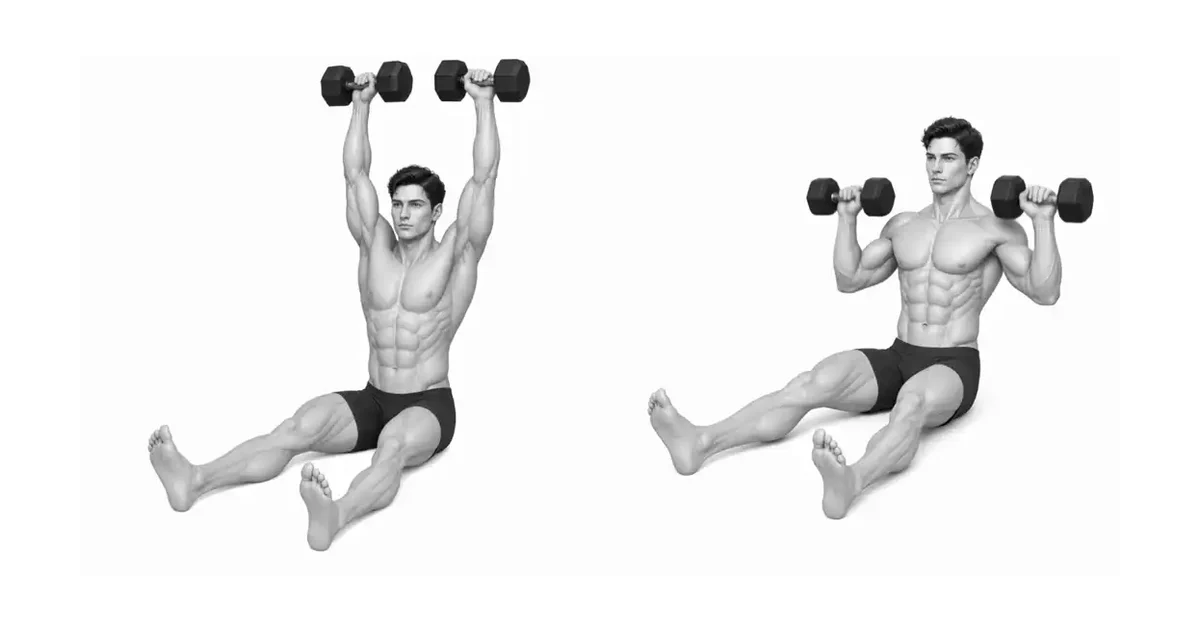
Key point: Progress the Z-Press only after every repetition follows the same path without joint pain.
TROUBLESHOOTING
Fix the cause of a mistake, not just its appearance
Excessive leaning back
- What you see
- The torso tilts far backward as the weight rises.
- Likely cause
- Lack of core strength or limited shoulder mobility.
- How to correct it
- Lower the weight and focus on keeping your spine vertical. The goal is to press without needing a backrest.
Bending knees or lifting legs
- What you see
- Knees pop up or heels lift off the floor during the press.
- Likely cause
- An instinctive reaction to try and generate momentum.
- How to correct it
- Drive your legs into the floor and flex your quads to anchor your lower body in place.
REGRESSION & PROGRESSION
Match the difficulty before adding load
Dumbbell Z-Press
Use dumbbells to allow for a more natural wrist and shoulder path and to correct side-to-side imbalances.
Single-Arm Dumbbell Z-Press
Press with one arm to improve the anti-rotational demand on the core.
BEGINNER PROGRAM
A practical starting framework
The Z-press is a favorite among elite lifters. If you want to take your overhead strength to the next level, this is the way.
Frequency
1 time per week
A high-fatigue movement best used as a variation of your primary press.
Volume
3-4 sets of 6-10 reps
Maintain strict form; if your back rounds, the set is over.
- Never allow your back to slouch or round.
- Spread your legs wide to create a stable base of support.
- Use your breath to maintain rigid core pressure.
Frequently asked questions
Why is it called the Z-press?
It is named after legendary strongman Zydrunas Savickas, who popularized the movement in strength circles.